
Building bridges: Education as a lifeline
Building bridges: Education as a lifeline
Lost at sea for five days at just four years old, Yen Siow overcame all odds to make it from Vietnam to Australia. Now a proud Monash alumna and changemaker, she speaks to the importance of the university's latest Southeast Asia initiative.
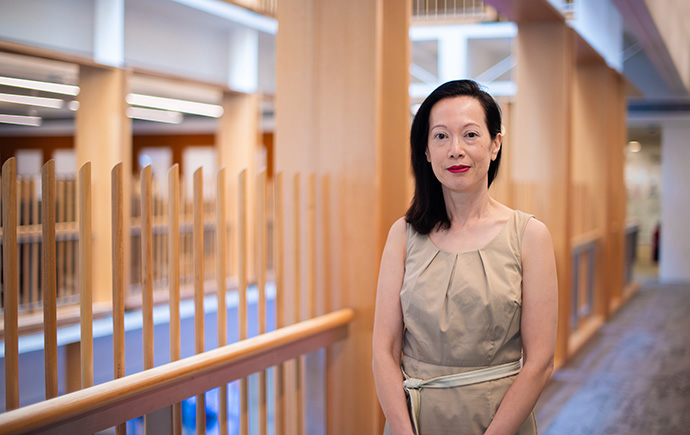
Yen Siow was three years old when she left Vietnam, but she remembers vivid snatches of the journey. How rough the sea became. How crowded it was on their leaky boat. How the water washed in and came all the way up to her mother’s chest.
Lost at sea for five days and four nights, her boat drifting, she remembers the agonising wait for one of the many passing ships to stop ignoring them, please, and help.
One finally did. A Norwegian oil tanker saved everyone, including her older sister and younger brother, and her dad and her mum. They arrived in Australia in 1981, were supported with community housing in Altona, before moving through primary school in Coburg and high school in St Albans, and eventually landing at Monash University for a commerce degree.
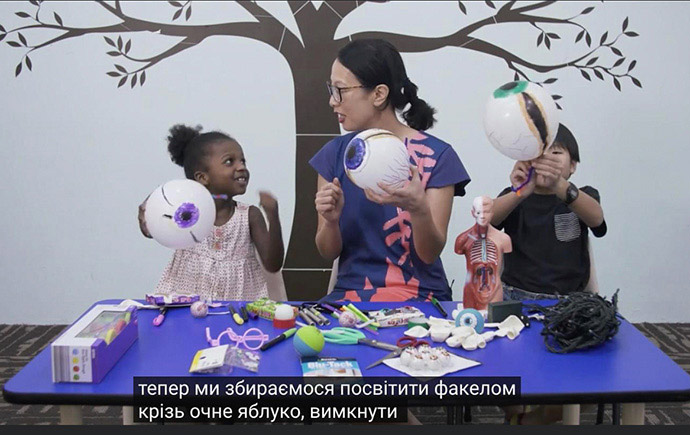
Education was always going to be her pathway, and what a path it forged. Siow, now 49, has worked in marketing and business development roles. She moved to Singapore and created a social enterprise – Discovering Without Borders – providing STEM education and internships for displaced communities in South East Asia (including Afghanis, Pakistanis and Rohingya people from Malaysia).
“My hope is to provide them with education that can open up work opportunities – particularly remote work,” she says. “I look at opportunities to uplift refugees, giving them job skills or a chance to upskill their education, because the more educated you are, the higher your chance of resettlement.”
It’s a big job – one she’s more than able to do after added career help from Monash, this time a Master of Teaching, which she completed during the pandemic. “I went to orientation day, went on campus and it was wonderful,” she recalls. “They had all these activities and clubs you could join, and then the university shut down, and we went into two years of online teaching.”
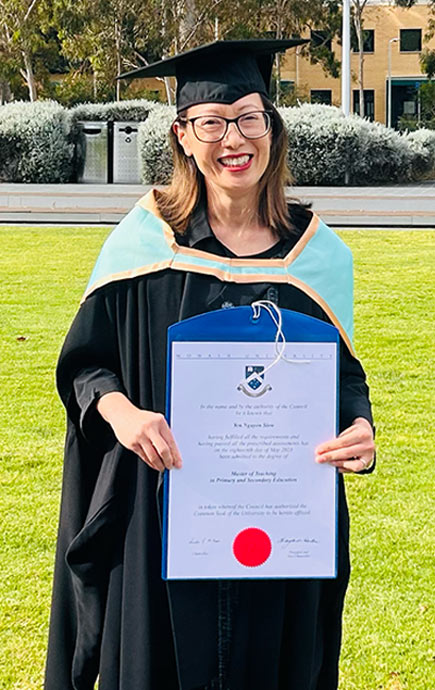
Yen studied commerce and later a Master of Teaching at Monash — shaping the way she now supports displaced learners across Southeast Asia.
Siow is clearly an exemplary alumna of the university, but she is also a living embodiment of the many ways in which Monash University is supporting students and alumni throughout the region. This commitment is further demonstrated by the new Vice-Chancellor’s ASEAN Awards, which were announced in August, and represent a landmark $2.5 million investment in Southeast Asia.
The award initiative supports 67 ASEAN undergraduate students from 2026, offering bundled support including everything from tuition to health insurance, relocation support and travel assistance. A further AUD$1 million has since been committed to support pathway students studying at Monash College in Melbourne’s central business district.
It makes sense. Monash is Australia’s most deeply engaged university in Southeast Asia, through campuses and research partnerships, including 15,000 ASEAN students (7700 in Australia), and almost 60,000 ASEAN alumni. Monash University Vice-Chancellor and President, Professor Sharon Pickering, notes that the global campus network is a highly distinctive strength – unique in both scale and depth. It’s an advantageous and enviable strategic footprint.
It offers great opportunities – and an even greater responsibility – to actively contribute to peace and prosperity in the region, fostering innovation, understanding and connectedness. It is one of the greatest examples of the new power of universities and of Monash’s impact in our world, enabling new research and education partnerships to create positive change.”
- Professor Sharon Pickering, Monash University Vice-Chancellor and President
The Vice-Chancellor’s ASEAN Awards will be given to students from 10 ASEAN nations, including Brunei, Cambodia, Indonesia, Laos, Malaysia, Myanmar, Philippines, Thailand, Singapore and Vietnam.
The latter two countries, of course, hold a particular place for Siow. “My husband is Singaporean. I’m Vietnamese. Monash is building partnerships and bridges and providing that spotlight and cultural lens that we really need. We need these countries to come together for educational exchange, and that’s what Monash is doing: building lifelong partnerships.”
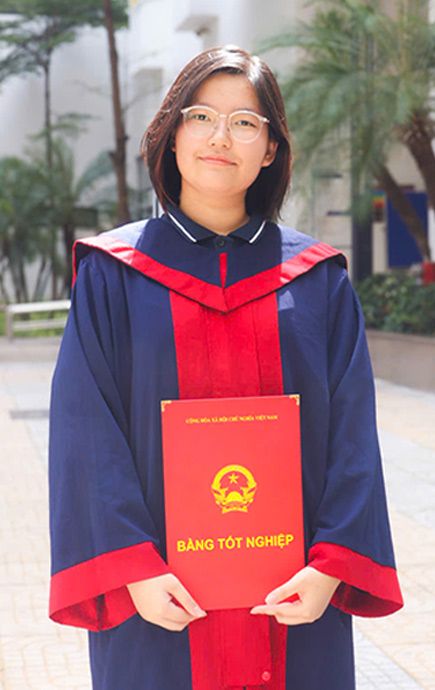
They’re also supporting the next generation of leaders in these neighbouring nations. The first student to receive the Vice-Chancellor's ASEAN Award has now been announced: Hanh Truong, from Ho Chi Minh City. In 2026 the award will support Hanh’s studies in the Bachelor of Pharmaceutical Science Advanced (Honours).
My experiences during the COVID-19 pandemic inspired me to one day contribute to vaccine research and development. I investigated many Australian universities, and Monash’s pharmaceutical rankings put it above the rest for me. I’m so thankful that this awards scheme has enabled me to pursue this career dream.”
- Vice-Chancellor's ASEAN Award recipient, Hanh Truong
Reflecting on the first cohort to be honoured with the awards, Siow remarked: “With their family backgrounds and positions, understanding the east and now the west – they’re going to be able to open our economy to their economy. Not to mention the cultural exchange: when we partner with them, we’re partnering with the world.”
Monash, Siow adds, not only has the regional presence to make a difference, but also the kind of expertise and heft that comes with being a leading university. Ask her what sort of possibilities are unlocked by studying at Monash, and Siow doesn’t hesitate, immediately calling to mind her time with the Monash Virtual School, a University-initiative, which provides free online learning programs to young people facing barriers to education because of conflict or disadvantage – including those displaced by the conflict in Ukraine.
Through the Monash Virtual School, Siow was able to join other volunteers to teach people within the Ukrainian diaspora, where schools had shut down leaving the students scattered around their country and throughout Europe.
“They needed help, but the teachers also needed professional development because of a shortage – with all male teachers taken into military service due to conscription,” she points out. “You can imagine these students using their iPhones, and they’re in bomb shelters, and there’s a huge amount of noise in the background, and they’re trying to learn something.”
It was, Siow adds, one of the most rewarding experiences she’s had in teaching.
“Monash was doing amazing things – reaching out through that humanitarian space to connect us to the rest of the world,” says Siow. “They had Ukraine President Volodymyr Zelenskyy come on board through an online meeting, and address us students. Which university has a president addressing Master of Education students, and encouraging us to ask questions?”
There’s a connective thread here, too, between those kinds of offerings, and the new ASEAN Awards – given that the latter will be used to recognise people who care deeply about their communities and want to make things better for others.
Many of us from ASEAN countries are already doing the work on the ground, often quietly, often with limited resources. The ASEAN Awards will give these students a platform, a community, and the belief that what they are working towards will matter.”
- Yen Siow
And it isn’t just about scholarships, or even regional prosperity. “When we invest in young people from the ASEAN region, we’re investing in a future that’s more just, more creative, and more grounded in shared experiences,” says Siow. “Education gives people choices, dignity, and confidence. I’ve seen how a single opportunity can change the direction of a young person’s life.”
Indeed she has. Siow never forgot her rescue at sea as a child. (Traumatic memories, she says, do have a way of lodging in the mind of young people.) That’s why when she turned 40, she decided to go and find her rescuers – the Norwegian captain of the tanker, and his crew.
Being digitally inclined, Siow went first to Facebook, offering up a plaintive message – “Does anyone know what happened to my ship?” – paired with a postcard photo of the vessel. Three days later she was connected to the shipping company, which had kept meticulous records, including a list of more than 80 names plucked from near death, hers among them. “I flew over to Norway to meet these people who rescued my family. I was such a tiny little girl at the time, and I said ‘I’ve grown up, and I want to thank you for saving my life’.”
In essence, this is why she’s on her pathway through Monash University – because she believes that technology can be used for good purposes, and not just through her social enterprise either. Siow also goes out of her way to provide STEM education and resources to marginalised people, working with the Melbourne Indigenous Transition School in Richmond. She hopes to move into a PhD next year, to upskill herself even further.
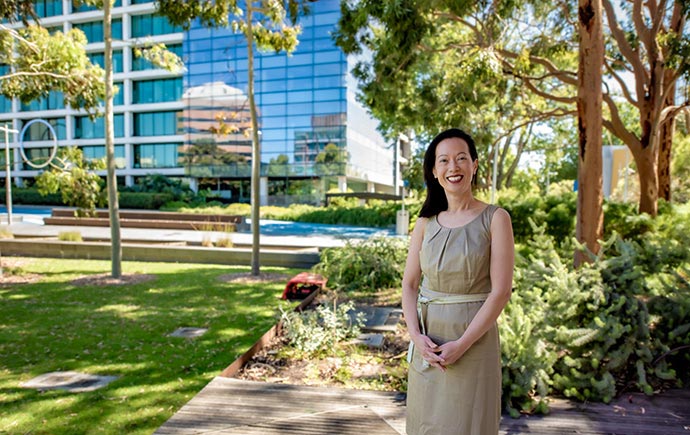
“My time at Monash changed the way I saw myself, and the kind of impact I could make,” she notes. “Coming from a Vietnamese background and growing up as a former refugee, I always knew education could change a person’s life. But at Monash, I realised it could also change entire communities.”
This goes to the very heart of the Vice-Chancellor’s ASEAN Awards, too, insofar as they exist to scaffold the education of 67 individuals, but also to supercharge that education in the context of their background and experience, framed by a kaleidoscopic cultural lens.
“Monash gave me the confidence and the skills to build programs in humanitarian STEM, to work with displaced learners in Southeast Asia, and to advocate for equity in education, and I began to see my lived experience as a former refugee as something valuable, as a strength to be shared,” Siow says. “Monash helped me realise that my story wasn’t something to hide – it was something I could use to lift others.”
Monash has long pursued a purposeful engagement with Asia, with campuses in Malaysia and Indonesia, locations in China and India, and a growing alumni and research network across the ASEAN region. It has consistently led in education mobility, partnerships and student recruitment in the Indo-Pacific. For more information about the Vice-Chancellor’s ASEAN Award, visit our website.