
The next big idea? It’s already here

Before Monash’s Professor Peter Gibson and Associate Professor Jane Muir carried out their key work on the FODMAP diet, they were early career researchers. Before a team – including Dr Jillian Shaw, Emeritus Professor Alan Trounson and Professor Ismail Kola – pioneered IVF research at Monash, they were early career researchers.
These brilliant minds didn’t spring from nowhere. Before all these medical pioneers made life-changing contributions to global science, they explored their fields. They asked new questions, focused on foundational problems – and did the vital work that would one day enable them to change the world for ever.
That’s why Monash’s Early Career Researcher Excellence Program (ECREP) is so important. Designed by the Faculty of Medicine, Nursing and Health Sciences and made possible by initial generous gifts from a group of generous donors, the program recognises and supports the most exceptional early career researchers.
It’s helping them answer big questions – from the value of interventions for critically ill patients to the role of molecules in keeping us healthy – and enabling them to become global leaders. And it’s giving them the time, space and freedom to pursue ideas that might seem unconventional today but could lead to leaps forward years from now.
So how does the ECREP work to help early career researchers? It provides them with the financial support to progress their innovative ideas and their careers – ensuring they can inspire and train the next generation of scientists, too. Recipients of ECREP funding can choose to use the funds however they see fit: expanding their teams, attending conferences to share knowledge, or pursuing ambitious and innovative research questions, to name but a few.
This extra support is vital because early career researchers face huge barriers. They must spend precious hours not working in the lab but applying for highly competitive research grants – and the success rate is just 10 per cent nationally. These limited and insecure funding opportunities mean that early career researchers don’t have the financial or career stability necessary for them to do their best work.
Dr James Pang, Senior Research Fellow and Head of the Computational and Comparative Brain Dynamics Lab in the School of Psychological Sciences, is one of the bright minds whose work is forging ahead thanks to the ECREP. His research uses imaging and computer models to study the structure and function of the brain.
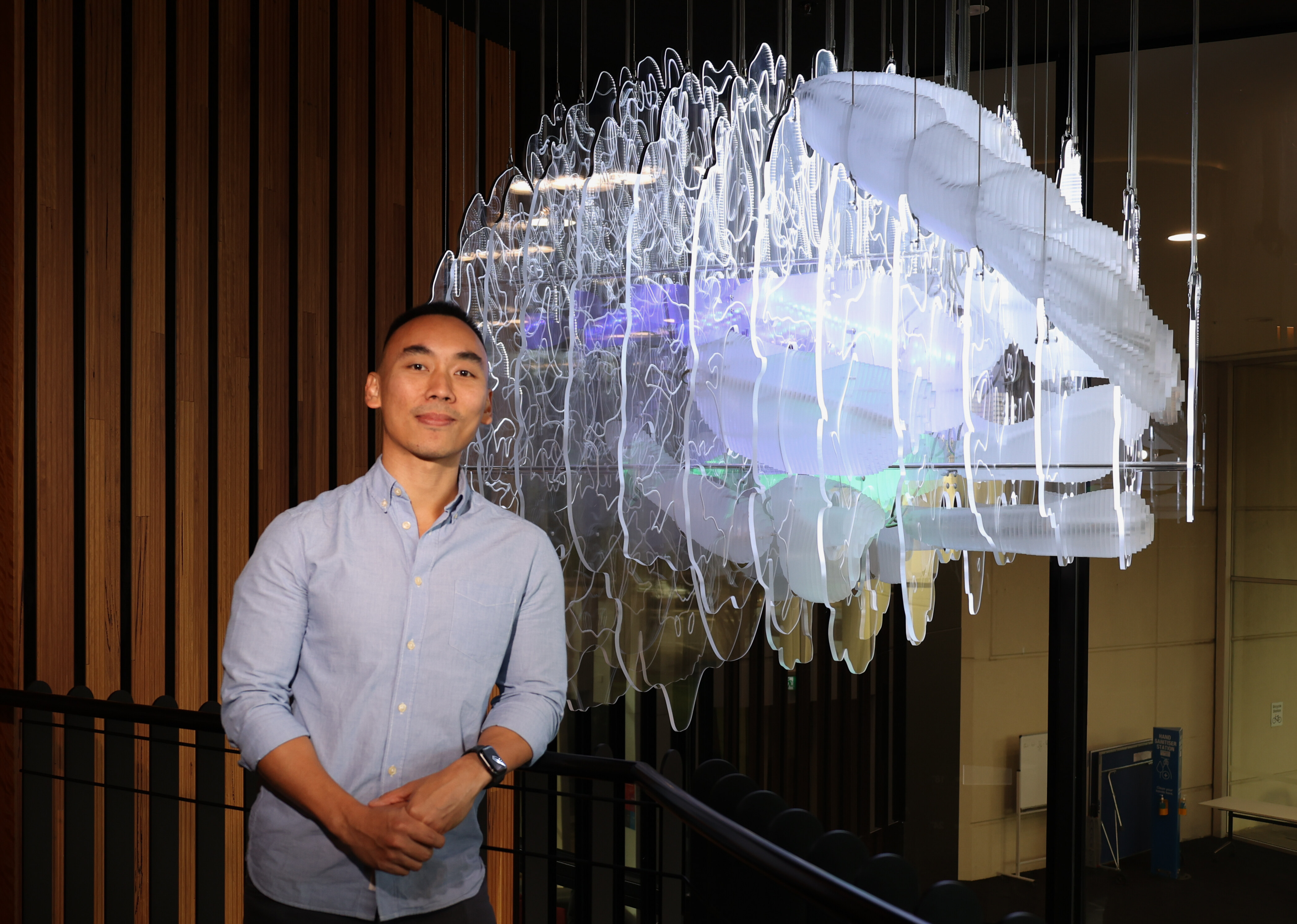
There is still so much we don’t know about how our brains work, and Pang aims to uncover the fundamental principles that govern brain structure and function in health and disease and across species. He is shedding light on biological mechanisms that underlie neurological and mental health conditions, while also providing new insights into brain development and evolution.
“This kind of support is enabling young scientists like me to pursue ambitious and innovative research questions that might otherwise be sidelined,” says Pang. “The funds also cover travel for collaborations and conferences, so I can share our findings and build international partnerships.”
Beyond his research achievements, Pang is deeply committed to sharing science with the wider community and inspiring young people to explore STEM pathways – work for which he received the Australian Institute of Policy and Science’s 2026 Young Tall Poppy Science Award for Victoria.
This award recognises Pang’s exceptional commitment to community outreach, including his involvement with the CSIRO’s STEM Professionals in Schools program to codesign classroom activities with teachers to build students’ STEM skills, and the national STEMpals initiative to encourage science curiosity among primary school students through exchange of handwritten letters.
The program is having an extraordinary impact, says Professor James Whisstock, Deputy Dean (Research). “It’s brought together curious minds who inspire one another, challenge assumptions and kindle innovations that elevate patient care, inform policy and advance global health systems.”
The Faculty of Medicine, Nursing and Health Sciences is the perfect place for early career researchers, too. Along with its partnered health networks, it serves more than 3.5 million Australians and is home to more than 1,700 graduate research students and nearly 3,000 adjunct and honorary experts.
“It’s a rich ecosystem where curiosity and collaboration fuel the latest breakthroughs,” says Whisstock. “These critical resources enable our early career researchers to become independent leaders in their field, to establish national and international reputations, to produce amazing discoveries and publish innovative publications of the highest quality.”
As the ECREP community continues to grow, so will its impact – with the help of visionary donors. “As we look to the future, we invite you to join us in sustaining and expanding this vital initiative,” says Whisstock.
“Your philanthropy doesn’t just underwrite experiments – it fuels careers, particularly of the very young. It accelerates discovery and it shapes a healthier and better tomorrow. Together, we are igniting the spark of discovery and transforming lives.”
Your generosity can help early-career researchers make more transformational discoveries. To find out how, contact Megan O’Connor at megan.oconnor@monash.edu