
2022
-
Welcoming Dr Rigissa Megalokonomou
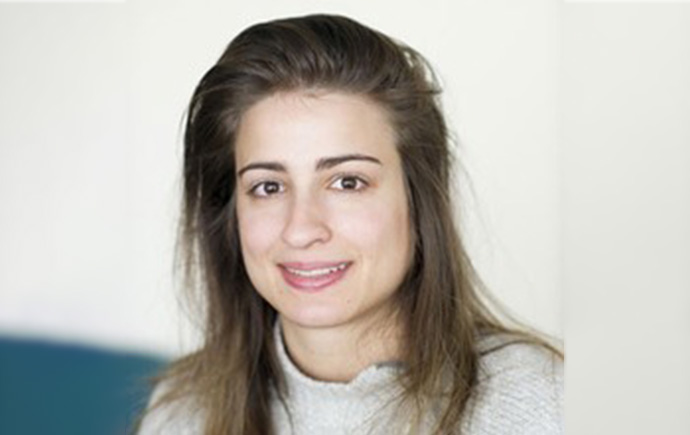 Dr Rigissa Megalokonomou.
Dr Rigissa Megalokonomou will join the Department of Economics as an Associate Professor at the end of February next year.
Hailing from the Greek capital of Athens, A/Prof Megalokonomou’s undergrad years were spent at the University of Athens, where she really fell in love with Economics.
“I was good at maths and economics in high school and it was the cool thing to do so that’s what I applied for at University. Once there, when I could try a range of subjects, I found I was really passionate about economics,” she says.
For her Masters degree she went to the University of Essex in the UK and graduated in 2010, uncertain of her future direction.
“It was just after the financial crises so returning to Greece was not a good idea. I had spent my entire life studying so I thought, why not do another degree. So I started a PhD at Warwick University.”
Her first academic job brought her to the University of Queensland where she has been for the past six years.
“When you go on the job market you just don’t know where you are going to end up. But my husband and I really love it in Australia. We like the lifestyle and the weather, the balance between work and leisure. Once you experience Australia, it’s difficult to leave,” she says.
A/Prof Megalokonomou is an applied micro economist with a focus on education- and labour economics. She has also conducted research on migration, health economics and gender.
During her PhD she constructed her own data set based on information from 150 high schools in Greece. Although an arduous and time consuming project, it has served her well for several years.
“Initially I collected the data from all these schools just to be used in the one paper. But I have used it for so many projects. And I actually like doing data collections. Once you do it, you convince yourself you are good at it so you do it again. I am always looking for areas that have not been explored. This is how I can add value,” she says.
Her current research focuses on another original data set from Greek Supreme Court cases she has compiled with the help of research assistants.
“The data set is complete and I am exploring it based on several dimensions, such as gender. My current topic is whether the gender composition of the judging committee leads to different outcomes. Hopefully this data set will keep me busy for another five years,” says A/Prof Megalokonomou.
She is also extending her research in the education field by conducting RCT surveys with the aim to understand why students behave in a certain way, something her original data set cannot explain.
“We are doing online experiments to understand more. This is completely new to me so I am learning a lot. That's what I like about research, you are always evolving.”
Switching to Monash Business School was not part of her initial plan but she became interested once she was approached by the department. She is attracted by the active and growing research groups.
“I am really looking forward to the nice, friendly research environment with interesting colleagues. We are also looking forward to everything a big city can offer. We enjoy the outdoors like hiking and picnics in the park with our two year old son.
“Everyone has warned me about the weather but I will evaluate it once I get there,” she laughs.
-
Dr Quoc-Anh Do: “This is really the best place I could aspire to be.”
 Dr Quoc Anh Do
After a long period of changing countries and universities, Associate Professor Quoc-Anh Do joins the department of Economics in January 2023. He looks forward to settling down and exploring the many research opportunities with colleagues in the department.
Dr Quoc-Anh Do – or ‘QA’ as his Anglo-Saxon friends and colleagues usually call him – is originally from Hanoi in Vietnam. That is where he grew up but from his undergraduate years and onwards, he has studied and lived all over the world.
He started out studying maths and engineering at the École Polytechnique in Paris and did another Masters’ degree in statistics and economics at ENSAE.
“In Vietnam I really didn’t have any notion of what we today would call modern Economics, but my engineering school in Paris let me try a lot of things,” he says.
“I have always been interested in social sciences and economics sits right at this intersection between maths, science, and social science.”
After his Masters’ degrees Dr Do had a path in mind to complete a PhD in France. But when he sought out a professor for advice on his future career, his plans changed completely.
“This Professor really pushed me to do a PhD in the US and so I ended up spending six years at Harvard doing a PhD in development economics,” he says.
Once his PhD was complete, Quoc-Anh Do got his first job at Singapore Management University, followed by another stint in Paris at Sciences Po.
For the last few years, he has been a visiting Associate Professor and Fellow at the Ford Center for Global Citizenship at the Kellogg School of Management at Northwestern University in Illinois.
His research focus is on political economy.
“I work on a broad range of topics in applied microeconomics, especially political economy. It is in the overlap between economics and political science. Some of the issues I’ve studied involve governance and misgovernance such as corruption and favouritism both across and within countries,” he explains.
“More specifically, I’ve investigated the role of capital city locations, and how politicians are likely to favour their hometown regions for infrastructure projects, which contributes to uneven development within a country.
“We’ve shown that this kind of favouritism also happens in non-democratic countries like Vietnam where politicians are not selected by voting, and yet they still favour their home region,” he says.
“In the US, the favouritism is more related to friendship links, and they are stronger at State level politics than at the federal level.
“My explanation is that there is more scrutiny at the federal level so less opportunity for the politicians to favour their friends’ companies for example. Congressmen face a lot of media scrutiny and pay more attention to the consequences. At state level, politicians have more local power to favour local companies.”
QA Do’s broad research interest is a great match with the Monash Department of Economics, and he looks forward to interacting with all his new colleagues. He has formerly conducted lab and field experiments and is keen to get to know both the Experimental Economics group and the Development Economics group.
“There are several people whose research I really love, like Professor Paul Raschky and Professor Sascha Becker whose research interests are close to mine,” he says.
“I am already working with Professor Yves Zenou and I hope to be more active in the Network Economics group with Professor Arthur Campbell. I can’t wait to take part in the reading groups and seminars to get to know everybody.”
You’ve visited Melbourne several times, what do you think of the city so far?
“I’ve already discovered that Australian wine and coffee are great, and I’ve found some Vietnamese friends-of-friends in Melbourne. There’s a lot of Vietnamese culture and food, which is nice,” says Associate Professor Do.
“As a family we like to travel and do road trips, so I think Australia is perfect for that and I look forward to exploring the city.”
-
Field experiments are calling Dr Mallory Avery
 Dr Mallory Avery
Although Dr Mallory Avery had not previously considered taking on a job in Australia, she was certain postdoctoral research at the Department of Economics was exactly what she wanted.
The opportunity to work with Professor Andreas Leibbrandt and the very strong experimental research group at Monash’s Clayton campus were pivotal in her decision.
It is also an advantage that her husband, who is a nurse, can work here.
“Everyone has been so nice and supportive and is doing great research. It is good to go to the seminars and hear what people are doing and to connect with everyone who’s doing cool and interesting things,” says Dr Avery.
“Research is a lot more fun when you collaborate with each other.”
Like so many others, her plans were postponed by over 18 months due to COVID-19. After completing her PhD at the University of Pittsburgh in Pennsylvania, she scraped by, returning to stay with her parents in New York and working online from home as a part-time research assistant on existing research projects.
“It was a stressful and rough period. It felt like being in limbo and trying to figure out if it would ever end,” she says.
Dr Avery and her husband finally made it to Melbourne in January this year and are set to stay for two years. She hopes the post doc will give her the opportunity to learn more about different topics, research and meet new people.
“It’s so great to learn how other people think. It allows you to explore and be open and curious. The tone of the department is so conducive to learning and growing,” she says.
Her work sits somewhere between labour economics, topics on diversity and inclusion as well as mental health and substance abuse. She uses lab- and field experiments in her research.
With Professor Leibbrandt she is working with Australian and foreign companies on topics connected to the future of work. For example, how does the use of artificial intelligence in recruitment and working from home affect diversity and inclusion outcomes?
“We look at it both from a supply and demand level. Does this encourage underrepresented groups to apply for jobs or does it discourage them? That can have huge welfare implications.” Dr Avery says.
Her job market paper was on a lab experiment looking at how likely a candidate who’s experienced affirmative action early in their career is to be hired later. The results show women who are successful in an early career stage with affirmative action are much less likely to be successful later.
“This is why we might be seeing great diversity early on in careers such as in college but we’re not seeing the same gains and diversity later because people assume they’ve got in because of affirmative action, not because they’re good.
“Women who were hired without affirmative action are more likely to get a more successful career later. So, my point is you can’t just have affirmative action early on and think you’re done. It might be better to also implement diversity programs later,” she explains.
Dr Mallory Avery is looking forward to developing work in field experiments with companies during her next two years at Monash Business School.
Why would you recommend others to do a postdoc here at the Department of Economics?
“Melbourne is really cool, and the postdoc gives you an extra period of time to learn and grow before you go on to a tenure track position. This is a great place to do that because of how kind and encouraging everybody is and that is not as common as you might think. There is room to grow here.”
The best place in the world for Dr Sebastiano Della Lena
 Dr Sebastiano Della Lena
The research agenda of the Department of Economics as well as the wish for an overseas experience is what brought Dr Sebastiano Della Lena to Monash Business School.
“I think I’m in the best place in the world for me, for many reasons. It’s a great university with a lot of opportunities. Now I just have to work hard,” says Dr Sebastiano Della Lena who is the second postdoctoral researcher to join the department this year.
As with so many others he expected to arrive in Melbourne two years earlier but when Australia closed the borders and the COVID-19 virus put life on hold, his plans were postponed.
Luckily Dr Della Lena had a research grant in Belgium to keep him going. He finally arrived in January at the height of Melbourne summer.
“So far, I really like both Melbourne and Australia. The city is big but not huge and it’s not polluted.” He is also happy to interact with Professors Arthur Campbell and Yves Zenou.
“Networks, social interaction, and cultural transition is really what I’m interested in so it’s great to be able to interact with them. It’s an incredible opportunity for me,” says Dr Della Lena.
He is a micro theorist, and his work focuses on the economics of social interactions. He studies how different environments and information affect people, their behaviour, opinions, culture, and beliefs – and how this in turn influences economic outcomes.
For example, when influential people are trusted experts on a topic but have opinions about other topics that they don’t know anything about on social media platforms like Twitter, the misinformation can spread more quickly and become very dangerous.
“It isn’t necessarily in bad faith, but you can’t be an expert on everything so it’s very important that they care about what they spread,” he says.
The other research topic is about cultural evolution and how different cultures interact and social norms are transmitted from one generation to the next.
He often starts out with an intuitive idea and builds a mathematical model to test whether his intuition is right.
“I try to think about some pattern between parents and children for instance and try to provide a simple mathematical model of that to study the outcome. Sometimes you have an intuition that gives you unexpected results. You should trust your intuition but also check it and sometimes I’m truly amazed by what the maths can do.”
Dr Sebastiano Della Lena is from a small village in Tuscany. He studied in Siena and went to Venice to complete a PhD. But it wasn’t quite as romantic as it might sound.
“Venice is very enjoyable when you go there as a tourist but for study and work it was very hard. Housing is so expensive, and the quality is terrible. It’s hard to get around and it's humid and cold. Living in Venice was harder than doing the PhD itself,” he laughs.
What are you hoping to get out of your stay at the department of Economics?
“My goal is to work hard and to write good research papers to produce the best research I can. I am keen to learn and when you interact with good people you learn. I’m at an early stage of my career and I hope to improve as a researcher.”
Why would you recommend others to do a postdoc at Monash?
“Doing a postdoc is a good moment to do research and improve as a scholar. It’s so important to take this time to learn from very talented people. It gives you time to concentrate on research without having to teach. I love teaching but when you’re young you really need to focus on research,” says Dr Della Lena.
The Department would like to welcome the following new research fellows:
Dr Mallory Avery, who is a research fellow with Prof Andreas Leibbrandt.
Dr Sebastiano Della Lena, who is a research fellow with Prof Arthur Campbell and Prof Yves Zenou.
Prof Jeff LaFrance and Dr Gennadi Kazekevitch (former deputy Head of Department and Education Director) have retired. Dr. Kazekevitch will continue teaching one unit as a sessional employee. We thank them for their incredible service to the department and wish them all the best for the future.
-
A new chapter for Dr Krisztina Orbán
 Dr Krisztina Orbán
Seeking a life filled with adventurous travel has seen Incoming staff member Dr Krisztina Orbán live in multiple countries, master four languages and experience a rewarding academic career.
She is currently completing her post-doctoral position at the National Bureau of Economic Research in Cambridge, Massachusetts and will shortly join the Department of Economics.
Her research focus is on understanding how firms operate and make decisions and how these decisions translate into growth and development. She is fascinated by the impact of government policies on firms and how firms in turn react to these influences and the effects this has on the macro level.
“My interests are quite broad, but this is the most concentrated sub-question. I’m always interested in talking to people on many different subjects as I really like combining insights from different fields,” Dr Orbán says.
Dr Orban is originally from Miskolc, a city in the north-eastern part of Hungary where she lived until the age of ten. Her parents worked overseas for a while, and this was the start of Krisztina’s interest in other environments.
She has since lived in the US, Italy, the Netherlands and Germany, and speaks all these languages fluently. For the last eight years she has lived in the US cities of Chicago and Cambridge.
Her academic background is reflected in her passion for new environments and different countries. She spent her undergraduate years studying maths and economics in Budapest and Amsterdam and completed her master’s degree at the Central European University.
She completed her PhD in Chicago in 2019 before accepting her current post-doctoral position at NBER.
Why did you choose to come to Monash?
“I had a very good impression of the Department of Economics and the people there. I’m excited to interact with my colleagues and look forward to our conversations. When I see how my childhood and my life has evolved, coming to Australia is a nice continuation of my exploration of the world. I’m an adventurous person,” she adds.
When Dr Orbán is not working she enjoys exploring urban areas and learning about the culture and history of new neighbourhoods. She is a keen photographer and after staying put during the long period of COVID-19 she is hungry for new constellations of buildings, plants, open spaces and people.
Once in Melbourne, she looks forward to being able to bike to work. She also really likes water sports and hopes to swim outside all year round.
“I would like to learn to surf, and I am really excited to live so close to the sea,” she says.
Kaveh Majlesi’s long journey, on COVID time
 Professor Kaveh Majlesi
For Professor Kaveh Majlesi, the journey from Sweden to Melbourne to take up a position in Monash’s Department of Economics has been long-winded, to say the least.
Delayed by COVID-19 for 20 months, he and his family finally arrived at the start of the Australian summer, thankfully managing to avoid a stay in quarantine.
“The past 20 months have been so disruptive as we never knew when we were going to leave!” he says.
“The trip was postponed several times but the department in Lund (University), Sweden was very good to me. It was difficult leaving them – they let me develop as a researcher and were always supportive.”
Professor Majlesi originates from Iran, from a south westerly region that should be of interest to many wine-loving Melburnians: Shiraz.
“It is the region where the grape comes from and I grew up there until the age of 18 when I went to Tehran to study electrical engineering at Sharif University,” he says.
But engineering was not his passion and after a few years of work in the private sector he was accepted to do a Master of Public Administration at Harvard University and moved to the US. His focus was economic development and after a stint at an NGO in California he went to Austin, Texas to conduct his PhD.
Once complete, he moved across the world again, to Lund University in the south of Sweden. Here his research interest shifted.
“My dissertation focused on trade shocks in developing countries and its effects on people’s choices and life outcomes. During my years in Lund, I became interested in wealth inequality and its origins.
“Now my core research is on how households and individuals make their financial choices and what the consequences are for the dynamics of wealth inequality. I look at this from many different perspectives.”
Would you tell us more about your research?
“One area I am interested in is, why do people make vastly different decisions with their money? When you think about financial decision-making, it could be genetic or driven by the environment like the behaviour of parents, siblings, or the larger environment. Or it can be an interaction between the two,” he says.
“Basically, I have thought about how important are pre-birth factors compared to the environment and what the environmental mechanisms are that could affect economic and investment decisions. In a couple of papers we worked with data on Swedish adoptees and linked them to both their adoptive and biological parents so we could see the variation. This research sort of changed my world view.”
How?
“Well, we find that when it comes to risk-taking in the financial market, that is, let’s say, investing in the stock market versus putting money in the bank, the environment you grow up in is much more important than the type of genes you inherit from your parents. We know that in the long run risky assets perform much better and this has implications for the dynamics of wealth inequality.
“Your environment matters so much more than your genetics. Note that it is not about inheriting your parents’ assets if they are rich. We conduct our analysis before any sort of bequest takes place. I wasn’t really surprised by the findings, but it reinforced and solidified what I knew. It’s not a pretty picture when it comes to wealth inequality and what drives it. It’s quite depressing,” says Prof Majlesi.
Other areas of research include the impact of labour market and socio-economic background on financial behaviour, how different types of investors act around stock market events as well as political economy. He has looked at how import competition with China affected political outcomes in the US.
The conclusion was that extreme trade shocks dramatically increased polarisation. Voters living in affected areas mostly went extreme right and in some cases to the very liberal left.
After more than nine years in Sweden Prof Majlesi and his family decided they were open to move. They had only five cities in which they were willing to live: Boston, Washington DC, London, Melbourne, and Sydney.
He received offers from universities in four of those cities but in the end decided to try his luck at Monash Business School.
“The easy option would have been to go back to the US. We have many friends there. It’s just that I liked the department here much better. You need some reassurance when you move to the other end of the world. And I could see that the department had made some impressive hires. Those people wouldn’t have moved and stayed at Monash if they didn’t think the department was good enough,” he says.
When he is not working Prof Majlesi loves football and coffee.
“My six-year-old son is now also obsessed with football. We both play and watch the sport. I’m a Liverpool supporter. I also like reading novels. My wife translates novels, mostly mid-century American novels, from English to Persian.
“She is also a musician and plays the Persian instruments Tar and Se-tar. She hopes to find an ensemble to perform with here. I’m also very positive about the city of Melbourne. The fact that you could have random conversations with people has been a highlight of my time so far. And the coffee is beyond anything I’ve ever experienced.”
What are you looking forward to now for research and also personally?
“The last 20 months were very uncertain and disruptive for my career as we never knew when we were going to leave so it was a very unproductive period.
“Now I have this urge to get back to my old self and to work hard again. I very much look forward to interacting with my colleagues and I hope covid-19 won’t put a restraint on that,” he says.
The Department would like to welcome the following new research fellows:
Dr Mallory Avery, who is a research fellow with Prof Andreas Leibbrandt.
Dr Sebastiano Della Lena, who is a research fellow with Prof Arthur Campbell and Prof Yves Zenou.
Prof Jeff LaFrance and Dr Gennadi Kazekevitch (former deputy Head of Department and Education Director) have retired. Dr. Kazekevitch will continue teaching one unit as a sessional employee. We thank them for their incredible service to the department and wish them all the best for the future.