
November
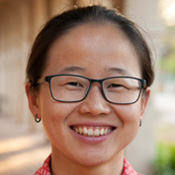 Meet Dr Kate Huang, a recent addition to our department who joins us from China
Dr Kate Huang has only been in Melbourne for a month, but despite growing up in China, she is no newbie to Australia.
Originally from Chongqing in southwest China, she moved to Shandong in northern China for university. While there, she had the opportunity to transfer to the University of Queensland (UQ).
“I started at UQ as a second-year student. It was challenging at first—moving to a different country, adapting to English as my second language, and getting used to the Aussie accent. But overall, I really enjoyed the program, and afterward, I decided to pursue an honors year,” Dr Huang recalls.
“During that time, I met some great advisors who encouraged me to pursue a PhD in North America,” she says, adding she eventually chose Caltech in Southern California for her doctoral studies.
“That was a whole new level of challenge—Caltech has a very special PhD program, with a small cohort of about 5-6 students per year, focused heavily on training in micro-theory, political economy and empirics,” Dr Huang says.
“It was an enriching experience, and everyone in my cohort was very supportive of each other, despite having diverse research interests. I was fortunate to meet my advisor (and now coauthor), Omer Tamuz, a mathematician and economist who taught me many things about math, research, and life.”
Why did you choose economics to start with?
“To be honest, it wasn’t my first choice. But perhaps it was meant to be. In high school, I was on the science track and initially wanted to become a medical doctor due to family influence. When I was applying to university, economics was actually a backup option suggested by my mother, so I could understand things like the stock market. Ironically, none of my research involves the stock market. I mostly work on microeconomic theory, which is a field of economics that is more abstract,” says Dr Huang.
Dr Huang completed her PhD about three months ago, with her thesis focusing on rational social learning theory, which builds on the idea that people often infer information and learn by observing what others do.
A simple example is when you’re choosing a restaurant—if you see a lot of people lining up, you think it must be good, and that influences your decision. This is also known as herd behaviour.
“In my research, I formalise this behaviour mathematically and draw conclusions about how social learning works in different settings. For example, what happens when the quality of a restaurant changes over time? How does this affect people’s behaviour, and how much information can we learn in such a dynamic environment? What if people have the opportunity to interact repeatedly? I use mathematical models to answer these types of questions, which then allow me to prove theorems that offer economic insights, as well as doing fun math. Aside from theory work, I also have secondary research interests in applying theory in both experimental and empirical settings.”
As an example of how her theoretical work applies to the real world, she looked at empirical data to test some of these theories. One case involves lung transplants, specifically how social learning might influence decisions about organ rejection.
“Sometimes, if people start rejecting an organ, others may infer from these rejections that something is wrong with it, even when it’s not the case, leading them to reject it as well. This is a negative effect of social learning. We’re working on designing algorithms to improve efficiency in this market and reduce waste, especially since the demand for organs far exceeds the supply, yet people are still saying no to certain transplants and organs are wasted because of this behaviour.”
Once her PhD was complete, Dr Huang was keen to return to Australia with her partner. While she had received an offer in the US, they both wanted to come back here - and she chose Monash because she really liked the environment.
“People are very friendly, and I’m also interested in the work of Prof. Arthur Campbell and Prof Yves Zenou, two researchers at Monash whose work aligns with my interests,” she says.
What do you like to do when you’re not working?
“Anything outdoors really. I love being in nature. I like to trail run with my partner and we camp and hike and spend time with friends outdoors. In Southern California we did some ultra-marathons, running for 7 to 8 hours in places where it is very dry. Here in Australia, it’s completely different—there are rainforests, birds, wallabies, and kangaroos. We’ve gone to Lysterfield Park a few times. It’s beautiful.”
What do you hope to achieve in the near future?
“I’m really excited to start working on new projects with different people here in Australia. Social learning, which is my field, isn’t as developed here yet, and I want to help Australia become a stronghold for this kind of research. I’d love to be part of that movement.”
“In terms of teaching, I want to help students, especially those considering studying abroad. I had great mentors who prepared me well, and I want to contribute by preparing honours students who are interested in pursuing higher studies, whether in the US or elsewhere. I’d like to help raise the competitive standard for honours students if they choose to go overseas.”
“As for life, I’m here for the long haul! I’m looking forward to being part of the academic and research community in Australia, while also enjoying everything Melbourne has to offer.”
A year of huge changes for Dr Filip Premik

In the past few months, so much has changed for Filip Premik. He completed his dissertation, became Dr Filip Premik, married his girlfriend in the US and moved to Melbourne to take up the position of lecturer at Monash Business School’s Department of Economics. Now he’s ready to get to work.
“When you change jobs and move to a new country there is a lot of idle time so now it’s time for me to really push workwise. I’ve talked to several people about collaborations and I hope to make some discoveries,” Dr Premik said.
Dr Premik did both his undergraduate and Master’s degrees at the Warsaw School of Economics in Poland. He worked for the National Bank of Poland for a few years, before an opportunity to pursue a PhD program in the US presented itself.
“I was looking for an adventure so I thought why not? The University of Minnesota is known for macroeconomics but despite working for the Polish Central bank for a few years, my research rarely concentrates around typical macro questions. But there is a small but vibrant Industrial Organisation community in Minnesota and I was very happy to be part of it.”
His research focus is on industrial organisation, applied micro economics and empirical auctions, and his job market paper focused on switching costs in an environment where buyers repeatedly purchased goods that had the same purpose but could be differentiated; specifically, city buses.
Whenever bus companies need to replace buses, they never replace all of them at once because it’s too expensive and risky. The public bus operators are also not able to pick just any bus but need to organise auctions.
These auctions may be organised in a way that allows public bus operators to favour one potential bidder over others. So Dr Premik’s paper tracks the degree of favouritism and shows that it responds to changes in the bus fleets, with the brands that are already in the fleet those that the operators prefer in this discriminating auction. This suggests that there is a “switching cost: associated with a new brand.
Dr Premik uses favouritism to quantify the switching cost and suggests how to change the environment to improve the welfare of the publicly funded companies.
How did you come up with the idea of public city buses?
“Public transport is kind of my hobby! I always liked buses and when I was young, I was chasing buses around Warsaw. At some point I had been on almost every single bus in Warsaw and ridden at least one stop. But then they renewed their fleet and I was too old to keep doing it. When I was looking for a good topic for my PhD dissertation in Minnesota I thought maybe I can use this. And when I managed to get the data for the auctions it just evolved.”
Why did you choose to come to Monash Business School?
“During the job market period I was applying everywhere. It’s hard to know what places are like just from reading university websites. Monash was the only Australian university I knew about beforehand. When I came here for the interview, I really liked it. The research environment is very good. I know it’s far away but for me Minnesota was already far away from Warsaw so this is fine. I’m enjoying it so far.”
“My wife is also an economist and she got a post as an associate professor in Canada. We met in math camp at the start of our PhDs, and even shared the same PhD advisor. A very romantic story! Unfortunately, we got split up in the job market, but we thought we needed to give it a chance. I hope she will one day come here as there are quite a few universities to choose from in Melbourne.”
You’ve only been here for about two months but what do you make of Melbourne so far?
“Compared to Minneapolis, Melbourne is very different and doesn’t share many undesired specifics which I truly wanted to avoid. [FP1] Instead, there’s interesting nature, great food and finally the coffee is also good!”
What do you look forward to in Melbourne - have you been on the buses?
“Yes of course! From my new apartment in Caulfield, I will be able to see the station so maybe I will become a train spotter. I also like to go out and explore so I hope to do some weekend trips and discover the wildlife.”