
Kathy Waghorn
Associate Professor Kathy Waghorn

Hailing from Aotearoa New Zealand, Dr Kathy Waghorn is co-director of HOOPLA, a Tāmaki Makaurau (Auckland) based ‘ultra-local’ practice carrying out urban research for place advocacy. HOOPLA are engaged with how people know, use and value places, and how places can be re-imagined and re-purposed. Their work is always grounded in specific places and the histories, people, and transactions that construct these places. HOOPLA’s work is discussed and documented in Kathy’s PhD ‘Practising a Feeling for Place (RMIT, 2017).
Alongside this work, Kathy develops exhibition projects that investigate contemporary architectural practice, making opportunities for wide public engagement with issues in the built environment. In 2013 she developed 'Muddy Urbanism', a project for the Auckland Triennial, in 2016 she was Associate Creative Director of 'Future Islands', the New Zealand Pavilion for the Venice Architecture Biennale and in 2019 curated the project and book 'Making Ways, Alternative Architectural Practice in Aotearoa' at Objectspace Auckland. Kathy’s research and practice work has been recognised through a number of awards including the 2023 Architecture + Women New Zealand Munro Award for diversity in architectural practice.
Kathy brings to Monash extensive experience in teaching architecture, first at the University of Auckland, then at Huri Te Ao, The School of Future Environments at AUT. In her design teaching Kathy generates communities of practice made up of learners, teachers, practitioners and researchers working with community partners. She is committed to the development of architectural education, where design-making is understood as a social and ethical practice set within the complexity of the city.
News & events
Recent news
Upcoming events
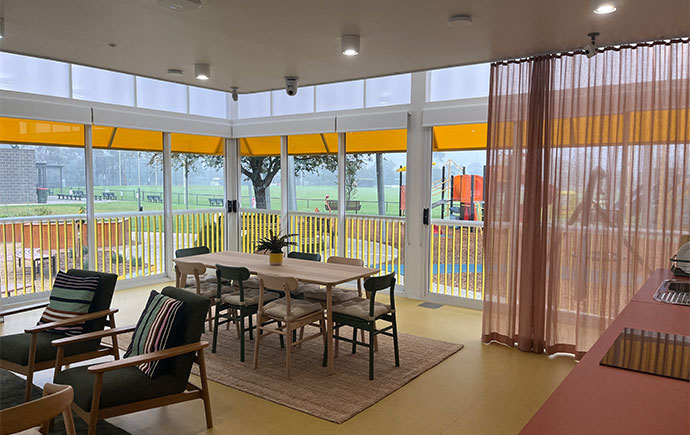
National Centre for Healthy Ageing (NCHA) launches future models of care co-designed by MADA
