
National Centre for Healthy Ageing (NCHA) launches future models of care co-designed by MADA
Monash Art, Design and Architecture (MADA) is proud to share in the announcement of the launch of the National Centre for Healthy Ageing’s (NCHA) new advanced simulation centres.
In an Australian-first, this ambitious research infrastructure project in collaboration with Monash’s Faculty of Medicine, Nursing and Health Sciences (MNHS) in a vital industry partnership with Peninsula Health (Bayside Health), aims to fundamentally transform preventative health, breaking down traditional silos to reshape care models for older Australians and people living with disability. Through this project, MADA has supported the important work of the NCHA by contributing interdisciplinary expertise to two of these six world-class spaces: the Independent Living Lab and Mobility Garden, and the Intergenerational Playground.
The official launch at the Healthy Futures Hub in Seaford brought together project partners, government representatives and key stakeholders including Ms Karen Corry from the Bayside Health Board; Ms Jana Gazarek, CEO of Peninsula Care Group, Professor Velandai Srikanth, Director of the NCHA, Professor Terry Haines, Head of School Primary and Allied Health Care, from Medicine Nursing and Health Sciences (MNHS) and Professor Mel Dodd, Dean of MADA.
Professor Dodd highlights how empathetic, spatial design can play a critical role in creating these future models of healthcare.
“To support healthy ageing, we have to look beyond just clinical care and start looking at the lived experience of the home. We’ve created a modular environment where Monash researchers and health practitioners can rigorously test how physical support systems and digital tools interact with human behaviour in real-time.”
Speaking at the launch, Professor Velandai Srikanth, Director of the National Centre for Healthy Ageing, emphasised the collective ambition behind the project, expressing excitement for the transformative impact these facilities will have in generating evidence to inform government, industry, education, technology, and service sectors. Three of MADA's research labs were deeply embedded in this interdisciplinary innovation: the Future Building Initiative, the Monash Urban Lab, and the Design Health Collab.
Simulation Centre: Independent Living Lab and Mobility Garden
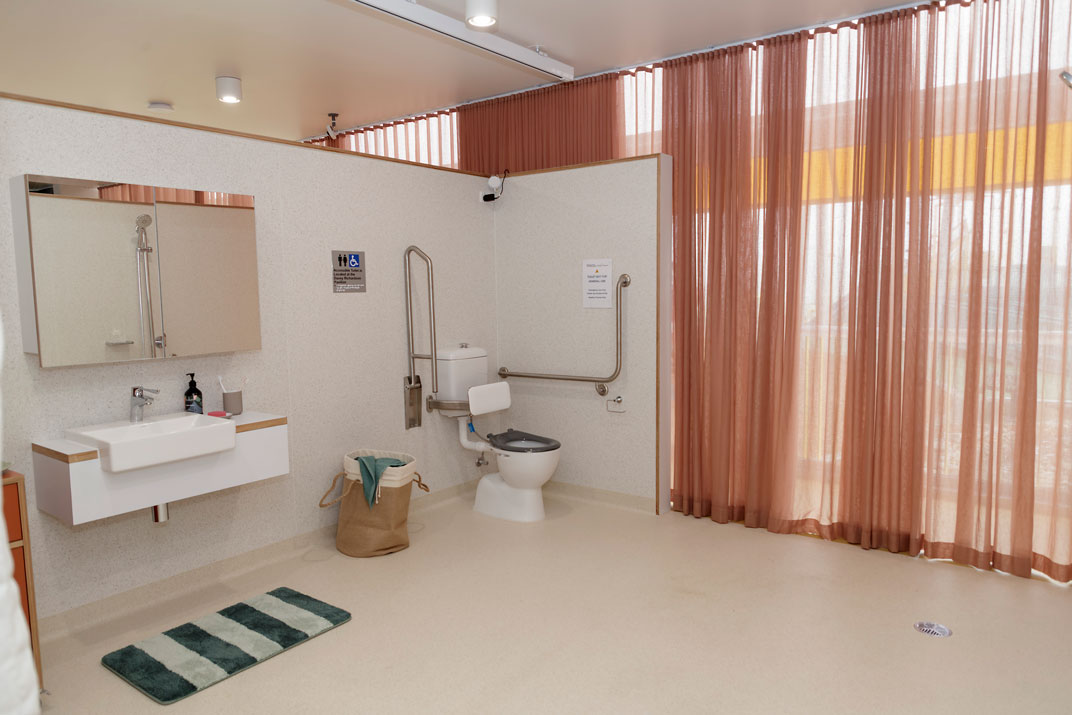
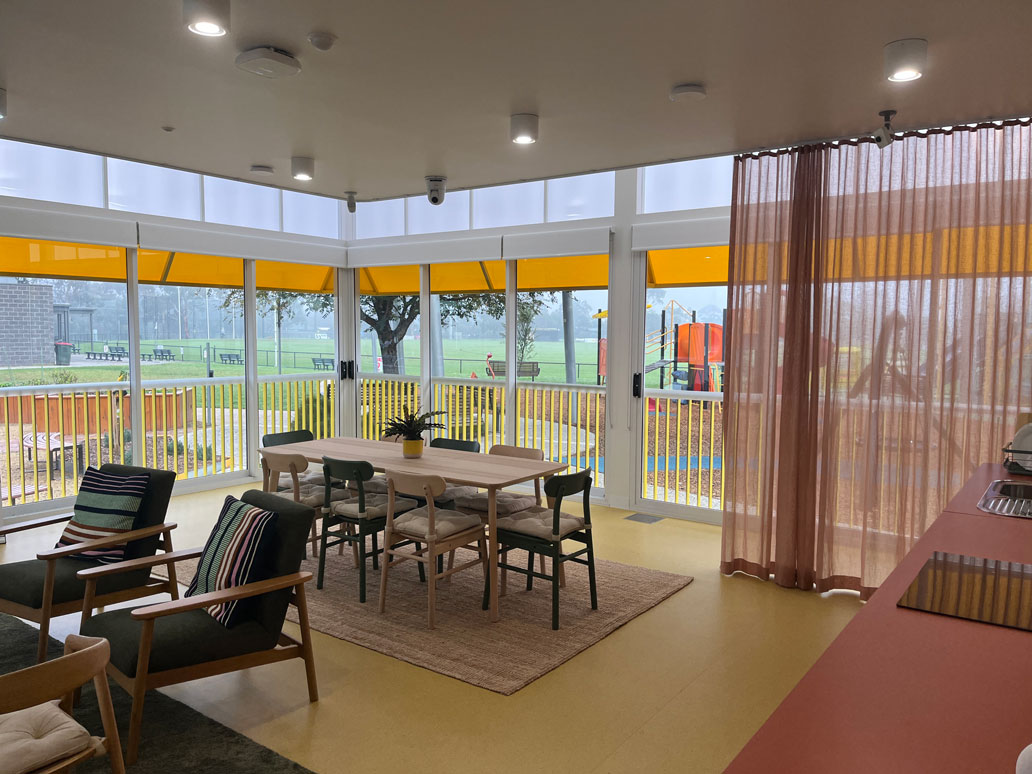
Too often, healthcare spaces focus strictly on the clinical, forgetting the human reality of daily domestic life. The Independent Living Laboratory flips this dynamic entirely. While it functions behind the scenes as a high-tech research lab rigged with artificial intelligence-enabled memory glasses, fall-prevention detection systems, and life-sized group rehabilitation robotics, it looks and feels exactly like a beautiful, dignified domestic home.
The facility bridges a critical knowledge gap, allowing people to test-drive cutting-edge assistive technologies and experience accessible housing design before making major life decisions. Born from an ambitious joint vision, the lab unites a health-focused proposal by Professor Terry Haines and Associate Professor Libby Callaway from the Rehabilitation Ageing and Independent Living (RAIL) Centre with a unique spatial design submission from Professor Mel Dodd, Professor Maryam Gusheh, Associate Professor Duncan Maxwell and Dr Rachel Couper. This cross-faculty venture brought together a large network of industry partners and clinicians to deliver on a complex, human-centred brief.
Overall architectural design development and construction delivery was spearheaded by Dr Couper, working alongside Professor Dodd, Professor Gusheh, and Associate Professor Kathy Waghorn. They developed a novel building assembly system grounded in Modern Methods of Construction (MMC), where modular components were manufactured with millimetric precision off-site by industrial partner Fleetwood Australia before being transported and seamlessly assembled on site. This modular approach unlocked incredible efficiencies; because the pre-fabricated building shell was constructed off-site in a factory, the on-site team was able to concurrently construct the Mobility Garden.
MADA’s contribution to the design seamlessly braided three disciplined research streams with three active community briefs to serve education, research, and the community simultaneously:
- Co-Design and Community Care (Design Health Collab): Led by Associate Professor Leah Heiss in collaboration with Associate Professor Libby Callaway, this stream centered on extensive on-site co-design workshops to gather a vast amount of qualitative data from clinicians, government representatives, and consumers with lived experience. This rich, human-centred foundation directly informed a realistic trial space where community members and their families can build genuine confidence handling technology in a welcoming, non-institutional setting.
- Spatial Synthesis and Education (Monash Urban Lab): Led by Professor Gusheh in collaboration with Professor Dodd and Associate Professor Waghorn, this stream distilled the co-design workshop findings into a sophisticated architectural proposal that carefully balanced the tension between "home" and "lab". The resulting environment functions as a dynamic teaching home-lab, allowing educators and practitioners to train students on how to deploy and manage advanced assistive technologies in a real-world context.
- Advanced Manufacturing and Prototyping (Future Building Initiative): Led by Dr Rachel Couper in collaboration with Dr Savindi Perera, this stream focused on the technical construction analysis of how advanced manufacturing can better support housing configurations for independent living. Working closely with Fleetwood, this stream culminated in the construction of the architectural living lab prototype through which MADA researchers and students can test physical components and prototypes in real time, such as reconfigurable spaces, kit-of-parts home modifications, or adjustable joinery.
Dr Rachel Couper explains the impact of these highly adaptive design features:
“Our goal was to design a building system that could be replicated and scaled, one where a dignified, domestic environment and a high-functioning research facility are one and the same. Through the home:lab concept we've created a platform where researchers from across disciplines can observe human behaviour in an accessible housing setting as it actually unfolds.”
Outside, the home flows into the co-designed Mobility Garden, a sensory landscape featuring varying outdoor terrains, steps, and handrails where users can practice navigating the physical world safely.
Simulation Centre: Intergenerational Playground
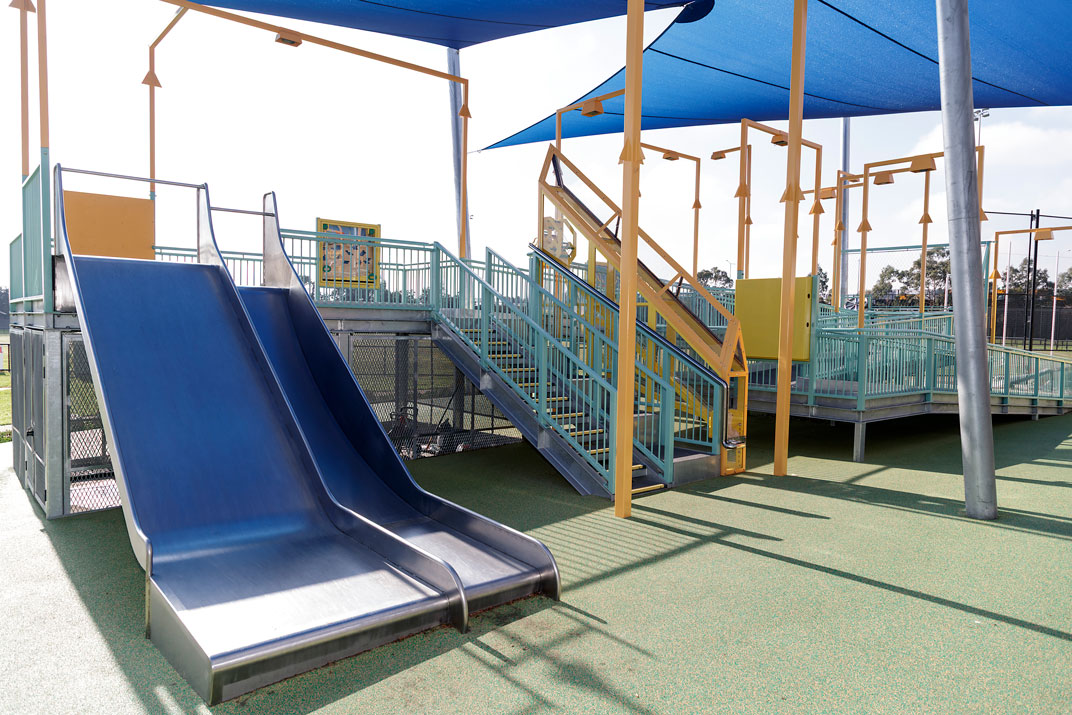
Located at Belvedere Reserve in Seaford, the Intergenerational Playground serves as another of the six simulation labs that MADA was heavily involved with, demonstrating collaboration across higher education, industry, and local government.
This open-air research laboratory offers STEM-based learning games and custom playground features designed specifically to bring children and older adults together. By engineering spaces for intentional, shared play, the playground directly combats social isolation and promotes intergenerational connection.
The co-design of the playground and its custom games was a broad cross-faculty achievement driven by the Design Health Collab. The project was led by Dr Nyein Chan Aung alongside Professor Daphne Flynn, Director of the Design Health Collab (DHC), Tom Millward, and James Robinson with Dr Jason Crow and Charity Edwards from the Department of Architecture; and the National Centre for Healthy Ageing’s Professor Terry Haines and Sonya Nedovic from MNHS.
“Play is a form of learning that doesn’t care how old you are. The Intergenerational Playground creates a space where children and older adults can meet as equals. We want everyone to be moving, testing, laughing, solving and discovering together so the learning feels invisible.” says Dr Chan Aung.
Interdisciplinary research for meaningful impact
By applying interdisciplinary research directly into live community infrastructure, our researchers are proving that architecture and design can empower meaningful change. MADA is proud to collaborate with Medicine Nursing and Health Sciences (MNHS) and the National Centre for Healthy Ageing (NCHA) to create a more dignified, and better connected future for those who need it most.
“This project shows how architecture, design, technology and health research can come together to create co-designed environments that genuinely support independence and quality of life as people age,” explains Professor Dodd.
The NCHA is a partnership between Monash University and Bayside Health Peninsula. The establishment of the Independent Living Laboratory was supported by Building 4.0 CRC, Fleetwood Australia , Frankston City Council, St Kilda Football Club, Belvedere Community Centre, and Wallara.