
To Forever Ebb and Flow: Queer Time/Migrant Time
MADA Gallery presents To Forever Ebb and Flow: Queer Time/Migrant Time, conceived by our Curator in Residence for 2024, Aziz Sohail, a Pakistan-passport holding curator, writer, and PhD candidate in the curatorial practice at Monash Art, Design and Architecture.
The project takes as its departure point the distinct propositions of migrant time and queer time and brings them in conversation with each other. Reflecting on the late Ranajit Guha’s meditation on the migrant condition as not just about belonging/disbelonging but also ‘temporal maladjustment’ which occurs due to the rupture of one’s own past (homeland) and present (settler land), this concept is complicated by the concept of queer time. As articulated by Jack Halberstam, ‘alternative temporalities’ can be developed outside of logics of ‘paradigmatic markers of life experience namely birth, marriage, reproduction and death.’
How can we then locate the (queer)(migrant) condition and experience that doubly complicates the notion of time and the affective relations and intimacies that unfold from it. How may we imagine disbelonging and detachment through both these experiences? How do we consider networks and friendship found and fostered, in order to be made possible anew?
Playing with the idea of time, the presentation is conceived as an evolutive exhibition which includes multiple collaborations and tentacles, with the MADA Gallery as its locus. In addition to the exhibition, the project includes sonic interventions, workshops, a reader, commissions and a film programme.
The British-Somali poet Momtaza Mehri in her collection of poetry Bad Diaspora Poems (2023) evocatively writes ‘Diaspora is durational loss / We keep moving and moving and moving / We never arrive.’ Keeping this adage in mind, the project embodies Ebb and Flow as two interlinked halves, not just gesturing to circularity (as opposed to linearity), but also to conditions of withdrawal, retreat, departure, opacity and gesturing to the past i.e. to ebb and visibility, movement, advancement, arrival and gesturing to the future. or to flow. There is a recognition to move beyond the binaries between the two, understanding that both coexist simultaneously.
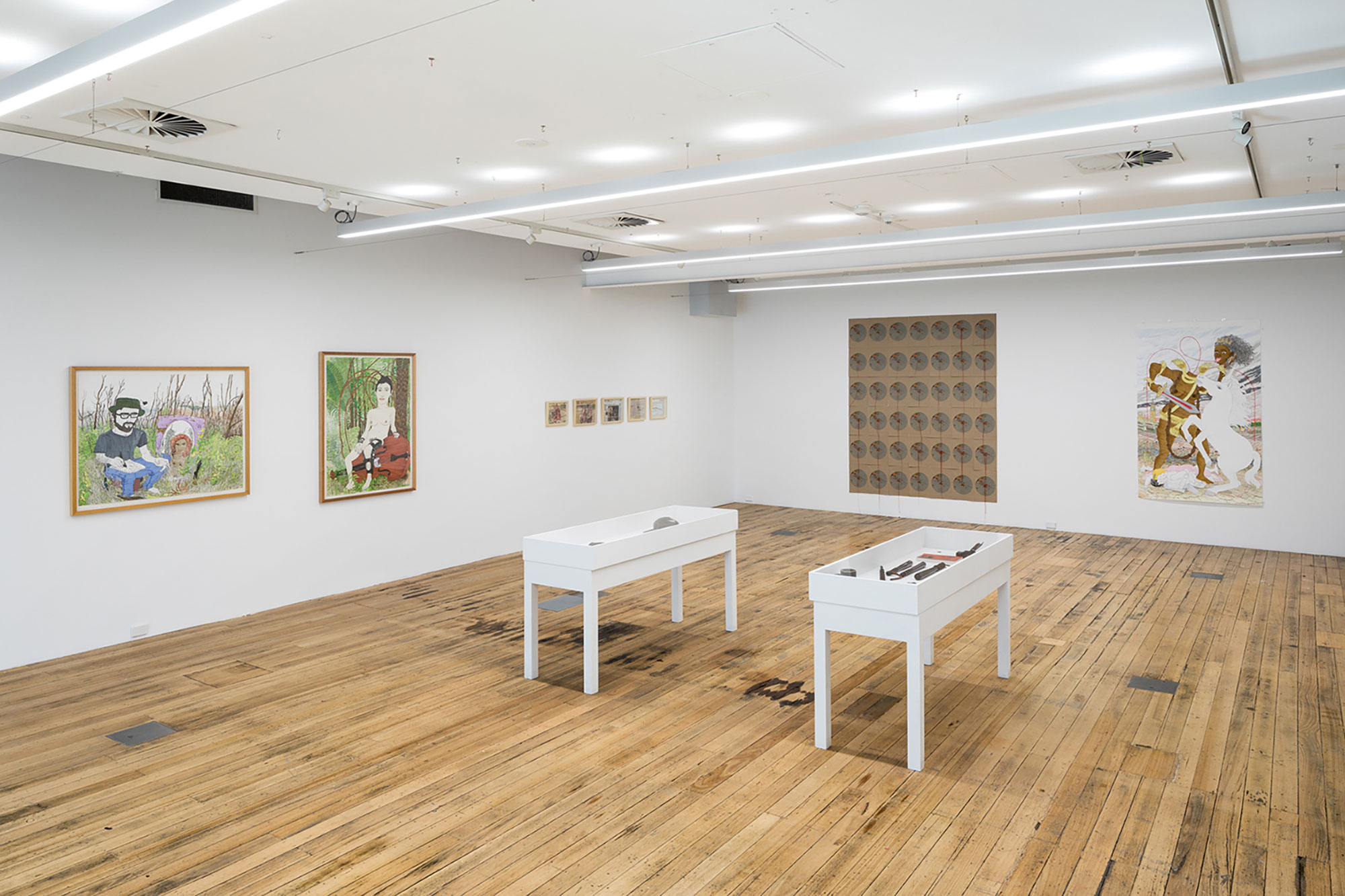
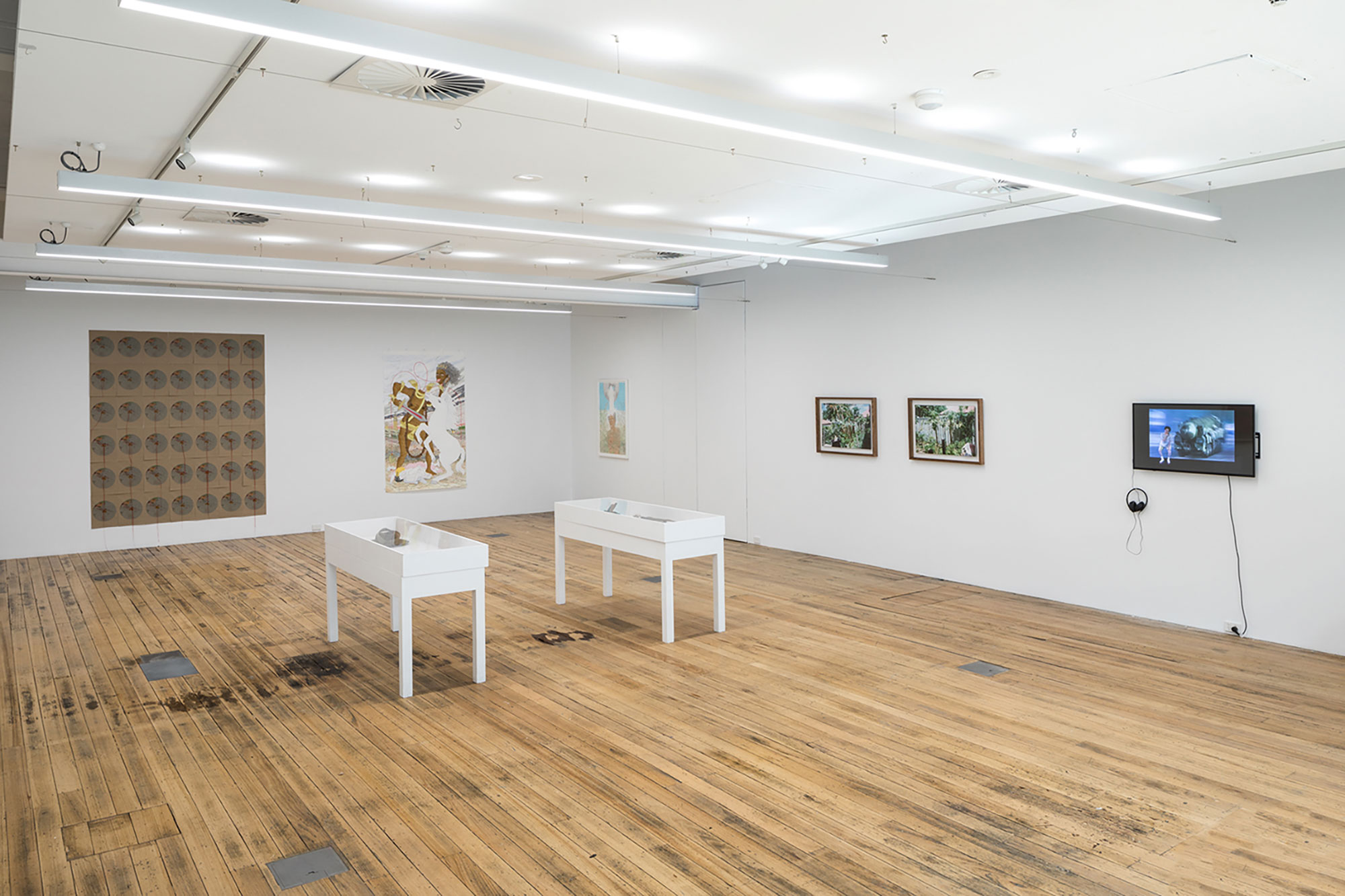
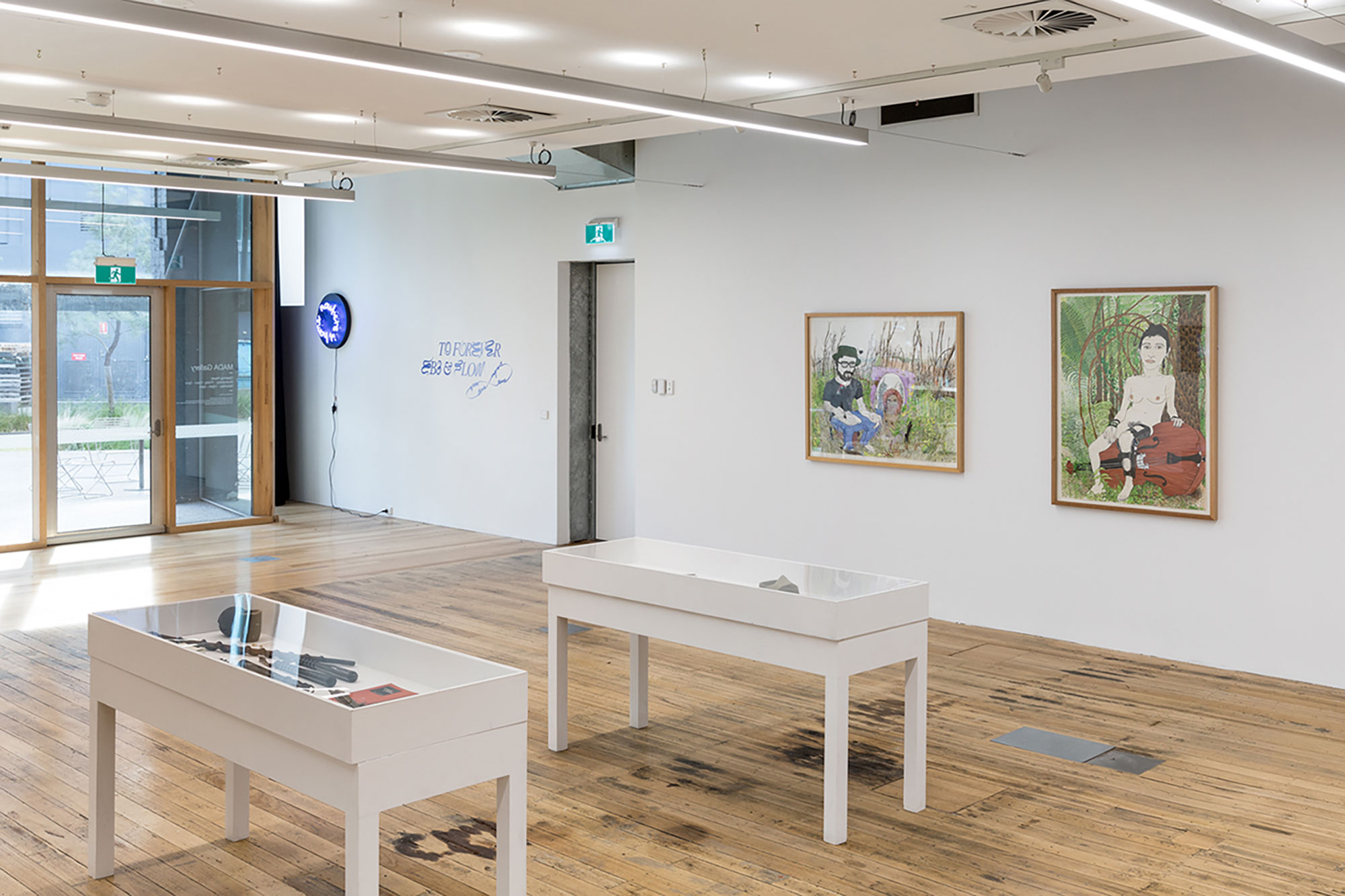
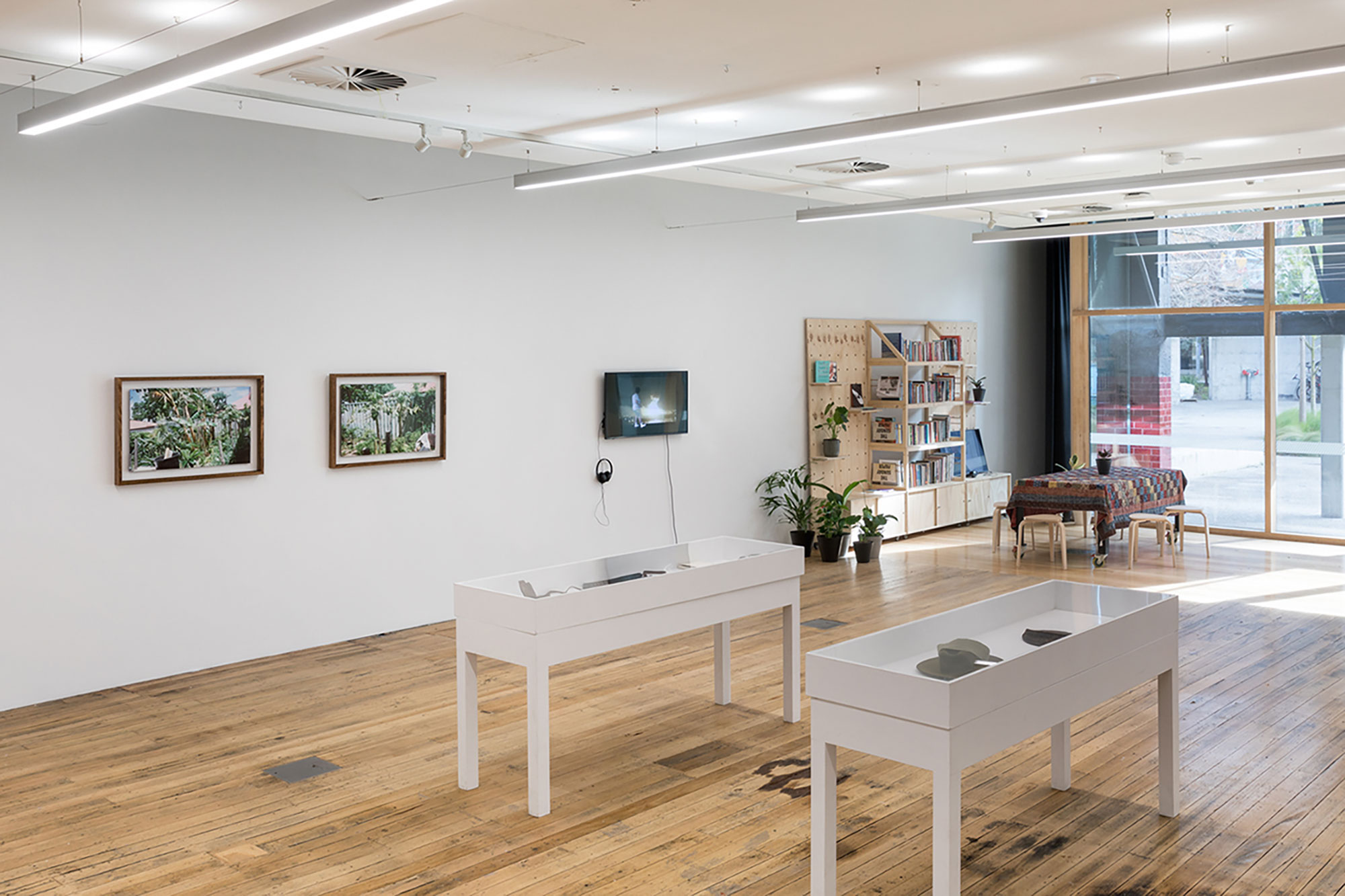
Between 31 July - 31 August, at MADA Gallery, works by Shivanjani Lal, Elyas Alavi, Nathan Beard, Texta Queen, James Nguyen and Salote Tawale are presented. A collaboration with the Community Reading Room (CRR), initiated in 2013 by Torika Bolatagici, brings an archive of books and ephemera to the space. Visitors are invited to spend time within the CRR in the exhibition to study, write, read, work and rest. Workshops led by Vasemaca Tavola (15 August) and Stéphanie Kabanyana Kanyandekwe (22 August) invite visitors and students to participate, contribute and leave traces within the exhibition.
Sonic interventions are offered between 1-3 August and 8-10 August by Shareeka Helaluddin/akka and Ripley Kavara/Lakatoi. Keeping with the trouble and fluidity of queer/migrant time, these interventions are ephemeral, leaving traces only in memory for those who experience them, while offering possibilities of deep listening and meditation.
Through an open call, which received close to 50 applications, the exhibition also takes place offsite in collaboration with West Space. Two new commissions for the Window Box are presented at West Space in Collingwood. The selected artists are Thang Do (6 July – 10 August) and Mandeep Singh (17 August – 28 September). In collaboration with unprojects, on 16 August, these commissions will be activated with a panel discussion with the artists as well as poetic invocations.
On 29 August, MADA Gallery invites visitors from 4 - 8 PM for a closing celebration to launch the reader of the exhibition, alongside performances, readings and invocations. Designed by Asad Ali Zulfiqar, the reader will include contributions, artists projects and texts by Omar Kasmani, Fatimah Asghar, Aisyah Sumito, Eos Dounis, April JY Kim, Momtaza Mehri, Manisha Anjali, TextaQueen, Shivanjani Lal and Elyas Alavi. All proceeds will be split and donated to a Pay the Rent and an Australia based queer-refugee rights organisation. More details on the programme will be announced in due course.
Workshops
About the identity and logo
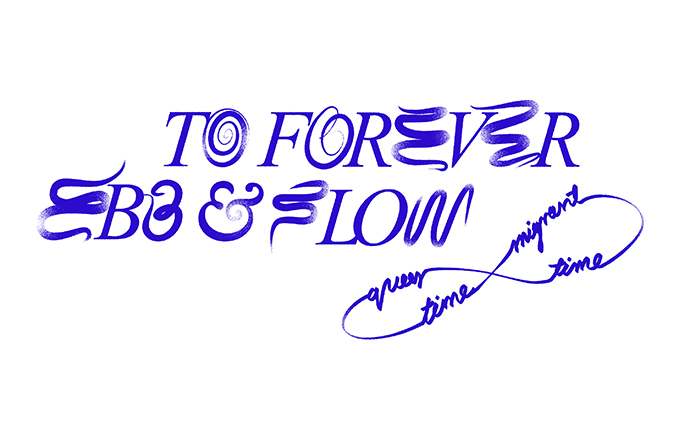
The identity and logo of the project is designed by Pakistani-based artist Asad Ali Zulfiqar; they convey the multiple thematic strands of the exhibition. The choice of colours and form is inspired by the ocean tides, which ebb and flow according to planetary and cosmic movements.
The ocean’s vastness and connectivity is especially embodied in Australia as an island continent; its location a bridge between the Great Ocean and the Indian Ocean, and the thousands of years of exchanges between the lands situated in these oceans. The vastness, or the ‘tyranny of distance’ of this continent, is also a metaphor for separation as embodied between both the migrant and the queer experience.
Within Islamic and other spiritual traditions, the phrase saat samandar paar (crossing the seven seas) also evokes notions of discovery, and of worlds beyond the present one. In Hinduism, the concept of kala pani (black water) looms as a condition of losing caste when crossing the ocean – a history embodied within the historical crossings of many indentured labourers from South Asia to islands such as Fiji.
The grammar of Australian citizenship is replete with the idea of the ocean: when a non-citizen arrives or exits Australia, their visa status changes to offshore/onshore; when Australians travel outside, they are ‘overseas’.
The logo itself oscillates between forms – a structured ‘perfect’ letter is followed by one that is curved, fluid and seemingly formless. The constant switching between the two represents a continuous movement from stability and rootedness to being precarious and ungrounded – hinting at affective states of belonging/disbelonging, citizenship/statelessness and legibility/illegibility, being at home/away from home.
These ideas are explored by the artists, writers and various contributors to this project. The letters (and the works of the artists) also become apparent in relation to one another – meaning can only be made when reading them together, alongside, intimately and in opposition to each other, in the same way that one’s migrant/queer identity is formed in relation to others. Evoking themes of ebb/flow and continuity/rupture, the subtitle of the exhibition is an infinite loop, rather than a slash/separation, and entangles queer and migrant time.
Event Details
- Date:
- 31 July 2024 at 10:00 am – 31 August 2024 at 5:00 pm
- Venue:
- MADA Gallery, Building D, Caulfield campus
- Categories:
- Fine Art; Gallery / Exhibition; Gallery: MADA Gallery
Description
MADA Gallery presents To Forever Ebb and Flow: Queer Time/Migrant Time, conceived by our Curator in Residence for 2024, Aziz Sohail, a Pakistan-passport holding curator, writer, and PhD candidate in the curatorial practice at Monash Art, Design and Architecture.
The project takes as its departure point the distinct propositions of migrant time and queer time and brings them in conversation with each other. Reflecting on the late Ranajit Guha’s meditation on the migrant condition as not just about belonging/disbelonging but also ‘temporal maladjustment’ which occurs due to the rupture of one’s own past (homeland) and present (settler land), this concept is complicated by the concept of queer time. As articulated by Jack Halberstam, ‘alternative temporalities’ can be developed outside of logics of ‘paradigmatic markers of life experience namely birth, marriage, reproduction and death.’
How can we then locate the (queer)(migrant) condition and experience that doubly complicates the notion of time and the affective relations and intimacies that unfold from it. How may we imagine disbelonging and detachment through both these experiences? How do we consider networks and friendship found and fostered, in order to be made possible anew?
Playing with the idea of time, the presentation is conceived as an evolutive exhibition which includes multiple collaborations and tentacles, with the MADA Gallery as its locus. In addition to the exhibition, the project includes sonic interventions, workshops, a reader, commissions and a film programme.
The British-Somali poet Momtaza Mehri in her collection of poetry Bad Diaspora Poems (2023) evocatively writes ‘Diaspora is durational loss / We keep moving and moving and moving / We never arrive.’ Keeping this adage in mind, the project embodies Ebb and Flow as two interlinked halves, not just gesturing to circularity (as opposed to linearity), but also to conditions of withdrawal, retreat, departure, opacity and gesturing to the past i.e. to ebb and visibility, movement, advancement, arrival and gesturing to the future. or to flow. There is a recognition to move beyond the binaries between the two, understanding that both coexist simultaneously.
Between 31 July - 31 August, at MADA Gallery, works by Shivanjani Lal, Elyas Alavi, Nathan Beard, Texta Queen, James Nguyen and Salote Tawale are presented. A collaboration with the Community Reading Room (CRR), initiated in 2013 by Torika Bolatagici, brings an archive of books and ephemera to the space. Visitors are invited to spend time within the CRR in the exhibition to study, write, read, work and rest. Workshops led by Vasemaca Tavola (15 August) and Stéphanie Kabanyana Kanyandekwe (22 August) invite visitors and students to participate, contribute and leave traces within the exhibition.
Sonic interventions are offered between 1-3 August and 8-10 August by Shareeka Helaluddin/akka and Ripley Kavara/Lakatoi. Keeping with the trouble and fluidity of queer/migrant time, these interventions are ephemeral, leaving traces only in memory for those who experience them, while offering possibilities of deep listening and meditation.
Through an open call, which received close to 50 applications, the exhibition also takes place offsite in collaboration with West Space. Two new commissions for the Window Box are presented at West Space in Collingwood. The selected artists are Thang Do (6 July – 10 August) and Mandeep Singh (17 August – 28 September). In collaboration with unprojects, on 16 August, these commissions will be activated with a panel discussion with the artists as well as poetic invocations.
On 29 August, MADA Gallery invites visitors from 4 - 8 PM for a closing celebration to launch the reader of the exhibition, alongside performances, readings and invocations. Designed by Asad Ali Zulfiqar, the reader will include contributions, artists projects and texts by Omar Kasmani, Fatimah Asghar, Aisyah Sumito, Eos Dounis, April JY Kim, Momtaza Mehri, Manisha Anjali, TextaQueen, Shivanjani Lal and Elyas Alavi. All proceeds will be split and donated to a Pay the Rent and an Australia based queer-refugee rights organisation. More details on the programme will be announced in due course.
Workshops
About the identity and logo
The identity and logo of the project is designed by Pakistani-based artist Asad Ali Zulfiqar; they convey the multiple thematic strands of the exhibition. The choice of colours and form is inspired by the ocean tides, which ebb and flow according to planetary and cosmic movements.
The ocean’s vastness and connectivity is especially embodied in Australia as an island continent; its location a bridge between the Great Ocean and the Indian Ocean, and the thousands of years of exchanges between the lands situated in these oceans. The vastness, or the ‘tyranny of distance’ of this continent, is also a metaphor for separation as embodied between both the migrant and the queer experience.
Within Islamic and other spiritual traditions, the phrase saat samandar paar (crossing the seven seas) also evokes notions of discovery, and of worlds beyond the present one. In Hinduism, the concept of kala pani (black water) looms as a condition of losing caste when crossing the ocean – a history embodied within the historical crossings of many indentured labourers from South Asia to islands such as Fiji.
The grammar of Australian citizenship is replete with the idea of the ocean: when a non-citizen arrives or exits Australia, their visa status changes to offshore/onshore; when Australians travel outside, they are ‘overseas’.
The logo itself oscillates between forms – a structured ‘perfect’ letter is followed by one that is curved, fluid and seemingly formless. The constant switching between the two represents a continuous movement from stability and rootedness to being precarious and ungrounded – hinting at affective states of belonging/disbelonging, citizenship/statelessness and legibility/illegibility, being at home/away from home.
These ideas are explored by the artists, writers and various contributors to this project. The letters (and the works of the artists) also become apparent in relation to one another – meaning can only be made when reading them together, alongside, intimately and in opposition to each other, in the same way that one’s migrant/queer identity is formed in relation to others. Evoking themes of ebb/flow and continuity/rupture, the subtitle of the exhibition is an infinite loop, rather than a slash/separation, and entangles queer and migrant time.