
First PhD for the Citarum Action Research Program demonstrates how design can be used to facilitate change
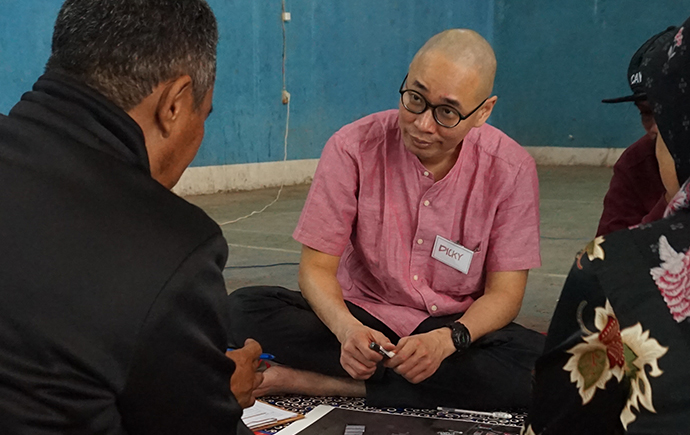
Dicky Tanumihardja
As a practising architect and lecturer, Dicky Tanumihardja has seen first-hand the impact informal developments have had on neighbourhoods in his home country, Indonesia. “I never thought it was a big deal, people living in self-built houses along the river because I could see no matter how difficult the situation was, these people are just really tough. They’re resilient and showed creativity.”
It was moving to Australia that highlighted the deeper impact of informal developments for Dicky and sparked his interest in how architecture and urban design can contribute to addressing the issues arising from informal settlements.
“Relocating to Australia was my first experience of living overseas. Looking at it from an Australian perspective, I thought, if only these people in the informal settlements could have a healthier, safer environment, it would help them have a better life.”
A transformation program that needed practical solutions
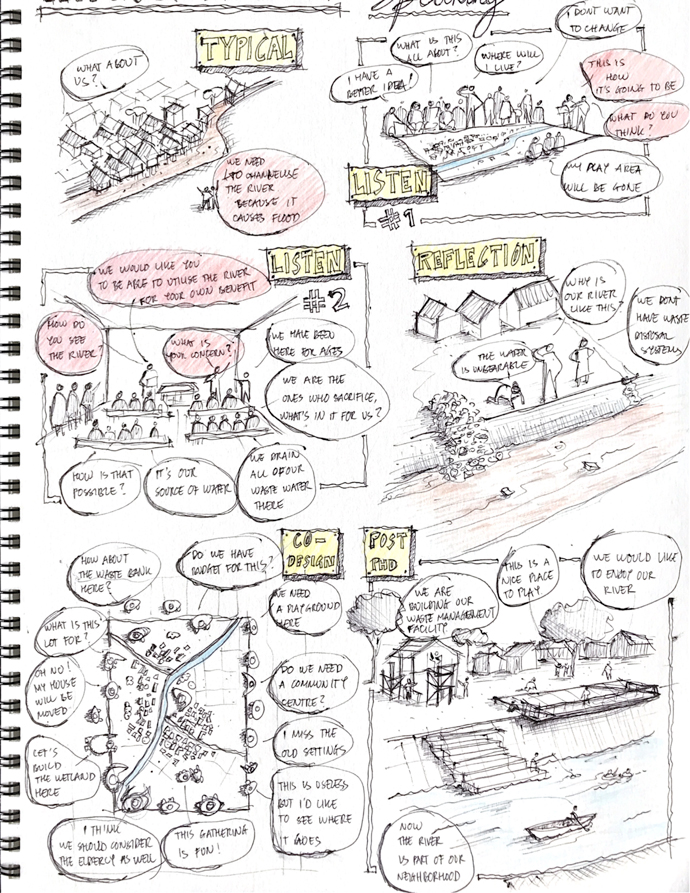
Sketches by Dicky Tanumihardja
The Citarum River in West Java is one of the most polluted rivers in the world, yet millions of people rely on it for their water and energy. The Citarum Action Research Project (CARP) is focused on an integrative, socio-technical approach for the sustainable transformation of the river corridor.
“As experienced architects and designers, we know what successful river revitalisation should look like; there are plenty of case studies and knowledge about how to deliver it, but how do we actually operationalise it?”
Dicky decided to investigate the answer to this question by undertaking a practice-based PhD in 2021 with the Informal Cities Lab. Situating his PhD under the broader CARP research team, he thought about how his role and his design background could contribute to the project. “I chose the Informal Cities Lab for my PhD because I knew it looked at informal developments on both theoretical and practical levels; the practice-based research was the distinguishing feature. I wanted to find out how we could take all the different ideas about river revitalisation and use design to deliver them better.”
One of only three architects in the research team, Dicky’s focus for his PhD was to facilitate the design process to deliver the Masterplan for the revitalisation. Formulated over three years, the approach involved bringing together different interests of three major stakeholder groups – government, communities, and experts.
As a multi-level government project, Dicky found a gap where even though an approach may be undertaken through policymaking, governance, and engineering to address environmental issues, the solution isn’t truly designed.
“I wanted to know if there was a way design could contribute and synthesise all these aspects to deliver a Masterplan that would detail the physical transformation and articulate the social and economic benefits for stakeholders.”
Balancing national and local aspirations
Across multiple workshops and community consultations, Dicky found that even though local communities didn’t know about the revitalisation program when asked what they wanted, they had definite ideas. These included opportunities for economic development, better infrastructure and improvement in services such as waste and wastewater treatment facilities.
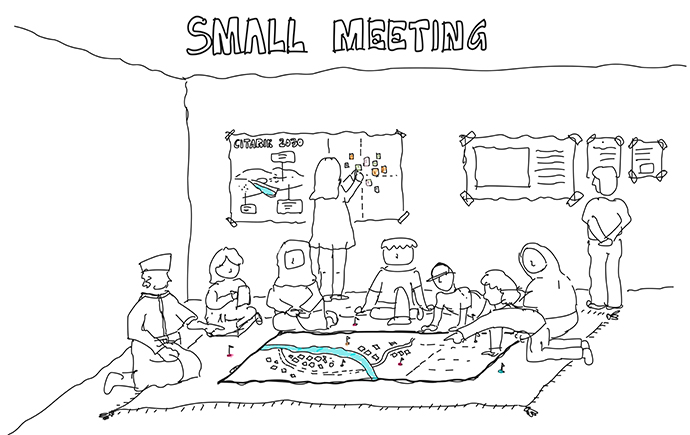
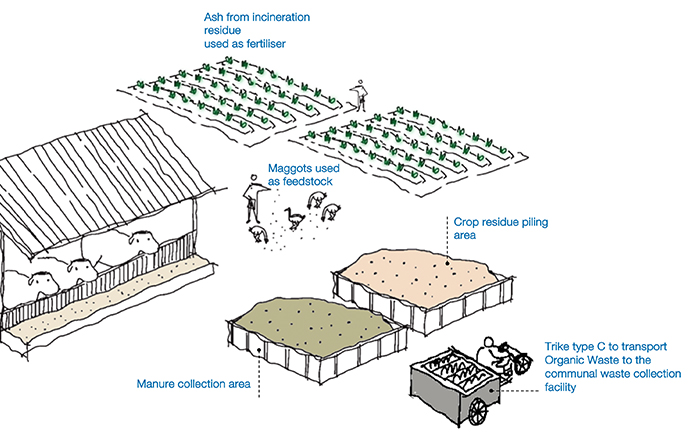
However, the government had different ideas about revitalising the river, especially given their limited resources. Dicky also found that speaking with different government agencies revealed a disconnect in communication, including an integrated waste processing facilities program that wasn’t directly related to the river revitalisation but would impact its development.

The challenge was to connect all the different aspirations, expectations, limitations and existing programs to envisage an integrated outcome and then translate that into a design proposal that used simple, direct language and clear drawings and visualisations.
A cross-cultural process
“Being Indonesian helped during the consultations and workshops because, in some instances, things said in Indonesian could not be directly translated into English; there was no equivalent. At times, the same was true for English to Indonesian. My experience as an Indonesian living in Australia helped me bridge the contextual gap between the cultures and synthesise everything for everyone involved.”
Throughout the process, Dicky also had to balance being a designer and a researcher. “In the past, in the Indonesian context, I was taught that designers design. If you asked me to design a house, I would do some sketches based on your requirements, but I’d never really thought about how I did that. As a result of my PhD, I’m now thinking about what I’ve learnt from the Masterplan design consultation process and how I can use that knowledge to inform architects about producing better designs.”
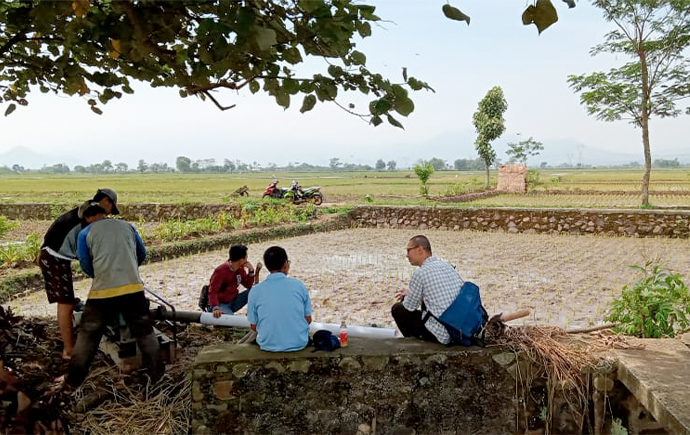
The Masterplan, delivered to and accepted by the then Governor of Indonesia, demonstrates how design can help envision long-term river transformation and turn the higher-level notion of revitalisation into an operational plan.
“Throughout the process, it was fascinating to see how the people along the Citarik River are living their lives in a very simple way. If this Masterplan is implemented, I will be both humbled and proud.”