
Desirée’s groundbreaking book reimagines Indigenous futures across disciplines
In her latest book launched at Melbourne Design Week 2025, ‘Decolonising and Indigenising Design: Theory, Methodologies, Storytelling, and Creative Practice’, Desirée Hernandez Ibinarriaga offers something the academic and creative worlds have been missing: a practical and deeply personal guide to integrating Indigenous knowledge systems into contemporary practice. As the first book of its kind to present tangible examples of how to do this work — not just why it matters — Desirée’s publication marks a pivotal moment in the growing global conversation around decoloniality and Indigeneity.
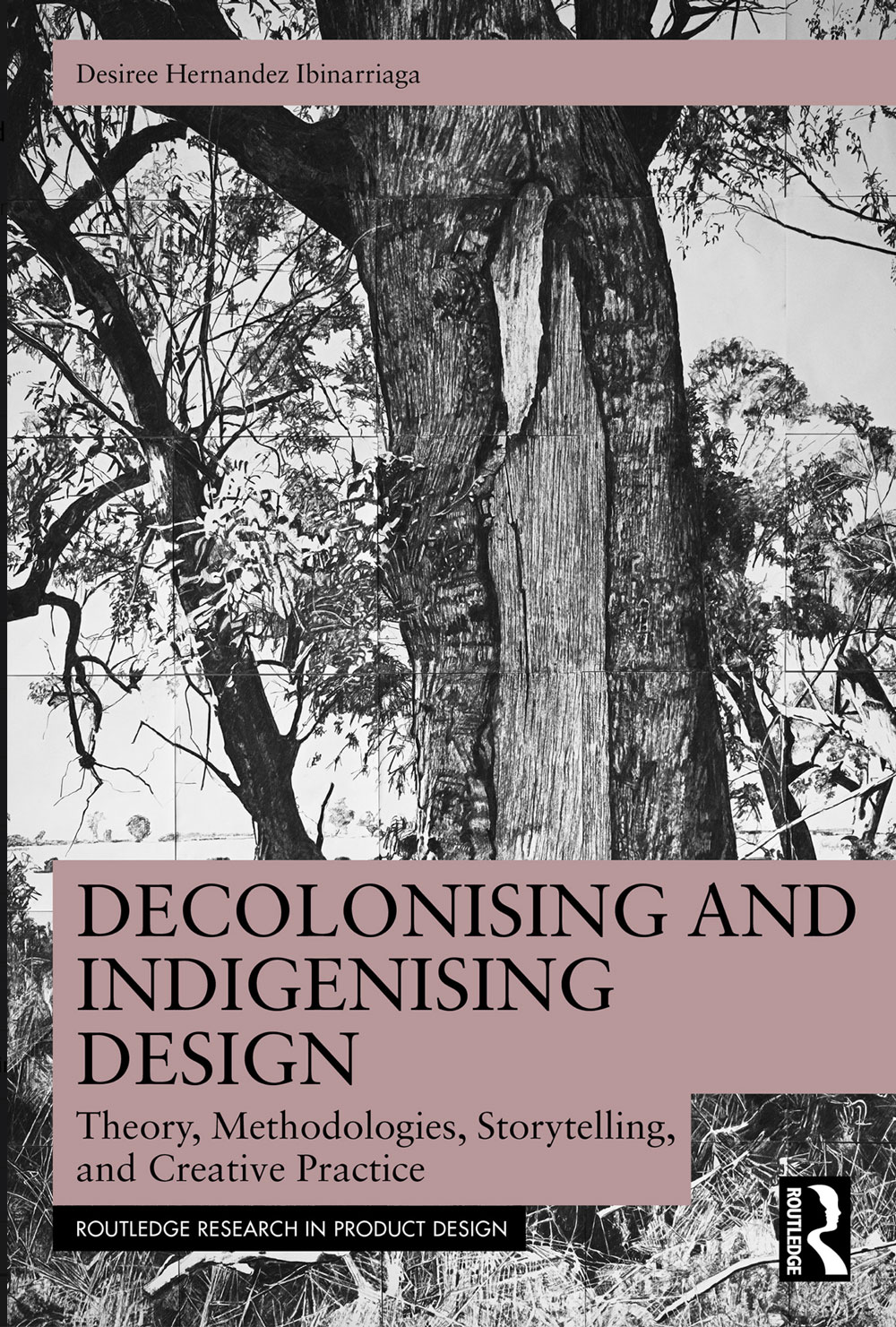
Book ‘Decolonising and Indigenising Design: Theory, Methodologies, Storytelling, and Creative Practice’, Routledge
A proud Indigenous Mexican woman of Chamula (Mayan), Nahua (Aztec), Euskaldunak (Basque) and of Spanish heritage, Desirée is the Coordinator for Indigenous Higher Degree by Research at Monash Art, Design and Architecture (MADA). Working within the Wominjeka Djeembana Indigenous Research Lab, she teaches decolonising and Indigenous methodologies through creative practice. Her new book draws from her lived experience, her research, practice, educational approach and her storytelling traditions to offer tools that empower both Indigenous and non-Indigenous peoples, researchers and students. At its core, the book is a call to transformation and action: to create new spaces, systems and approaches that are ethical, human, and deeply connected to place, culture and values.
“There are books that talk about the worth of Indigenous knowledge,” says Desirée, “but very few that show you how to actually incorporate it into your practice — and none with detailed examples across disciplines.” Her book changes that. Through case studies in design, photography, curation, and business, she demonstrates how Indigenous ways of knowing can be embodied in everything from customary art, design and storytelling, to architectural sculpture and ethical entrepreneurship.
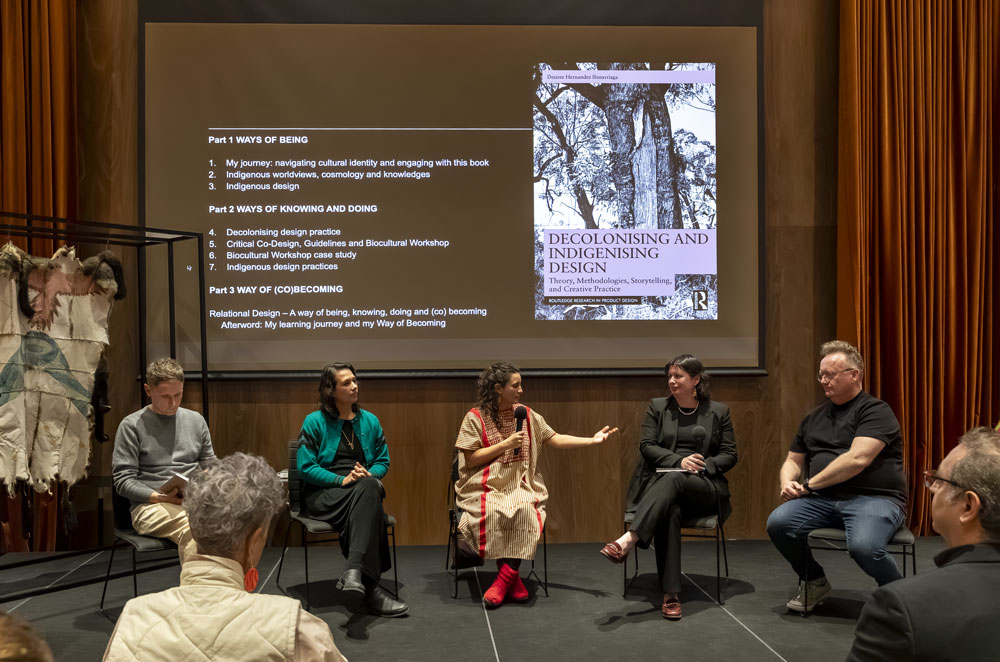
Book launch, Melbourne Design Week 2025. Discussion panel from left to right Ilya Fridman, Melisa Duque, Desirée Ibinarriaga, Jess Berry, Gene Bawden
One example she shares is an Agave furniture-sculpture, exhibited in Blak Dot Gallery in 2022 and at the 2024 Melbourne Design Week, that unfolds into functional furniture that becomes a space — an artwork that transcends static design to become a dynamic object of use and cultural meaning. “It’s not just a piece of furniture,” she explains. “It represents a new space — a kind of architecture. The agave plant is sacred amongst my people, so the sculpture carries spiritual and cultural resonance that transforms how we interact with it.”
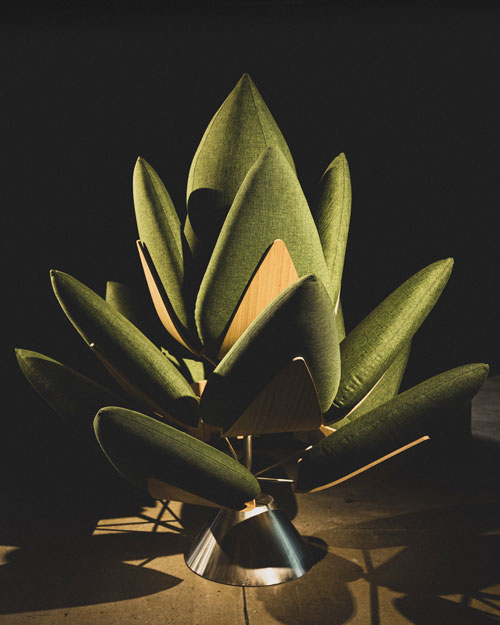
Agave, culturally significant design, furniture/sculpture. Photography by wani
Although the book is rooted in creative disciplines, its impact is already reaching far beyond. “People from biology, politics, law, and business are contacting me,” Desirée notes. “They’re seeing how these approaches can shift systems. How relational, ethical, value-based practice and thinking can change the way institutions function.”
Indeed, her work is inherently transdisciplinary. Desirée collaborates with programs like the Master of Indigenous Business Leadership at Monash, exploring how ancestral knowledge can shape more humanised economic models. One such project saw students design and create a possum skin cloak — a powerful act of cultural continuity embedded with protocols, values and visual storytelling. The lesson? Indigenous knowledge doesn’t just belong in galleries and classrooms. It belongs in boardrooms, policy-making, and community economies.
For Indigenous readers, Desirée hopes the book empowers them to reclaim space and voice in sectors where they’ve historically been marginalised.
“It’s about saying, we can create our own methodologies and practice. We can innovate from our ancestral knowledge,” she says.
For non-Indigenous readers, the book offers an opportunity to reflect on identity, privilege, and what it truly means to be an ally. “Decolonising is about them understanding their own cultural identities and how to create space for Indigenous people,” she says. “Indigenising is for us.”
What sets Desirée’s work apart is its insistence on relationality — a concept that challenges Western individualism and hierarchy. “In Indigenous reality and thinking, everything is interconnected. There’s no individual — we are all related,” she says.
Her forthcoming furniture sculpture Ometeotl draws from this ethos In Lak Ech / Hala Ken, inspired by the Mayan principle of duality in unity — “I am you, and you are me.”
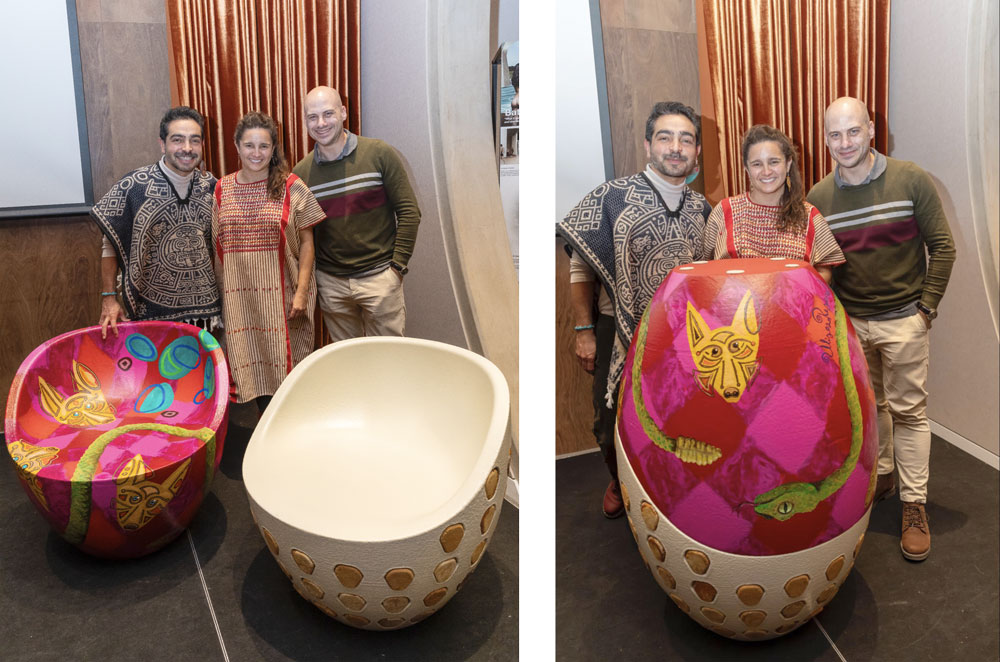
Ometeotl Furniture-sculpture. Collaborators Ulises Resendiz, Desiree Ibinarriaga, Phillip Gough
As Desirée sees it, her book is a seed: one that can grow into new systems of education, design, research and governance that are ethical, inclusive and deeply respectful.
“I want people to understand the diversity of ways of being, knowing and doing,” she says.
“To imagine a future where values — not just ethics — are part of every process. Where Indigenous knowledge is not just included, but centred.”
By giving voice to Indigenous methodologies and showing how they can shape everything from furniture to finance, Desirée is charting a path toward more inclusive and sustainable futures. Her book is not only a major contribution to the creative disciplines — it is a vital tool for any field seeking to engage meaningfully with decolonial and Indigenous perspectives.