
Monash Industrial Design and Architecture alumni named in Australian Design Review 30UNDER30
Two Monash Art, Design and Architecture (MADA) alumni — industrial designer Zac Vassallo and architect Pearl Dempsey — have been named in the latest Australian Design Review 30UNDER30 list, recognising emerging practitioners shaping the future of Australia’s design industries.
Published annually by Australian Design Review, the 30UNDER30 program highlights the next generation of designers making significant contributions across architecture, interiors, product and industrial design.
For both Vassallo and Dempsey, the recognition marks an opportunity to reflect on the pathways that began during their time studying at Monash and the impact they are now making through design.
 Image: Zac Vassallo
Zac Vassallo: Rethinking ocean restoration through design
Industrial designer Zac Vassallo works at the intersection of design, engineering and environmental restoration through his work with Reef Design Lab.
“It’s a real honour to be recognised,” he says of being named in the Australian Design Review 30UNDER30 list. “My work is a bit of an outlier because I don’t design consumer products.”
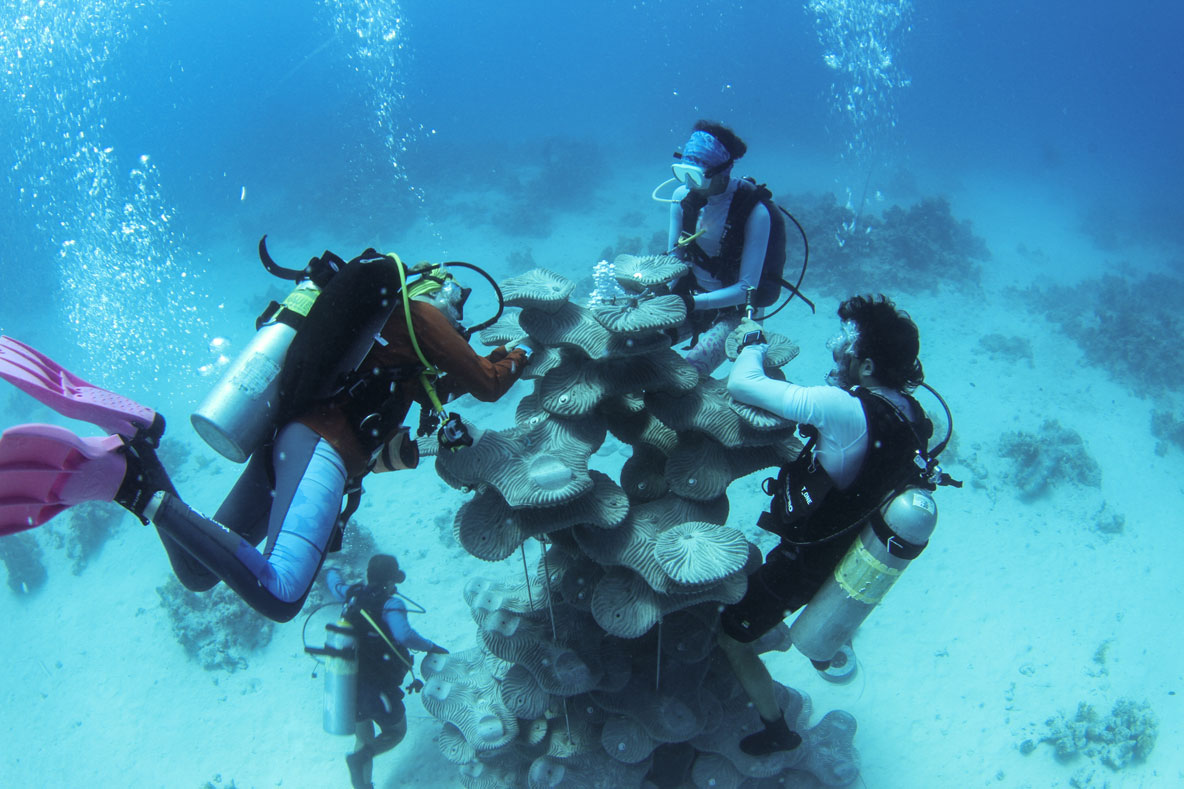
One of his proudest achievements has been contributing to the development of the MARS 2 (Modular Artificial Reef System), an innovative structure designed to support coral growth and marine biodiversity. The second iteration significantly simplified the original design — reducing the number of mould parts from 24 to two, which are cast twice to make a complete unit — making the system easier to manufacture and deploy underwater.
In late 2024, Vassallo travelled to the Red Sea to help test the system, completing dive and rescue certifications before spending several weeks training local teams to assemble the modular reef structures underwater.
“The system is designed so pieces can be assembled while scuba diving, avoiding the need for cranes or barges in sensitive marine areas,” he explains.
The work forms part of a growing global effort to restore coral habitats damaged by climate change and human activity, with projects underway in locations including Clifton Springs in Victoria, as well as Malaysia and the Middle East.
Vassallo’s path into industrial design began at Monash, where he initially enrolled in engineering before transferring into the Bachelor of Industrial Design at Monash Art, Design and Architecture (MADA). Monash academic Dr Rowan Page — who had taken a similar path from engineering into design — became an important mentor, introducing him to industrial designer and Reef Design Lab founder Alex Goad, a Monash alum whose original MARS reef system won the James Dyson Award (Australia).
The connection led to an internship with Reef Design Lab during Vassallo’s final year of study and eventually a full-time role developing reef restoration technologies.
Today, the mentorship that shaped his career has come full circle. At Reef Design Lab, Vassallo has supported emerging designers including Xavier Earl, who joined the studio as an intern before moving into a full-time role.
Vassallo now also shares his experience with the next generation as a sessional teaching associate at Monash, bringing insights from environmental restoration and product development back into the studio.
“Don’t walk through the world as a consumer,” he advises aspiring designers. “Walk through it as a designer — analyse your environment and ask how things could be improved.”
 Image: Pearl Dempsey
Pearl Dempsey: Transforming everyday spaces through architecture
Architect Pearl Dempsey has built her career around projects that demonstrate how thoughtful design can transform even the smallest public spaces. After graduating from Monash in 2018, she spent seven years in practice at Searle x Waldron Architecture, working across a wide range of civic and community projects.
Being named in the 30UNDER30 list, she says, offered a moment to reflect.
“I applied because I wanted to look back at everything I’ve done so far,” Dempsey says. “To be named is encouraging, it suggests I’m on a good pathway.”
For Dempsey, architecture’s greatest appeal lies in its collaborative nature. “You can’t ever know everything,” she explains. “Every project introduces you to people with specialist knowledge — builders, engineers, trades — so you’re constantly learning.”
Her time at Monash played a formative role in shaping this approach. Drawn to the architecture program’s experimental ethos and tight-knit studio culture, she found inspiration in both peers and teachers.
“The people were the highlight,” she says. “We had such a strong community in the studios.”
Her approach has been shaped by strong mentorship both at Monash and in practice. At Monash, Dr Lee-Anne Khor encouraged her to take ownership of her ideas and explore overlooked sites, including research into reactivating an old automotive factory. This connection led Pearl to meet her future director, Suzannah Waldron, who has been a constant mentor throughout her professional journey.
“Suzannah has given me the space and agency to take on projects, encouraging me to step up while always leading in an empowering way,” Pearl reflects. “She’s a great advocate for inclusivity — and in particular empowering and supporting women in both projects and practice. Working with her has shown me the value of collaboration and advocacy, and it’s something I carry into all my projects.”
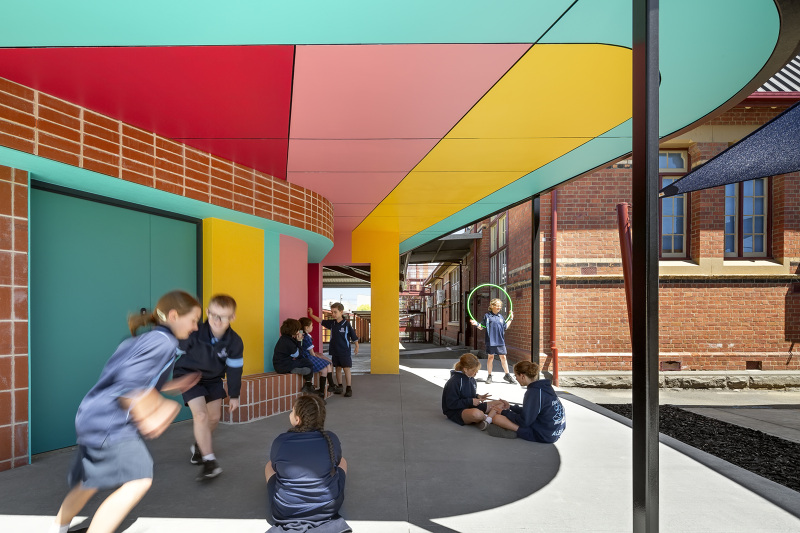
Among the projects she is most proud of is a small but impactful redevelopment of a school toilet block in Ballarat. Working with a modest brief and budget, the team reimagined the neglected structure, opening the building to the school entry and creating a welcoming canopy while preserving an existing mural. The Macarther St Amenities Pavillion project went on to receive a 2024 Victorian Small Project Architecture Award from the Australian Institute of Architects.
“I love those smaller transformative projects,” Dempsey says. “Taking something existing and making it better for the community.”
Today, she continues to bridge practice and academia through teaching, valuing the exchange of ideas with students.
“I learn a lot from them,” she says. “Teaching keeps you thinking differently about how you communicate and design.”
From restoring fragile marine ecosystems to revitalising everyday civic spaces, Vassallo and Dempsey demonstrate the diverse ways design can shape the world — a trajectory that began in the studios and workshops at MADA.