Tony Wong
Professor Tony Wong
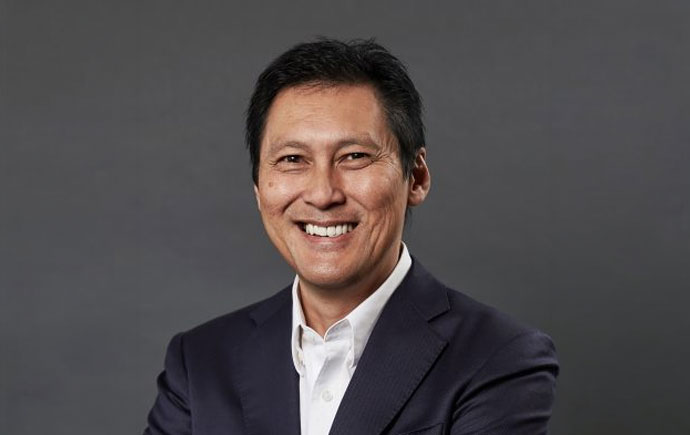
Tony Wong is Professor of Sustainable Development at Monash University and a global leader in sustainable urban water management. He is internationally recognised for pioneering Water Sensitive Urban Design (WSUD) and advancing the Water Sensitive Cities (WSC) approach, which integrates nature-based solutions with socio-technical frameworks to deliver resilient and sustainable urban water systems. His work bridges creativity in urban design with rigorous scientific and technical methodologies, shaping urban water policy, practice, and standards both in Australia and internationally.
Professor Wong’s career uniquely spans academia, industry, and public policy. After an early research career in water engineering science, he co-founded a consulting firm that translated emerging research into innovative approaches for urban planning, design, and development. The firm was later acquired by a United States-based multinational company, where he served as Principal and Director of Urban Design. In 2010 he returned to Monash University to establish major transdisciplinary research initiatives on urban water, including the Centre for Water Sensitive Cities and subsequently the Cooperative Research Centre for Water Sensitive Cities (CRCWSC), a $120 million Australian Government–supported research partnership involving more than 80 industry partners and spanning 13 disciplines across the social sciences, engineering, and environmental sciences. These initiatives created new models for collaboration between academia, government, and industry, accelerating the translation of research into policy and practice.
A civil engineer with a PhD in Water Resources Engineering and over three decades of professional experience, Professor Wong has led a programme of research and practice that has fundamentally reshaped thinking about urban water management. His early work on WSUD pioneered the application of biomimicry and nature-based solutions—such as constructed wetlands, pollutant traps, and bioretention systems—to improve stormwater quality and urban water resilience. These innovations have become embedded in contemporary industry standards and urban planning practice. Building on these foundations, he developed the Water Sensitive Cities approach, a transformative socio-technical model that addresses the social, environmental, and economic challenges of conventional urban water systems. Through this work, Professor Wong has advanced new understandings of the relationship between the societal and biophysical dimensions of water security and urban waterscapes, enabling cities to respond creatively and effectively to growing water and climate challenges.
Professor Wong has also led the development of widely adopted tools and technologies that support the implementation of water-sensitive practices. In 1998 he led the development of the Model for Urban Stormwater Improvement Conceptualisation (MUSIC), a decision-support software tool that has become an industry standard across Australia for planning and designing sustainable urban water systems. Earlier, in 1995, he played a leading role in developing continuous deflective separation technology for stormwater treatment, which was commercialised and is now used internationally. Through these and other innovations, his work has consistently bridged the gap between scientific research and practical implementation.
His research output includes more than 250 publications comprising books, book chapters, journal articles, and conference papers, with over 9,000 citations. His work has been published in leading journals and has influenced global frameworks for water-sensitive urban development. Professor Wong has also delivered more than 40 keynote addresses and over 80 invited lectures at international conferences and forums. In 2017 he delivered the Alfred Deakin Oration at the Parliament of Victoria, and he has presented at major international policy forums including the United Nations Asia-Pacific Forum on Sustainable Development and the United Nations High-Level Political Forum on Sustainable Development.
Beyond research, Professor Wong has played a significant role in shaping water policy, standards, and international practice. He has served as an advisor to local, state, and national governments, as well as multilateral organisations and development agencies. His work has influenced water-sensitive policies and urban development standards across Europe, China, South and Southeast Asia. Notable international collaborations include advising Singapore’s Public Utilities Board on the Active, Beautiful, Clean Waters program, supporting the water-sensitive planning of Amaravati in India, partnering with the City of Kunshan in China on long-term urban water transformation, and advising Indonesia’s National Capital Authority on water-sensitive strategies for Nusantara, the country’s new capital city.
Professor Wong’s research has also addressed global development challenges. In 2016 he co-developed a major transdisciplinary initiative linking water-sensitive approaches with public health, securing more than $55 million in international funding to undertake a large-scale randomised control trial of water, sanitation, and hygiene interventions in informal settlements. The program has already transformed essential services in multiple communities in Indonesia and Fiji, providing critical field evidence of the health benefits of integrated water-sensitive solutions.
Professor Wong’s contributions have been recognised through numerous awards and honours. In 2010 he received the Sir John Holland Award from Engineers Australia as Australia’s Civil Engineer of the Year, and in 2014 he was elected a Fellow of the Australian Academy of Technological Sciences and Engineering. In 2018 he was awarded the International Water Association’s Global Water Award in recognition of his lifetime contribution to innovation in water-sensitive urban design and biomimicry in urban landscapes.
Across research, policy, and practice, the central theme of Professor Wong’s work is the advancement of collaborative, transdisciplinary approaches to addressing complex urban water challenges. Through visionary leadership and enduring partnerships across academia, industry, and government, he has empowered a global movement toward water-sensitive cities—advancing sustainable, resilient, and liveable urban environments for communities around the world.
News & events
Recent news
Upcoming events
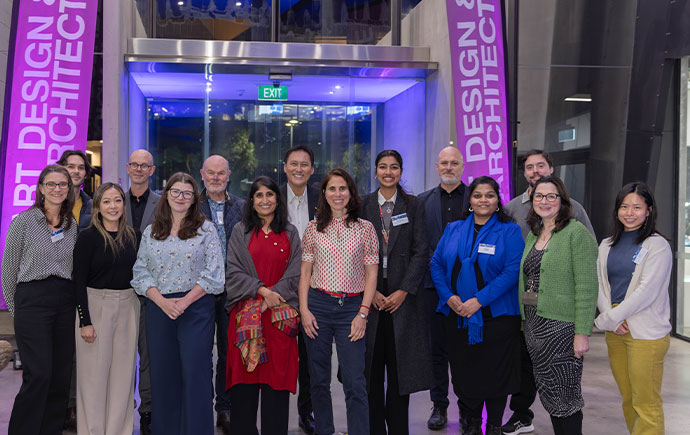
Monash University launches Transforming Cities Hub to tackle escalating climate and social stress in the Indo-Pacific