
Monash University launches Transforming Cities Hub to tackle escalating climate and social stress in the Indo-Pacific
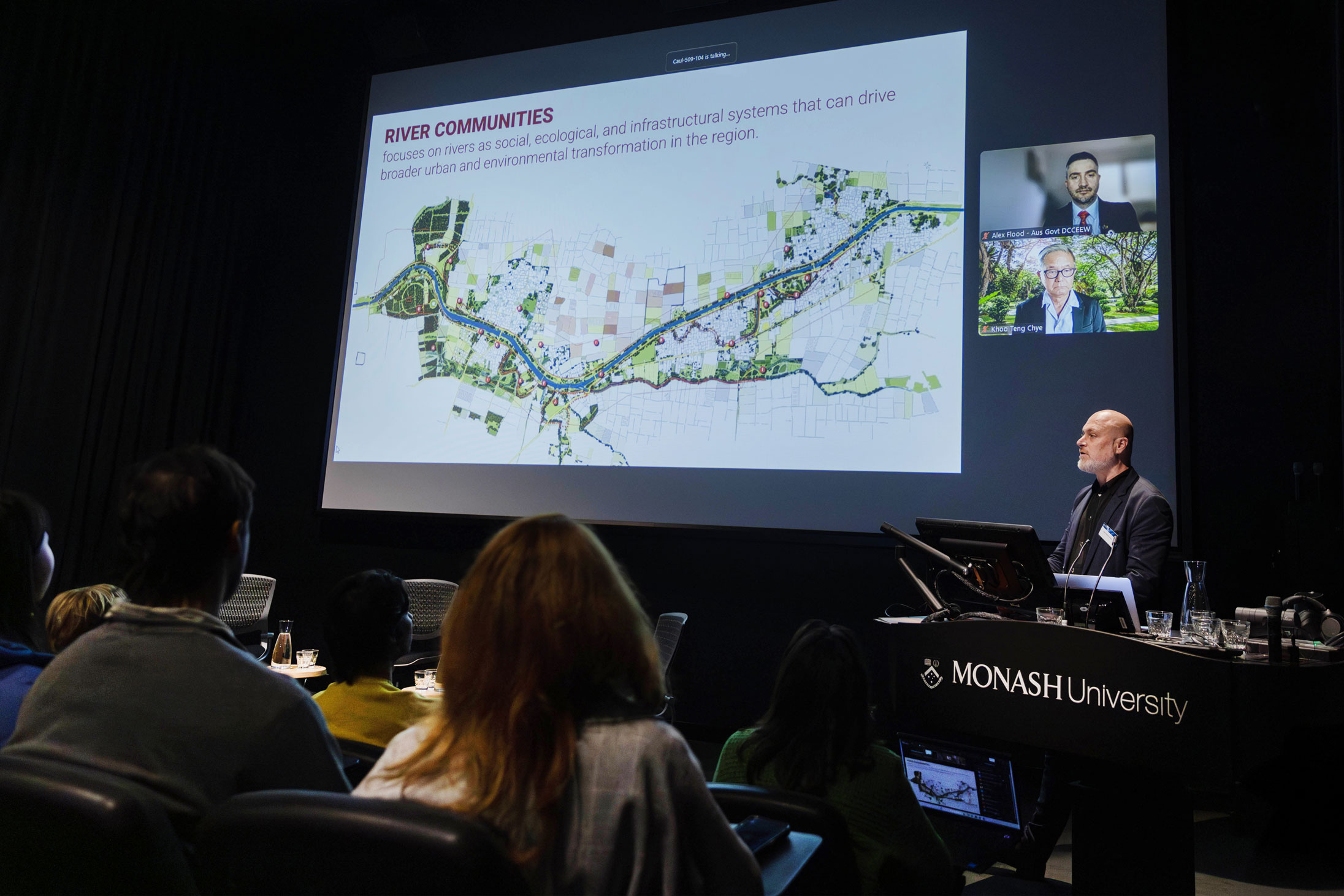
Monash University recently launched the Transforming Cities Hub, a major outward-facing initiative hosted by Monash Art, Design and Architecture (MADA). Signaling the University’s continued commitment to engaging with our regional neighbours, the new Hub serves as an anchor platform to deliver scalable, context-responsive urban and architectural interventions across the Indo-Pacific.
Supported by a strategic consortium of academic, industry, and government partners, the Transforming Cities Hub addresses borderless climate challenges. By integrating research, practice, and pedagogy, the Hub bypasses traditional academic barriers to co-create solutions designed to be built directly where communities face the greatest instability.
Professor Diego Ramírez-Lovering is an international leader in architectural design and the Director of the Transforming Cities Hub. He sees the initiative as central to Monash’s identity as a globally engaged university driven to resolve the grand challenges of our era.
“We are facing an unprecedented convergence of urban inequality and climate risk across the Indo-Pacific,” Professor Ramírez-Lovering said. “The Transforming Cities Hub is Monash’s direct response, a transdisciplinary impact platform that connects scientific research, design, and implementation to accelerate pathways from knowledge to action, institutional learning, and broader urban transformation.”
Co-creating resilient urban systems
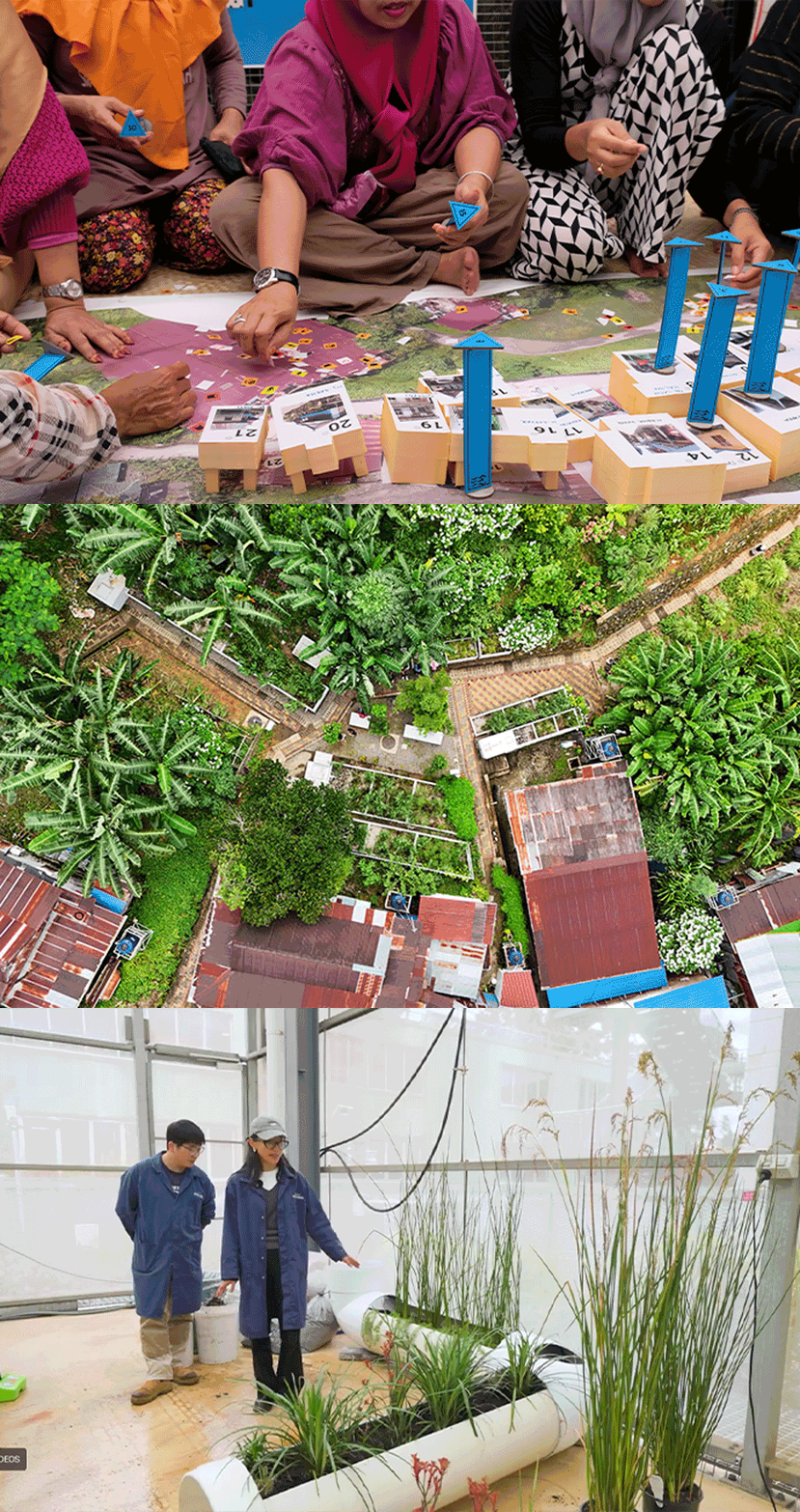
Operating across multiple scales and implementation contexts, the Hub’s strategic effort is integrated directly within regional nodes, including active collaborative frameworks at Monash University Malaysia and Monash University Indonesia.
The Hub’s research portfolio rests on three inter-related, action-oriented areas of work:
- 1. Settlement Upgrading: Co-creating architectural and architectural interventions alongside local residents to transform vulnerable informal settlements into resilient, safe neighborhoods.
- 2. River Communities: Designing climate-adaptive spatial strategies for populations living along volatile waterways, balancing critical ecological restoration with community protection.
- 3. Water Sensitive Cities: Integrating nature-based solutions into municipal infrastructure to manage stormwater, secure clean water, and protect cities from devastating flash floods.
A public forum for systems change
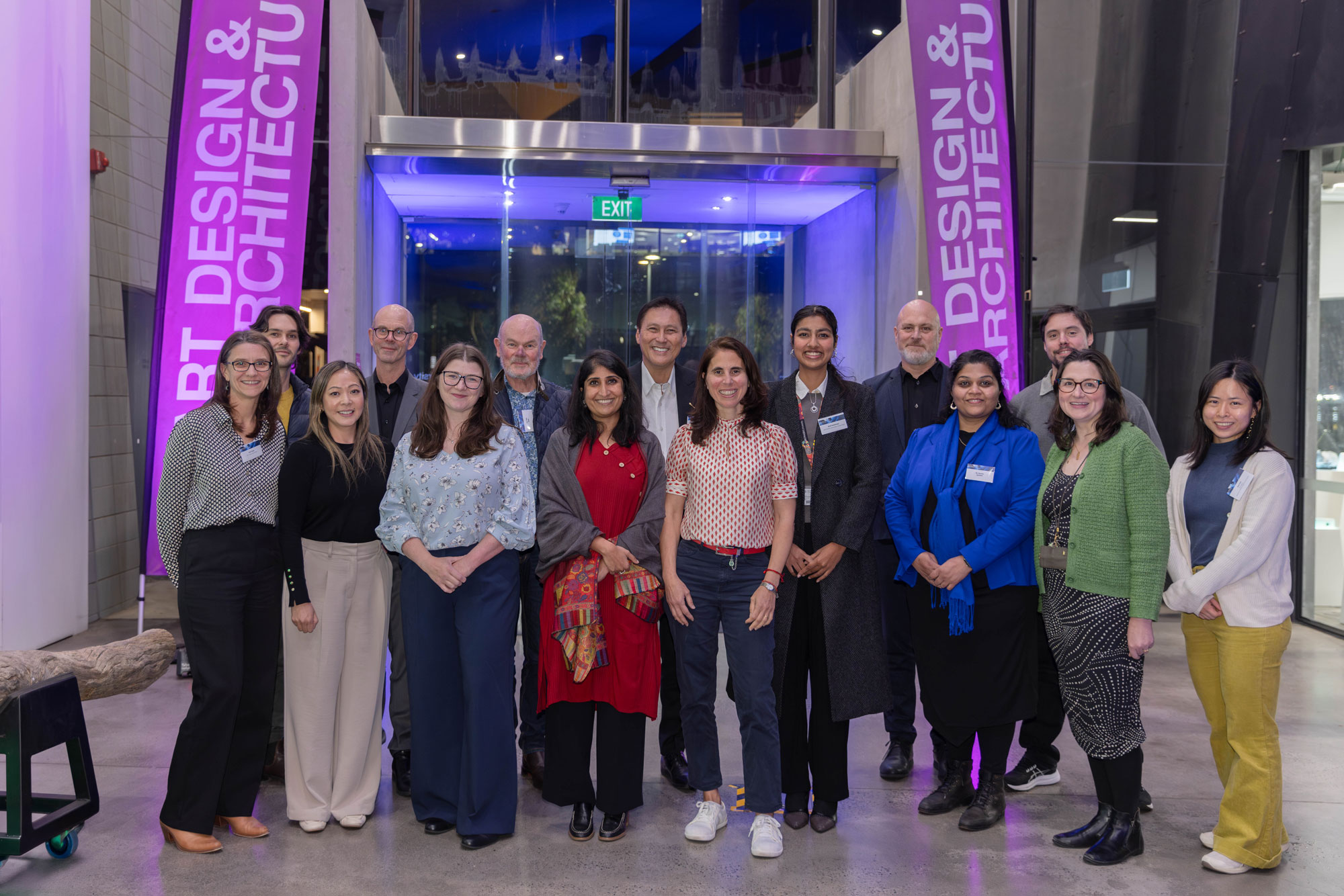
Anchoring MADA’s annual Research in Action Symposia, the launch event brought together an international panel of cross-sector leaders determined to tackle the immense pressures facing regional urbanisation. During the public forum, speakers delivered a sharp provocation to the higher education sector: If cities across the Indo-Pacific are entering a period of escalating stress, are universities acting with the urgency and ambition required?
The expert-led panel which included high-level representatives from the Australian Government’s Department of Climate Change, Energy, the Environment and Water (DCCEEW), the National University of Singapore, and the Melbourne Centre for Cities, explored how community-based research and science can be actively deployed to build sustainable, inclusive urban futures.
Professor Mel Dodd, Dean of MADA, welcomed guests and noted that the Hub reflects Monash's commitment to impactful partnerships. Internationally recognised water-management leader Professor Tony Wong concluded the proceedings by reinforcing that true systems change requires universities to act as dynamic, outward-facing infrastructure partners.
The Transforming Cities Hub invites global industry, government, and community stakeholders to participate in its upcoming research commercialisation pipelines and flagship programs.
To learn more about our current projects, view research capabilities, or connect with our international network, visit the Transforming Cities Hub website.