
Confronting colonial blueprints: Bradley Webb’s Unpalatable exhibition
Confronting colonial blueprints: Bradley Webb’s Unpalatable exhibition
Image: Dr Bradley Webb, Black Dog White Dogs (detail), 2024
This year, artist and Monash University Fine Art PhD graduate Dr Bradley Webb presented Unpalatable, an exhibition of nine powerful and confronting paintings at Mora Galleries. Opened by Senator Lidia Thorpe, the exhibition formed part of Webb’s Non-Traditional Research Output and directly reflects the themes of his doctoral research submitted in March 2025.
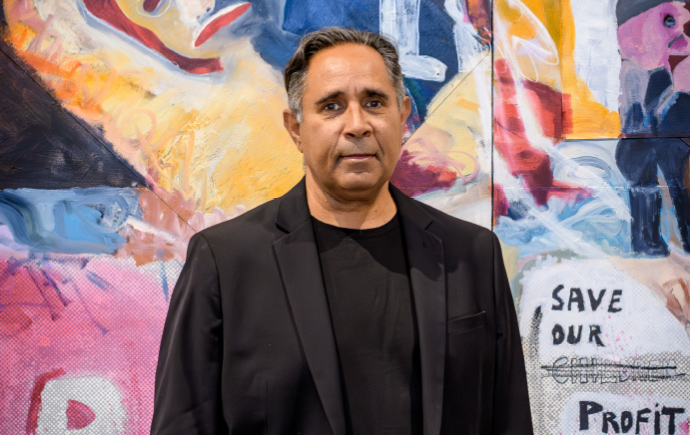
Dr Bradley Webb
“It was the culmination of deeply personal work and I was thrilled to have sold two of the paintings,” Webb says. “But more than that, it was about putting difficult truths into the public space.”
Researching the design of colonisation
Webb’s PhD examined ‘How colonial frameworks determine Indigenous (Aboriginal) representation and cultural heritage.’ His research draws on autoethnography and a deep engagement with Indigenous scholarship to propose a way of “decolonising colonisation.”
“I see colonisation as a design—like an architectural blueprint methodology,” Webb explains. “Every action, policy, and piece of legislation inflicted on Indigenous people was carefully planned by what Professor Martin Nakata terms the Corpus—a body of institutions that sustain cultural hegemony. My research investigates that blueprint.”
An artistic practice grounded in politics
Alongside his writing, Webb’s practice spans realism through to expressionism, using mediums such as painting (acrylic, oil, and oil pen), charcoal, silkscreen printing, digital imaging, and collage. His art is unapologetically political.
“I’m not about creating nice paintings that people feel comfortable with,” Webb says. “That doesn’t sit well with me. I prefer to provoke people, to encourage them to think more deeply about the realities Indigenous people face.”
The themes running through his work stem from lived experience and observation of social and political struggles. Today, Webb sees those struggles amplified and distorted by social media.
“The monster of social media demonises and diminishes our efforts for equity and justice through racism and bigotry,” he reflects.
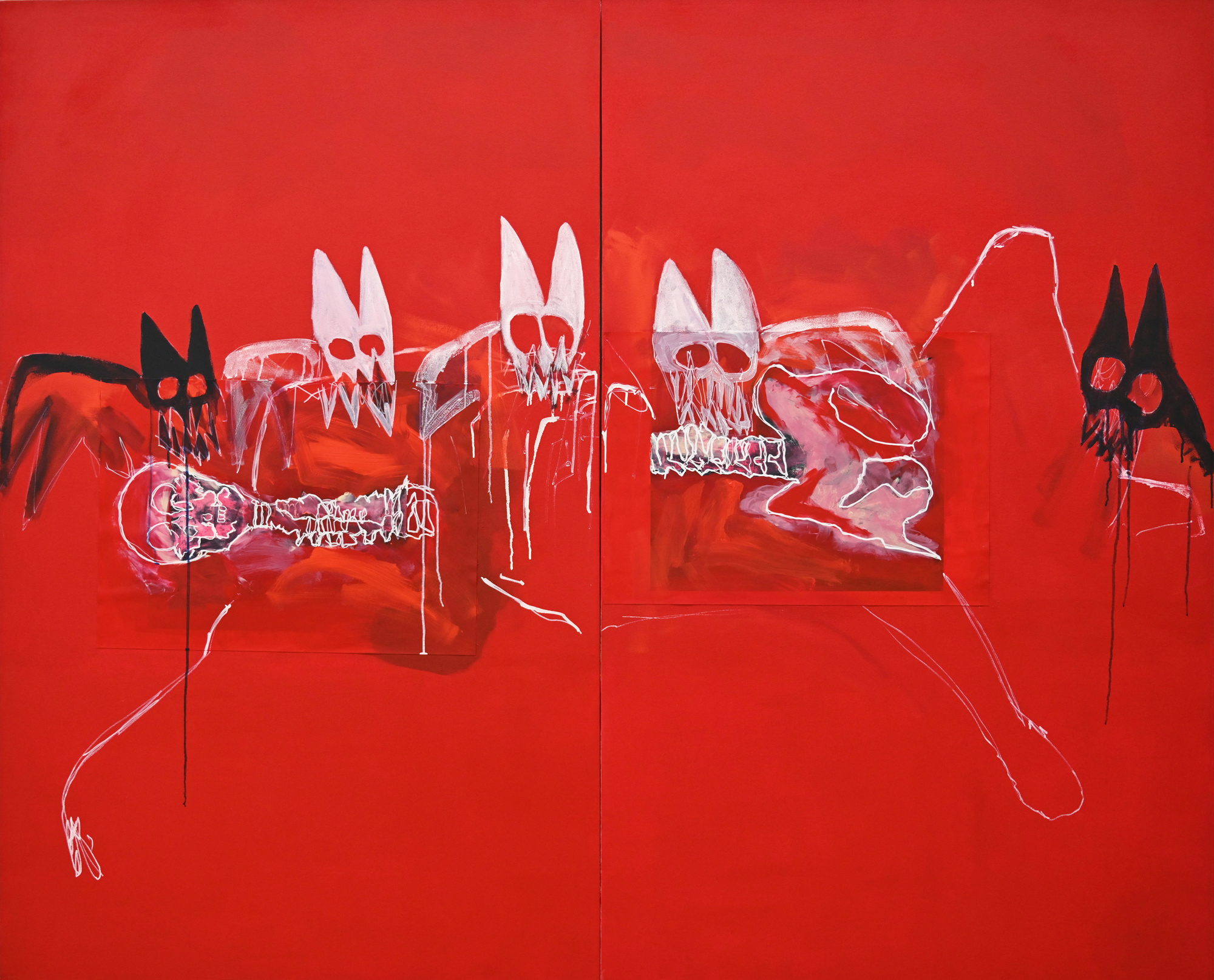
Bradley Webb, 'Black Dog White Dogs' (2024)
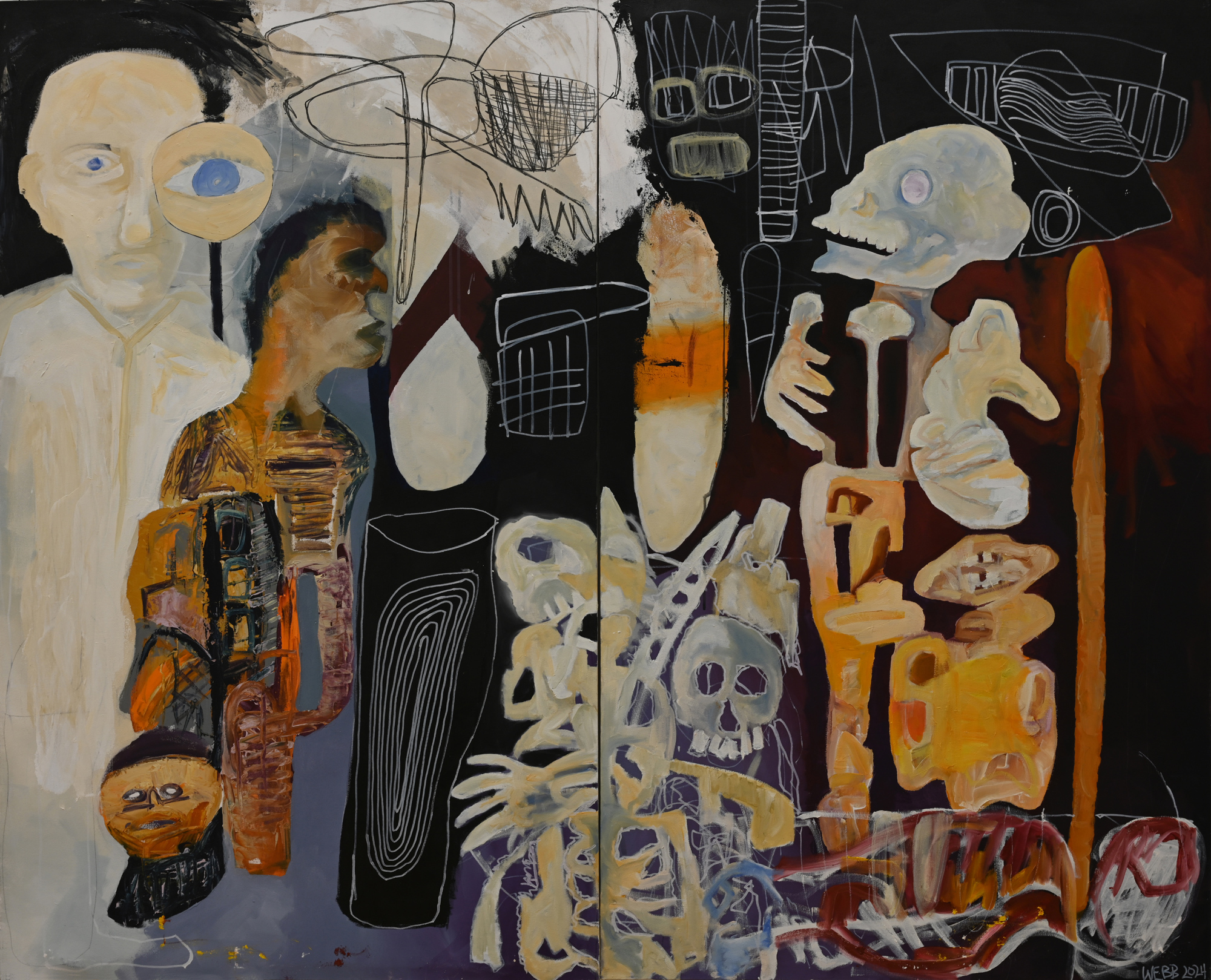
Bradley Webb, 'Institution' (2023)
Why Unpalatable?
The title Unpalatable emerged during Webb’s thesis when discussing representation. He argues that Aboriginal people are often absent or “not (re)presented” across the Corpus because they are considered unpalatable—“too Black, too political, too confronting” for the mainstream.
“As Professor Norm Sheehan notes, it comes down to how comfortable white people are seeing Black people in positions of power,” Webb says. “Our connected histories are often submerged in cultural amnesia, and that inability to move beyond it is what I’m interrogating in my work.”
This context made the exhibition particularly timely. In the wake of the ‘2023 Indigenous and Torres Strait Islander Voice to Parliament’ Referendum, Webb believes the impact of the Corpus was on full display.
“It showed how much further we have to go as a nation. These works take people on a journey through the shaping, positioning, and (re)presentation of Indigenous people in Australia.”
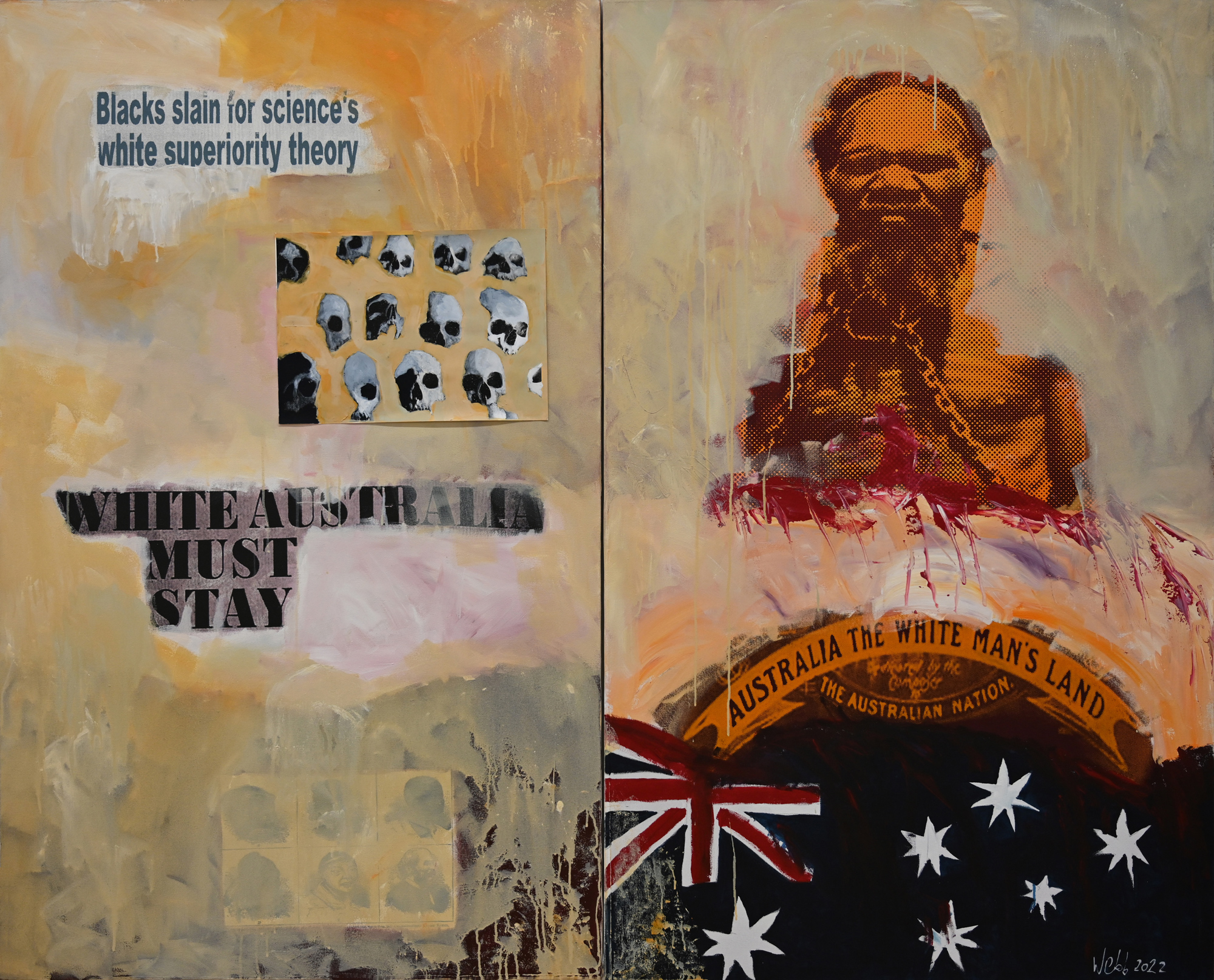
Bradley Webb, 'The Violence of Science' (2024)
From thesis to exhibition
Webb’s creative process intertwined theory and practice. His literature review identified gaps, while his autoethnography provided the emotional and experiential foundation.
“Those words became images, and then the images influenced the writing. Both theory and practice informed each other,” he explains.
One favourite work from the exhibition, The Blueprint Methodology, embodies this process. “It illustrates colonial design in action. It has many layers, was carefully thought out, and I’m very proud of that piece.”
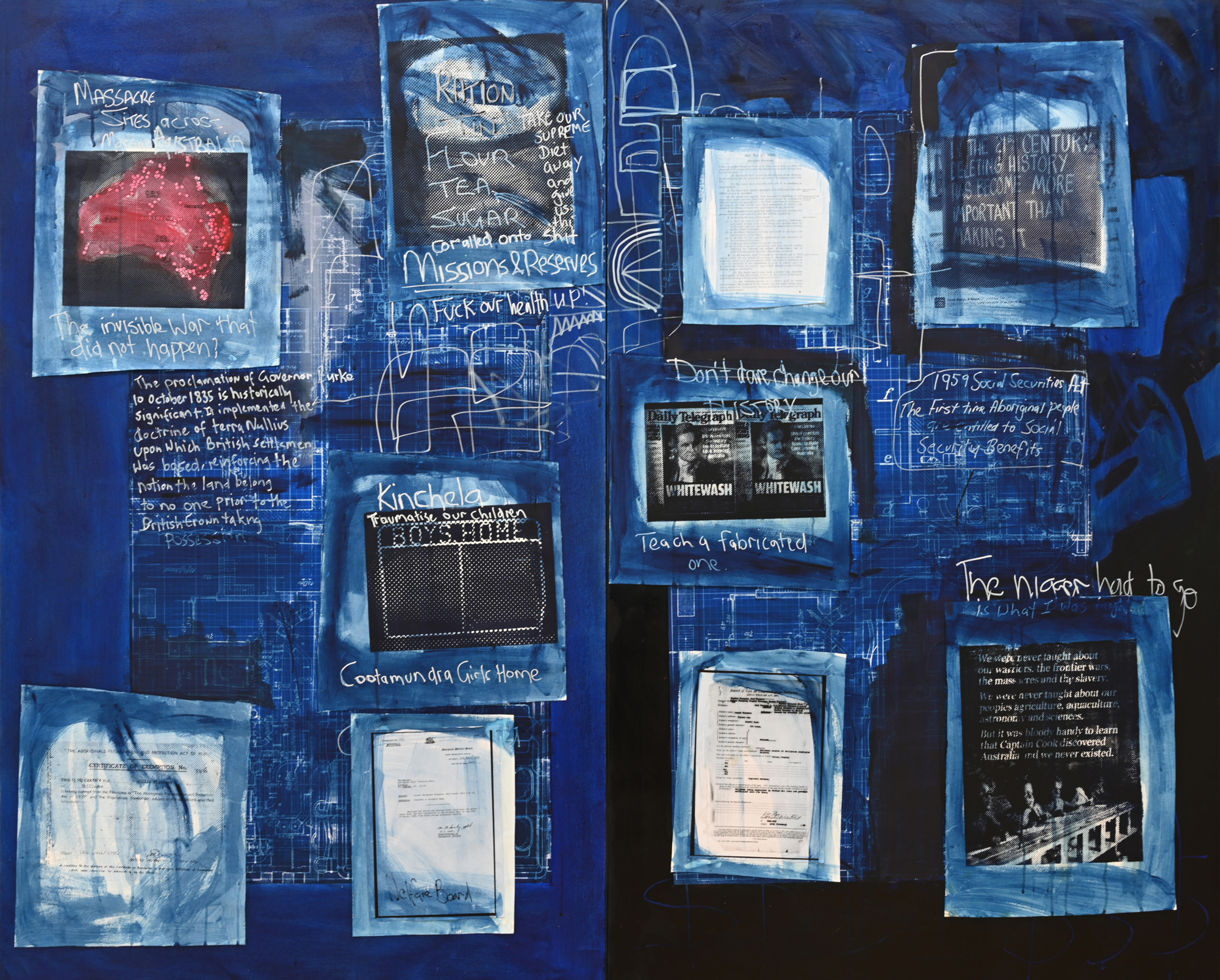
Bradley Webb, 'The Blueprint Methodology' (2024)
The Monash influence
Webb credits his time at Monash Art, Design and Architecture (MADA) with strengthening his practice. “MADA is the best place to be if you want to become an artist,” he says. “The staff are talented, generous, and experienced. I wish I had started my undergraduate studies here.”
He acknowledges firstly the Wominjeka Djeembana Indigenous Research Lab, a place where incredible Indigenous practice-led research is being undertaken. He also adds that there were many mentors he encountered at Monash—both academics and industry practitioners—whose guidance shaped his journey.
With his PhD now complete, Webb plans to establish a new studio and build on the body of work created during his candidature.
“Most people who complete a practice-led PhD draw further inspiration from their research, and that’s what I’ll do,” he says.
Through both his scholarship and his art, Dr Bradley Webb, continues to challenge Australia to confront its colonial blueprints—and to imagine different futures.