
Finding home through curating: Madeleine Steer’s first exhibition at Murray Art Museum Albury
Finding home through curating: Madeleine Steer’s first exhibition at Murray Art Museum Albury
When Monash Bachelor of Art History and Curating student Madeleine Steer received an email from the Murray Art Museum Albury (MAMA) inviting her to guest-curate a major exhibition for the museum’s 10 year anniversary, she was stunned.

“It felt surreal,” she recalls. “I grew up in Albury, visiting MAMA since I was little. Curating an exhibition there feels like coming full circle.”
MAMA is a leading regional cultural hub, known for working closely with artists – including those from the Murray region – and for its innovative contemporary exhibitions. CEO of MAMA, Blair French explains why Madeleine was chosen as a guest curator.
“For MAMA’s 10th birthday, we wanted to fill the museum with the collection and invite outside voices to shape it. We chose Madeleine as one of four guest curators for her fresh, youthful perspective and her connection to Albury and MAMA – as a past RAW exhibitor, and volunteer. We knew she’d create something original and insightful that would inspire audiences to see the collection anew.”
George Street is Madeleine’s first curated exhibition, part of ningha (translated to here in Wiradjuri), a program exploring local identity, belonging, and First Nations connections in the Murray region. The program runs across three seasons over 18 months with Madeleine’s section featured in the second titled nginha: gathered here which also features guest curator Talia Smith; artist Haley Miller Baker; and long-term MAMA collaborator and curator, Sally Denshire.
Madeleine’s section, named after Narelle Autio’s photograph George Street (Angel), mirrors her own journey from regional New South Wales to a large urban centre. It’s a story of leaving home, embracing change, and rediscovering roots.
“Autio’s image of a woman with angel wings stepping into a taxi captured that feeling perfectly,” she explains. “I used to live on George Street in Albury, so it resonated deeply, symbolising leaving for Melbourne and eventually finding my way back home.”
A creative path from Albury to Monash
Madeleine’s passion for art was encouraged early.
“My parents saw I was creative and supported it. We travelled, visited galleries and museums, and they nurtured that interest,” she reflects.
When choosing where to study, Monash’s Bachelor of Art History and Curating stood out.
“I was drawn to how it combined art history with professional experience, teaching me not just to think about art, but to work in the art world.” she says. “The professional development throughout revealed museum roles and taught practical skills, giving me the confidence to take on opportunities like this exhibition.”
Mentorship and guidance
Madeleine credits PhD teaching fellow Grace Slonim as a key mentor.
“Grace is an incredible advocate for her students. She shares experience and opportunities, gives thoughtful advice, and has been a constant, inspiring presence since my first lecture.”
Another mentor, Gina Dixon, whom she met through connections at Mannix College, introduced her to new career pathways.
“Gina helped me see how roles like collections coordinator can combine curating, collaboration, and community engagement.”
Curating at MAMA: Collaboration and community
Madeleine’s connection to MAMA began when she exhibited there in RAW 24, presenting work about her experience with epilepsy. She began volunteering and was later hired as a Visitor Experience Host, returning during university breaks to assist the team.
“MAMA is amazing to work for,” she says. “They promote young, diverse, Indigenous, and queer voices and they really trust us.”
Madeleine’s Exhibition
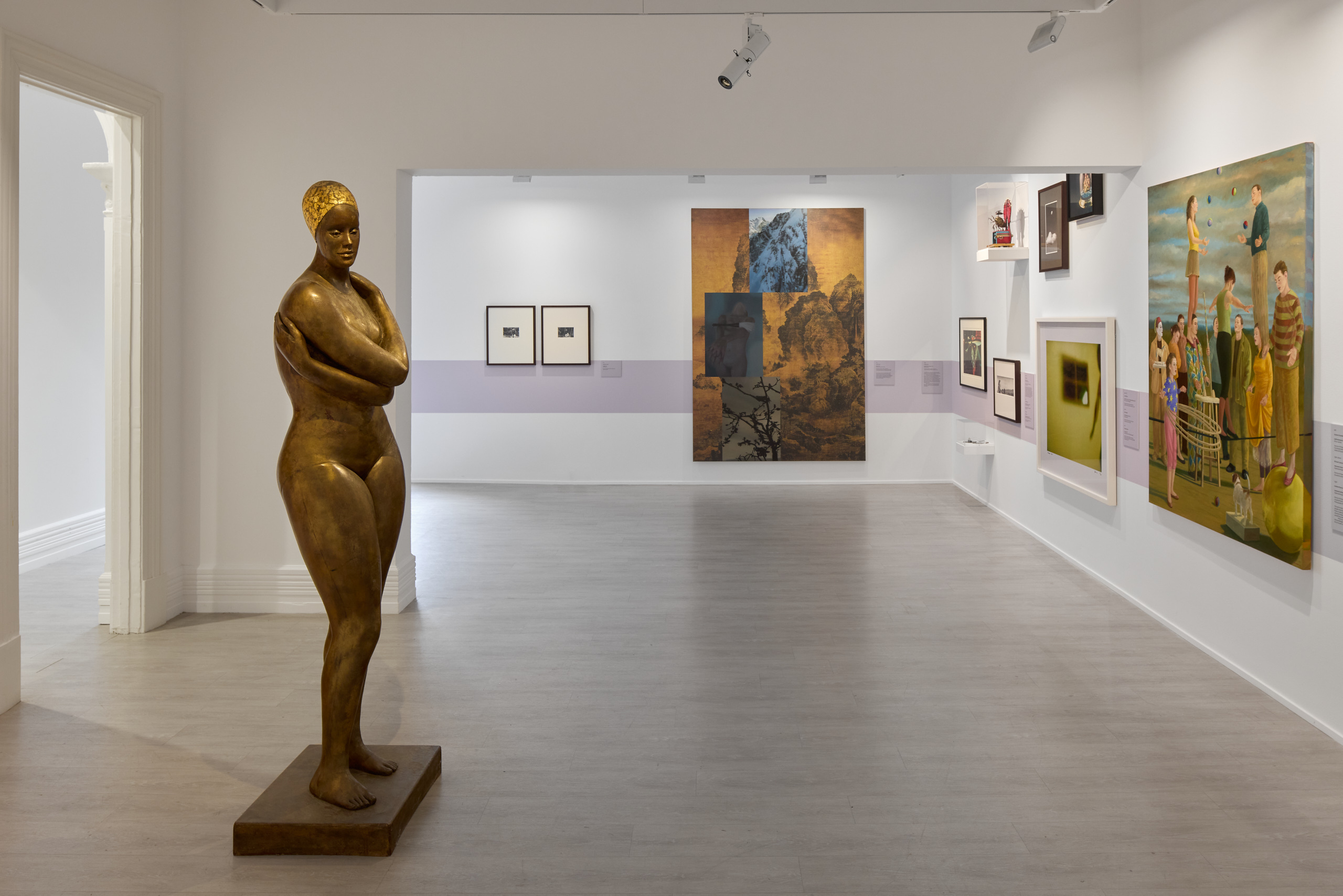
Madeleine describes the George St exhibition this way:
“My exhibition explores both a nostalgic view on the collection as well as an optimistic, future-concerned perspective.”
For George Street, she worked closely with head curator Michael Moran and Curator Collections Mia Maria, who were both experienced and supportive.
“Michael guided me in choosing relevant artworks, but also prompted me to make my own considered decisions, while Mia’s feedback helped me refine my ideas and bring clarity to the exhibition’s vision,” she explains.
Mia Maria describes Madeleine’s approach to the exhibition:
“Driven by her passion for exhibition design, Maddie thoughtfully chose works that bring the exhibition’s vision to life while creating an engaging design from a young person’s perspective. She has excelled in productive and analytical discussion and we are grateful for her perspective and contribution in this important MAMA milestone.”
Working with MAMA’s collection was especially meaningful. Max Dupain’s The Bank Building captured the intersection outside MAMA in the 1950s, while The Willow evoked family picnics by the river and the Lilies by Margaret Olley reminded Madeleine of her mum’s love of lilies in the home. Other featured pieces were Guy Boyd’s sculpture The Olympic Woman and an etching by Francisco Goya, showcasing both personal resonance and the breadth of MAMA’s collection.
“Nginha has over 2000 pieces of art and five curators this season,” she says. “We each selected from the collection, which meant negotiating, collaborating, and compromising. This was a true curatorial experience.”
Madeleine’s section spans two lavender themed rooms. Originally considering a pre-1930s-style Salon Wall, she embraced Michael’s suggestion to modernise it, using a soft lavender stripe instead to avoid colonial connotations. The exhibition includes over 30 works, blending personal nostalgia with reflections on home, identity, and memory.
“I’m a maximalist,” she laughs. “I wanted to include lots of works that connect with my story but also the community’s. There’s whimsy, childhood memories, and a sense of rediscovering where you belong.”
From classroom to gallery
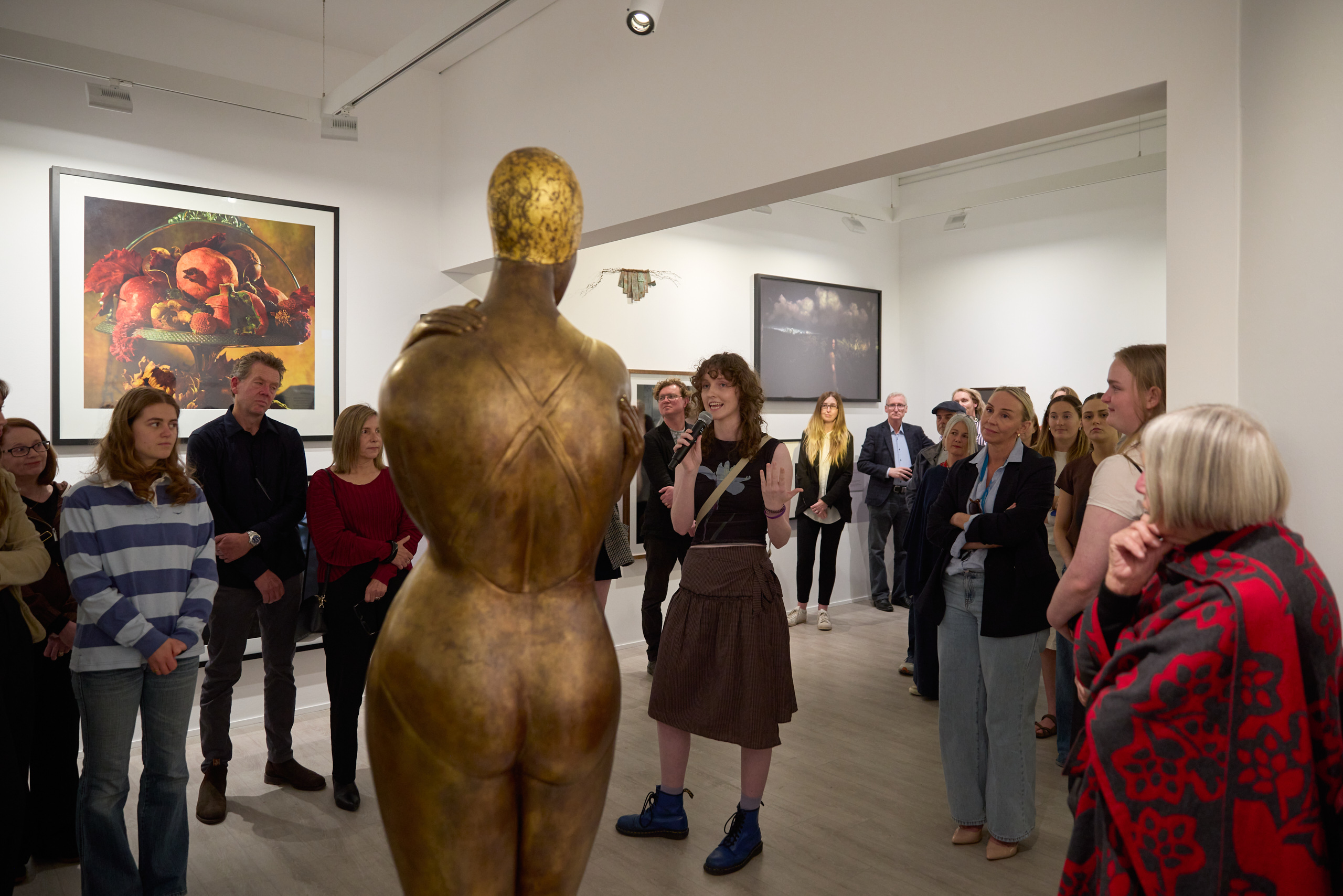
Madeleine says her Monash studies deeply informed her curatorial thinking.
“We learned how exhibition displays have been shaped by colonial history. At MAMA, there’s a focus on decolonising stories, so when Michael suggested modernising a salon wall, I understood how to adapt that idea with integrity, thanks to my grounding at Monash.”
She also drew from the ‘Indigenous Ways of Knowing’ unit which emphasised the importance of reflecting on place and what that symbolises.
“This helped me identify the symbols that represent what home means to me and they are represented throughout the exhibition.”
Regular visits to ACCA, NGV, Tarrawarra, and Incinerator Gallery also sharpened her eye for display and interpretation.
Next steps
Later this year, Madeleine will study renaissance art at Monash’s Prato campus in Italy, expanding her global perspective on exhibition history.
After George Street, she hopes to pursue a career combining art history, curating, and collections work.
“I feel incredibly grateful for the opportunity to curate at MAMA. It confirmed that I want to be in museums and showed me how much I enjoy collaborating with collections and artists. That’s where I see myself long-term.”
Her advice for future students is simple:
“If you love art but feel pressure about being an artist, this degree shows there’s a whole world behind the scenes where you can make art happen. It keeps your passion alive and turns it into a career.”
George Street, part of ningha: gathered here is on at Murray Art Museum Albury until 1 February 2026.