
2022 News
News

Women are often told their fertility 'falls off a cliff' at 35, but is that right?
Dr Karin Hammarberg explains that while women's fertility does decline with age, the fertility cliff concept is not entirely accurate. Read more in The Conversation.

We asked people why they don't donate their eggs or sperm. Their responses could help us attract more donors
The demand for donor eggs and sperm outstrips supply in Australia. Dr Karin Hammarberg and colleagues interviewed 1,000 people about whether they had ever donated gametes (eggs or sperm) and if they hadn’t, the reasons why. Read more in The Conversation.

The crisis of perinatal mental health requires collaborative solutions
The blog of the Environmental Change and Security Program (ECSP) recently covered the MOMENTUM USAID perinatal mental health theory of change webinar, which Professor Jane Fisher spoke at. Since 1994, ECSP has actively pursued the connections between the environment, health, population, development, conflict, and security. ECSP brings together scholars, policymakers, media, and practitioners through events, research, publications, multimedia content, and an award-winning blog.
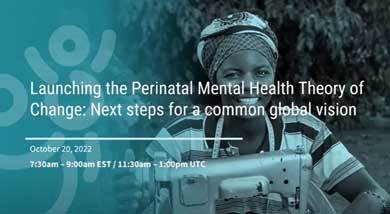
Launching the Perinatal Mental Health Theory of Change
On 20 October 2022, USAID's Country and Global Leadership arm, MOMENTUM, collaborated with global experts on perinatal mental health (PMH) to deliver a webinar introducing a global theory of change. Professor Jane Fisher was the first of eight speakers, setting the stage by discussing the worldwide occurrence of mental health problems experienced by women who are pregnant or have recently given birth. The launch was followed by a discussion on how to align behind a shared global vision to improve maternal and newborn health. Watch the webinar recording here.

Webinar: Better Policy for Better Mental Health in Australia
This 60-minute webinar, a partnership between Better Governance and Policy and Global and Women's Health, explores the state of mental health in Australia, and asks the questions: how can better policy promote better mental health in Australia? And can better mental health policy effectively reduce the prevalence of mental health-related illnesses in Australia? Watch the webinar recording here.

Addressing violence against women and children through Early Childhood Development programs
The Global and Women's Health team delivered a presentation on the Learning Clubs VIetnam project at the Sexual Violence Research Initiative Forum in Mexico in September 2022. Dr Shelly Makleff presented on behalf of Ha Tran, Dr Thach Tran, Hau Nguyen, and Professor Jane Fisher – Addressing violence against women and children through Early Childhood Development programs: Considerations for engaging fathers based on evaluation of the Learning Clubs (Early Journey of Life) program in Vietnam. You can learn more about the work of the Hanoi RTCCD to engage fathers in this 5-minute video.

Problems conceiving are not just about women. Male infertility is behind 1 in 3 IVF cycles
Dr Karin Hammarberg provides commentary around new data which reveals one third of all IVF cycles performed in 2020 included a diagnosis of male infertility in this piece in The Conversation.
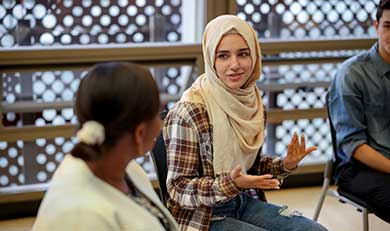
Enabling social supports for humanitarian migrants
Global and Women's Health research assistant Varni Doma was a panellist for a webinar hosted by the Australian Institute of Family Studies on 3 August. She presented the findings from her Master's project on the relationship between social support and mental health of humanitarian migrants resettled across Australia in a facilitated discussion with three other panellists.
Dr Karin Hammarberg at FSANZ
Dr Karin Hammarberg recently attended the Annual Scientific Meeting of the Fertility Society of Australia and New Zealand (FSANZ) held in Sydney. The conference had a record 800 attendees and featured many national and international experts. Karin was invited to speak in a clinical session, What women know about elective egg freezing and what they need to know, and spoke in a counselling session about Outcomes of retrospective donor legislation introduced in Victoria, Australia in 2017.

Thinking about freezing your eggs to have a baby later? Here are 3 numbers to help you decide
Dr Karin Hammarberg champions the need for factual and realistic information for women to be able to make informed decisions about what is possible with elective egg freezing in a piece in The Conversation.
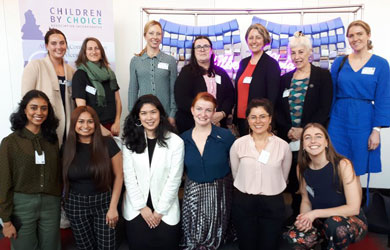
Global and Women's Health team members present at the Reproductive Rights and Abortion Conference
Three Global and Women's Health team members attended the Reproductive Rights and Abortion Conference 2022 in Brisbane in August. The conference brought together researchers, activists and health care professionals from around Australia. Shelly Makleff presented on Lived experiences of abortion care during the COVID-19 pandemic in Australia, and Natasha Davison presented on Establishing the preventive sexual and reproductive healthcare needs of women from refugee and asylum seeker backgrounds in Victoria.

How Roe v Wade will make abortion stigma in Australia even worse
Access to abortion and the stigma for those who go through it are still big problems in Australia. ABC Life Matters speaks with Dr Shelly Makleff about her research which finds judgement from health professionals and others in the community only makes abortion access harder.
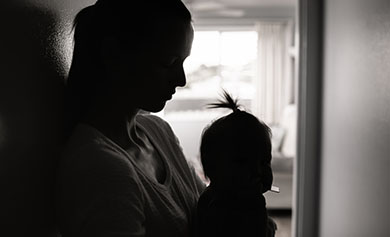
When mothers suffer, babies suffer. It's time the world realised this, say maternal mental health experts
Experts at a roundtable hosted by CNN's gender reporting team – As Equals – discuss the prevalence of perinatal mood disorders, their root causes, the challenges in diagnosing and treating them, and potential solutions. Professor Jane Fisher was invited to contribute to the discussion.

In Roe v Wade’s shadow, there’s an urgent need to tackle abortion stigma in Australia
Dr Shelly Makleff shares insights from a study conducted by the Global and Women's Health unit, which highlights the pervasive stigma and roadblocks to Australian women and pregnancy-capable people seeking abortion care. Read more in Monash Lens.
Don’t presume women with chronic conditions don’t want babies
In a blog for the Queen's Nursing Institute Scotland, Dr Karin Hammarberg shares insights from a literature review revealing that women with non-communicable diseases (NCDs), such as diabetes, epilepsy, rheumatoid arthritis, multiple sclerosis and cystic fibrosis might miss out on preconception care because health professionals don’t ask them whether they want to become pregnant in the foreseeable future.
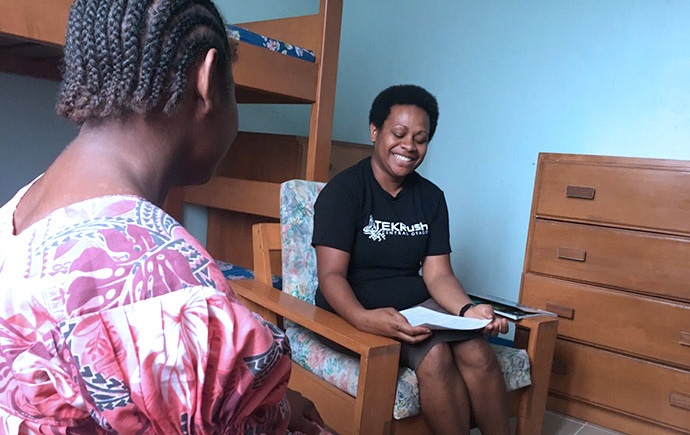
Intimate partner violence linked to poor pregnancy health in Vanuatu
Dr Stephanie McKelvie concentrated her BMedSci Honours project on researching the prevalence, patterns and determinants of intimate partner violence (IPV) experienced by women during pregnancy in Vanuatu. The study, which was published in the Lancet Regional Health – Western Pacific, is the first to detail findings about the adverse effects of IPV on pregnancy health in Vanuatu. Read more in Monash Lens.

World Health Day 2022 webinar: No mental health without planetary health
On World Health Day, Monash University and Beyond Blue explored the links between climate change, mental health and wellbeing. As a panellist on this webinar, Professor Jane Fisher explored the links between mental health and planetary health. Watch it here on Youtube.

Why do women still believe in the fertility myth?
In this Feed Play Love podcast Dr Karin Hammarberg discusses the myth about fertility that persists for both men and women. Karin talks about how likely it is for a woman to fall pregnant after 40 and what needs to change to allow women to have babies when they are most likely to fall pregnant.

Masada Early Parenting Centre Research Webinar
Professor Jane Fisher and Dr Karin Stanzel were invited to join a panel discussing a current research project at Masada's Early Parenting Centre. The panel discussed how the Early Parenting Centre is unique to Australia – Professor Fisher and her team hope to show that this approach is highly beneficial to women and children, and doesn’t require a long admission. Additionally, even people who present with complex issues (e.g. borderline personality characteristics, disturbed mood, and anxiety disorders) can highly benefit from this program. There have been no other studies of this scope and rigor in this sector. Watch the webinar on YouTube.

VicHealth Health Promotion Awards
Professor Jane Fisher and ABC radio host Raf Epstein were recipients of the 2021 VicHealth Health Promotion Award for Outstanding Media Reporting. Jane co-hosts ABC Radio's Life and Other Catastrophes weekly program. The segment – which celebrated it's tenth anniversary recently – covers aspects of health and wellbeing, looking at mental and physical health, relationships, habits as well as social pressures. It won for serving as a resource, a comfort, and an outlet for listeners as they are encouraged to call in to share their experiences.

Glimpsing a life after COVID
Professor Jane Fisher discusses Monash's Fire to Flourish survey and how women have coped through the pandemic. Read more on the Jean Hailes website.

Disaster survivors feel more prepared for the next one but are often left out of planning
Global and Women's Health is part of Monash University's Fire to Flourish project. More than 3,500 Australians were asked about their perceptions of preparedness and resilience to disasters through the Fire to Flourish survey. Read about the findings in this Conversation article.