
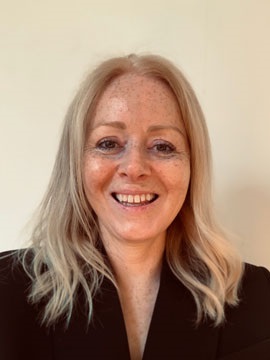
Sally Popplestone
PhD CANDIDATE PROFILE
Sally Popplestone
BSc, GDipPR, MIPH
 I believe investment in early childhood development is a long term approach that will help to transform the lives of people in resource-constrained communities.
Sally Popplestone commenced her PhD in 2023 and is investigating the influences of the home environment on cognitive development in children aged two to five years in low and middle-income countries (LMICs).
Ms Popplestone’s knowledge of health and development issues has been established during her 23-year career spanning the university, not-for-profit and corporate sectors in Australia, the United Kingdom and Singapore. Her understanding of early childhood development was consolidated while studying a Master of International Public Health 2013-2015, and subsequently working at international non-governmental organisation, Save the Children.
Ms Popplestone explains that her interest in the two to five year age group (the next 1,000 days) was established while working on a now published systematic review with members of the Global and Women’s Health unit in 2021.
“I was drawn to focussing on the two to five year age group in my PhD project because it has been highlighted as a key developmental stage in the life course,” says Ms Popplestone.
“This age group offers the potential to consolidate gains made in the first 1,000 days (conception to age two) and to promote protective factors to reinforce a healthy developmental trajectory,” says Ms Popplestone.
Ms Popplestone’s project is exploring components of the World Health Organization’s Nurturing Care Framework – which is a global framework to promote early childhood development. Aiming to promote the cognitive development of children aged two to five years by addressing policy and program evidence gaps in responsive caregiving and home-based early learning in low and middle-income countries, Ms Popplestone’s project will incorporate two systematic reviews, quantitative research of secondary analyses of international data, a framework analysis, and a protocol of an intervention study.
“Momentum has been gathering since the 1990s and there is extensive agreement that public health programs should ensure that children reach their developmental potential, particularly in resource-constrained settings.”
When considering the future of global health, particularly early childhood development, Ms Popplestone is optimistic that the establishment of important platforms such as the Nurturing Care Framework will be pivotal in progressing early childhood development globally.
Furthermore, she says there is growing sentiment that the strengthening of early childhood development will be key to achieving at least seven of the Sustainable Development Goals, on poverty, hunger, health (including child mortality), education, gender, water and sanitation, and inequality.
“It’s a challenging yet exciting time for global health,” says Ms Popplestone.
Ms Popplestone is inspired by the many changemakers in global health who work tirelessly for improved health outcomes, particularly for populations in low and middle-income countries.
“I believe investment in early childhood development is a long term approach that will help to transform the lives of people in resource-constrained communities.”
Prior to starting her PhD, Ms Popplestone worked as a research officer in the Global and Women’s Health Unit for over three years and was motivated to pursue her doctorate due to the strong leaders within the team. She is also inspired on a daily basis by her husband and teenage son and daughter who are stimulated and engaged global citizens.