
2025 MADA Gallery Curators in Residence: MJ Flamiano and Catherine Ortega-Sandow
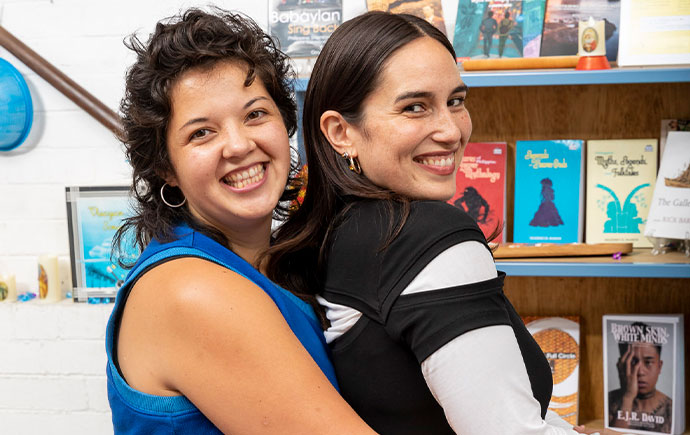
Image: I fear for my books launch, portrait of MJ Flamiano and Catherine Ortega-Sandow by Lucy Foster 2023
MADA Gallery is set to embark on an exciting and transformative year with the appointment of MJ Flamiano and Catherine Ortega-Sandow of Saluhan Collective as the 2025 curators in residence. Their unique curatorial vision promises to open new avenues for engagement, exploration, and dialogue within the Monash University community, offering students fresh perspectives on contemporary art and its role in shaping knowledge and narratives.
“There’s no more important time than now for Saluhan Collective to interrogate the institutional archives and offer a generative space for kinship, reciprocity and the expanded sense of a gallery space that has an inclusive community at its heart,” says Associate Professor Spiros Panigirakis, Head of Fine Art, Monash Art, Design and Architecture (MADA).
Expanding artistic perspectives and student engagement
The residency will introduce Monash students to ‘Fugitive Archives,’ an exhibition series deeply rooted in critical inquiry, self-authorship and the presentation of voices historically underrepresented within Western institutions.“Fugitive Archives considers the role of artistic practices as powerful forms of collective organising,” say MJ and Catherine.
Inspired by Fred Moten and Stefano Harney’s 2013 text ‘The Undercommons: Fugitive Planning and Black Study’, the curators aim to explore artist-led and independent archives as transformative tools for collective organising, particularly for Filipino and BIPOC (Black, Indigenous, People of Colour) artists whose contributions historically have often been marginalised in institutional contexts. Through this exhibition visitors will gain exposure to artists and creative practices from the Philippines, both locally and internationally, in addition to artists from across the Australian continent.
Beyond a traditional exhibition format, the program will incorporate a reading room, fostering an interactive and immersive environment where students can engage deeply with archival materials, books, artworks, and film. By integrating these elements, Flamiano and Ortega-Sandow seek to encourage visitors to think beyond their curriculum and explore knowledge production in a broader, more nuanced context.
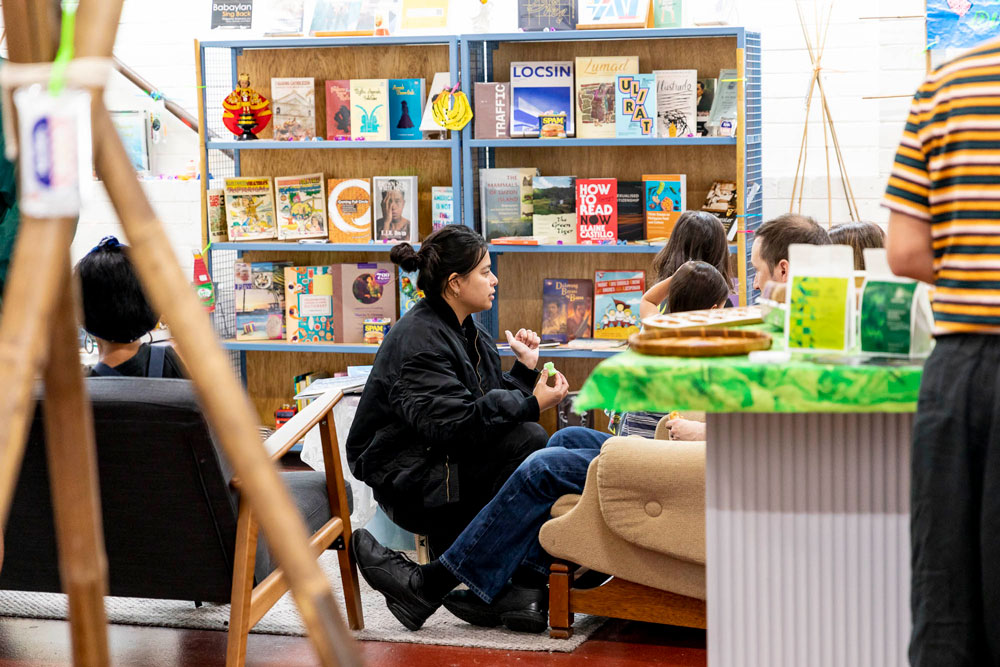
Image: I fear for my books launch, Arts Gen, 2023 photo by Lucy Foster
The role of archives in artistic and academic inquiry
A key aspect of their residency involves a deep dive into Monash University’s library collections and the Monash University Museum of Art (MUMA) archives. Their research will examine existing resources, particularly in relation to Filipino artists, shedding light on gaps in representation. Through their ongoing work with Pagbasa Archive—an artist-led collection of art, text, sound, and video based online and in Naarm—‘Fugitive Archives’ will foster counter-spaces where communities, students, and researchers can engage with material cultures beyond the institutional frameworks of traditional archives and libraries. By creating these spaces, the project responds to the urgent need for more inclusive knowledge exchange and self-determined narration.
“Whoever controls the archives controls the narrative,” explains Catherine.
This residency provides an opportunity to challenge conventional curatorial structures, encouraging students to critically engage with how knowledge is preserved, shared, and interpreted.
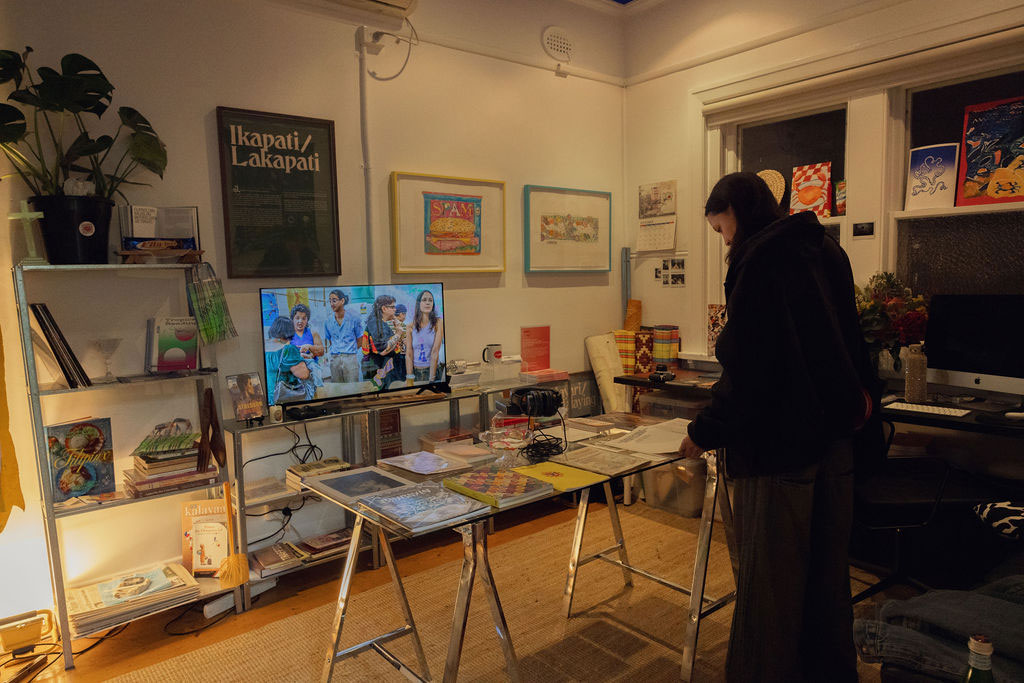
Image: Pagbasa Archive at Seventh Gallery photo by Mischa Wang
Encouraging collaboration, experimentation, and independent thought
Hosted in a gallery space located within a university, the curator-in-residence program also plays a critical role in engaging students with new artists, practices and exhibitions through a range of teaching activities and workshops.
One of the most compelling aspects of this residency is the emphasis on collaborative and interdisciplinary approaches to art-making. Both curators come from diverse academic backgrounds—Ortega-Sandow in politics and sociology, Flamiano in visual arts—bringing a multifaceted perspective to exhibition-making. Their approach encourages students to step outside conventional artistic frameworks, take creative risks, and consider alternative modes of artistic expression beyond gallery spaces.
Artists working solo in a gallery can often be quite isolated, so collaboration with other artists is critical.
“Our ethos for making is from a collaborative framework —a good way to sustain your energy is to be part of a community,” says MJ.
By offering workshops, public programs, and Open Day activities, the residency aims to bridge gaps between disciplines and foster a sense of artistic agency. Whether they aspire to be artists, curators, or professionals working in the art industry, students will gain invaluable insights into how art can function as a tool for social critique, storytelling, and community-building.
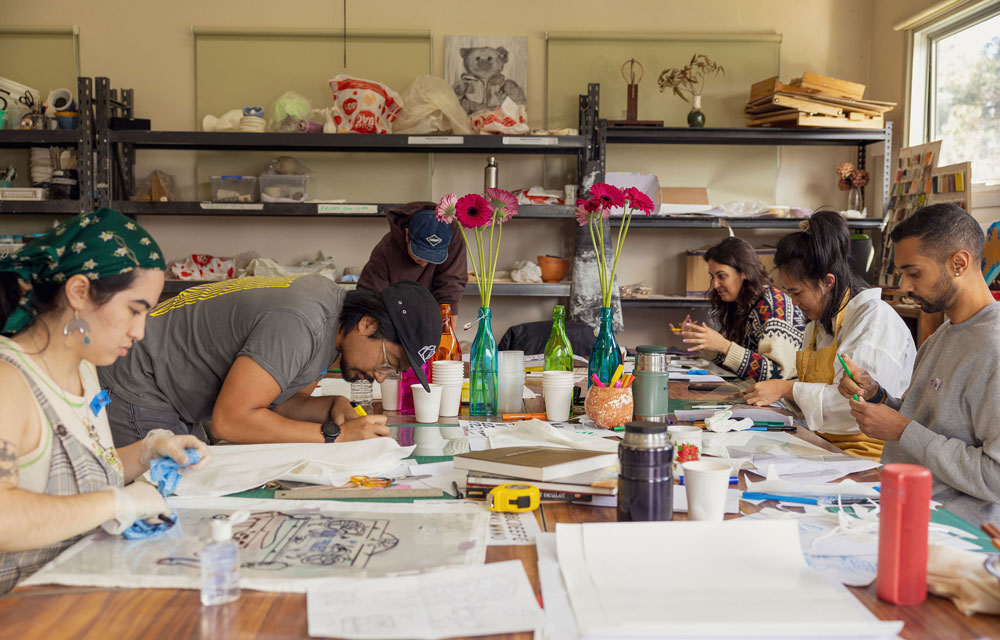
Image: Silog Workshop at Bridge Darebin, 2023, photo by Mischa Wang
A lasting impact on the Monash community and beyond
MJ and Catherine’s residency at MADA Gallery is more than just a series of exhibitions—it is an invitation for visitors to reimagine the ways they engage with art, archives, and knowledge. Through their curatorial work, they hope to instill a sense of curiosity, critical thinking, and collective responsibility in contributing to the cultural landscape.
“Everyone contributes to knowledge and the making of knowledge,” says MJ.
“The ability to listen is critical. We hope that visitors will think beyond their own current practices, engaging with new ideas - valuing perspectives outside of what they are aware of and what they are comfortable with,” says Catherine.
By challenging established narratives and fostering a space for inclusive storytelling, their work will inspire visitors and students alike to embrace new perspectives and creative possibilities.