
PICA 2026 Graduate Show: announcing Tabitha Glanville
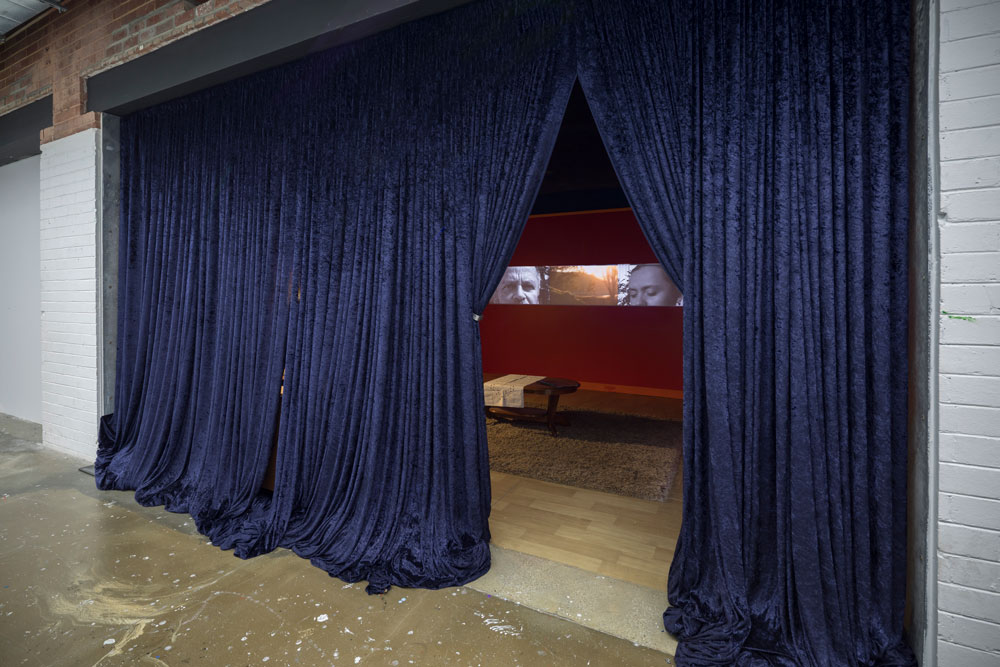
Kamilaroi woman and Monash University Bachelor of Art History and Curating and Bachelor of Fine Art (Honours) graduate Tabitha Glanville has secured a coveted spot in the prestigious Hatched: National Graduate Show 2026 at the Perth Institute of Contemporary Art (PICA). Her selection for her work, gyrr ngaya bina-guwal winangaylahna (I am listening now with different ears) , highlights the distinct, essential voice she brings to contemporary creative practice.
“I was absolutely shocked to be included in Hatched, but really grateful to share my family’s story,” Tabitha says.
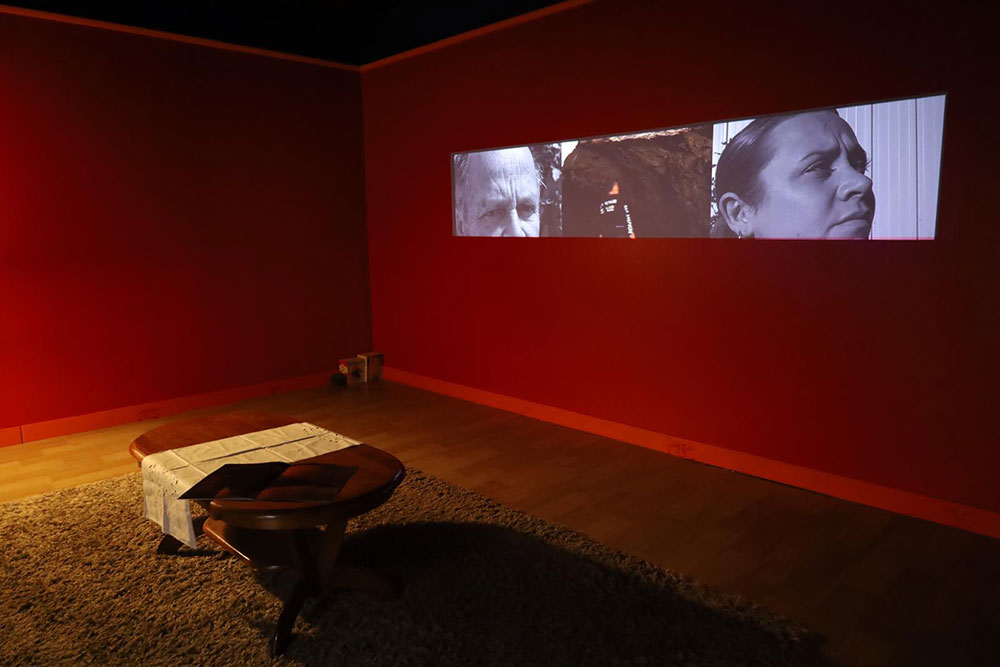
Adding to her selection for the exhibition, Tabitha’s powerful installation went on to claim one of the three $15,000 Dr Harold Schenberg Arts Awards on opening night. The judging panel singled out gyrr ngaya bina-guwal winangaylahna for its exceptional filmic sophistication and deeply considered material presence, calling it a reflective space that feels both personal and protective.
Through the lens of her Kamilaroi ancestry, Tabitha uses film and archived audio/film to return to her language, belief systems, and law. She curates spaces that protect stories and establish truthful counter-narratives to colonial representation.
Returning to country, refusing the silence
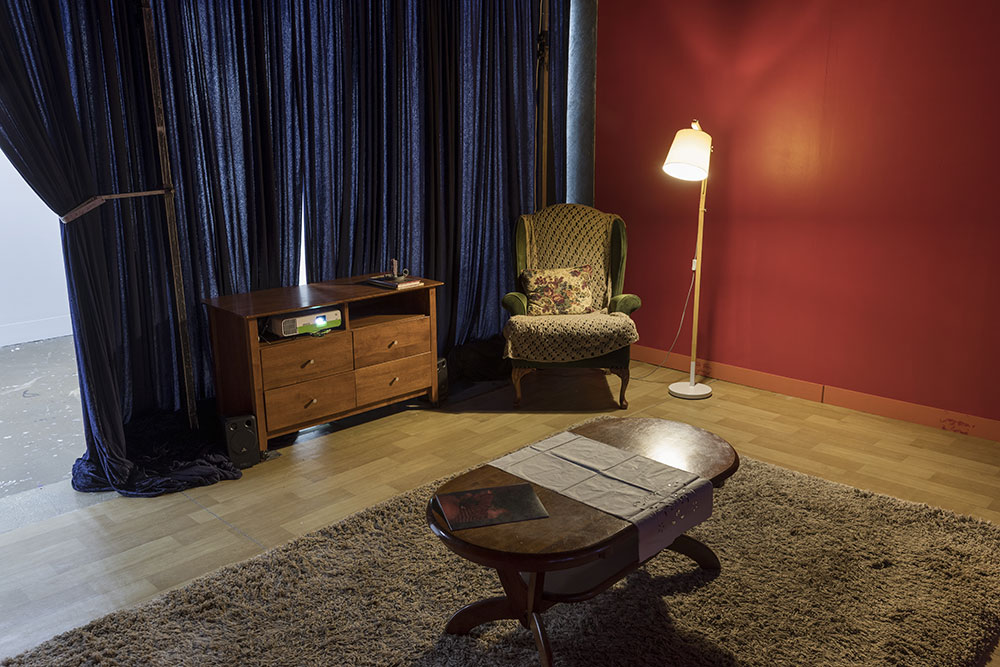
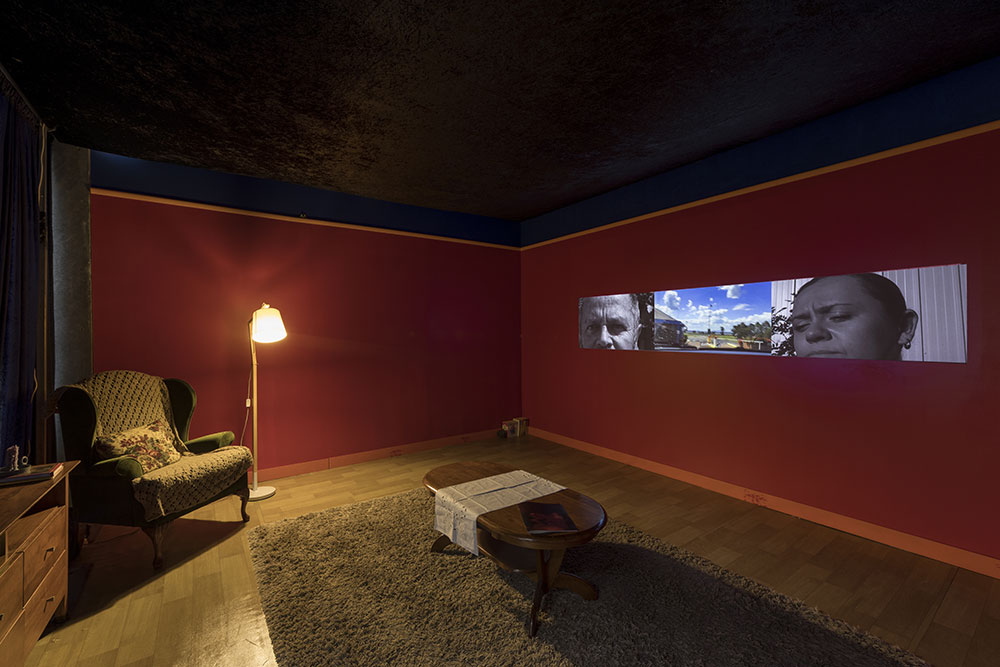
Tabitha’s exhibiting installation is a deeply moving, three-part film and spatial experience centered on a journey back to Kamilaroi country with her father. Growing up in Tasmania with her parents, Tabitha observed the intergerational silence of her paternal family.
“No one really spoke about my nan’s family, where she came from, who she was. I wanted to recreate this in a reconstructed space of hers, but this time I would refuse the silence” she explains.
Seeking to understand her family history, Tabitha embarked on a journey across northern New South Wales with her dad, the birthplace of her paternal matriarchs. The landscape initially carried a heavy sense of grief, especially when looking for ancestral markers and finding no physical graves or official records. However, the narrative shifted when they began listening to Country through a different lens. Tabitha and her father noticed magpies following them everywhere on country.
“Our family totem is the magpie-burrungaarbuu,” Tabitha explains. “We realised our grandmothers were following us all along.”
Using film, audio, and large-scale elements, Tabitha’s work explores what it means to be a contemporary creative practitioner through the lens of her Kamilaroi ancestry. It serves as an intentional space that refuses historical silence, transforming personal grief into a profound point of truth.
Family, place-making and blak design
Tabitha credits her mother, artist Tania Glanville, with teaching her that art is “the purest form of truth telling in history.” Her father breathed his knowledge of Country into this understanding.
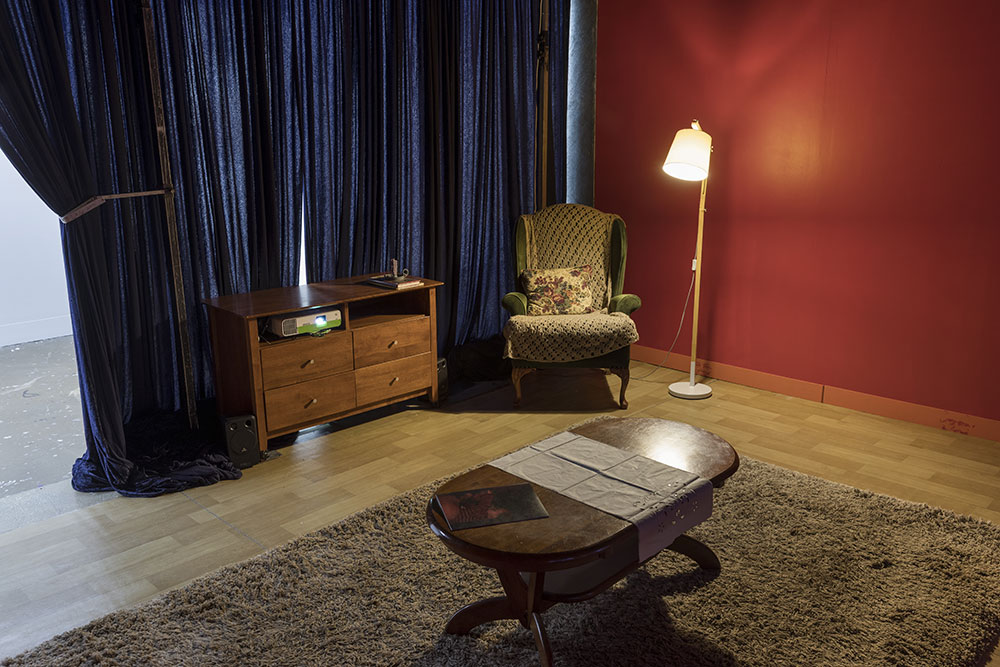
Tabitha uses curation as a powerful form of structured storytelling and place-making. In her initial presentation of the work, Tabitha painted the gallery space the exact orange, yellow, and blue hues of her childhood bedroom, a room her parents had originally painted to mimic the desert where her father felt most at home. Along the skirting boards, she painted the eyes of her ancestors, establishing a direct gaze with the viewer to subvert confronting historical ethnographic imagery.
The Monash experience
Moving from lutruwita to Naarm/Melbourne as a young Aboriginal woman brought unexpected cultural pressures. Guided by her lecturer and mentor, Moorina Bonini, Tabitha learned to use her bina (ears) to listen deeply, establish cultural and creative boundaries, and ensure her creative practice remained an honest form of understanding lived experience.
Tabitha chose an Honours year to challenge her critical thinking. As the sole curator in her cohort, she used this dedicated time to define her professional path and rediscover her passion for the industry with the support of the Fine Art Honours community.
"The mentors I had at Monash—Dr Moorina Bonini, Nicholas Mangan, Professor Daniel Von Sturmer, Tamsen Hopkinson and Dr Fiona McDonald—are absolute powerhouses and invaluable educators. They provide an archive of knowledge, care, and honesty,” Tabitha explains. “Their willingness to be transparent created a safe, supportive space that taught me how important it is to be honest in my own practice" explains Tabitha.
Now she is a mentor herself, through her role as a Director at Bus Projects and as a tutor of ‘Indigenous Ways of Knowing’ at Monash, Art Design and Architecture (MADA). Tabitha has this advice to young artists starting their journey:
"In an anxious and fast-changing world, art isn't about gallery openings or comparisons; it’s about finding your unique point of truth and having unwavering belief in your own creative voice."
A catalyst for connection and healing
For Tabitha, the ultimate success of her work lies in its power to spark deep, personal revelation and bridge generational divides.
"The way my work was received at the 2025 MADA Now Graduate Show was exactly how I wanted it to be seen. ," Tabitha reflects. "My cousin saw the exhibition, and I think she better understood us, and who we are. It’s not about claiming titles, but locating identity and something meaningful about yourself."
As her work moves to the national stage, Tabitha hopes to challenge broader audiences to confront the heavy, complex histories of this country, and embrace the universal human need for belonging and identity. She envisions the exhibition as a space that inspires audiences to "listen to the history of this country with different ears."
Hatched 2026 at PICA is on from 1 August to 4 October 2026.