
Lauren Brincat announced as 2026 Prato Campus Artist in Residence

Image: Lauren Brincat
Monash University’s Prato Campus will welcome acclaimed Australian artist Lauren Brincat as the 2026 Prato Artist in Residence, where she will spend more than three months developing a new body of work titled Textile Acts: Resistance, Ritual, and Radical Forms in Prato.
“I was wildly surprised to be included,” Brincat says. “But I was also really grateful. It felt like Prato was a place that I needed to go.”
Beginning in May, the residency will immerse Brincat in one of Europe’s most historically significant textile centres. Home to hundreds of textile factories and a long production heritage, Prato offers fertile ground for an artist whose multidisciplinary practice spans performance, installation, video, sculpture and sound.
A city shaped by textiles
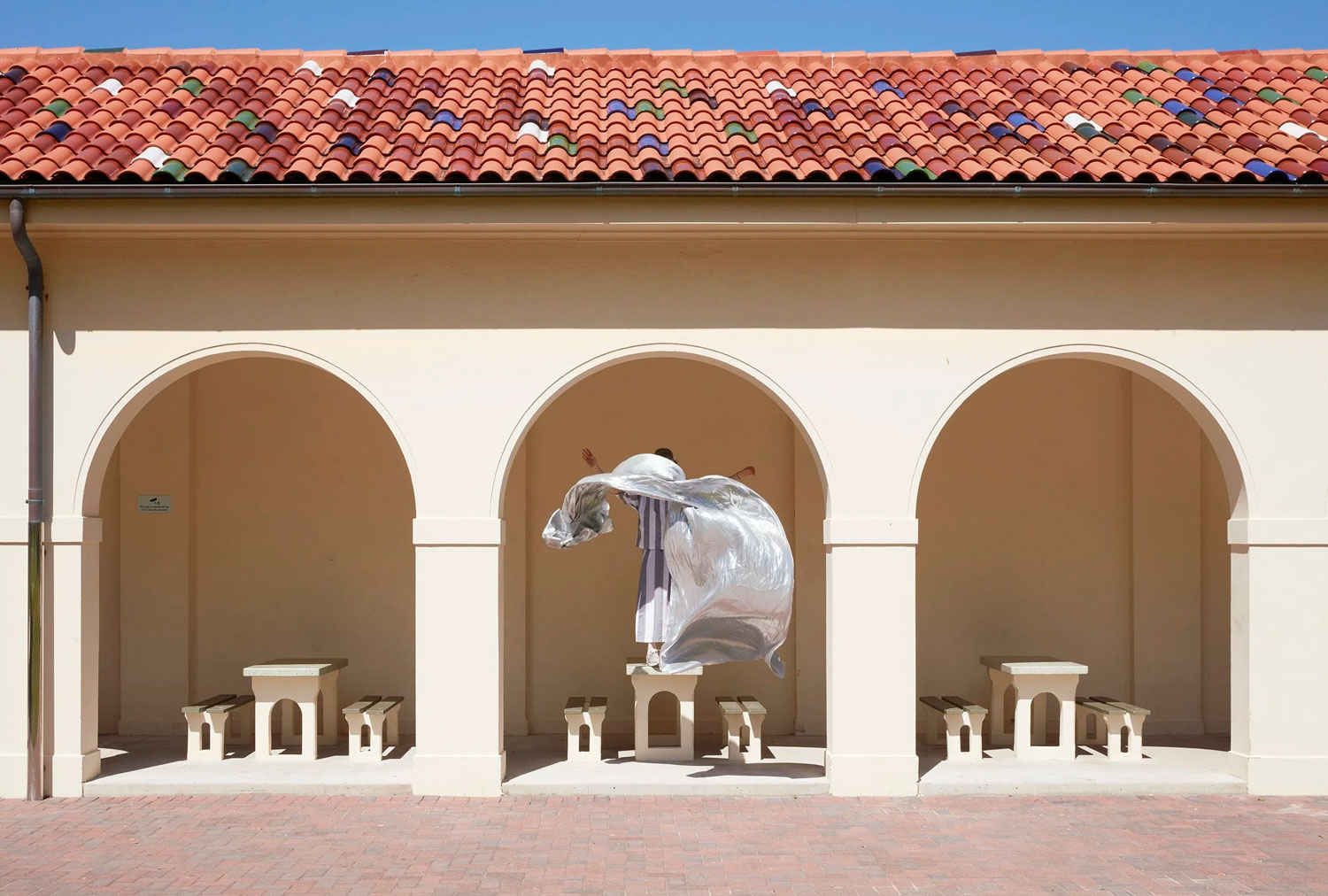
Photography Zan Wimberley.
Brincat’s residency project explores fabric as a medium of memory, resistance and transformation. While textiles have long appeared in her work, the residency marks a deeper engagement with the material.
“My practice has always included textiles,” she says. “But it’s become more of a focus recently. I never formally studied it, so this residency is an opportunity to research it more deeply.”
Working in Prato allows her to connect with the labour and migration histories embedded in the city’s textile industry.
“Textiles carry both personal and political histories,” she explains. “They are language, memory and resistance.”
She is particularly interested in engaging with the collections of the Textile Museum of Prato, where centuries of weaving and industrial production reveal patterns of repetition and gesture she hopes to translate into sculptural and performative forms.
Rather than arriving with a fixed plan, Brincat prefers to respond to place as the work unfolds.
“I try to let a residency come to me,” she says. “It’s like starting a garden. I’m bringing a lot of seeds, but I don’t know which ones will grow there.”
She also plans to source fabrics from local markets and producers, drawn to materials that already carry histories of labour and use.
Fabric, sound and choreography
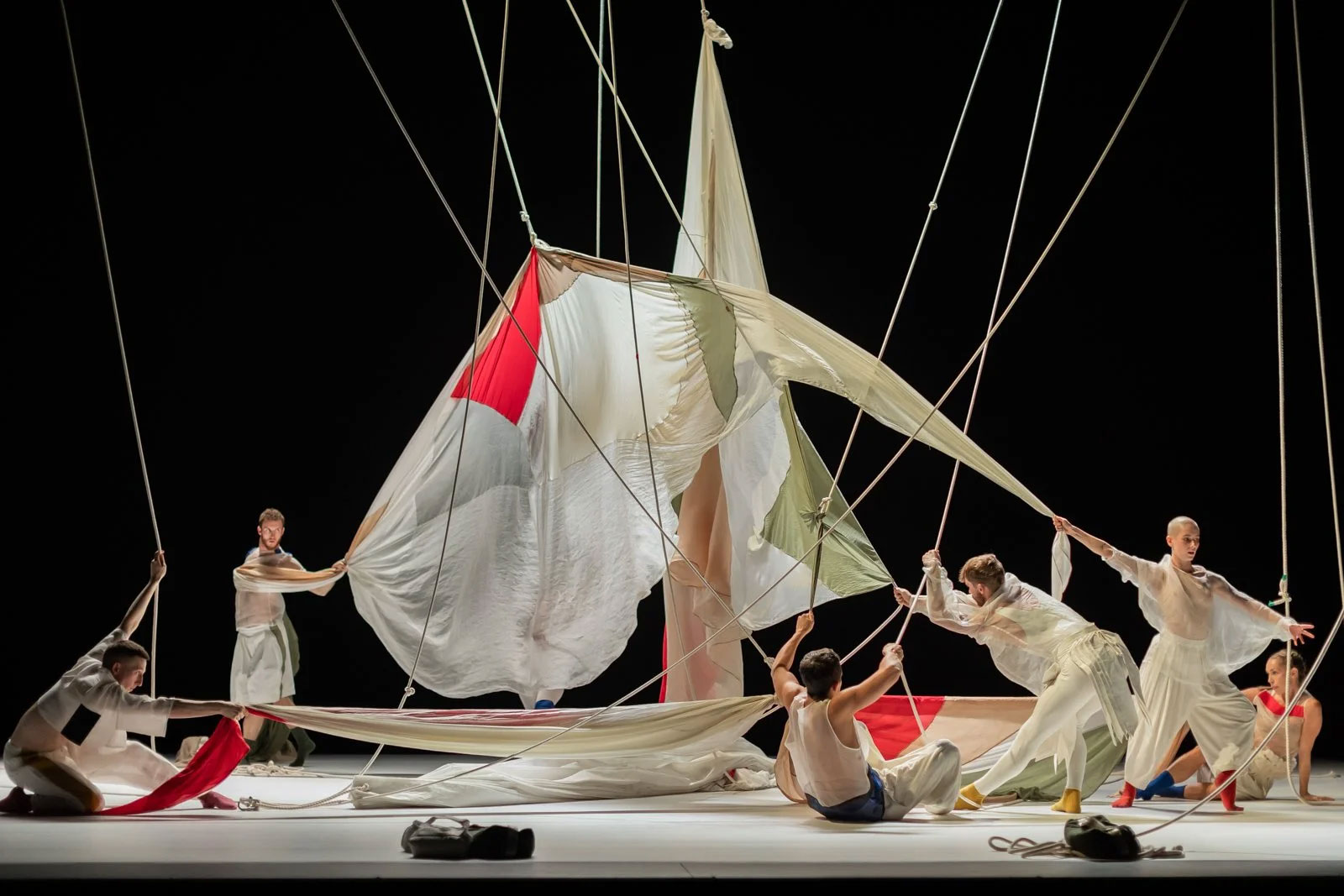
Image: The Shell, A Ghost, The Host & The Lyrebird – Sydney Dance Company, Sydney Opera House (2023). Set, costume, and visual dramaturgy for a full-length contemporary dance work.
Although textiles sit at the centre of Textile Acts, they operate alongside sound, movement and collaboration with dancers and musicians.
“Fabric isn’t the only element,” Brincat says. “There’s always sound, collaboration and movement.”
In many installations, textiles function like musical notation. Colours and patterns act as a visual “score”, activated during live performances.
“Some of my textile works are essentially coloured scores,” she explains. “Each colour represents a sound. The fabric becomes part of the choreography.”
During the residency she also plans to record sounds from Prato’s streets and workshops, creating an audio archive that may inform the final works.
“I collect everyday sounds from my environment so I can return to that place later,” she says.
Threads of family history
The project is also shaped by Brincat’s heritage. Her father is Italian-Egyptian and her mother Greek-Egyptian, and she grew up in a multilingual household where Arabic, Italian and French were spoken alongside English.
Textiles hold particular resonance through the memory of her grandmother, who worked in a textile factory after migrating to Australia.
“My grandmother was always sewing,” Brincat recalls. “She had her own machine and made clothes for all of us grandchildren.”
Her fascination with fabric first emerged during university when she was gifted a small sail. She began collecting sails, echoing her grandparents’ maritime history in the sponge-trading industry. Those early experiments later informed a large 2012 installation in which Brincat covered a 50-metre sail with thousands of telltales — small pieces of cloth used by sailors to read wind direction — each marked with fragments of song lyrics.
The residency in Italy, she says, feels like a way of reconnecting with those histories.
“Going back to places connected to your family can help things make sense.”
Collaboration and community
During her time in Prato, Brincat plans to collaborate with the experimental performance collective Kinkaleri, exploring how textile installations interact with bodies in motion.
“The fabric exists,” she says, “but it really comes alive when I work with dancers and choreographers.”
Engagement with Monash students and local audiences will also form an important part of the residency.
“I hope people experience the work as an open collaborative space where fabric, bodies and ideas intersect,” she says. “In that way, the community becomes a co-author.”
Through Prato’s textile heritage, local collaborations and personal histories of migration and labour, Textile Acts will unfold as a site-responsive exploration of how cloth can carry memory, movement and meaning across generations and geographies.