
Matthew Bird: merging architecture and art at the 2025 Lorne Sculpture Biennale
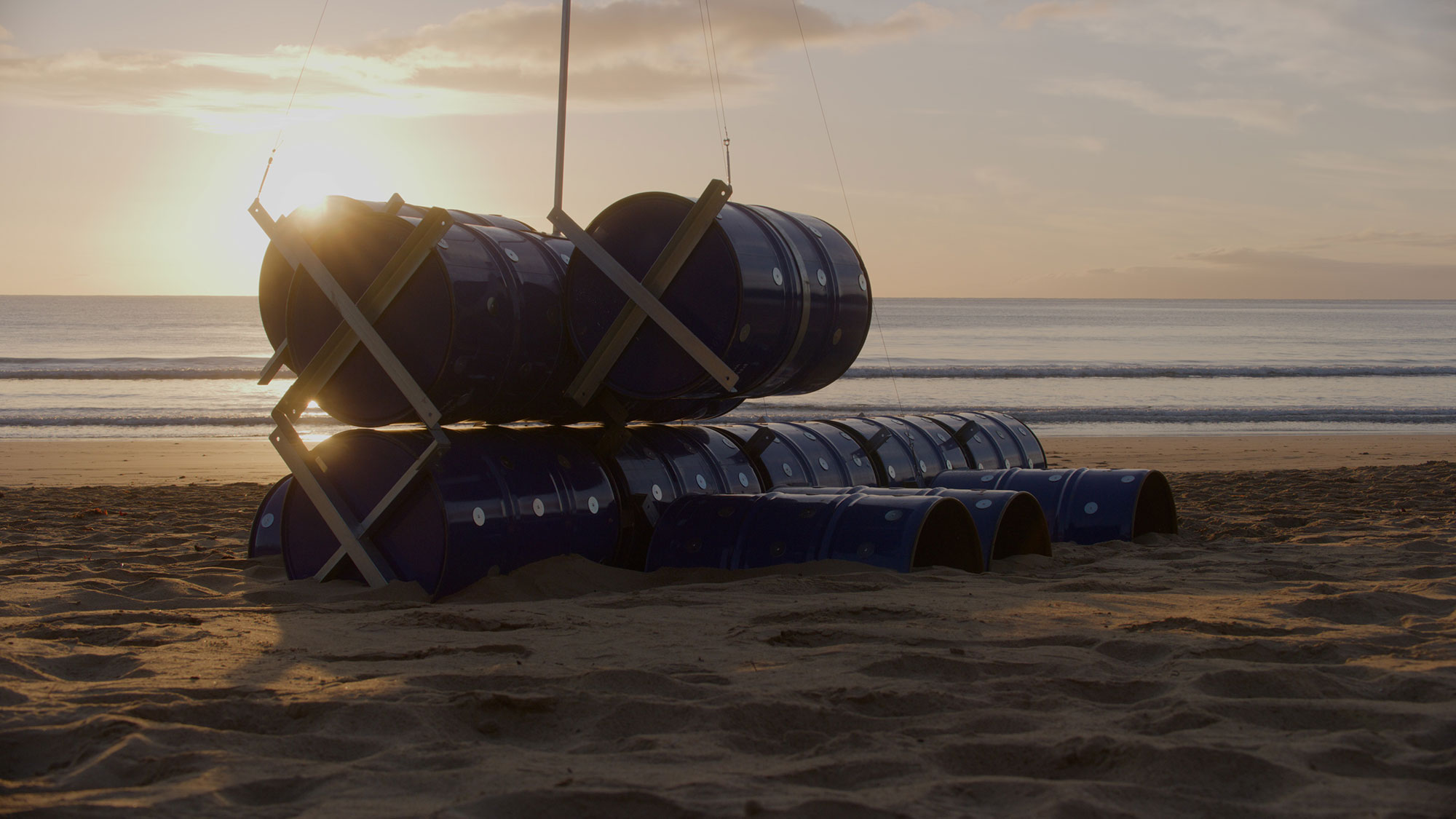
Monash Architecture Senior Lecturer Dr Matthew Bird has long defied conventional categorisation. As an architect, artist, and educator, Bird's career is a continuous exploration of interdisciplinary and transdisciplinary practices, merging architecture with performance, installation, and public art. His latest endeavour, ‘Future Fossil’, a collaboration with urban geographer, architect and Monash Architecture Lecturer Charity Edwards, was unveiled at the 2025 Lorne Sculpture Biennale. This highly anticipated exhibition for the month of March solidifies Matthew’s position as an innovative force within both the architectural and artistic landscapes.
The intersection of architecture and art
As well as lecturing architecture students at Monash Art Design and Architecture (MADA), Matthew is the founder of Studiobird, a practice that transcends traditional architectural boundaries by incorporating interior architecture, installation art, speculative design, and performance. His projects frequently involve collaboration with professionals from diverse disciplines, including cinematographers, astrophysicists, and choreographers. His partnership with choreographic artist Phillip Adams exemplifies this interdisciplinary approach, where performance art intersects with architecture and socio-economic commentary.
Throughout his career, Matt has exhibited works in locations as varied as Luxembourg, the Canary Islands, and the Mojave desert, often incorporating performative elements. His work is as much about inhabiting space as it is about designing it, blurring the lines between architecture and ephemeral experiences. This ethos permeates ‘Future Fossil’, an interactive sculpture that invites audiences to engage with deep geological and environmental timescales.
Future Fossils: a reflection on time and transformation
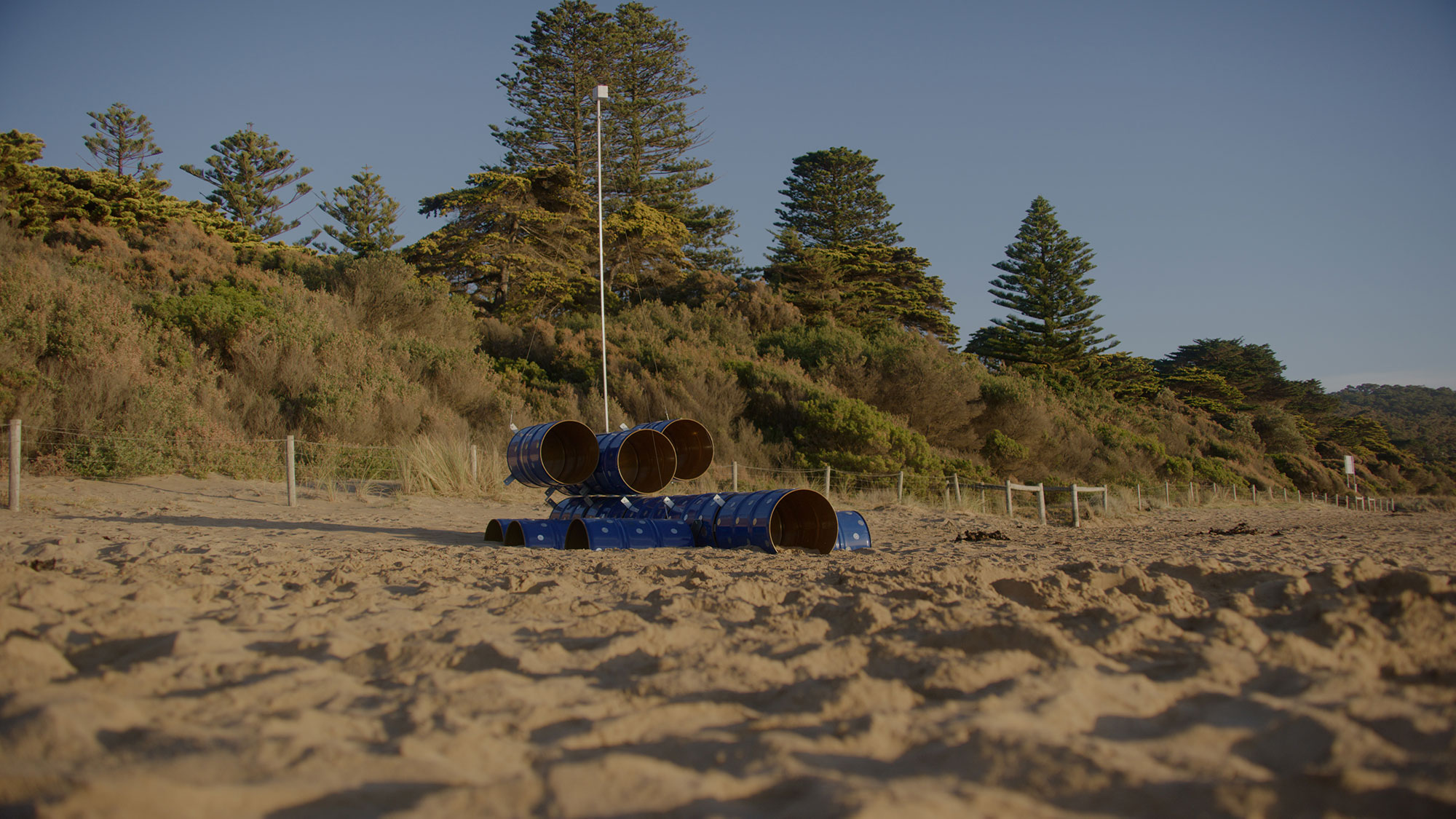
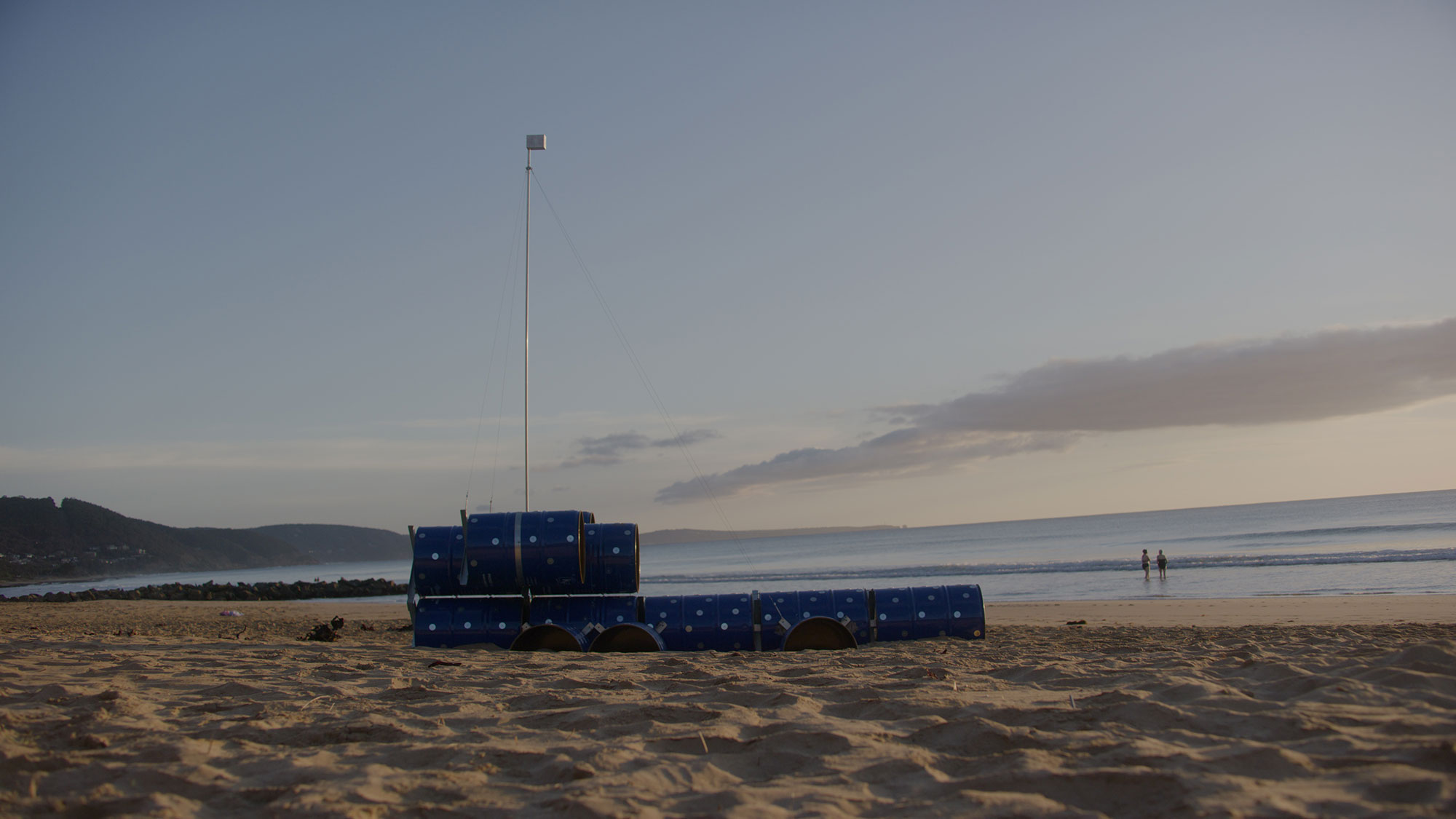
Selected from over 400 applicants, Matt and Charity are among just 16 artists featured in the 2025 Lorne Sculpture Biennale. Their work, ‘Future Fossil,’ is inspired by the Biennale’s overarching theme of strata—examining the transformation of land and time. The sculpture references prehistoric marine megafauna while simultaneously commenting on contemporary technological interventions in the ocean, such as the mapping of seabeds by autonomous underwater drones for resource exploration.
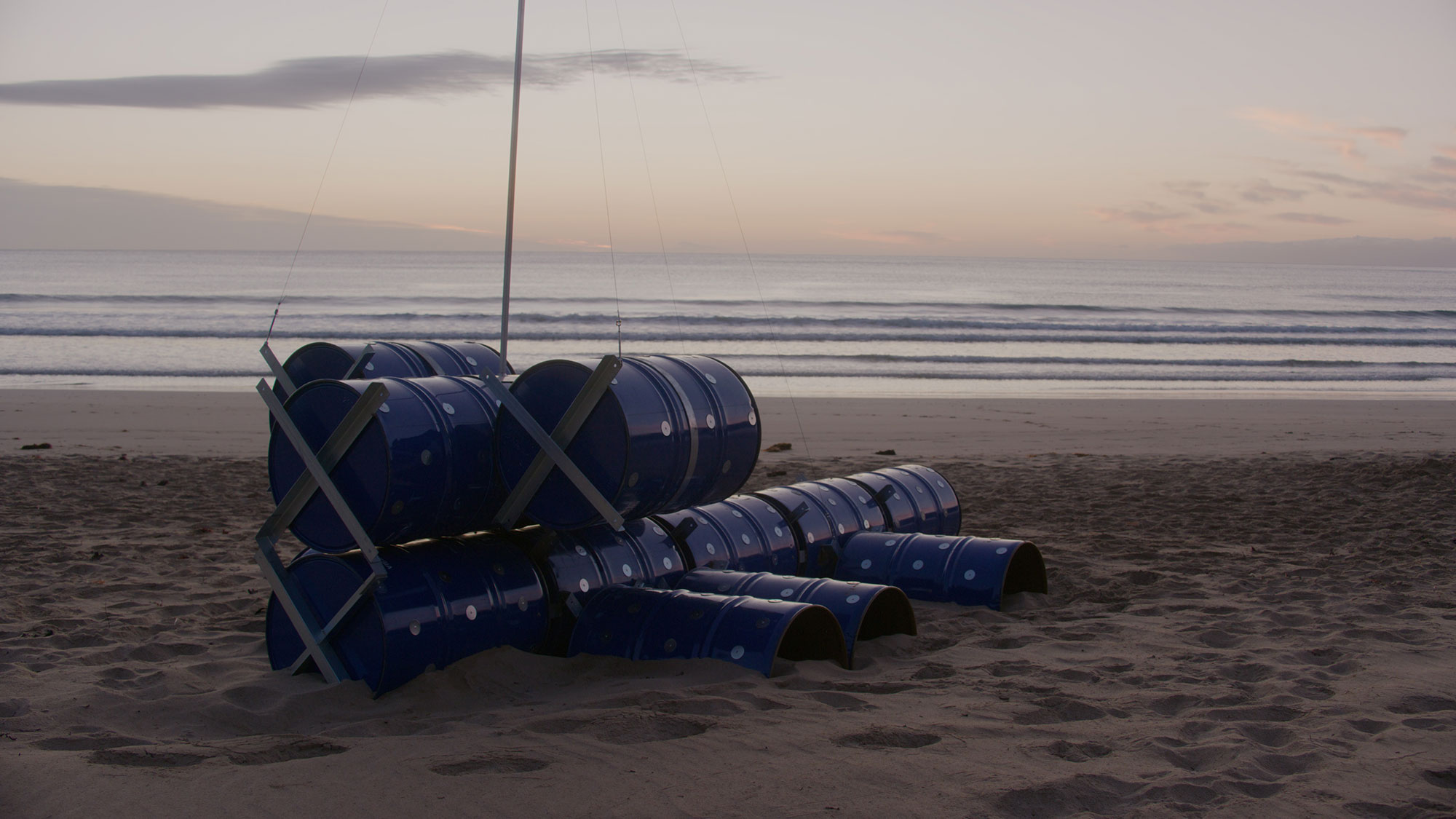
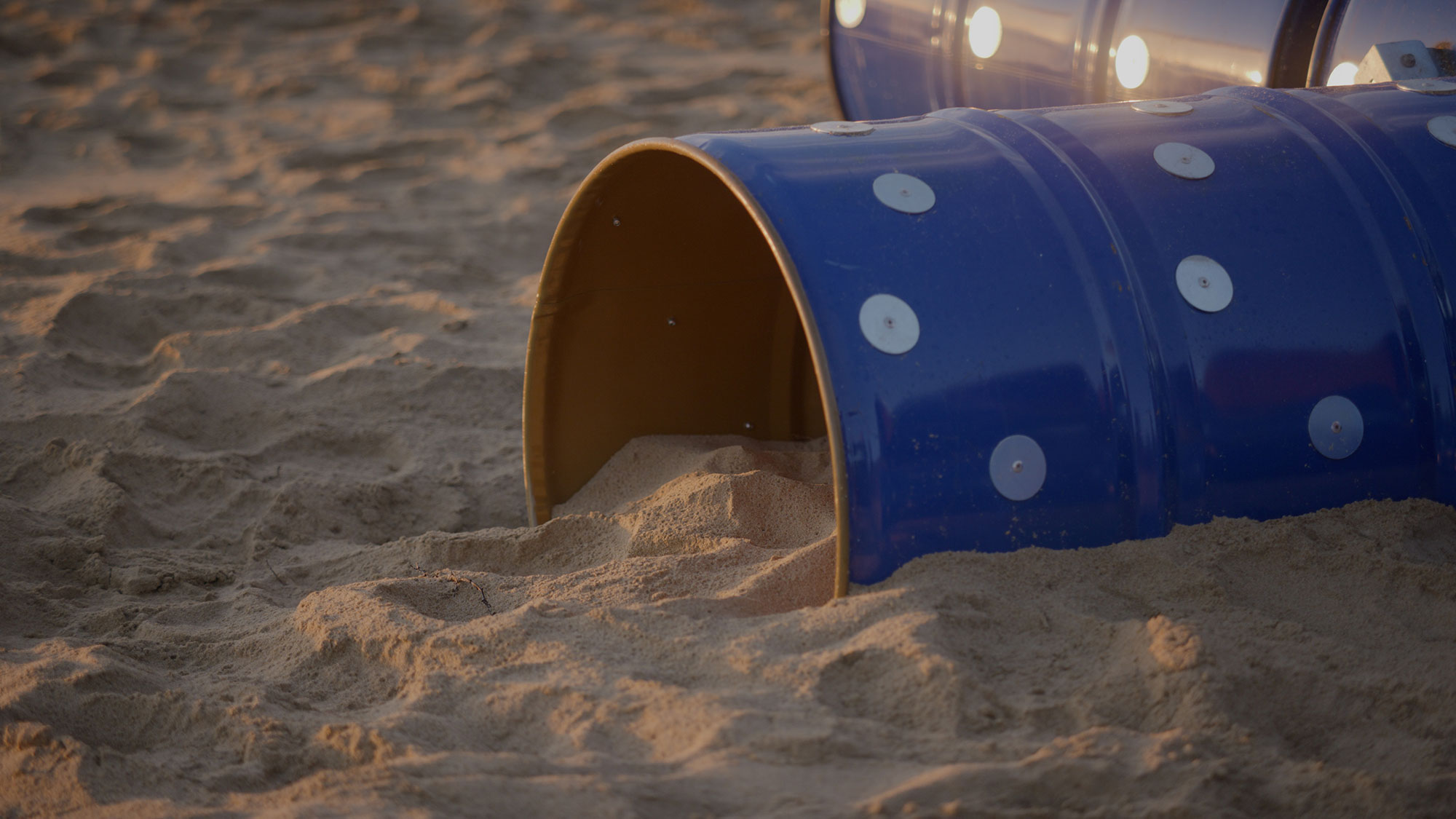
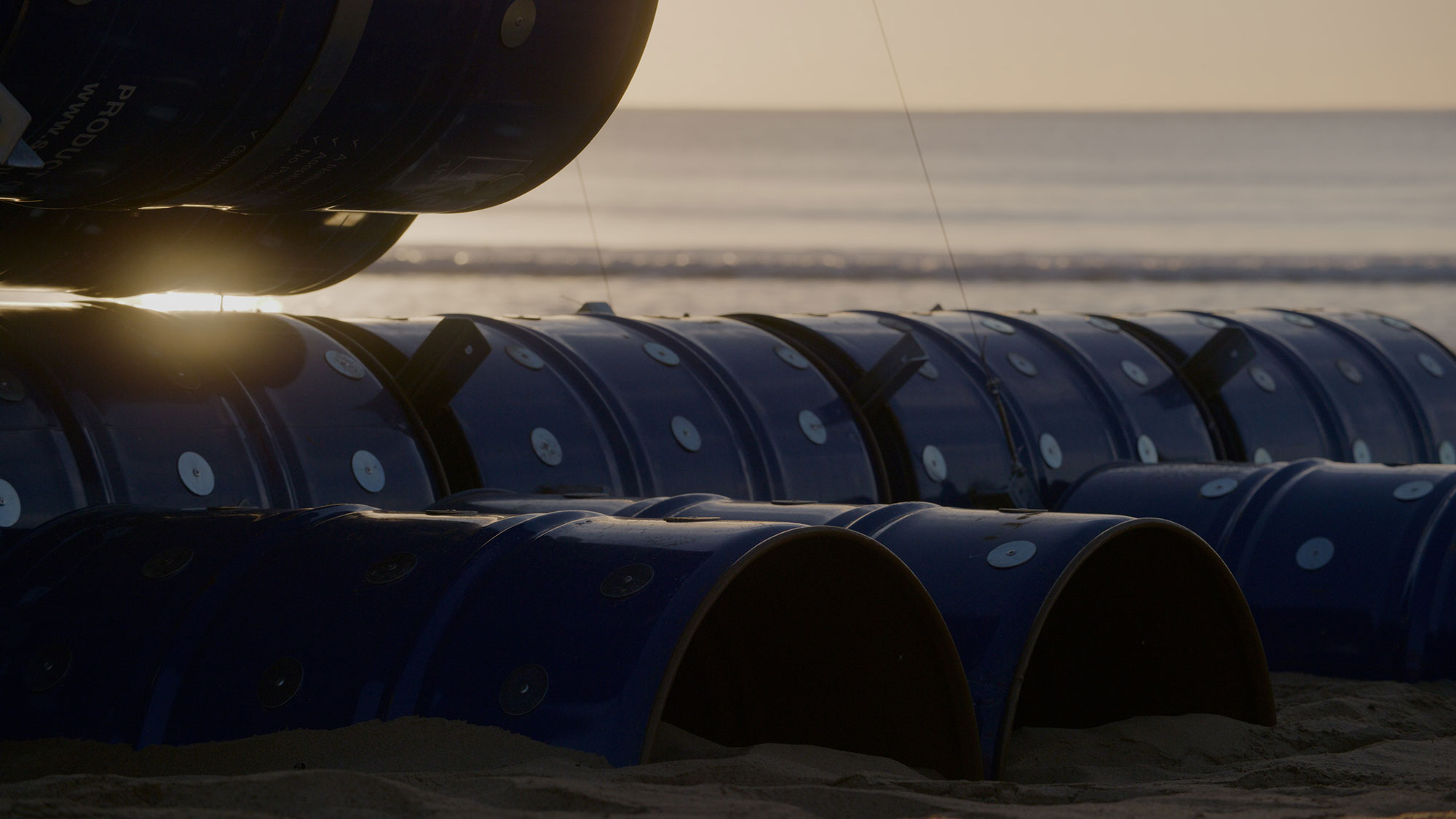
Constructed from salvaged industrial materials, including large coconut cream metal drums, ‘Future Fossil’ embodies Matt’s signature approach to reimagining materials and narratives. Metal washers punctuate the sculpture’s surface, mimicking the textures of fossilised sea creatures while also alluding to human-made technological imprints on the natural world. Over time, exposure to the sea air and sun will accelerate the sculpture’s decay, reinforcing its thematic engagement with temporality and ecological cycles.
Matt was particularly drawn to exhibiting at the Lorne Sculpture Biennale for its coastal setting, which aligns with Charity’s ongoing research into oceanic urban geography. The opportunity to create work in a regional Victorian landscape was a significant factor in his decision, providing a unique environment to explore themes of transformation, environmental history, and material decay.
Additionally, the chance to collaborate once more with Curator Simon Lawrie was an exciting prospect for Matt. Having previously worked together in 2017 on the McClelland Gallery exhibition ‘Dormitorium’, Matt was eager to reunite with Lawrie, whom he describes as open-minded and thoughtful.
“Simon Lawrie is not narrow in his thinking. He can see the architectural aspect to my approach. He takes care to listen and offer thoughtful advice. He is a good collaborator.”
Beyond its immediate impact at Lorne, ‘Future Fossil’ will also be exhibited at Linden New Art Gallery in St Kilda later in the year, extending its dialogue with audiences in urban settings.
A community-focused approach
For Matt, the Lorne Sculpture Biennale is particularly significant due to its community-oriented ethos.
“I love that this Biennale is community-focused and local. It is more meaningful to me than a global event,” he shares.
The opportunity to exhibit ‘Future Fossil’ in a coastal setting, where environmental and cultural histories intersect, offers a deeply resonant context for the work.
His collaboration with fellow MADA Lecturer Charity Edwards, a longstanding partner in research and practice, further enhances the project’s conceptual depth. Together with Jason Crow and Tom Morgan, their joint involvement in The Afterlives of Cities research cluster at MADA reflects a shared interest in revitalising disused buildings, spaces and towns through exploring new found purpose and design.
Through ‘Future Fossil,’ they bridge past ecological histories with present industrial transformations, inviting audiences to reflect on humanity’s evolving relationship with the natural world.
Shaping the future of architectural practice
“My creative practice has influenced my approach to teaching. I encourage students to develop their unique perspectives and instill confidence in their ability to navigate complex design challenges,” Matt explains.
He emphasises architecture as a tool for critical thinking, urging students to engage with pressing global issues beyond aesthetics and function.
As a mentor and educator at MADA, Matt envisions an evolving future for architectural education—one that embraces dual disciplines and equips emerging architects with versatile skill sets.
“The new practitioner is one that is dexterous and can operate across a range of disciplines,” he asserts.
This belief underscores his own career, where his work spans architecture, art, performance, and scientific collaboration.
Invitation to explore the Future Fossil
Matthew Bird’s selection for the 2025 Lorne Sculpture Biennale is a testament to his boundary-pushing practice that seamlessly weaves together architecture, art, and pedagogy. As he continues to challenge conventional disciplines, Matt remains committed to creating work that provokes thought, sparks curiosity, and redefines how we perceive the built and natural environments. ‘Future Fossil’ is not just a sculpture; it is an invitation to contemplate time, transformation, and the traces we leave behind.
Photography by James Wright (NonStudio).