Placemaking Clarence Valley
Placemaking is a collaborative and Country-centred approach to improving the built and natural environments of neighbourhoods, towns and regions. It involves people collectively reimagining and reinventing public spaces, strengthening the connection between the places they share, and more broadly Country. While placemaking carries colonial distinctions of public and private space, its decolonising potential lies in its core aim of consensus-building and collectivism around spaces and places, a significant world view in Indigenous Knowledges. It plays between blurring such binaries, whilst still navigating the complexities of current day regulatory and land use hurdles.
Placemaking Clarence Valley put this approach into practice. The project advanced service-learning to assist diverse communities in regional NSW to identify, ideate and plan for place-based improvements to their localities following the 2019-2020 bushfires across Australia.
Designers and Project Team:
Lead Community Team (Fire to Flourish Clarence Valley)
Roxanne Smith (Wiradjuri/Ngemba), Cara MacLeod, Pamela Denise and Faye Neil
Lead Research Team (Department of Architecture)
Professor Mel Dodd, Nikhila Madabhushi, Robert Lees
Supporting Community Members (Clarence Valley LGA)
Shakti Mudra, Leonie Pankhurst, Kaya Jongen, Wesley Fernando (Gamilaroi) and Jessica McPherson
Contributing Monash Architecture Students
Lilli James, Chantelle Lappin, Athiqah Ummi Salma, Andrew Gregory, Jessica Hordern, William Cupido, Ashley Ho, Hayden Brown, YeeWen Chuah, Huei Sze Yeap
Contributing Monash Urban Planning Students
Yuk Chun Kwong, Daniel Mersin, Sam Granger, Jason Lee, Ti Ju Yang, Mohanapriya Madurai Jawahar, Kiana Nabighods, John Momis
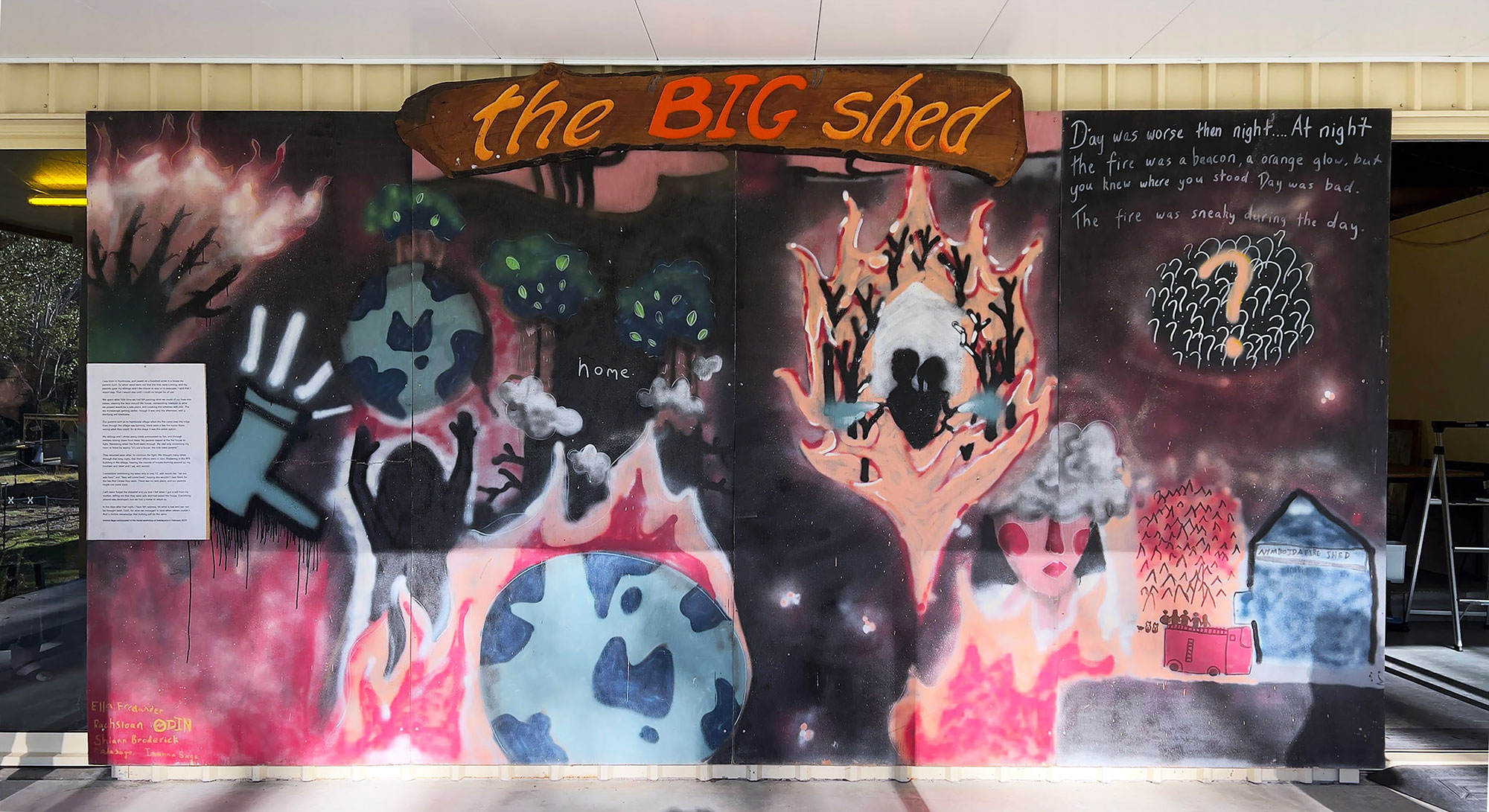
The 2019-2020 bushfire season in Australia was characterised by its unprecedented scale and severity of destruction, devastating vast swathes of Country, communities and built environments, and marking one of the most intense bushfire seasons in the nation’s history. For many communities this catastrophe was compounded by the Covid-19 global pandemic, the 2022 Northern Rivers floods and ongoing bushfires since then. Placemaking Clarence Valley was achieved through the Fire to Flourish program, which uses a community-led, strengths-based approach to build resilience to disaster.
This project responds to increasing evidence that communities that have greater social and civic connectivity respond better to catastrophic events. A closeness and relationship with ‘place’ are what enable communities to self-organise and solve problems in a crisis. Such relationships affect social equity, which also influences social resilience. A ‘placemaker’ – as distinct from an architect, designer, planner or expert – is inclusive of all who make and sustain the quality of human settlements, including the people and communities who live in a place. ‘Placemaking’ is therefore an important ingredient of resilience-building processes, growing social networks, capabilities and long-term resilience, through both the process and the designed outcomes.
Placemaking on Bundjalung, Gumbaynggirr and Yaegl Country
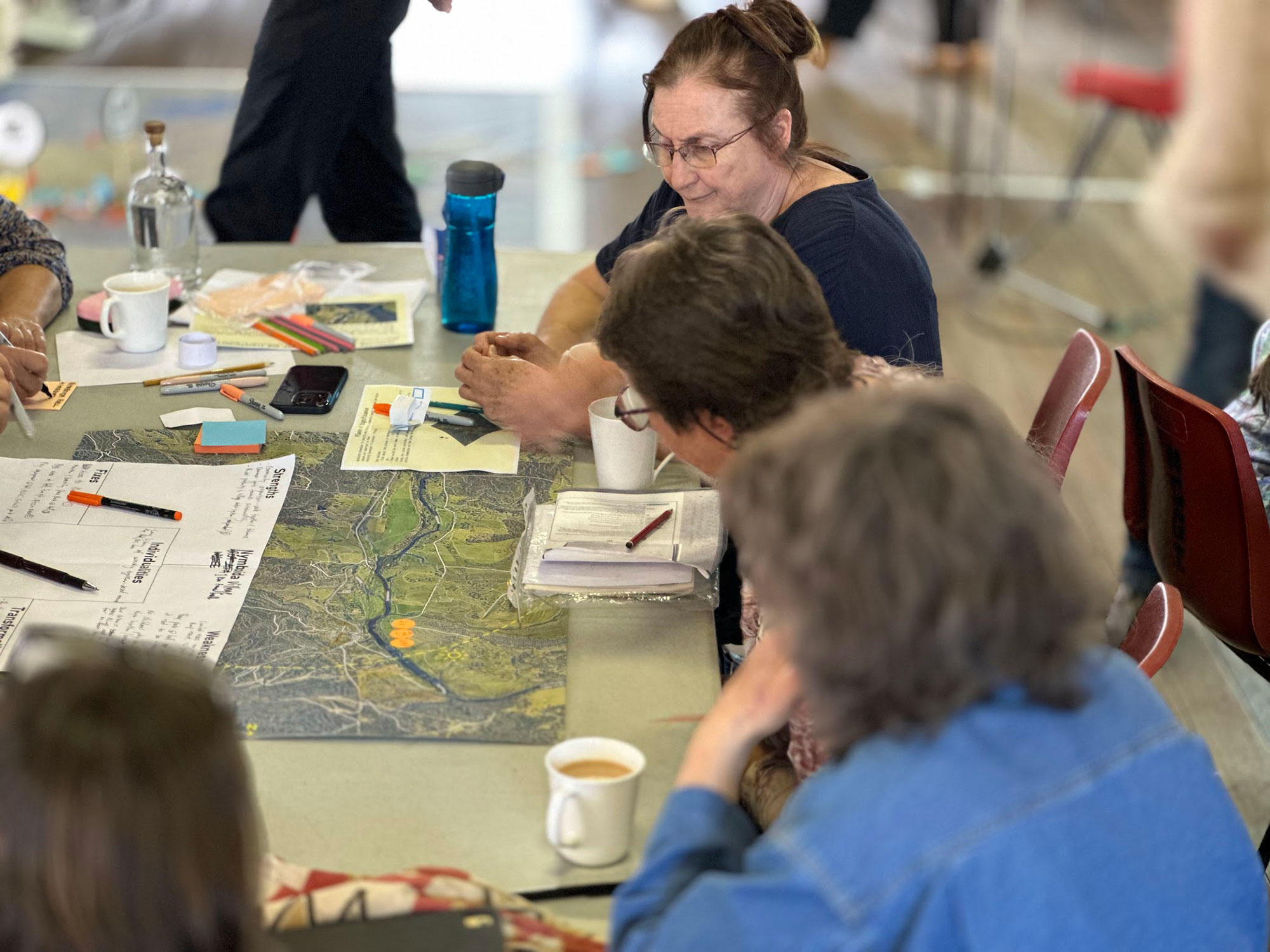
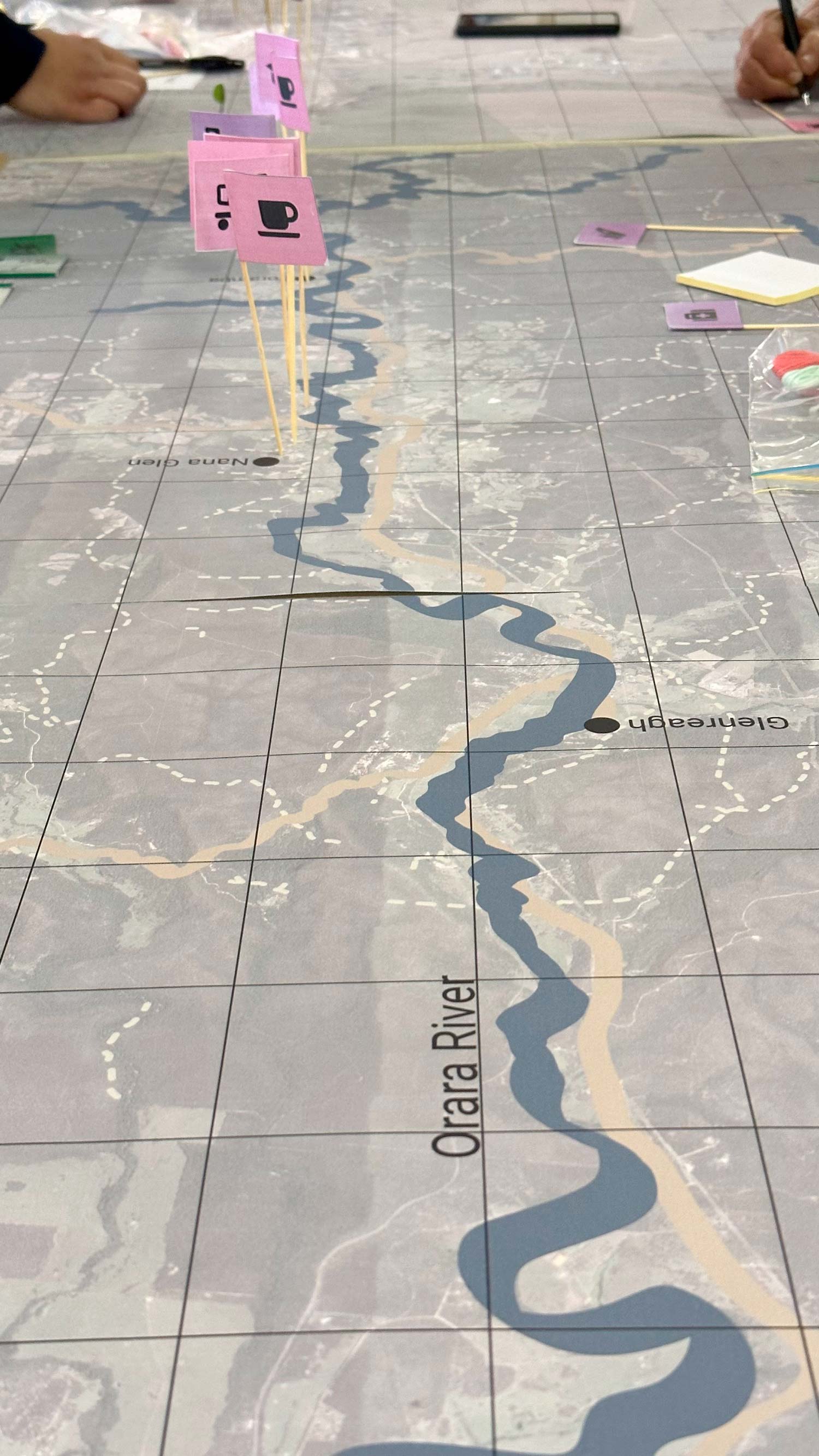
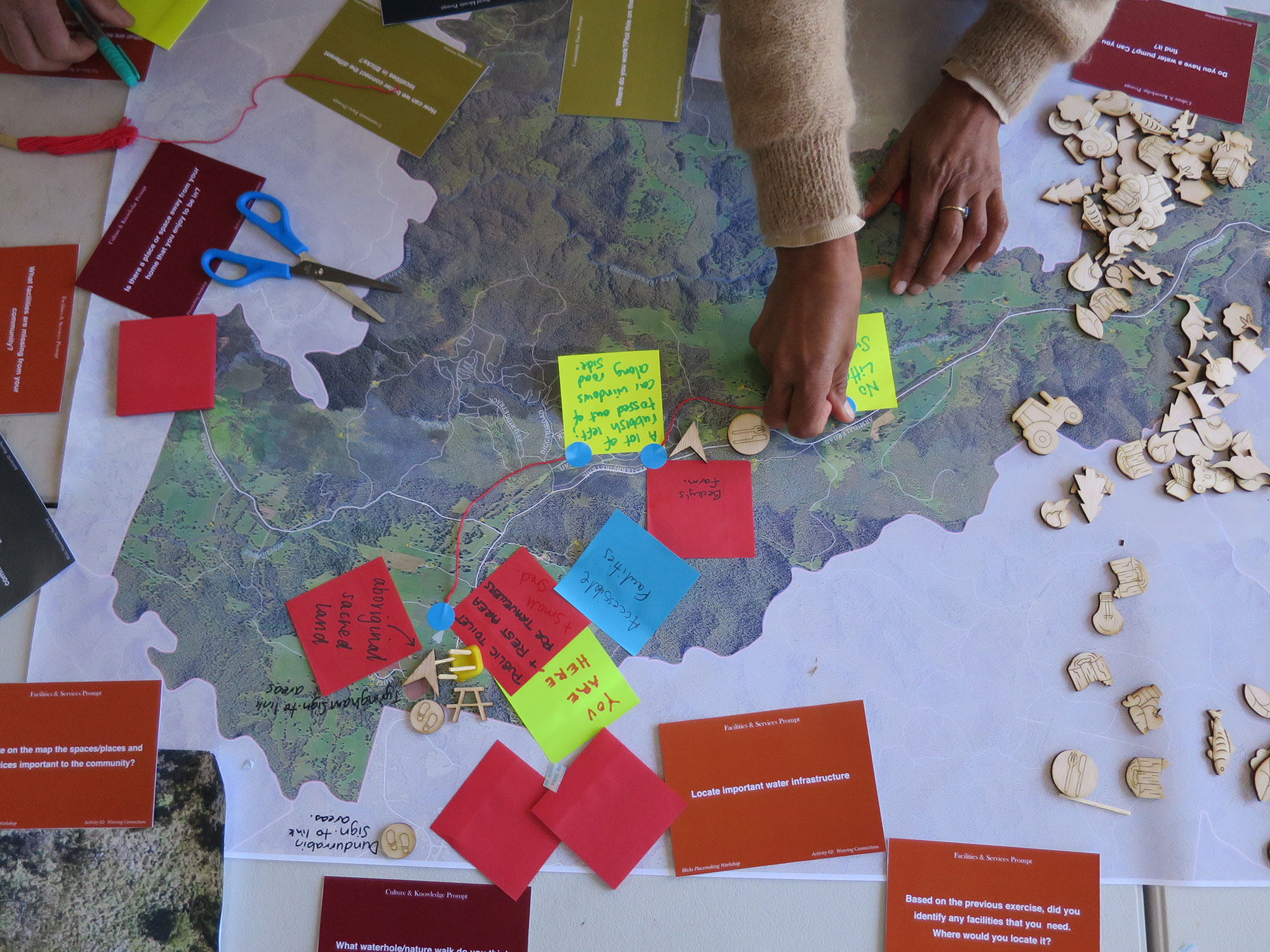
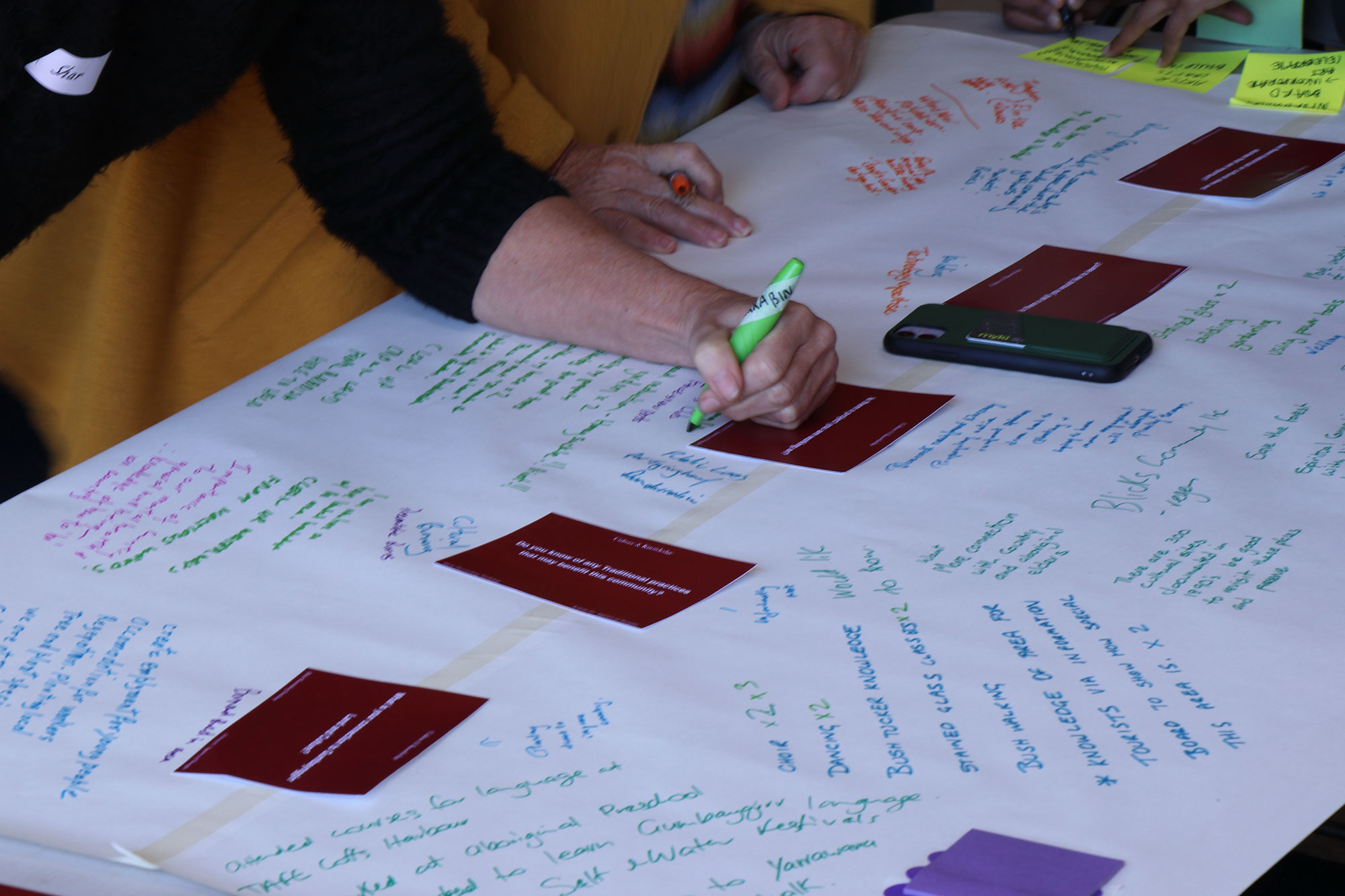
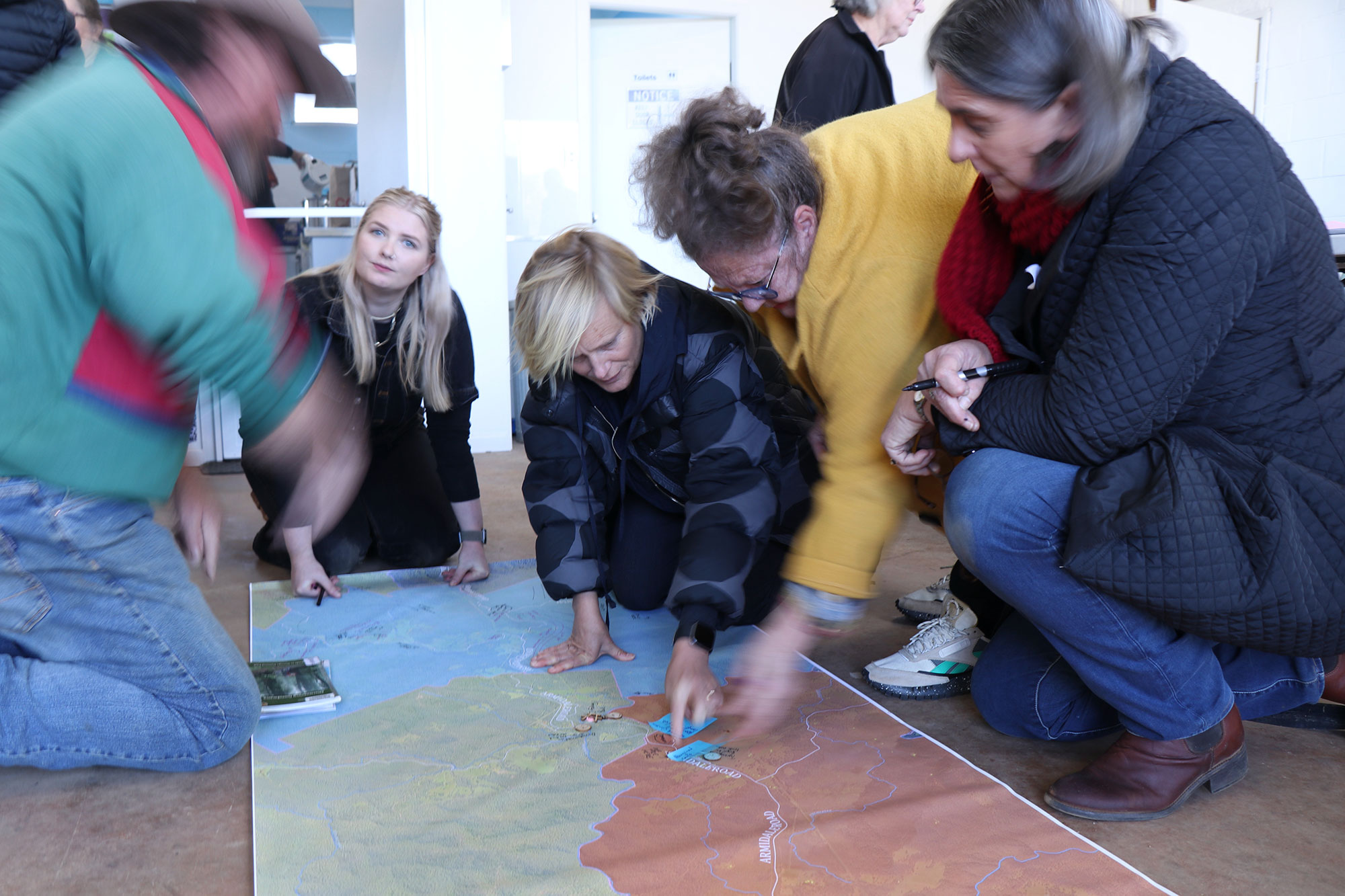
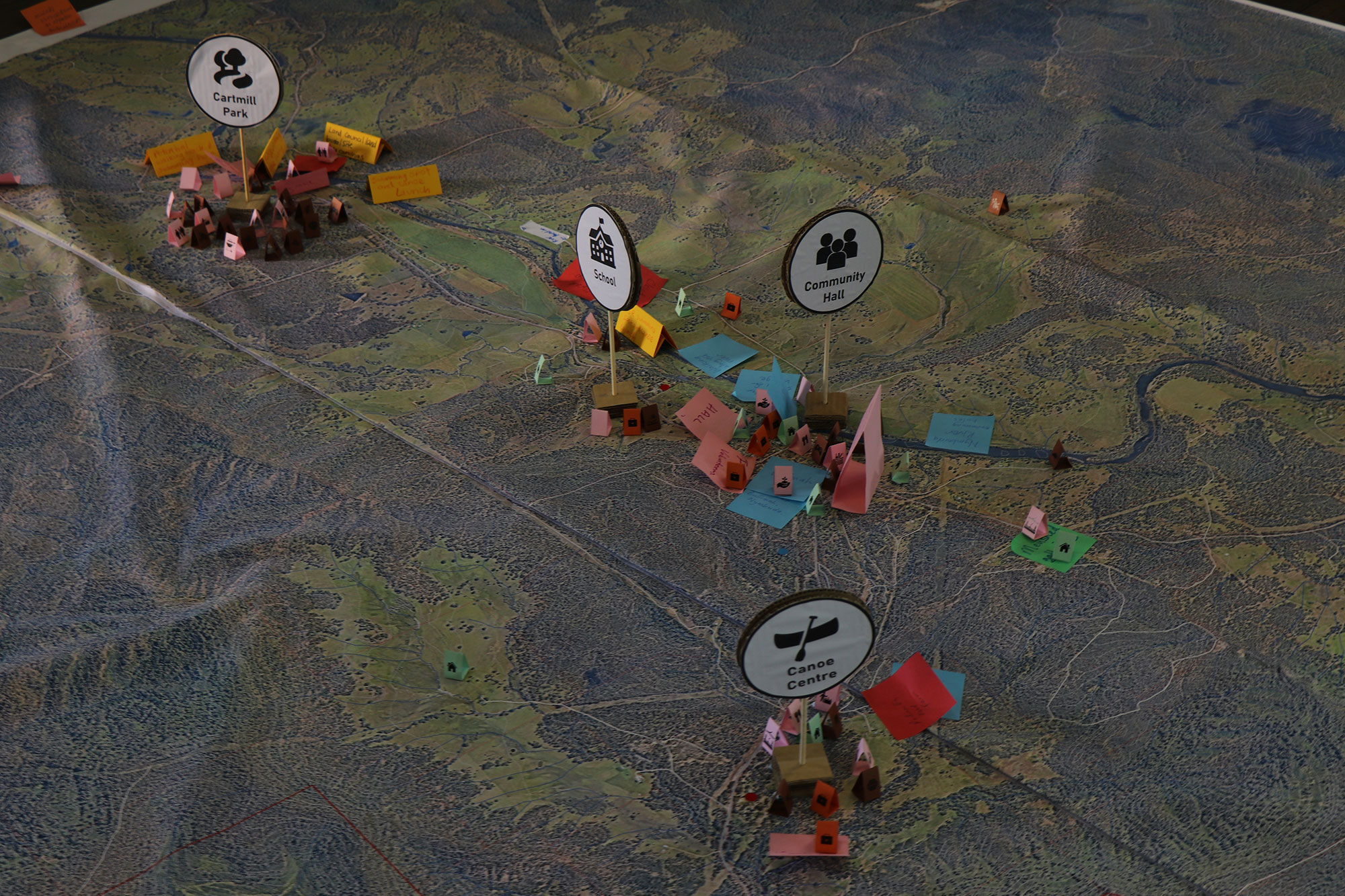
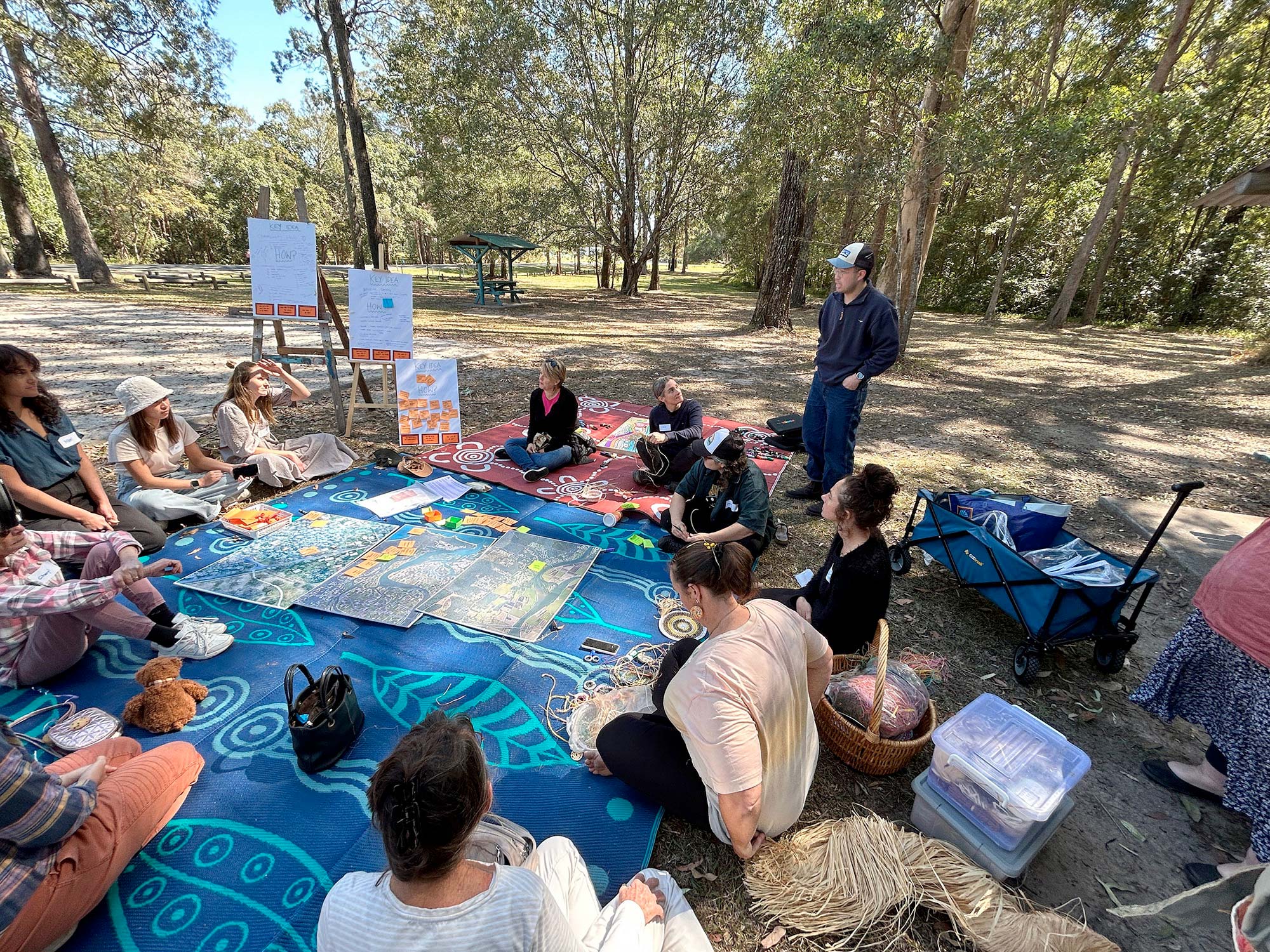
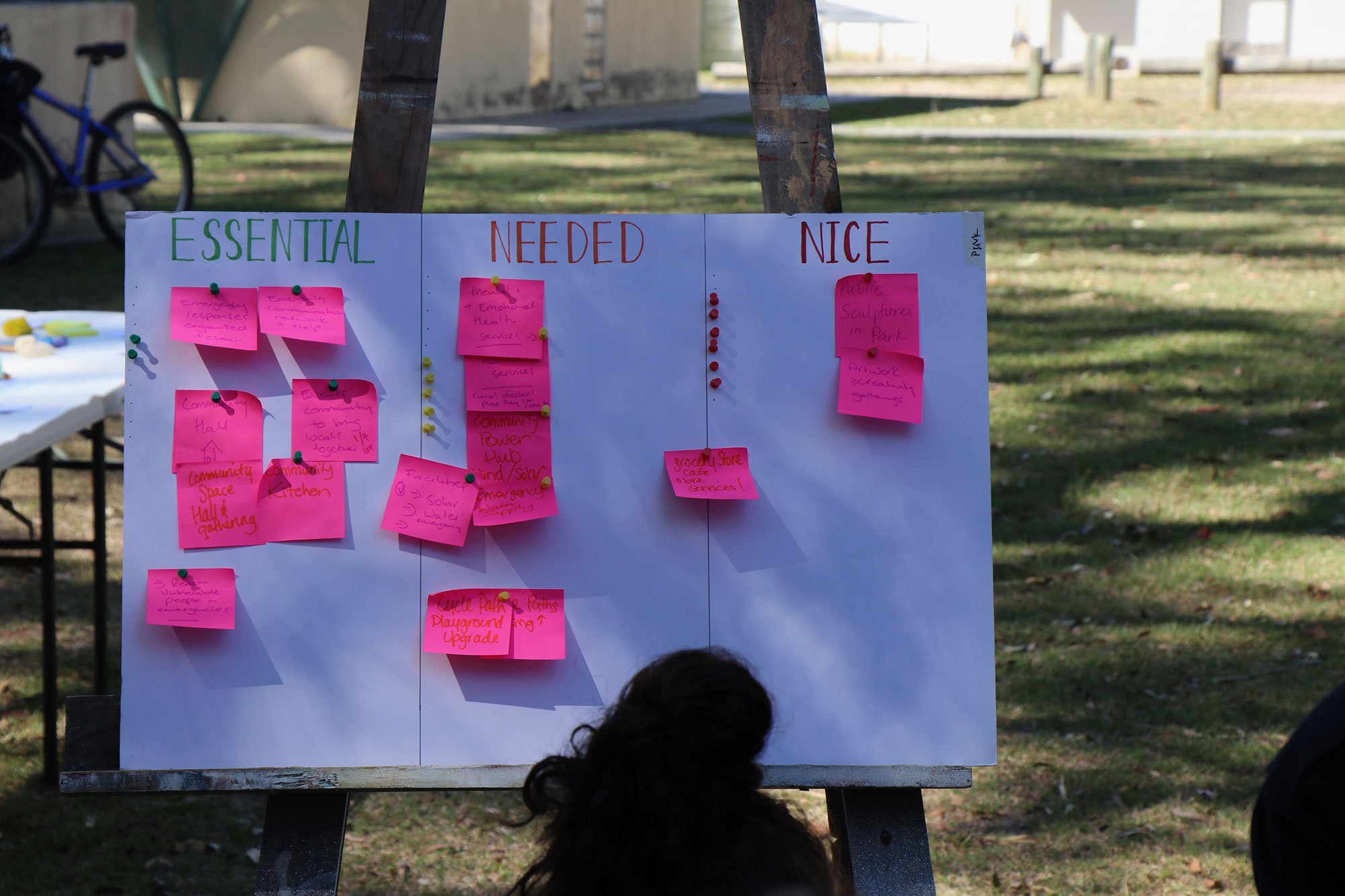
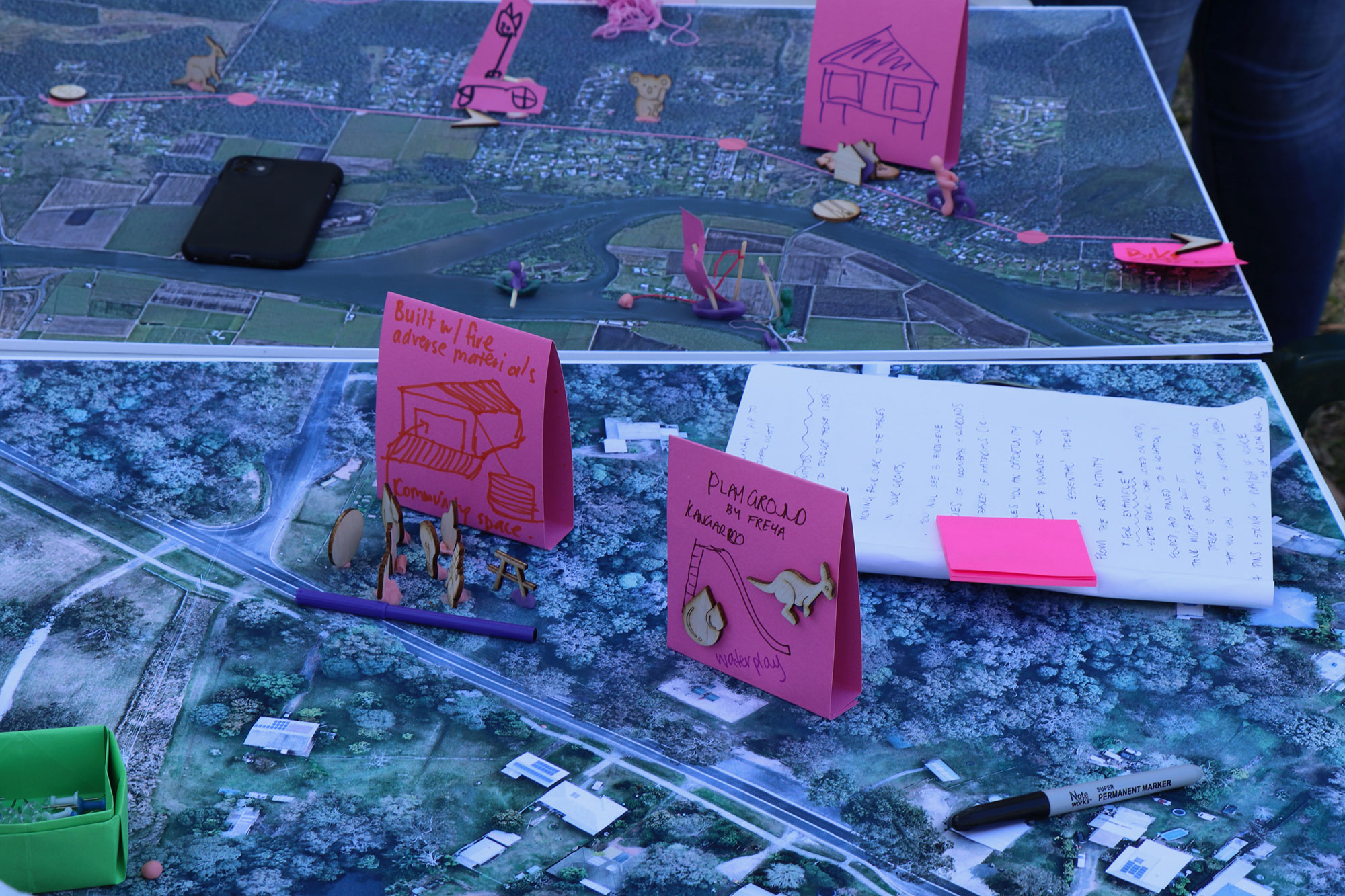
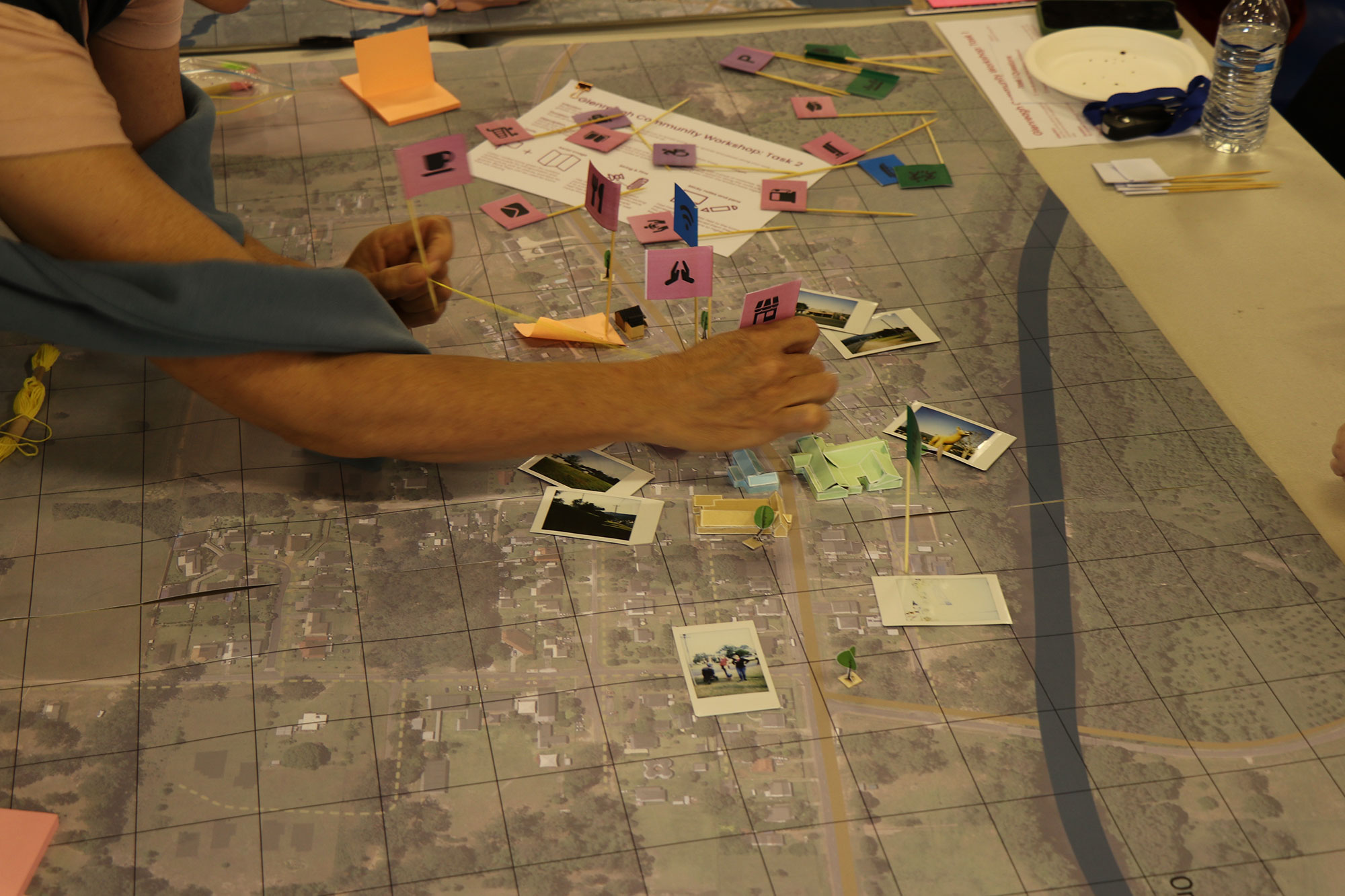
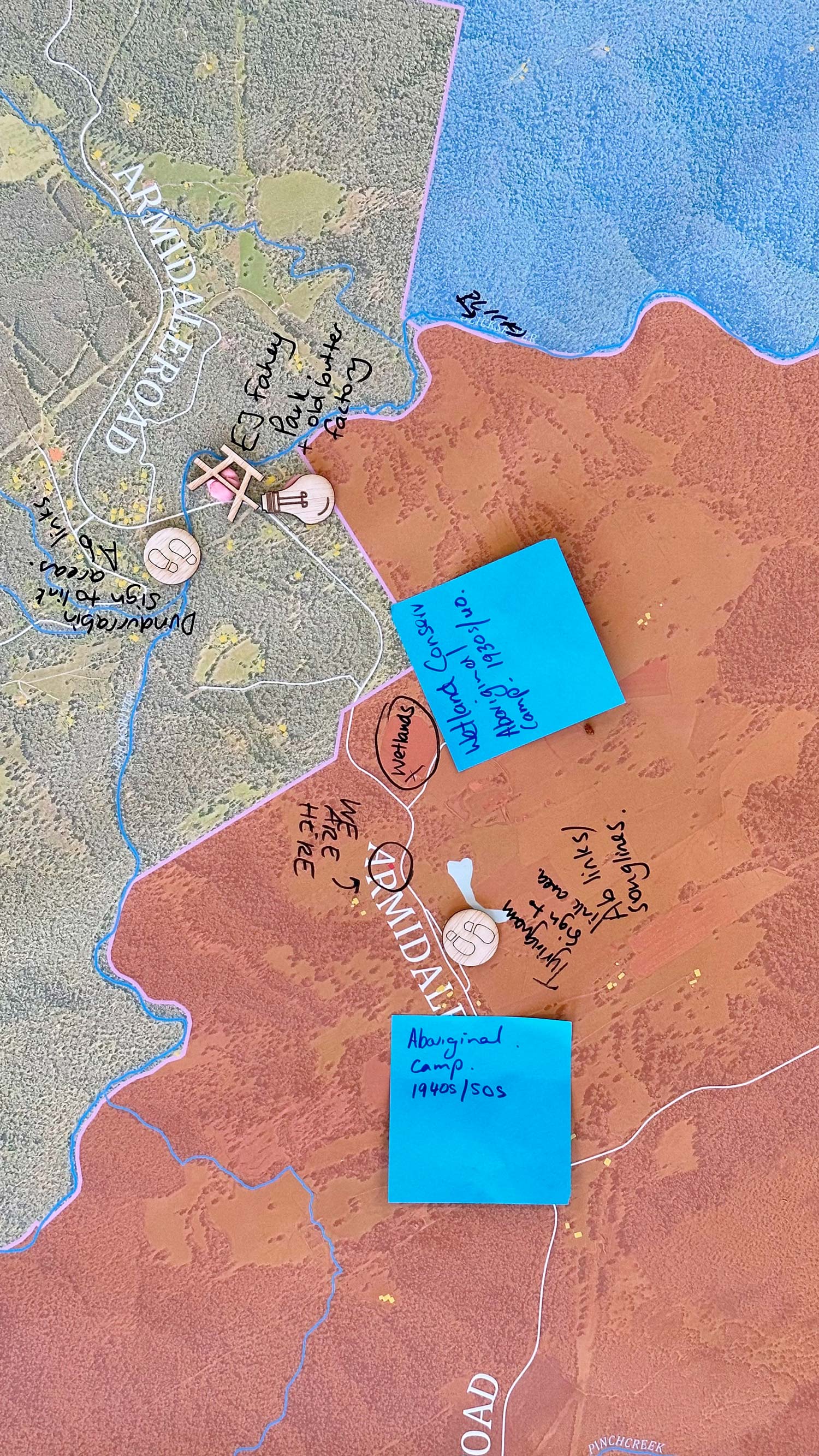
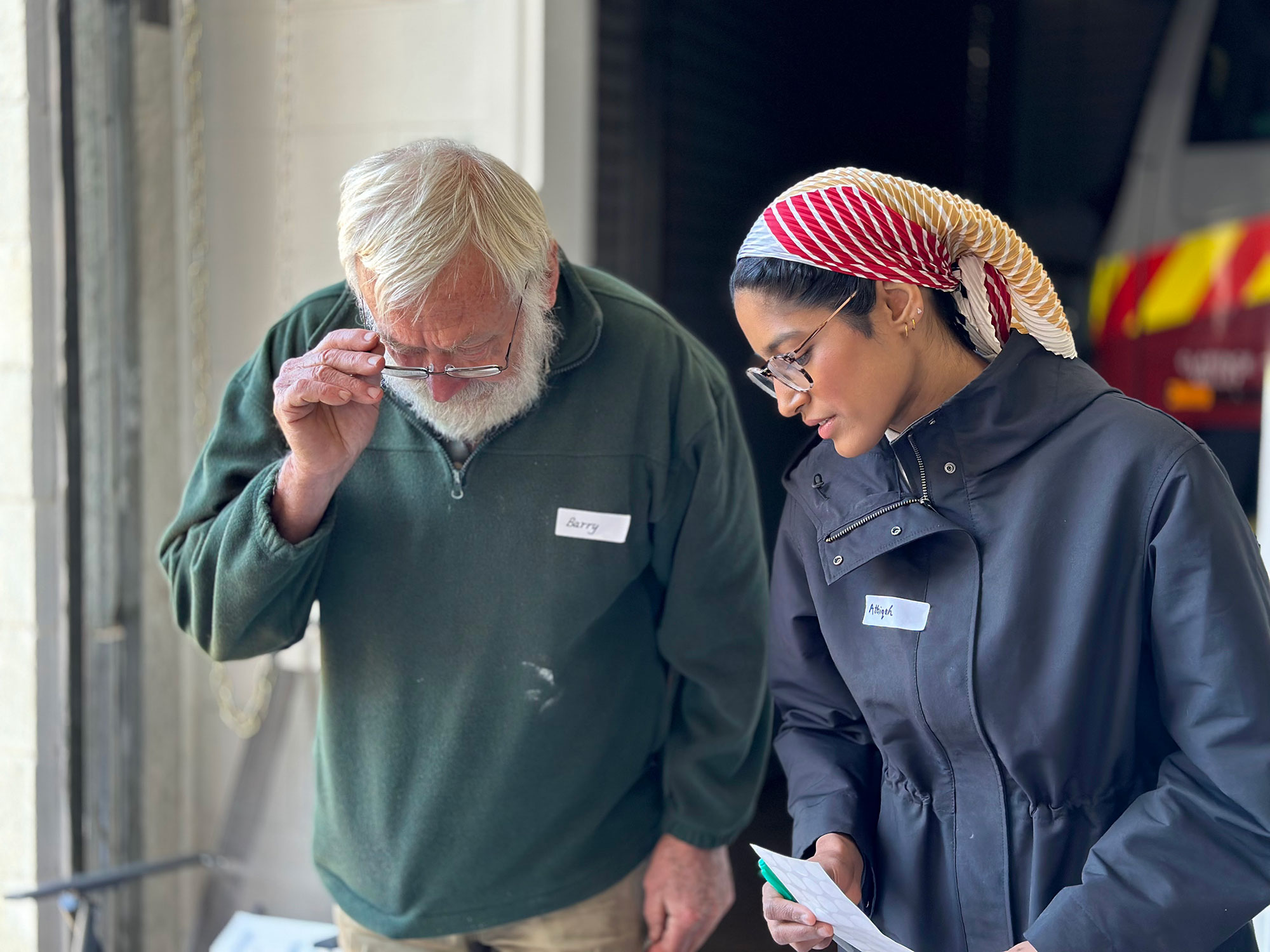
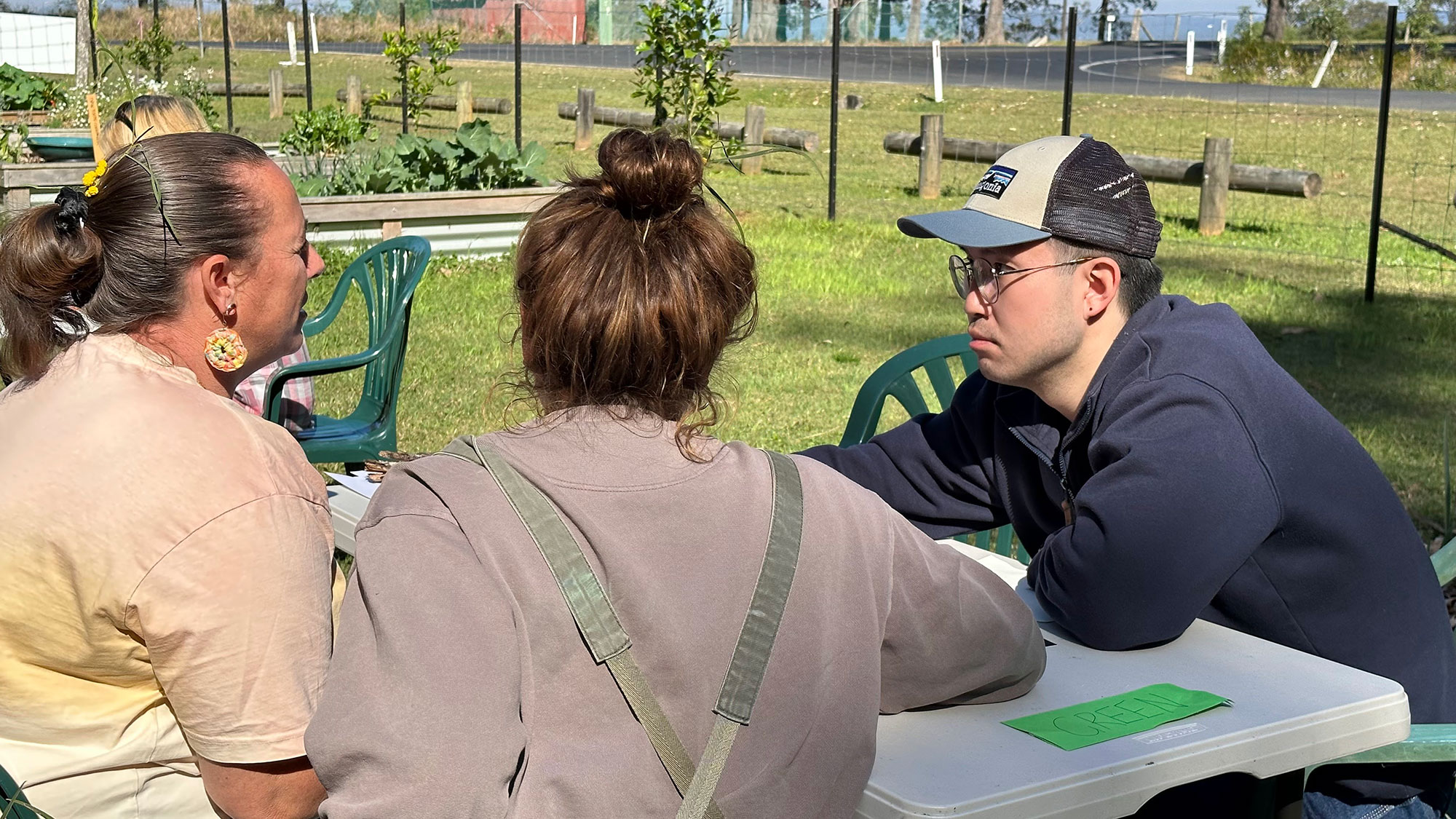
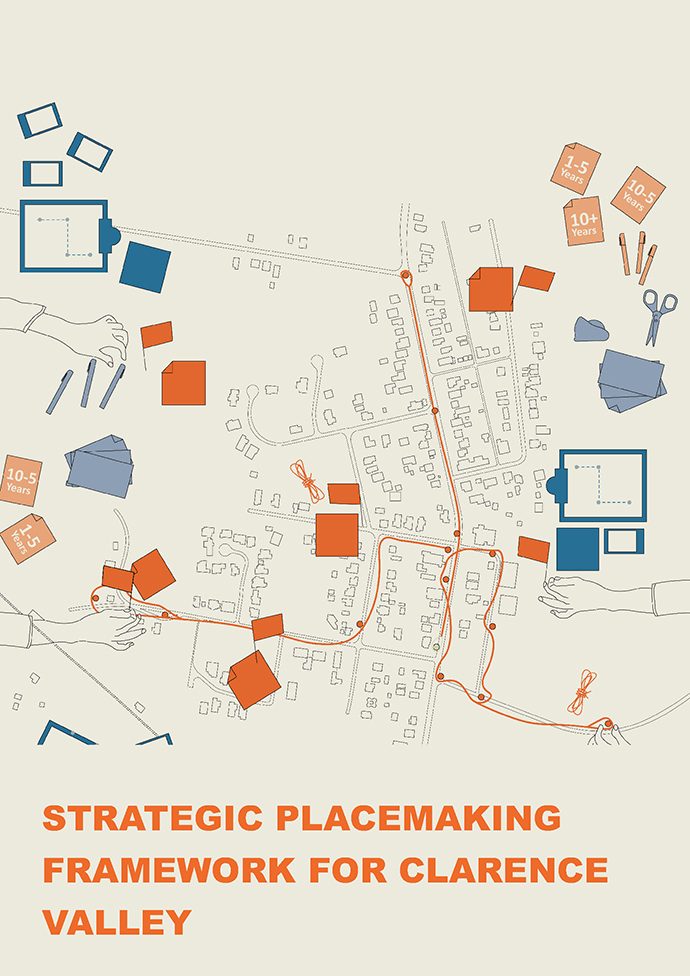
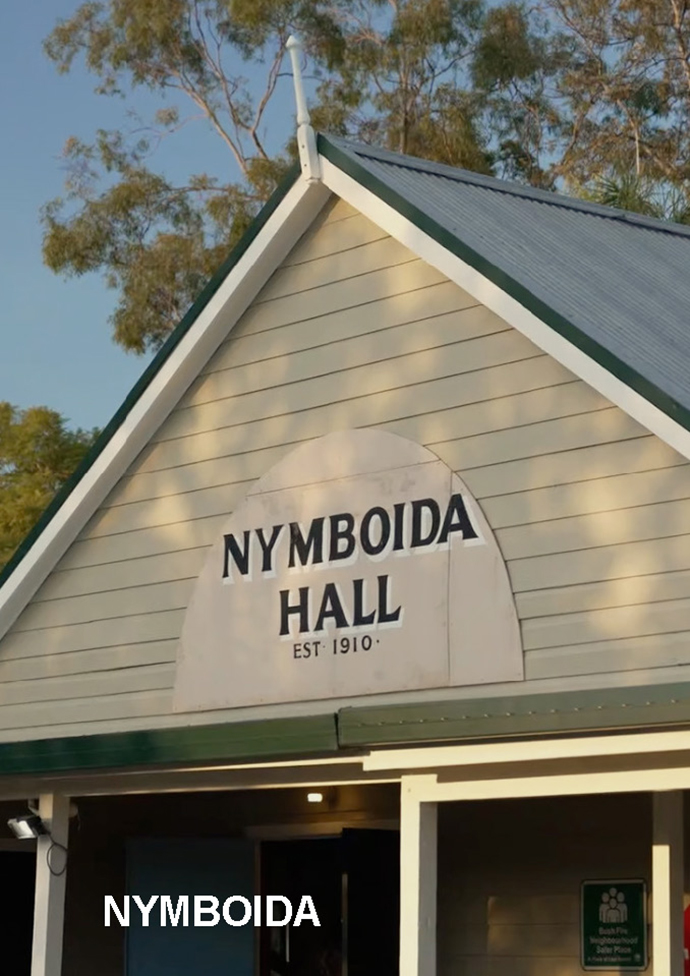
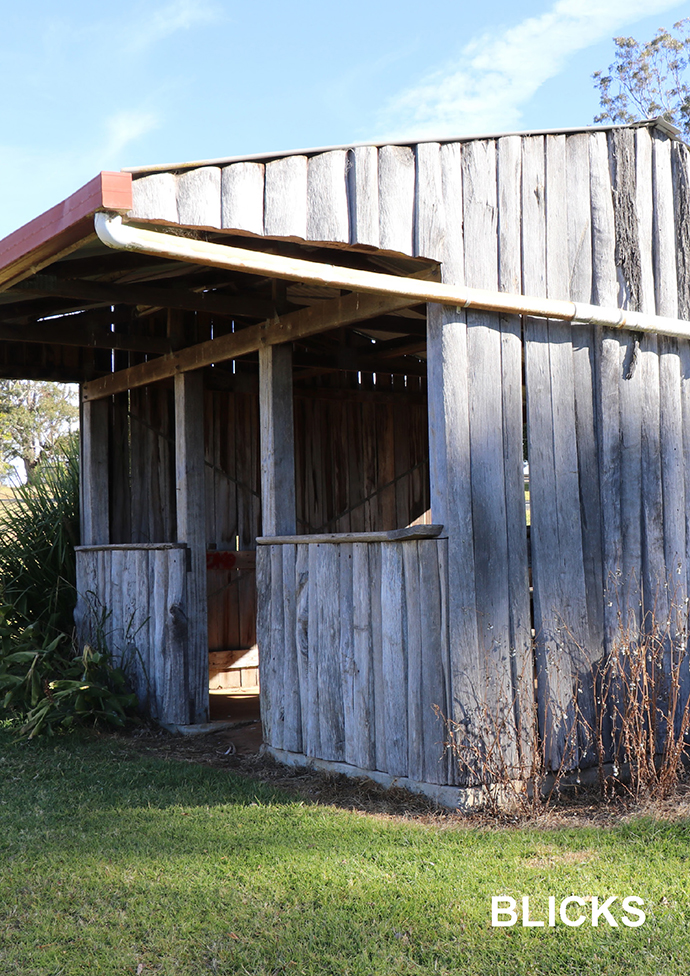
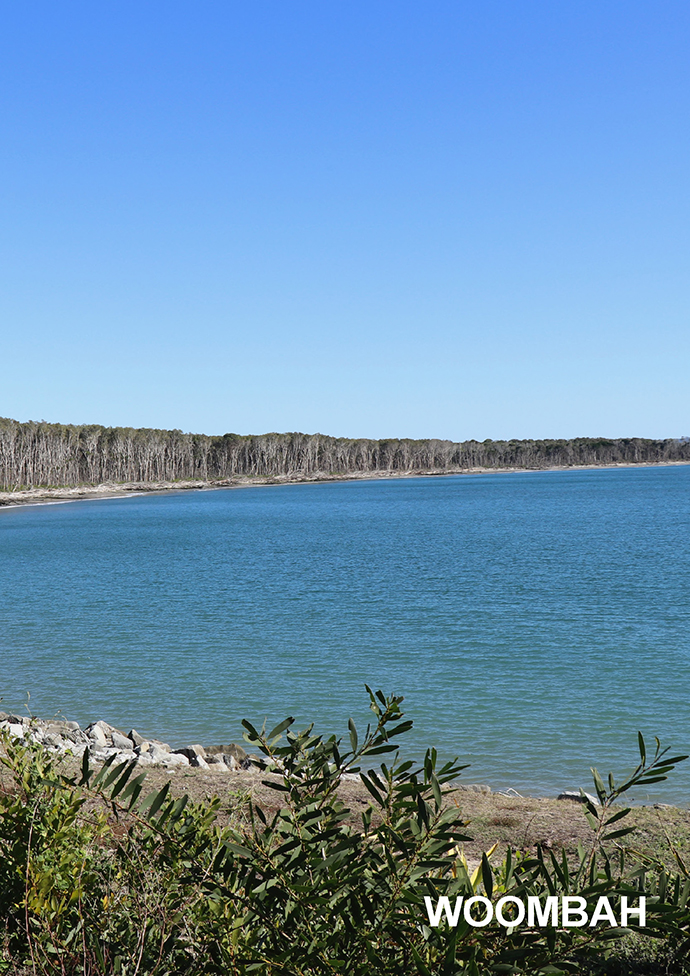
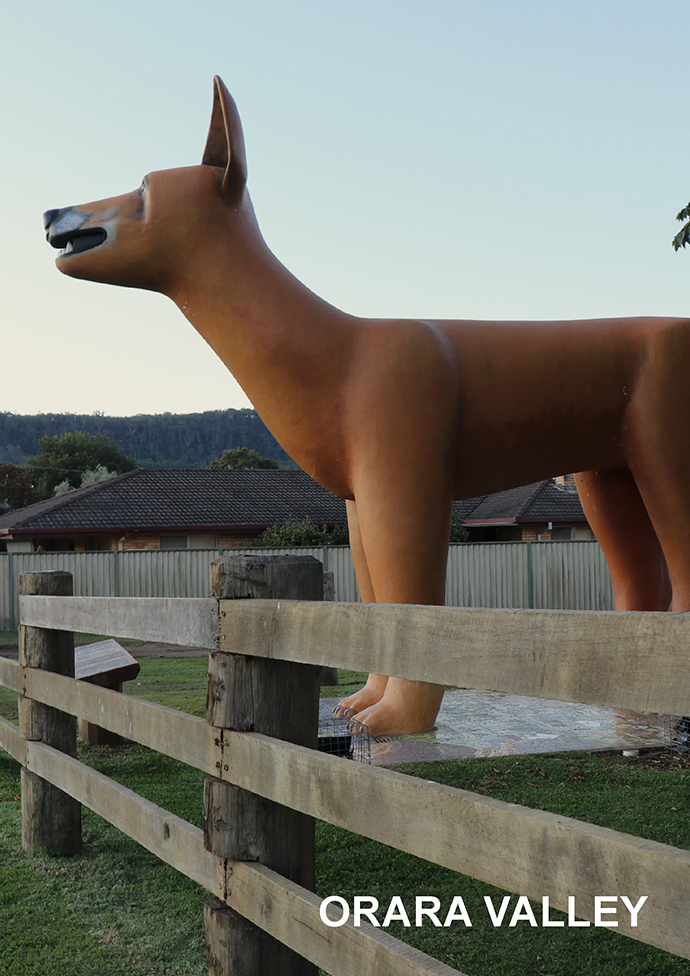
Working under a research-led service learning model, the research team partnered with Fire to Flourish Clarence Valley as part of their ongoing recovery processes. Four communities in Woombah, Glenreagh (Orara Valley), Nymboida and the Blicks River communities of Tyringham, Hernani, Dundurrabin (Bundjalung, Gumbaynggirr and Yaegl Country / NSW) worked alongside the research team and Master of Architecture and Master of Urban Planning and Design students to bring diverse locally-led placemaking ideas to life. This included the design and facilitation of field-based co-creation workshops where local people were invited to share and develop ideas for places and spaces that contribute to broader resilience building initiatives in their locality. As this research-led studio contributed to a live program, the engaged communities have been provided with Strategic Placemaking Frameworks that reflect and synthesise the communities’ visions for building resilience. These key outcomes have aided community groups and individuals to engage in Fire to Flourish’s participatory grant funding program, through an auspice arrangement with Northern Rivers Community Foundation. These outcomes have also assisted locals to plan for future funding opportunities put out by government and non-government agencies.
Placemaking Clarence Valley has sought to disrupt standard modes of architectural production through working at the intersection of participatory design, community development and disaster resilience.
Participatory Granting
Clarence Valley Community Facilitator Pamela Denise describes the multi-stepped process of participatory granting that the design studio helped support:
- The participatory granting was a staged, nuanced process in which each community could engage in a facilitated conversation within a MADA-led placemaking workshop, about increasing the district’s resilience and disaster preparedness by improving public places. The community engagement process took over a year and resulted in a community-led decision making process through preferential voting over a 2-week period. The approved projects are anticipated to commence May 2024, and are to be concluded by October 2025.
The following diagram describes the timeline and activities within the process advanced in Placemaking Clarence Valley including a link to the funded projects.

ADRC24 Fire to Flourish discussion highlights: Placemaking as a Catalyst for Building Resilience
The Australian Disaster Resilience Conference #ADRC24 and the #AFAC24 conferences were held on Gadigal Country in Sydney on 3–5 September 2024, creating opportunities for momentum-building conversations, learning, sharing and planning for a future of disaster resilience.
As ADRC24’s official Knowledge Stream Sponsor, it was encouraging to see significant recognition of the Fire to Flourish community-led model of sustainable resilience.
This short video shows highlights from a Fire to Flourish-hosted discussion on Thursday 5 September: Placemaking as a Catalyst for Building Resilience, moderated by Nikhila Madabhushi.
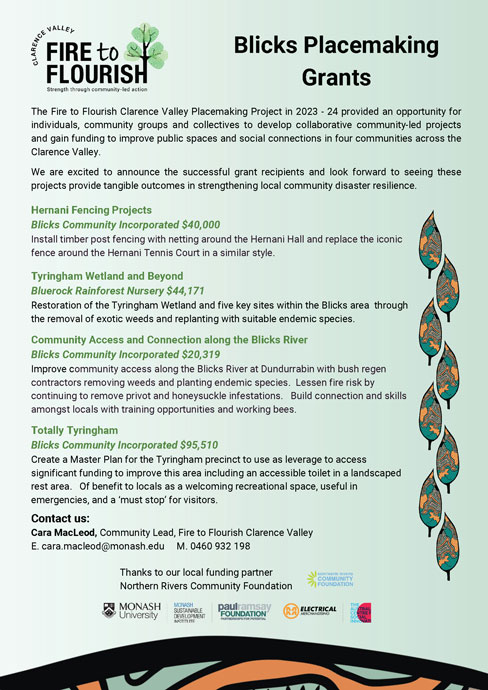
Granted Projects
Placemaking Frameworks
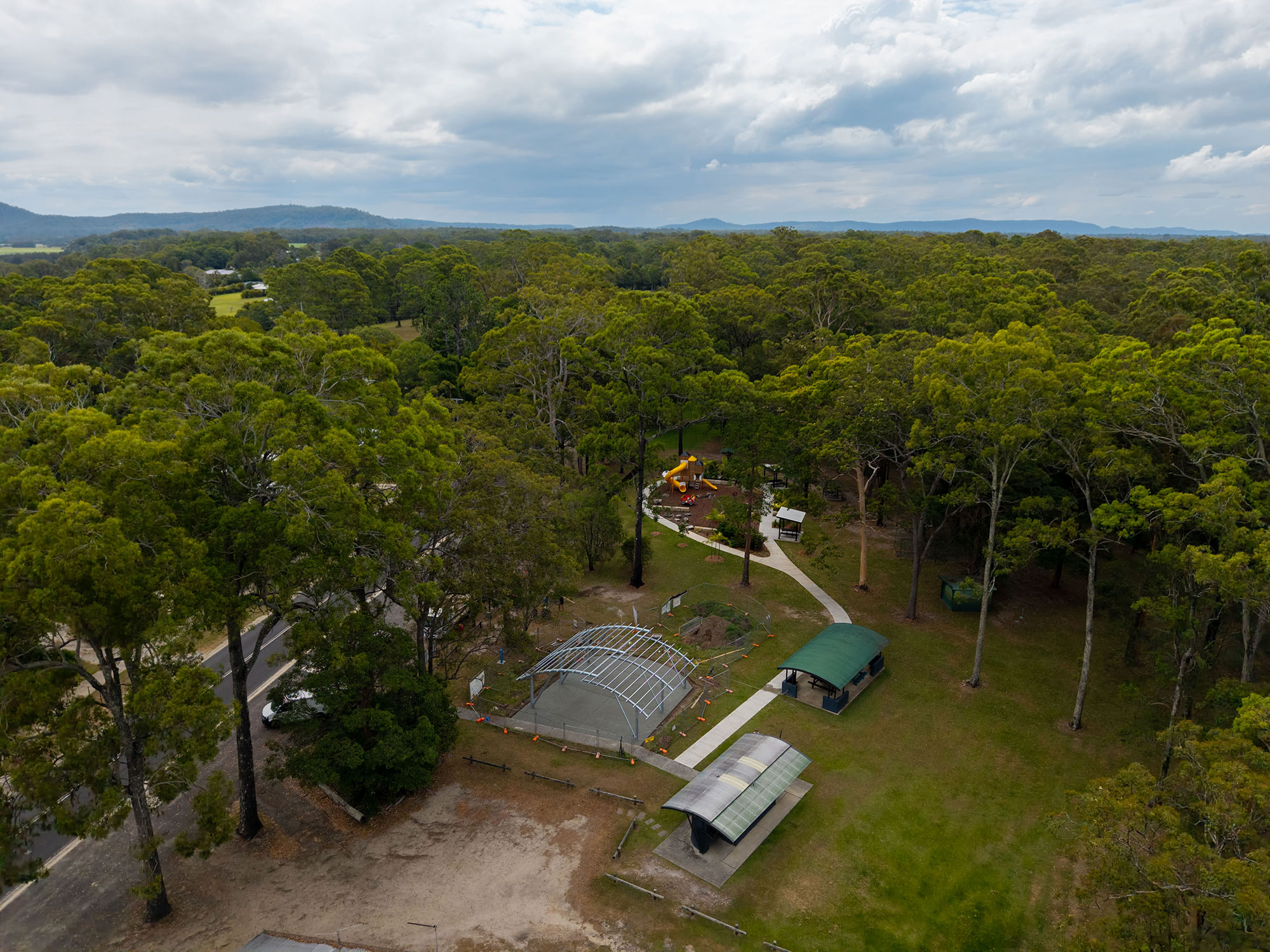
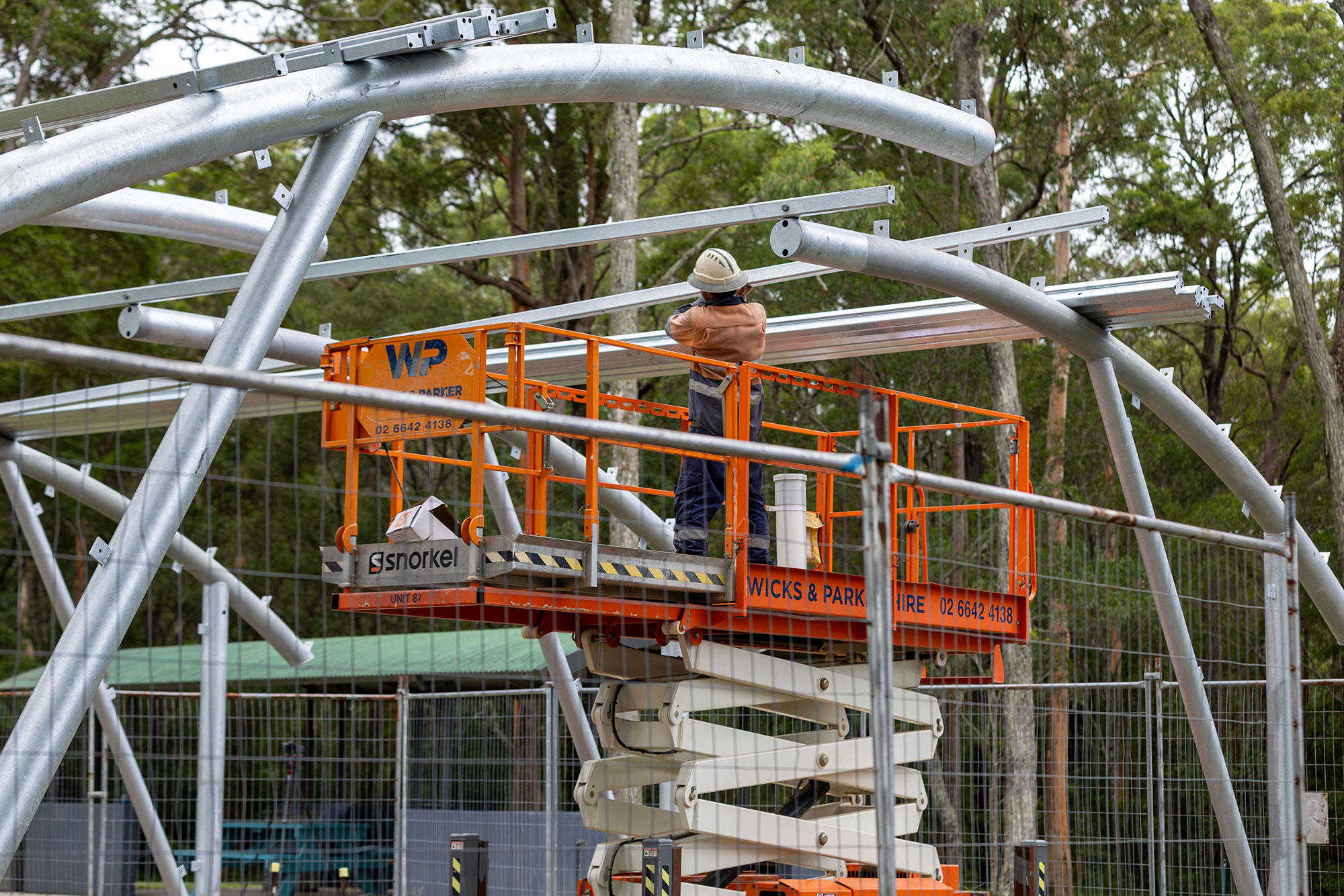
Project highlight: Woombah Shelter
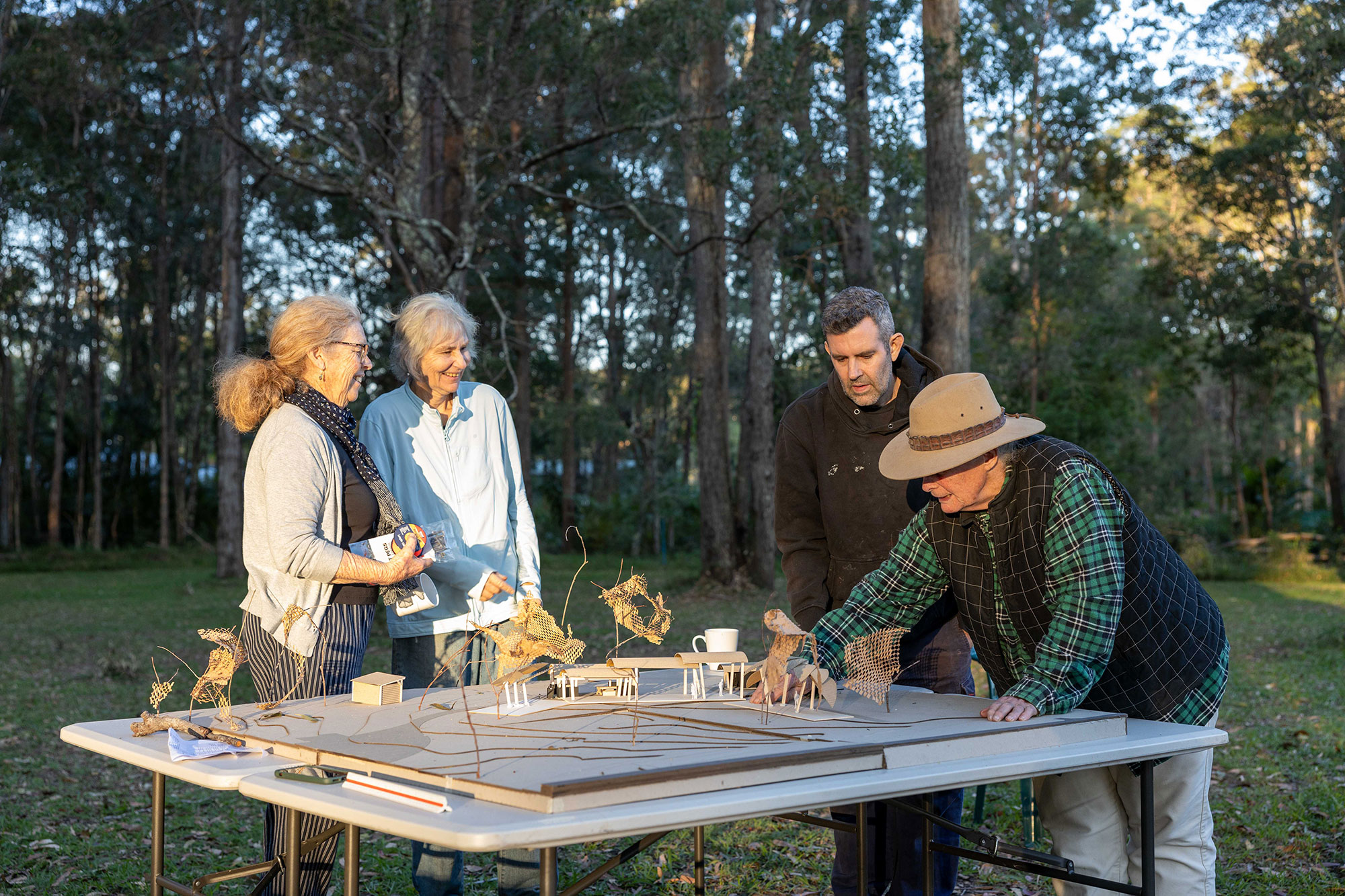
Woombah residents secured $200,000 through the Clarence Valley Placemaking Program to deliver an all-weather, inclusive community shelter for meetings, workshops and cultural events. Following the grant award, the placemaking team worked closely with the community to develop the design, beginning with an in-person workshop to explore site options and translate local ideas through hands-on model making. Several rounds of design refinement and community feedback followed, leading to a finalised proposal.
The Woombah Shelter transforms community priorities into durable civic infrastructure that supports everyday use and emergency needs. Designed in collaboration with residents, the shelter responds to Woombah’s climate, landscape and patterns of community life. Community input directly informed the scale, layout and material choices to ensure flexibility across a range of uses.
The design features a robust roof, open edges and integrated screening to provide shade, weather protection and strong visual connections to the surrounding landscape. A generous concrete slab and adaptable internal space support gatherings large and small, while also providing a safe, accessible meeting point during extreme weather events.
Research outputs
- AJEM Journal Paper, Placemaking as a catalyst for building resilience: co-designing social infrastructure with high-risk communities (July 2025)
- Buildings & Cities Journal Paper, Placemaking living lab: creating resilient social and spatial infrastructures (December 2025)