
Leanne Haidar: Beyond the Horizon
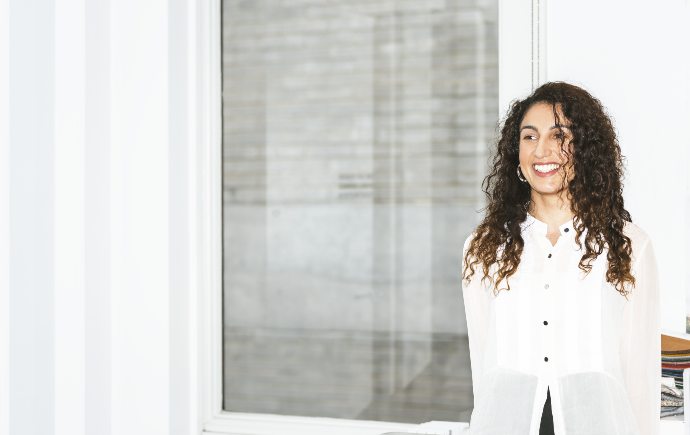
Image: Portrait of Leanne Haidar. Photography courtesy Leanne Haidar
BM: Hi Leanne and welcome! Can you start by giving me a brief introduction to yourself and your architectural practice?
LH: I am a graduate of Monash’s double degree of architecture and civil engineering and I am currently working at SJB Architects. I have worked in a diverse range of practices including planning, pedestrian planning and architecture within large multi-disciplinary organisations such as Arup and Jacobs. The projects that I have worked on have ranged from public infrastructure, such as the Suburban Rail Loop, to private residential dwellings, such as multi-residential, mixed-tenure social housing projects. I have a keen interest in advocating for the architectural profession in Australia and hold a strong belief in the value of our architectural education. This passion stems from my time volunteering at student-led non-for-profit organisations such as the Global Consulting Group (GCG) and the Student Organised Network of Architecture (SONA). At GCG, I brought the skills that I had developed in engineering and architecture and applied them to a variety of management consulting projects, while at SONA I learnt about better ways to influence and promote a good culture of design and designing in Australia.
BM: What are your reflections on the double degree program?
LH: My experience was diverse – it was always challenging and rewarding, and sometimes it was extremely stressful! But mostly, it was essential to my development as a person, both professionally and personally.
I commenced my journey at Monash in 2015. I was 17 years old and fresh out of high school. Contrary to what people assume, there weren’t actually any double degree specific classes or sessions. It was very literally the undertaking of two bachelor’s degrees simultaneously. In hindsight, I think moving between the two disciplines was positive towards my ‘coming of age’ as a designer. It allowed the concepts to marinate and mature. I found that the concepts I felt most strongly about were often linked to my personal values, which were also being tested in my personal life. In my second year, I was enrolled in a design studio named ‘The Garden of Earthly Delights’, where we were asked to design a range of devices and gardens to facilitate pleasures of our choosing. I chose to test the overlaps between public and private life. The topics I explored included the female menstrual cycle, public toilets and nudity. As a young female having grown up in the context of Middle Eastern culture, I was also starting to explore my own ‘public’ and ‘private’ identities.
Undertaking the double degree provided me with a unique set of varied experiences and skills that are often at opposite ends of the spectrum. The ability to think small and large, to see the detail while still thinking about the big picture, to be diligent and analytical while still being creative and fluid, are all skills that I believe I have only developed by undertaking the double degree. These are skills that have been valued by my colleagues and employers.
BM: Can you tell me a little bit more about SONA and the Australian Institute for Architects (AIA)? What do these organisations do and how are they related?
LH: The Australian Institute of Architects (AIA) is the peak professional body representing the architectural profession in Australia. It serves the profession as a whole by advocating on its behalf to the greater built environment industry and Australian society in general. Practicing architects, graduates and students of architecture make up majority of its membership base.
The Student Organised Network for Architecture (SONA) represents the student members of the AIA. SONA works together with the rest of the AIA community to ensure that students play a key part in the future of the profession, to promote student work and thinking, to advance the education of architecture and to provide greater opportunities for professional development. Most importantly, it does this by fostering a community of camaraderie, leadership and collaboration among students.
BM: And what has been your involvement with SONA?
LH: I joined SONA in 2018 as a representative from Monash. I developed close relationships with the other students involved in SONA, and the SONA leadership team and Institute staff had a big impact on my development in the role. They inspired me to come out of my comfort zone and instilled confidence in me to speak up. In the Chapter Council meetings, I was able to listen to a range of professionals discuss important advocacy issues for Victoria. I learnt about issues of novation, heritage conservation, sustainability in practice, cultural diversity… just to name a few.
It was the encouragement to step out of my comfort zone, along with sitting in on the Chapter Council meetings, that inspired me to put my hand up to continue advocating. I then became Vice President of SONA in 2019, President Elect in 2020 and eventually National President in 2021. My main goal as president was to inspire confidence and camaraderie among the rest of the SONA leadership team. I wanted to inspire students to work together, grow together and inspire one another to reach their full potential. I also wanted to educate SONA members to appreciate their relationship with the SONA community as a long-term one, to realise how they can help shape the future of the profession.
BM: Let’s talk about your current role at SJB. What does a normal workday look like for you?
LH: At SJB, I am a member of a wider team working on multi-residential and mixed use projects from design through to construction. My role is continuously developing as I learn more and take up more responsibility. In my first few months, I worked on a large variety of projects and tasks, ranging from assisting associates with documentation, preparing town planning presentations and working with the directors to prepare client presentations. Jumping around the office allowed me to build relationships with a large range of people and be oriented into the culture of SJB. However, within the last 18 months, I have had the opportunity to work on one project full time and have seen it through from town planning to construction. This has allowed me to develop as a key member of the team, take on responsibility for full packages of work and collaborate directly with clients and consultants.
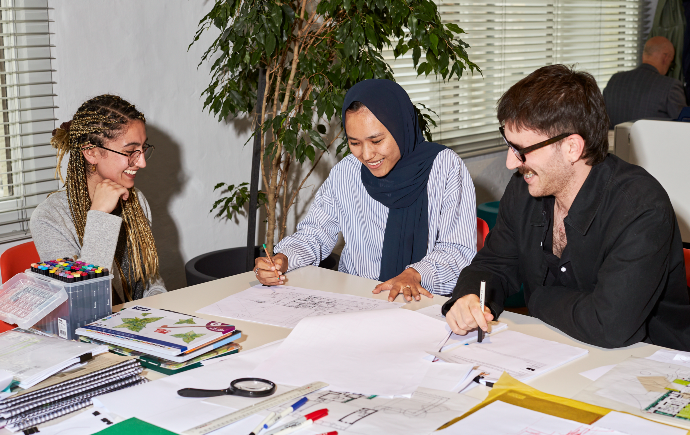
Image: SJB Melbourne studio. Photography courtesy SJB.
As the project that I have been working on for the last 18 months is currently under construction, I often attend the site office. A normal workday also involves managing client expectations, collaborating with the builder and consultants to resolve design issues, responding to Requests for Information (RFIs) and working with the broader team at SJB to deliver drawings and documentation. A lot of my day also involves preparing sketches and markups, reviewing work and providing mentoring to students. When I’m not doing those things, I’m out for lunch with colleagues in the CBD, going for coffee breaks or giving cuddles to the office doggos!
BM: Can you please introduce us to the office doggos?
LH: Everyone at SJB is free to bring their dogs into the office. This brings a smile to everyone’s face and can make juggling the work-life balance a lot easier for many employees. Two of the frequent visitors to the office are Daisy and Bernie. Daisy used to be a puppy show dog in Port Macquarie, but her dad rescued her from the pageant lifestyle. She now gets to cause havoc on a daily basis. Bernie is a loving, funny and goofy 13 month old Australian Cobberdog. He loves days in the studio and is quite a popular boy – he can also be cheeky!
BM: Can you share some more about that project you’re currently working on?
LH: Currently I am working on a multi-residential social housing project in Brighton. The project is part of the Victorian Government’s Ground Lease Model Project. It’s a mixed tenure project where 50 per cent of the dwellings are social housing and 50 per cent are private built-to-rent/market-rentals. Specialist disability accommodation is also provided across both the private and social housing. The project is also a blind tenure, which means that the quality of all the dwellings across the project is equal regardless of whether it is a social or private dwelling. I have been involved in the project since 2021 and have worked across the town planning, design development and construction stages. I feel quite lucky to be involved in such an important project for the sustainable and equitable growth of the community. My parents migrated from Lebanon in the ‘80s to provide their children with greater opportunities for growth and education. We lived in community housing for most of our upbringing as a young family. Community housing allowed us to be integrated within the broader community (not segregated or alienated) and have access to all the tools we needed to find our way. I hope that the mixed-tenure social housing that we are designing in Brighton will provide many other families the same opportunities for growth that my own family was able to access.
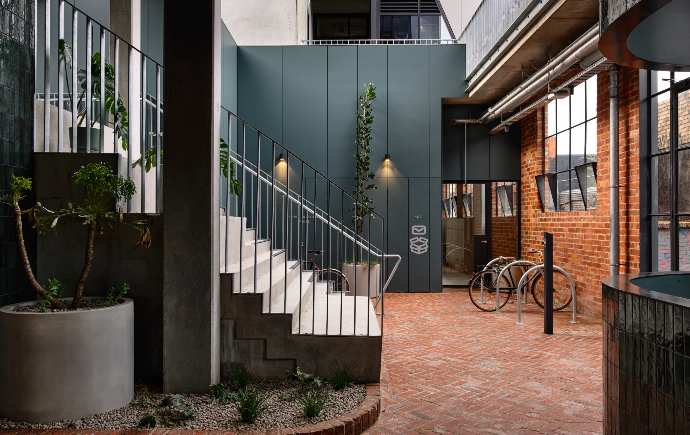
Image: Zero Gipps by SJB. Photography - Derek Swalwell.
BM: You mentioned student mentoring earlier – you also teach at Monash, is that right?
LH: Yes, I joined the architecture teaching team at Monash at the beginning of 2022 as a teaching associate. The role allows me to assist first year foundation design studios by providing mentoring and feedback to students. I hope to inspire students to find their individual confidence, to celebrate their creative aspirations, to practice communication and relationship building, teamwork and meaningful peer-to-peer feedback.
BM: Your passion for student culture feeds into research led by SONA and Monash into mental wellbeing among architecture students and practitioners, which you spoke about at the 2022 National Architecture Symposium, alongside Professor Naomi Stead and Nicole Misquita Mendez. Perhaps you could summarise, in broad brushstrokes, some of the findings of this research?
LH: Our analysis focused on understanding the key drivers that could be having an impact on the mental health and wellbeing of students. We found that the ’24-hour work ethic’ permeating the studio culture could be playing a large part in negatively impacting students’ health and wellbeing and that although there may not be a lack of resources available to architecture students at their universities, there are stigmas attached to accessing them. We also found that a student's perceived value in their education has a direct link to their ‘sense of purpose’. Employability is a key reason students decide to go to university, and so students tend to report that learning practical skills that prepare them for practice is a requirement for their education. This link between a student’s mental health and sense of purpose is problematic if they lose confidence in their education.
When we presented these findings at the National Architecture Symposium, we realised that these issues are not exclusive to architecture schools, and that in fact these issues are felt across the profession, from our youngest to our most senior members.
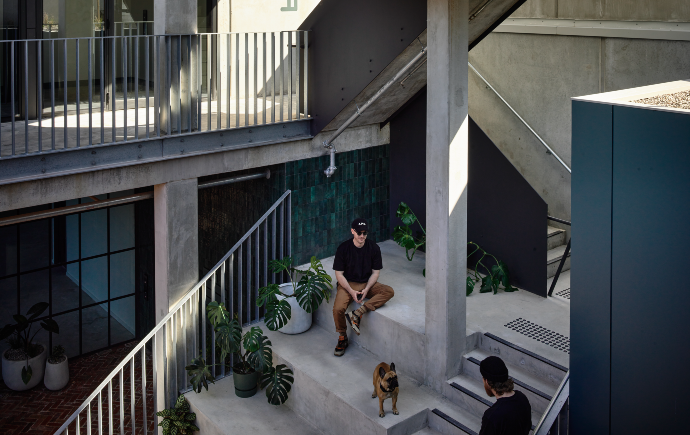
Image: Zero Gipps by SJB. Photography - Derek Swalwell.
BM: Do you think your involvement in this research has influenced your practice as an educator?
LH: Absolutely. I am passionate about encouraging students to contribute to a productive, inclusive and diverse studio culture, one that allows them to support one another to reach their full potential and eliminates negative ideas of ‘perfection’. It has also influenced me to communicate the value of architecture education and instil a sense of confidence in students.
BM: What would be your advice for someone thinking about further education and a career path in the architectural field?
LH: My advice would be to remember that the learning and practice of architecture cannot be autonomous. Building relationships with your peers and colleagues and supporting one another to grow will not only help you in your ‘career’ but will also provide you with incredibly rewarding experiences both professionally and personally. Also, not to always take everything too seriously – to make sure you’re having fun, exploring, experimenting and using the practice, creation and discourse of architecture to express and share your own individual ideas and opinions with the world!