
Background
What is ECMO?
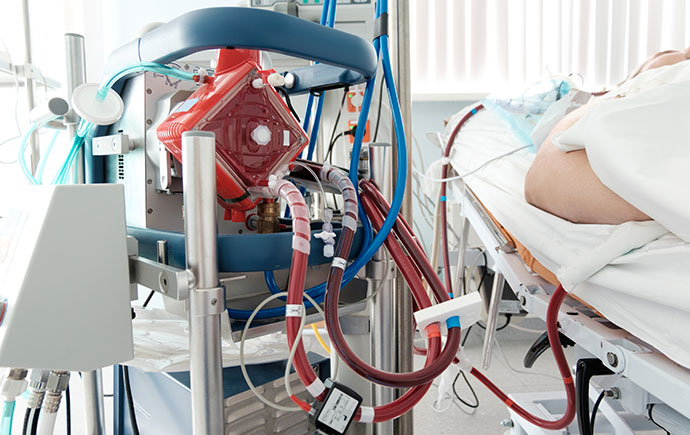 Extracorporeal Membrane Oxygenation (ECMO) is a life-saving intervention used with critically ill patients in intensive care (ICU). ECMO is a machine that temporarily supports the functioning of the heart and/or lungs when they are unable to effectively sustain life. ECMO is not a treatment, but gives the body time to heal, as well as allowing additional clinical management to be provided.
An ECMO machine is made up of several cannula (tubes) attached to an external pump and oxygenator system. The ECMO machine operates by draining blood from the body via the cannula and external pump to the oxygenation system. This system removes waste and carbon dioxide from the blood and replaces it with oxygen, before it is pumped back into the body to supply oxygen to the tissues. The two most common forms of ECMO are Veno-venous (VV) and Veno-arterial (VA) ECMO. VV ECMO is used to partially or completely replace the functioning of the lungs, whereas VA ECMO replaces both heart and lung functions.
ECMO requires specialised equipment and significant hospital resources, including highly trained staff to operate and manage. Other allied health professionals including physiotherapists and dietitians are also needed to provide support to patients on ECMO. As there are numerous risks associated with ECMO such as blood clotting and bleeding, additional support from specialised medical services may equally be required. As such, only select hospitals in Australia and New Zealand provide ECMO services, most of which are located in larger metropolitan areas.
ECMO is employed only when other conventional life-saving methods have failed. Comorbidities such as age, obesity and organ failure can be major impediments to the effectiveness of ECMO, and as such, ECMO is not appropriate for all people. However, since the beginning of the COVID-19 pandemic in late 2019, it has been used as a key intervention for some of the most critically ill patients. Recent studies have reported that the chances of survival following ECMO for COVID-19 does not differ from patients receiving ECMO for non-COVID-related illness, suggesting it is a viable option when deemed appropriate.