
Q&A with Claire Hutton
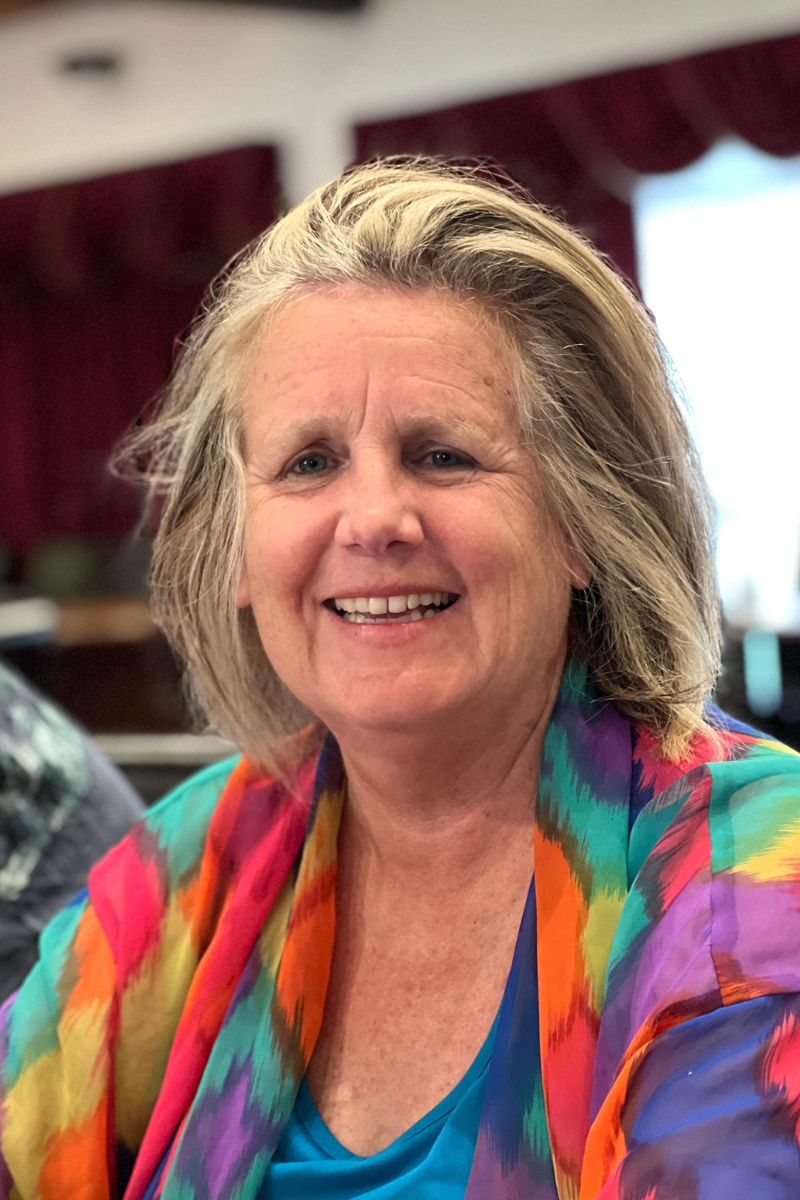
Claire Hutton is currently a PhD candidate within the Department of General Practice at Monash University. Claire's research explores what it’s like for doctors, when their patient is also a doctor. She shares her journey from registered psychologyist to PhD candidate.
What is your professional background?
I have been a registered psychologist for over 30 years, counselling clients in a variety of settings including community health, non-government organisations and in private practice. For the past 15 years, I have also been teaching in post-graduate counselling programs, at Victoria University, Monash University and currently at Deakin University. Alongside teaching, I have worked with AMA (Vic) for many years, training and supervising doctors who volunteer in their Peer Support Service (an anonymous telephone service for doctors and medical students experiencing difficulties either personally or professionally). And I regularly provide psychological support on residential training programs for humanitarian aid workers.
What made you decide to undertake a PhD?
To be honest, the initial motivation was that I love university teaching and wanted to ensure I remain employable (given the bar is getting higher). But once I made the decision, the choice to do research in the area of doctors’ health was an easy one, given my experiences in the AMA Peer Support Service. Observing how impactful medicine can be (heavy training, high demands, long hours, constant threat of medico-legal complaints), and at the same time how hard it can be for doctors to seek help, motivated me to want to better understand medical culture, and to explore what might make the process of seeking care (for either physical and psychological health issues) easier.
Can you briefly outline the journey from psychologist to PhD student?
After starting a 3-year teaching role in 2017 (for academics with significant practice experience but without PhDs) at the Monash Faculty of Education, there was strong encouragement to start a PhD position, especially if we hoped to have our positions extended. Once I decided on a topic, I approached the Department of General Practice to find possible supervisors. The process was relatively simple, and I was also happy to discover there are no fees for PhDs (other than Student Services). While Monash requires you to commit to two days of study a week (for part-time students), my teaching hours were flexible, so this wasn’t too onerous. And I was also grateful that, when I needed to take several months off when my son became ill, this was easily negotiated.
What has surprised you about the research you undertook?
While it is still very much a work in progress, a couple findings have surprised me. As an outsider, GPs can seem quite confident about their abilities, but in fact many seem to experience imposter syndrome, and this can emerge quite strongly when they are treating another doctor. And the concern about offending a colleague, and jeopardising the collegial relationship, can impact how they treat their doctor-patients, in ways that sometimes lead to less-than-optimal care. I was also surprised to find that not letting your treating doctor know that you are also a doctor is not uncommon, and this is driven at least in part by the wish to be treated like a ‘normal’ patient (and the awareness that this can be hard to do).
How do you envisage your research will improve primary care?
I hope to have some of my findings incorporated in some way into medical training, and the guidance provided to enable treating doctors to navigate this important role of caring for their doctor-patients. The findings highlight the need to overtly acknowledge the complexity of the doctor-doctor consultation. When training doctors for their role as treating doctor, it is vital to enable them to effectively manage the issues of collegiality and respect. Such education is relevant at all levels of medical training. Even medical students need to recognise that they will be treating doctors in the future. Although being a doctors’ doctor is relevant to all specialities, all doctors should have their own general practitioner. Therefore, my work is especially relevant to general practice training. Improving the care provided to doctor-patients has important implications for physician well-being.
What has been the most rewarding, and the most difficult parts of undertaking this research and your PhD?
While I remain a psychologist, I have (mostly) loved the experience of being a student again. While it carries responsibilities and stress, they are very different to those in my work life. Being a part-time PhD student has pros and cons. Having to balance study with numerous other tasks helps to keep the study experience in perspective. For example, I know that how I perform in a milestone presentation will not have any significant impact on my career! Financially it is tough though and I would like to see more availability of scholarships for part-time PhD students. I think the assumption has been that if you are studying part-time, this is primarily because you are working in a well-paying job as opposed to trying to balance study, work and carer responsibilities.
What advice would you give to other clinicians considering incorporating academia into their careers?
It is likely much easier when there is not too much financial pressure. Being able to enjoy the study without constantly thinking about the work you are not doing (and the money you are not earning) is something I have strived for (and not always been successful).
Find at least one supervisor who has experience with part-time PhD students (if you choose that path). We are very much a minority and the demands are quite different.
And, to state the obvious, choose a research area you really care about! While there will always be ups and downs over such a long journey (currently almost 6 years for me ... and two to go), I continue to find the work meaningful (and only occasionally have the “Does this even matter? Will anyone even read this?” moments).
________________________________________