
Breaking down the barriers to education
Breaking down barriers to education
Monash Life | Thriving communities | 4 minute read
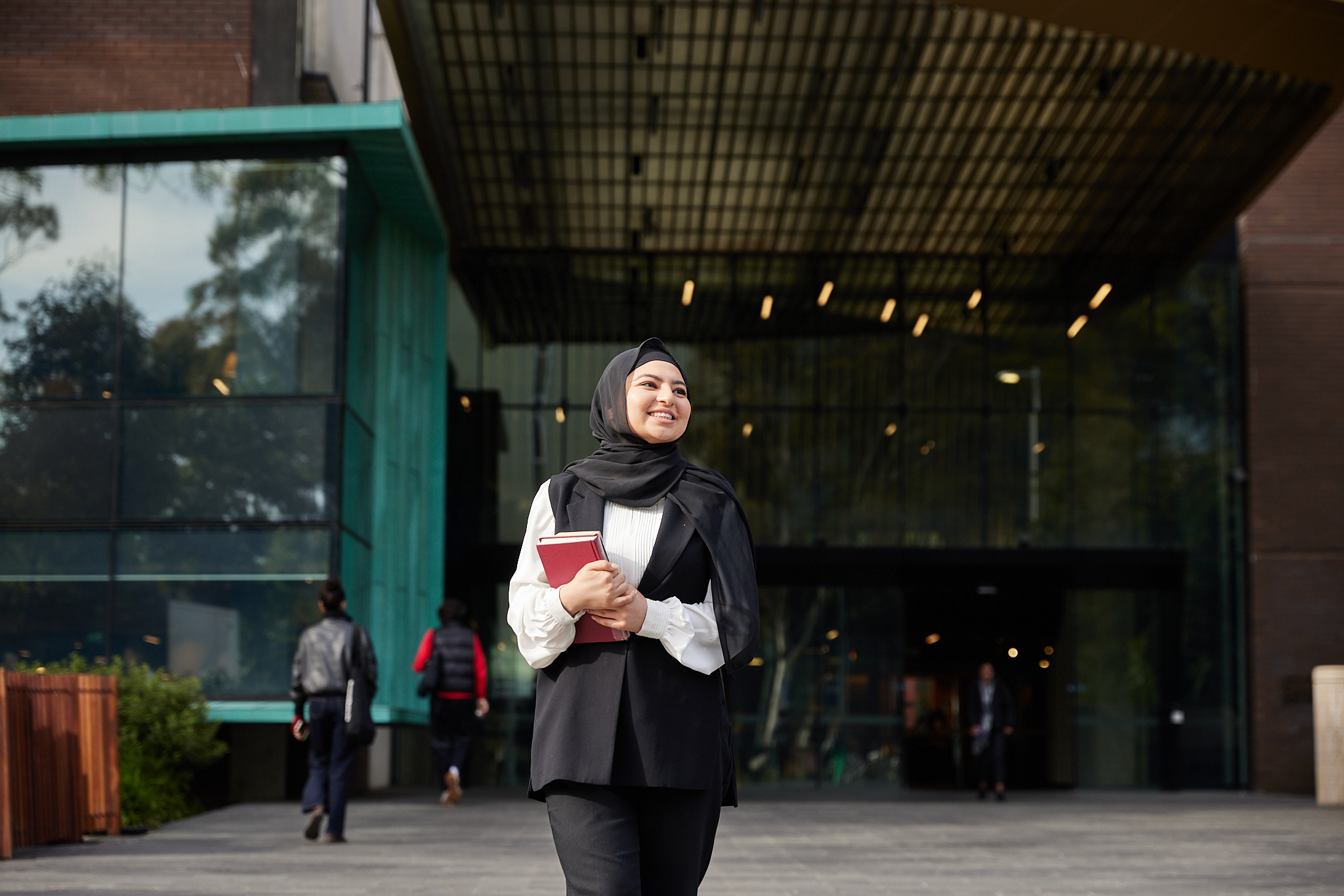
Universities have a central role to play in student mobility - it’s core to who we are and why we were formed, says Interim President and Vice-Chancellor Professor Susan Elliott AM.
When people ask me why this university should concern itself with social mobility, my answer is clear. Education changes lives. Not just for the individuals involved, but also for their families, and often their communities. I should know: I was the first in my family to attend university and it changed the course of my life.
And it’s particularly true at Monash, where widening participation is part of our DNA. We were founded to expand access to higher education beyond the sandstone universities – and with a commitment to do things differently. The $65.3 million we’ve invested in 13,232 equity scholarships over the past five years is a continuation of that tradition and we’ve recently extended this commitment through the new Kummargi Yulendj scholarship program. Announced in September, Kummargi Yulendj (which in Boon Wurrung means ‘knowledge is rising’) ensures the support we provide students extends far beyond financial assistance, providing holistic support and access to experiences outside of the classroom.
Monash has high entry standards, and our scholarship students meet those standards and exceed them. In fact, students who receive scholarships, including equity scholarship holders – those from low socioeconomic status backgrounds, Indigenous students, and students from remote areas – have consistently achieved higher results (weighted averaged marks) than non-scholarship students.
Running a successful scholarship program is about far more than funds; it’s about finding a way to thrive.
If you come from a community or family where a university education is not common, then leaving that home and community can be a big step. We offer all scholarship students a range of support that starts before they arrive at Monash, including peer-assisted learning, our Student Success program, and mentoring programs. That support continues once they are here, with rich educational experiences such as the Monash Innovation Guarantee, volunteering opportunities and the Student Academic Success program, which provides personalised support, workshops and online resources to help students develop the skills they need to succeed in their studies.
We also recognise the specific and disproportionate barriers that Indigenous students may face. In addition to the University’s Kummargi Yulendj program, our William Cooper Institute plays an important role, offering specific support – from individual tutoring to recreational and study areas with an Elder in Residence. Our success rates – at 80 per cent – are well above the national average for Indigenous students, but we want them to be higher.
Our determination that scholarship students have everything they need to flourish goes beyond graduation. Getting into university didn’t just give me a degree certificate; it helped me get into the workforce and provide a contribution to the broader community. So, we design experiences for students that enable them to enter the world of work and positively contribute to the community under our Monash Enrich program.
The Global Immersion Guarantee (GIG) is our flagship international study opportunity where students learn directly from local leaders, developing hands-on skills, knowledge and networks. Of the first cohort of students, 45 per cent didn’t have a passport. For this large group, who haven’t travelled outside Australia’s border, GIG is a true adventure.
Another important support service is our alumni mentoring program, which matches Monash students with an alumni mentor to help them gain industry knowledge and networks to support their transition to the workforce (if you’re a Monash alum and think you’d like to get involved, let us know at the link below).
Many of our scholarship students choose to study health-related subjects. We know that rural and remote students are much more likely to go back to their communities, taking their knowledge with them, becoming role models for the power of education, and creating a virtuous circle where, we hope, the brightest and best students from any background will feel inspired to be the best they can be.
Our scholarship students are grateful for all the assistance we provide but, more importantly, we are grateful to them because they give so much back. Not just to our university community – where diversity of thought, background and experience is so crucial for considering new ideas and ways of thinking – but to the wider world.
What have universities got to do with social mobility? Everything.
Professor Susan Elliott AM is the Interim President and Vice-Chancellor of Monash University.
We are grateful for the generous support of alumni donors. To find out more about how you can empower future leaders, please visit Giving to Monash.