
Anna Sput-Stern
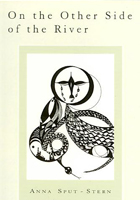 Title: On the Other Side of the River
Author: Anna Sput-Stern
Publisher: Aussie Publications
Place of publication: Melbourne
Year of Publication: 1999
Location of Book: Rare Books Collection, Sir Louis Matheson Library, Monash University Clayton Campus
Cities/town/camps: Poland: Warsaw, Bialystok, Luninetz
Note: those cities/towns/camps underlined are those which are most central to the narrative
Anna Sput-Stern’s book, On the Other Side of the River, is not, strictly speaking a memoir. Written as literature more than as memory, the book contains a series of short stories, ‘episodes’ in her life as well as in the lives of people she knows. The book is divided into two parts. Book I: On the Other Side of the River (pages 7-106) contains short stories about Anna’s and others’ war-time experiences. Book II: Beyond Rivers and Oceans (pages 107-167) tells of various experiences of immigrants in post-war Australia. Some of Anna’s stories are about herself, others are about people she knows or has met. The stories are not connected to one another; rather they are an eclectic collection of anecdotes – short, isolated episodes. Most of the stories written about other people describe them in the third person, whilst those telling of Anna’s own experiences are written in the first person. There are, however, some stories in the book that are written in the first person even though they tell of other peoples’ experiences (this can be seen by observing the names used and the events that take place in the stories). Here only those two stories that are autobiographical and that occurred around the time of the war will be described.
In the first chapter of the book, entitled On the Other Side of the River (pages 9-18), Anna describes one of her most painful memories: her final separation from her parents, in Warsaw, October 1939. At that time, Warsaw and western Poland had already come under German occupation, whilst eastern Poland was now under Soviet rule. Anna’s parents and their friends felt that life under the Russians would be more safe, and so they sent her to be smuggled across the border to friends in Bialystok. Though the man who assisted her and a group of people in crossing the border cheated them and did not take them all the way to Bialystok, she ultimately arrived there. Anna describes her first, traumatic day in Bialystok.
Another chapter that describes Anna’s own experiences is the first chapter of Book II, Hello Australia (pages 109-112). This chapter describes the arrival of Anna, her husband Henek and their young daughter Ruth, in Australia in the aftermath of the war. After spending some time in a transit camp in Germany, the three managed to obtain papers to immigrate to Australia with the help of relatives already living there. Anna describes the anxiety that she and her husband felt as their boat approached Melbourne, and their relief upon arriving and meeting Henek’s relatives. The remainder of Book II consists of anecdotes and episodes in the lives of new (and not so new) immigrants, articulately told and laced with humour.
Anna Sput-Stern’s book is beautifully and descriptively written. The parts of the book that tell directly of her own experiences relate them in a way that vividly conveys her relationship with her own memories. At the same time, even those chapters dealing with experiences that she did not witness firsthand, convey in some way her feelings about her own past and the collective past of survivors like her.