
Chaim Benjamin Künstlich
Title: L’Chaim: Surviving Soviet labour camps to rebuild a life in postwar Poland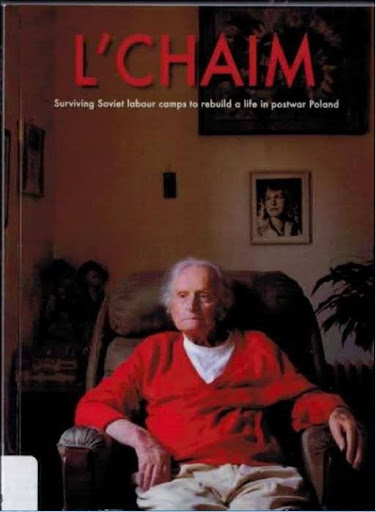
Author: Chaim Benjamin Künstlich
Publisher: Makor Jewish Community Library
Place of publication: Caulfield South, VIC
Year of Publication: 2009
Location of Book: Lamm Jewish Library, Sydney Jewish Museum, State Library of Victoria and other public libraries
Cities/town/camps: Poland: Baranow, Krakow, Rabka, Rzeszow, Warsaw; Ukraine: Lviv (Lwów); Siberia: Yakutsk, >Aldan labour camp; Kazakhstan: Shymkent (Chimkent), Mankent; Australia: Melbourne
Note: those cities/towns/camps underlined are those which are most central to the narrative.
Genre: Memoir
Key events/experiences: Jewish refugee; Soviet occupation; Siberian labour camp
L’Chaim is the 141-page memoir of Chaim Künstlich who fled the Nazis with his wife, Hania, only to be interned in a Soviet labour camp for a year before surviving the rest of the war in Kazakhstan.
Pages 1-4 provide a preface by the author’s daughter, Krystyna. In pages 5-49 the author presents a family genealogy and details his childhood in Krakow and early adulthood in Rabka. Pages 25-49 comprise a chapter devoted to his wife Hania Siebzehner and her family, including several pages from a letter Hania wrote to her nephew describing her wartime experiences. Pages 50-76 recount the onset of the war and the author’s flight from Lwów with his wife and their deportation to a Siberian labour camp and life in Kazakhstan. Pages 77-126 describe their return to Poland in early 1946 and eventual emigration to Australia in 1958. Pages 127-141 present the fate of Jews of Rabka. The memoir contains 78 photographs of the author’s extended family and various historical sites as well as 28 documents, mainly in Polish.
Chaim Künstlich was born 6 August 1913 in Baranow to Orthodox Jewish parents Rachel Scheer and Mojzesz Künstlich. Chaim had two older brothers, Efraim and Eliezer. The family moved to Krakow in 1914, at the beginning of the First World War, to be near their maternal family whilst Chaim’s father was away at war. Chaim attended the local Polish school but received a Jewish education on Sundays and had no experiences of antisemitism growing up. In 1925, the family purchased a kosher guest house in the resort-town Rabka and Chaim began splitting his time between Rabka and Krakow. After he graduated school, Chaim worked as a bookkeeper. In 1936, he moved to Rabka to help with the family business.
Chaim was in Krakow visiting family on 1 September 1939 when Nazi Germany invaded Poland. On 4 September, Chaim and his brothers fled to Lwów as the German army reached Krakow, making the two-week journey on foot and horse-drawn cart. Chaim’s girlfriend, Hania, remained in Krakow, arriving in Lwów in December. By this time, the city was occupied by Russian forces. In Lwów , the boys lived with relatives, working odd jobs to support themselves. On 8 January 1940, Chaim and Hania married. Efraim married a woman from Lwów and was provided a permit to remain in the city, whilst Eliezer moved to Tarnopol.
On 30 June 1940 Soviet authorities arrived in the middle of the night and arrested Chaim and Hania as they did not have Lwów residency papers. The couple were then placed in cattle wagons to Yakutsk, Siberia. The trip took approximately thirty days. They were then sent to a labour camp near the village of Aldan where Chaim was put to work lumbering whilst Hania worked in the kitchen. They were paid a meagre wage and rations of bread and soup.
In August 1941, the Polish government negotiated the release of the Polish prisoners from the Soviet labour camps and Chaim and Hania decided to journey to a warmer climate, travelling by train to Chimkent, Kazakhstan. They found accommodation in nearby Mankent where they obtained work picking fruit. As more Jewish and Polish refugees arrived, they moved back to Chimkent where a Polish community had formed. Chaim obtained work as a bookkeeper whilst Hania worked as a secretary for her former boss, Dr Epstein. Sometime in 1943, as Soviet-Polish relations broke down, the pair lost their jobs and Chaim was pressured by Soviet authorities to obtain Russian citizenship. He refused and spent two months in jail.
After his release, Chaim worked at a regional supply centre. At the end of the war, many of the Polish refugees, including Chaim and Hania, applied to return to Poland. In April 1946 their exit permits were approved and they returned to Poland in May. They first travelled to Rzeszow where Hania got word that her sister and brother had survived in hiding. When Chaim travelled to Rabka to search for surviving family he discovered tragically that both his brothers and his parents had been murdered. Chaim filed a legal suit with the Polish government to reclaim his family home in Rabka.
The couple lived with Hania’s sister and husband for a time before they moved to a small town in lower Silesia, Jelenia Gora. There they obtained work as accountants. They moved to Warsaw in 1948 and their daughter Krystyna was born in 1950. In 1958, due to rising antisemitism in post-war Poland, the family decided to emigrate to Australia after obtaining landing permits from Hania’s niece. The family arrived in Melbourne on 25 July 1958 where they began their new lives.
L’Chaim is a brief overview of the author’s wartime experiences. The memoir was written and published as part of the Makor Jewish Community Library’s “Write Your Story” Program. It was edited by the author’s daughter, who added a selection of photos and documents as well as extensive historical footnotes and commentary. The memoir was not professionally edited and contains typographical errors and minor historical discrepancies, some of which are noted in the footnotes.