
Fred Agar
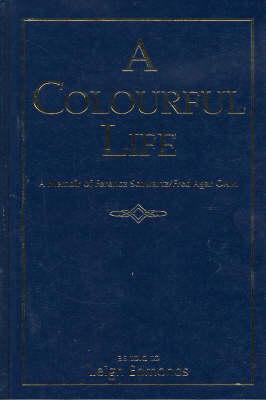 Title: A Colourful Life: A Memoir of Ferencz Schwartz/Fred Agar
Author: Leigh Edmonds
Publisher: Fred Agar (Brown Prior Anderson)
Place of publication: Melbourne, Australia
Year of Publication: 2006
Location of Book: LAMM Jewish Library of Australia
Cities/town/camps: France – Nyiregyhaza, Hungary; Harangod; Birkenau; Auschwitz; Mauthausen and Goosen 11; Nissafors; Australia - Melbourne
Fred Agar’s memoir is 134 pages in length. Pages 1-9 detail Fred’s pre-war life in Hungary. Pages 11-31 deal with the war years, including Fred’s experience during the Holocaust, beginning with the invasion of Poland and ending with his liberation. The next 46 pages detail Fred’s life in the post war years; pages 33-59 focus on his life in Sweden and pages 60-79 look at his life in the United States, including his conscription into the US Army. The memoir from page 81-134 details Fred’s meeting of his wife Anna-Maria and his move to Melbourne Australia. This book was published in 2006 by Brown Prior Anderson.
Before The War Ferencz/Feri (Fred) was born in Hungary in 1926 close to the Romanian border where their extended family lived. Fred had a normal, happy childhood attending a Jewish school. By the time Hitler came to power in 1933, Feri was aware that being Jewish meant you were “different” and by 1936 Jewish children were being taunted and Antisemitism was encouraged by the Government. When Germany invaded Poland in 1939, Fred was 13 and witnessed the arrival in Hungary of many Poles (including Jews). At first Hungary was protective of its Jews but under pressure from Germany, The Hungarians became more antisemitic. He learnt copper smithing from his father but was not awarded a diploma because he was Jewish.
During the War
After 1940 his non-Jewish friends abandoned him. Feri was involved in Zionist Youth organisations. In April 1944, not long after the Nazis invaded and occupied Hungary, his family was herded into a ghetto area where 11,000 were crammed into 123 houses. After some time, approximately 5,000 of Jews, including Feri’s family were taken to a farm in Harangod where life was very brutal. The process of dehumanisation began on the overcrowded cattle trains taking them to Birkenau in Poland. On arrival Feri witnessed the selection process. After a few days, the men were all marched to Auschwitz. Both he and his father received their tattoos. He and the other male members of his family were driven to Katowice where they would work in the anti-aircraft factory. They continued living and working under appalling conditions until January 1945 when the Russian army were heard to be close. These men were sent by train to the notorious Mauthausen and then onto another camp, Goosen 11 and finally to Hanover. In early April 1945, those who were still alive were marched 50 kms. to Bergen-Belsen where they remained until April 15th 1945, when the British Army arrived to liberate them by which time Fred was close to death. He was taken to a military hospital to recover.
After the War
By July, he had fully recovered and decided to go to Sweden with his sister Anna and friend Miki. On arrival, he was quarantined until he recovered from pneumonia when he was sent to a Hungarian camp in Nissafors. Soon this camp was closed down and Feri found work as a coppersmith. In the first few years Feri enjoyed life in Sweden but never felt completely accepted so in January 1950 he left for Canada, then moved on to the USA. By the age of 23 he was conscripted to the Army to serve in the Korean War. After three months of basic and technical training, Feri was posted to France where he worked on engineering jobs. He was discharged from the US Army in 1953 and changed his name to Fred Agar and became an American citizen. In October 1954 he had met and married Edith, but the marriage was short-lived. In 1961 he met another girl and fell in love. They were married in 1962 and came to Melbourne where Fred and a partner began a kosher meat business. After years of success in the meat industry, Fred switched to property development and continued his success. Together, he and his wife Anna worked hard in business, raised a family and became involved in a variety of social and charitable organisations. In 2003, Fred was awarded the Order of Australia. In the mid 2000’s, Anna became very ill and soon died. Although Fred went through some serious health issues, he survived to complete this story and see it published.
This memoir as told to Leigh Edmonds tells the story of Holocaust survivor Ferencz Schwartz, later known as Fred Agar.