
Helena Ladanyi
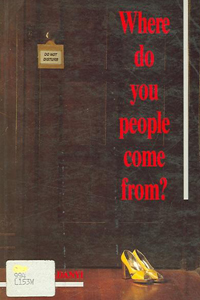 Title: Where do you people come from?
Author: Helena Ladanyi
Publisher: Spectrum
Place of publication: Melbourne
Year of Publication: 1988
Location of Book: Sir Louis Matheson Library, Monash University Clayton Campus
Cities/town/camps: Austria: Vienna, Hungary: Budapest, Kistarcsa, Romania: Constanta, Turkey: Istanbul
Note: those cities/towns/camps underlined are those which are most central to the narrative
Helena Ladanyi’s autobiography covers her whole life, including her experiences during World War II. The first 40 pages describe the life of her family in Austria before the war. Pages 41-76 tell of the German invasion of Austria, Helena’s escape to Hungary, and the time that she spent on the run and in hiding. Pages 77-95 describe liberation and Helena’s attempt to begin pulling her life back together in its aftermath. Finally, on pages 96-163, Helena discusses the new life that she built up after emigrating to Australia. Professionally published in 1988, Helena wrote the book late in life.
Helena was born in Vienna around the turn of the century to a wealthy, assimilated Jewish family. Her life before the war was a privileged one, and she moved in aristocratic circles. In the 1930’s, anti-Semitism increased in Austria, and after the Germans took over the country in 1938, Helena and her husband, Paul, decided to flee to Hungary. In the same year, Helena’s brother escaped to South America. Her parents soon fled as well, and they and her brother ultimately settled in California. Helena and Paul managed to obtain landing permits for Australia. Paul departed in 1940; Helena was supposed to follow soon after.
After Paul’s departure, communication between Hungary and the outside world becomes increasingly difficult, and it is hard for Helena to stay in touch with her family abroad. After struggling to obtain the necessary visas to travel to Australia via Romania, Turkey and Iraq, Helena sets off on her journey, only to be turned back because war has broken out between Syria and Iraq. The expiry of her Turkish visa sees her returning to Budapest, where she temporarily resumes her previous, luxurious life.
When the Germans march into Hungary in March 1944, Helena is forced to move into the Jewish ghetto. She manages to obtain false papers, and goes into hiding, moving from place to place. Eventually, in June 1944, she pays a large sum of money to a woman in order to hide in her apartment. The woman reports her to the authorities and keeps all of her belongings. Helena is arrested as a political prisoner and put in solitary confinement.
Upon release from prison, Helena is transferred to the Kistarcsa concentration camp. Through bribes organised by Helena and her friend Richard, she manages to avoid being deported to a death camp, though the conditions in the concentration camp itself are horrific. Through connections of Richard’s, Helena briefly tastes freedom again in October 1944 when she and other inmates are freed from the camp. She once again goes into hiding, this time with Richard (who has deserted the Hungarian army because he does not want to fight with the Germans) and an old Jewish man who is a friend of Richard’s. Living in constant fear, the three repeatedly have to relocate as their hiding places are compromised.
‘Liberation’ for Helena was not the momentous, joyous occasion that it was for many. In hiding in a monastery hospital at the time, her situation changed little in the immediate aftermath of the arrival of the Russians; instead of fearing the Germans, she now had to avoid the Russian soldiers who stole, raped and killed even in the hospital where she had been hiding. Nevertheless, liberation did allow her ultimately to begin rebuilding her life. She left the hospital for Richard’s estate and, in July 1946, she left Hungary once again for Australia, this time successfully. Helena goes on to tell the story of her life as an immigrant in Australia, her subsequent move to Hong Kong with her second husband, Capt James Wood, and after James’ death, her return to Australia and remarriage to Paul.
Where Do You People Come From? is an unusual story of survival, different in both content and style from many other memoirs. Descriptive and unashamedly personal, Helena relates some of her most personal feelings from those times. The irony of a woman whose situation was decidedly privileged before the war nevertheless finding herself trapped in Europe for its duration whilst her family has escaped is not lost on the reader. Eloquently written, the narrative is graceful, at times even poetic.