
Kenneth Arkwright
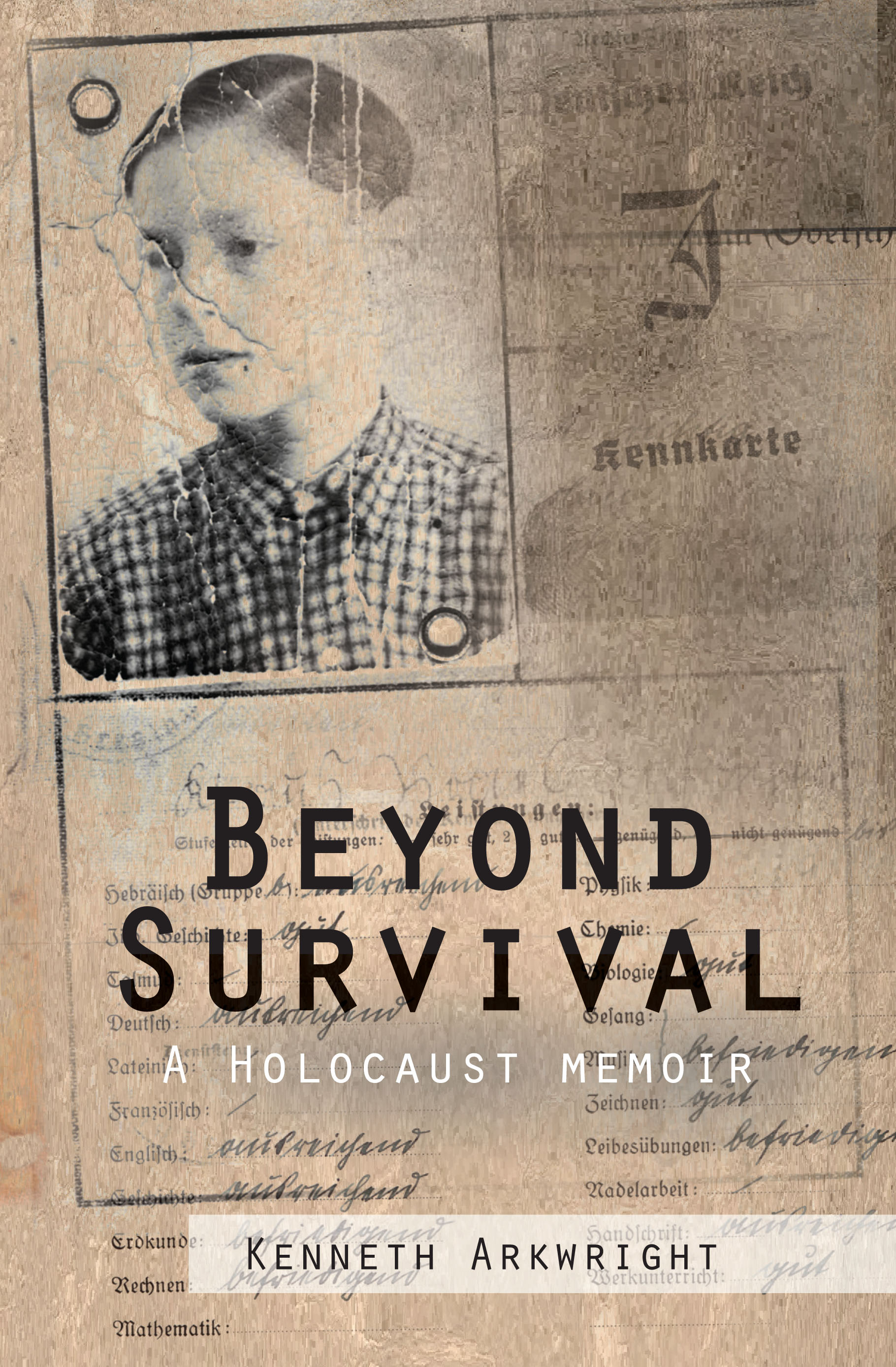
Author: Kenneth Arkwright
Publisher: Hybrid Publishers
Place of publication: Melbourne, Australia
Year of Publication: 2018
Location of Book: JHC, SJM
Cities/town/camps: Breslau, Gross- Rosen, Grünthal/Trachenberg and Perth (Australia)
Kenneth Arkwright’s memoir is 194 pages long. The first 17 pages look at his early life and include a chapter describing both of his grandfathers whom he considers his heroes. Pages 18-105 discuss his childhood in Nazi Germany focusing on the progressive rise in antisemitism. The next section of the book focuses on Arkwright’s life post deportation with six pages focusing on Arkwright’s experiences at Grünthal/Trachenberg Labour Camp and 16 pages looking at his time at Gross-Rosen concentration camp and subsequent escape to work as a farmhand in Neudorf. The remainder of the book (pages 130-194) looks at Arkwright’s post-war experiences including his migration to Australia. This memoir was published in 2018 by Hybrid Publishers.
Before The War
Ken was born on 16th April, 1929 in Breslau Germany (now part of Poland). Up to the age of three, he enjoyed a happy life but as he matured, he found it more and more difficult to reconcile the contrast between the world that he grew up in with the reality of those difficult times. Being so young, he realised later in life that his recollections of his early life merged with stories he was told; for fear of inaccuracies, he writes little about his early childhood. He remembers the beautiful 15 room apartment his family lived in in 1935. His strongest memories of this time are the smells such as French polish, soap and food. His description of this period suggests a very wealthy and privileged life-style. While his parents worked hard, he was looked after by his grandfathers who were both very intelligent and talented. By 1935, conditions in Germany were beginning to impact on their lives and the family had to down-size considerably. Between 1935-1937, many laws were promulgated including the restrictive Nuremberg Laws which made Jews second class citizens. As a young boy of nine, he witnessed the burning of synagogues, ransacking of Jewish businesses and the arrest and deportation of Jews on Kristallnacht. By this time both his parents had to perform menial jobs to survive.
During the War
By 1941, no Jews were allowed to leave Germany. Family accommodation had been reduced to one room in the basement of a Children’s Home. His father (who had been released from a labour camp) became house master and educator and his mother was the caretaker and kitchen hand of the Children’s home. Until late 1944, Kenneth shared his life with the 100 children in the home, but they had to move several times. Then Kenneth was sent as a forced labourer to a chemical factory where he was regularly lifting 75kgs among other jobs. In September 1944, he received an order for deportation to the Grunthal/Trachenberg labour camp (his father had been sent earlier), and later to Gross-Rosen concentration camp. In January 1945 the camp was evacuated. He was faced with the dilemma of marching to the next camp or escaping. He chose to risk an escape. Fortunately he found a farm where the owners let him work. He survived there until the end of the war, but contracted typhoid. Ken was treated in an American hospital where he was provided with papers that would allow him to return to Breslau to look for his family. He was 16 years old.
After the War
Despite many hurdles and setbacks, he managed to reach the ruined Breslau where he was miraculously reunited with his mother. There was still fighting between the Polish militia and Russian troops and conditions were terrible, so together with his mother he moved to Erfurt where they reunited with his father who was managing a shoe factory. Kenneth then enrolled in medical degree at a university in Berlin. At the age of 21, Ken and his parents fled East Germany and came to Australia on an Italian liner which arrived in Perth.
Ken immediately found a job and continued his studies at night. He married Judith and they had two sons. In Australia he was able to live a free life which was very full, active and successful and culminated in his being awarded an Order of Australia for his contribution to Australian society. Ken is the author of several books and has a long history of involvement in Perth’s Jewish communal life, including Holocaust education.
This memoir has the interesting provenance of having first been published in German, where it aroused considerable interest. The revised and updated English edition was published in 2018.