
Mara Reichman
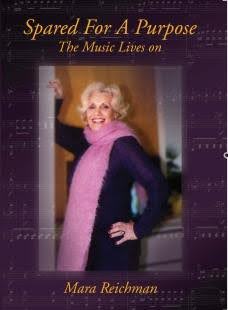 Title: Spared for a Purpose: The Music Lives On
Author: Mara Reichman
Publisher: Makor Jewish Community Library
Place of publication: Caulfield South, VIC
Year of Publication: 2008
Location of Book: Lamm Jewish Library, Sydney Jewish Museum, State Library of Victoria and other public libraries
Cities/town/camps: Romania: Galați, Bucharest; Moldova: Kishinev/Chișinău, Tiraspol; Ukraine: Tulchin, Pechora concentration camp, Balta; Russia: Rostov, Stalingrad, Astrakhan; Uzbekistan: Tashkent, Fergana Canal, unknown collective farm; Kyrgyzstan: unknown collective farm
Note: those cities/towns/camps underlined are those which are most central to the narrative
Genre: Memoir
Key events/experiences: child survivor; Russian-occupation; ghetto; concentration camp; Romanian-occupied Transnistria; Jewish refugee; Soviet collective farm
Spared for a Purpose is the story of Romanian-born child survivor, Mara Reichman. After surviving several ghettos and a concentration camp in Transnistria, Mara’s family was herded into a building that was deliberately bombed. The only survivor, Mara emerged from a coma in Russia, with no memory of how she got there. Orphaned at age twelve, she joined thousands of Jewish refugees journeying across the Soviet Union in flight from the Germans.
The memoir is 193 pages long. Pages 1-15 recount the author’s childhood in Bucharest and her year living in Russian-occupied Kishinev with her family. Pages 16-39 describe her flight from Kishinev following the German invasion in June 1941, internment in various ghettos across Transnistria and recovery in the Rostov hospital in February 1942. Pages 40-78 describe her journey to Uzbekistan and experiences in several collective farms across Uzbekistan and Kyrgyzstan from 1942, as well as her forced marriage to Leon and the birth of their daughter in 1946. Pages 79-97 recount their relocation to Poland and a DP camp in Vienna followed by their emigration to Australia in 1951. Pages 98-193 discuss the author’s life in Melbourne, her children and their shared love of music. The memoir also includes 46 photographs of the author and her extended family in Australia.
Mara Reichman (née Meitis) was born 1 April 1930 in Galați, Romania, to parents Dora Feldman and David Meitis. When she was still a baby, the family moved to Bucharest. Mara was the second of four children and had an older sister, Ida, a younger brother, Abram and little sister Fay. Her father was a professor of linguistics at Bucharest University. The family was not Orthodox but observant and kept kosher. Marie attended the local state school and did not experience antisemitism at school.
Due to political unrest, in June 1940 Mara travelled with her family to Kishinev (Chișinău) in Bessarabia (modern-day Moldova) where her mother’s sister lived. Whilst there the Russians annexed the region and the family fell under Soviet rule. As the authorities prevented them from returning to Romania, they remained in Kishinev for a year.
In June 1941, Germany invaded Russia and Kishinev came under Nazi bombardment. After two weeks of bombing, the family fled west but were rounded up by occupying Germans and sent to the Tulchin ghetto in Romanian-occupied Transnistria. They remained there until forced to march to the Pechora concentration camp. In August 1941, they were sent to the Balta ghetto and subsequently to the Tiraspol ghetto. In February 1942, under German orders, Romanian authorities bombed their building in Tiraspol, killing Mara’s family. Mara was injured in the blast and fell into a coma, waking three weeks later in a hospital in the Russian city of Rostov.
Orphaned and alone, Mara recovered in hospital for six more weeks before being taken in by a fellow Jewish refugee family – the Tuchinksis. As the German army closed in they were forced to flee to Stalingrad on packed cattle wagons with thousands of other refugees. After living on the streets in Stalingrad for ten days, they were sent to the city of Astrakhan on the Caspian Sea where they journeyed by barge and train to Tashkent, Uzbekistan, arriving at the end of June.
In Tashkent, Mara lived on the street for 6-8 weeks with thousands of other refugees, surviving off minimal food. The Tuchinski’s were then sent to Kyrgyzstan and Mara joined another refugee family from Romania. They were sent to a collective farm on the Kyrgyzstan border to pick cotton and lived in abject poverty. When the cotton season ended, Mara was assigned back-breaking work on the Fergana canal as one-by-one members of her adopted family died of illness and malnutrition. Close to death herself, Mara was rescued by an elderly Uzbek woman who took her to a collective farm where work was more secure and conditions better. Mara was able to return to school, rekindling her love of music and finding purpose playing piano.
However, in September 1944, when Mara was only fourteen, she was brutally assaulted and forced into marriage with a man twenty-years her senior, Leon Reichman. Their daughter Faigele was born in August 1946 when Mara was just sixteen. That year, the family left for Poland, where Mara’s husband was born, arriving in Szczecin in December. In mid-1947 they left Poland with the help of the Haganah, staying at a transit camp in Nachod, Czechoslovakia, before travelling to the Lichtenegg DP camp in Wels, Austria, where they stayed for four years with financial aid provided by the IRO and JOINT. Mara’s son David was born in October 1950. Finally, through Leon’s family connections in the textile business, they secured landing permits to Australia. In 1951, they travelled to Genoa and boarded a ship to Melbourne.
In Melbourne, the family were given accommodation by the Warsaw Committee. Leon established a business in the textile industry. Their daughter Rita was born in August 1958 and eventually became a successful pianist.
Spared for a Purpose is a remarkably candid and comprehensive account of the author’s life written in ornate prose. Though some specific dates, locations and names are not recollected due to the author’s youth at the time, the memoir is written with great transparency and attention to detail. It includes discussion of domestic and sexual abuse as well as pregnancy loss. More than half the memoir is devoted to the author’s life in Melbourne, her family and their shared love of music. It was written and published as part of the Makor Jewish Community’s “Write Your Story” Program.