
Siegmund Siegreich
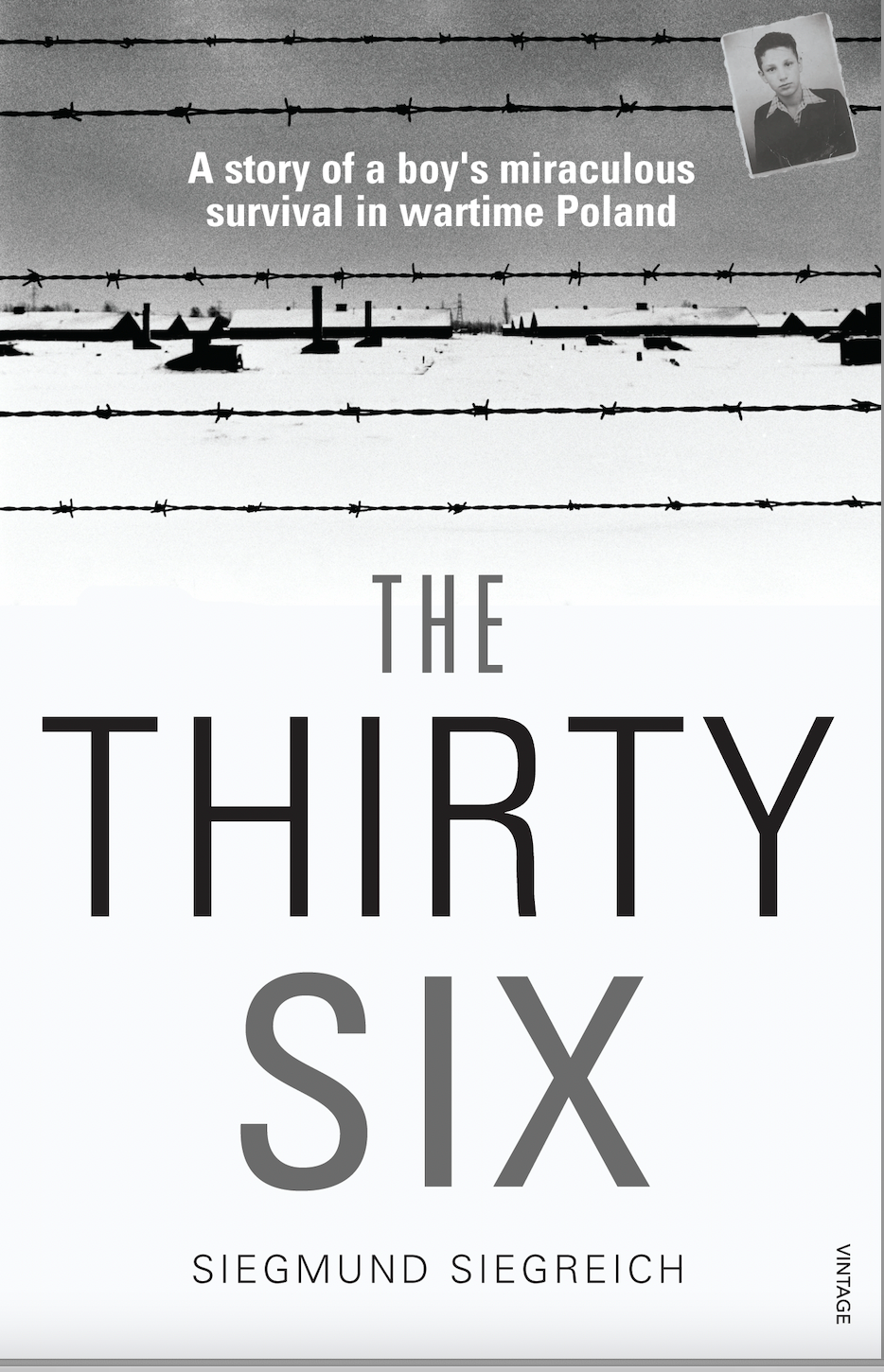
Author: Siegmund Siegreich
Publisher: Random House
Place of publication: Sydney, Australia
Year of Publication: 2009
Location of Book: LAMM Jewish Library of Australia
Cities/town/camps: Olkusz, Katowice, Bedzin, Krakow, Starchowice-Wierzbnik, Poland, Melbourne Australia.
Overview
Siegmund Siegreich’s memoir is 376 pages in length. The book is divided into seven parts. The first section (pages 5-63) starts just before the war begins. Each section deals with a different phase of the war and how it impacted on Siegmund (Sigi’s) life. Part 2 (p67-118) covers a span of almost two years from October 1940 until September 1942; part 3 covers six months from September 1942 until January 1943 (p121-210); part 4 devotes 51 pages from January 1943 until April 1943; part 5 describes in detail the period from May 1943 - May 1944 (p267-319); part 6 (44 pages) describes the final stages of the war and liberation, from May 1944 until January 1945. The book concludes with an epilogue and an index of names of the 167 members of his extended family had been exterminated in the death camps of Treblinka, Belzec and Auschwitz.
What is fascinating about this memoir, aside from the fact that it accurately explores the deprivations of daily life, the humiliations suffered at the hands of the Nazi occupiers, the overnight disappearances of family and friends and Sigi’s miraculous escapes from death is the title of the book, The Thirty Six. According to the kabbalah (Jewish mysticism), in each generation there are 36 righteous people who sustain the world and preserve humanity. They help ordinary people in times of extreme need. Each time Sigi is saved, he believes he is helped by these ‘36’ people (also known as the ‘Lamed Vavs’ (the two Hebrew letters that represent the number 36).
Before The War
Born in 1924, in Katowice, into a large and wealthy family, Sigi enjoyed a happy and cultured childhood in the Upper Silesia and Zaglebie area of southwest Poland. The family was very active in the Jewish community and did much charity work. Sigi and his older sister Halinka lived a very privileged life in a large comfortable home surrounded by art treasures, dazzling furnishings and all the ‘mod cons’ of that time. The family went on annual ski holidays and had a large circle of friends and family. Sigi adored his parents who were cultured, fun, intelligent and progressive. He spoke six languages. Sigi had just turned 15 and was living a carefree life when World War ll was declared. Within days, the Siegreich family relocated further into Poland, to Bedzin, hoping the war would pass quickly. This was not to be the case as in early September, the German Army reached Bedzin.
During the War
Within days of the family setting up in Bedzin, while out shopping for food Sigi was picked up by German soldiers and taken off with 20 other Polish Jews where he was forced to dig a large trench. The German soldiers then shot the men, one by one. In the first miracle of his life, Sigi was saved by a man who grabbed him and threw him into the trench before him. This was Siegmund’s first of many lucky escapes. When he returned home his mother believed that Sigi was saved by a man who was a ‘Lamed Vav,’ one of the 36 righteous who help ordinary people in time of need.
As conditions were rapidly deteriorating, the family moved from Bedzin to Krakow but by now, nowhere was safe. Halinka escaped with her fiancé to the Russian controlled area of Poland. Sigi and his parents were forced to move many times to find shelter or work as Germany continued its invasion of other European countries.
From October 1940-September 1942
Sigi and his mother joined his father in Starachowice-Wierzbnik (or Skarzysko-Kamienna – need to check this and what happened to his parents) where he had been offered work. At first Sigi laboured alongside his father as a timber worker but was later moved onto working in a brick-making factory. When the timber works relocated to Staszow, so did they (this was their ninth move since first leaving Katowice).
The next sections of the book describe how Sigi went on to lead the most extraordinary life in order to survive. Operating a bicycle courier service between Jewish ghettos in Poland, escaping from his first workcamp, working with the Polish resistance and being returned to another workcamp where he was able to use his job in the armaments factory to sabotage the German munitions. In the Czestochowa labour camp he fell in love with Hanka who helped him survive his last period in the workcamp when he was forced into hiding. Sigi was just twenty when he was finally liberated by the Russians in 1945.
After the War
The morning after liberation, Sigi married his love, Hanka. The two returned to his former home in Katowice where they spent the next 15 months trying to trace any surviving relatives and deal with the unwarranted guilt so many survivors suffered. Their daughter Evelyne was the first Jewish child born to Holocaust survivors in Katowice. In Katowice, they were reunited with Siegmund’s sister and brother-in-law and after 20 years eventually resettled in Melbourne, Australia where he established a successful import business.
More than six decades after these events, Siegmund was finally able to talk, and write about, and share his story with his family. He has collated and presented his experiences with clarity and eloquence in this remarkable book The Thirty Six.