
HDR Student projects in Creativity and Collaboration
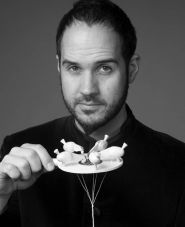
Matter, agency and the ethics of percussion instruments.
Eugene Ughetti
This research aims to explore a philosophy and practice of percussion through a theoretical and practical analysis of my own creative practice. I will undertake a critical examination of how percussion materialises, is agentially enacted and ethically implicated. Any physical object can be involved in the sonic play of percussion and this indeterminate instrumentation means that matter plays a central role in the meaning of percussion. Responsible percussion practice is being response-able to percussion instruments. An ethical engagement with instruments I believe is inextricably linked with the enactment of agency. Through this practice-based research, comprising a new percussion work entitled Pigeons and this exegesis, I will present a new philosophy of percussion.

Creativity and ecology: Mapping cultural landscapes through the lens of creation.
Joseph Callaly
Interconnections between humans and their environments have throughout history been shaped by the narratives and realizations of the concept of creation. Creation myths form sacred accounts which address fundamental questions of cultural self-identity and worldview. The contemporary secularization of creation into the notion of ‘creativity’ has served to intensify its ubiquity and formalise its power. With this, the modern rhetoric of creativity has become embedded within human epistemologies of labor and property – preconfiguring a relationship between humans as exceptional and all else as the resources or products of their creativity. By examining interdisciplinary theories and practices of creativity, this work aims to contribute to the rewilding of creative ideology, thereby elevating the diversity of forms in which it appears.
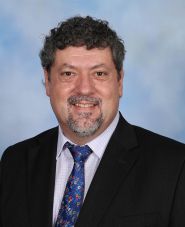
Provoking Creativity: the role of informal music learning strategies, “ontologically thin music” and “desirable difficulties” in developing musical creativity in high achieving, classically-trained high school music students.
Ian Barker
The Sydney Conservatorium High School is a specialist Music High School where pedagogies of creativity, collaboration, expertise and enterprise (PoCCEE) underpin and inform our culture as a school. Conversely, research suggests that many of the underlying tenets of Classical music-making: high levels of practice and repetition, high expectations of accuracy, replication of score notation and fluency of performance, can contribute to the inhibition of creativity1. This research project juxtaposes this dialectic facing every student at the school and proposes a physical, social, intellectual and musical space for students to work through musical obstacles, create musical solutions together, and learn to be more creative through informal music-making techniques, desirable difficulties2, and ontologically thin3 musical stimulus.
[1] “Undue emphasis on staff notation can lead to atrophy of musicians’ creative abilities” (McPherson & Mills, 2015) (p.178). And David Elliott ( in 1989 on p24 ) suggests that “aestheticists” such as Beardsley, Dewey and Langer and aesthetic educators like Reimer claim technical concerns are inimical to creativity (Elliott, 1989) (p.24).
[2] Bjork & Bjork, 2011; Metcalfe, 2011.
[3] Working definition of “ontologically thin music”: music that has little constitutive detail, few instructions or material that can be used to instance a performance, such as a single line melody with no annotation, music that requires a great deal of musical material to be added into it in the process of performance in order to achieve any semblance of a satisfactory performance.