
Engagement activities
Professor Sascha Becker was a Visiting Scholar at the Einaudi Institute for Economics and Finance (EIEF) in Rome, Italy in June/July 2026.
He also gave two keynote lectures:
- June 2026: Keynote Lecture at the 4th Workshop “Diversity and Human Capital”, Exeter, UK
- May 2026: Keynote Lecture at the 4th Workshop in Economic History, Uppsala, Sweden
Professor Becker gave seminar and conference presentations at;
- 30th Annual Conference of The Society for Institutional and Organizational Economics (SIOE), INSEAD Fontainebleau
- Global Heritage Lab, University of Bonn
- LSE Economic History
- PEPES Seminar @ Sciences Po, Paris
- Università degli Studi di Milano Statale
- Università Bocconi, Milan
- King’s College, London
- UC Louvain-la-Neuve
- University of Torino
- EPFL Lausanne
Preparing for a PhD abroad
As part of his new role as Honours Director, Dr Claudio Labanca, with Asst/Prof Liang Choon Wang, identified one area in which our already excellent program could be further strengthened: increasing students’ interest in, and preparation for, applying to top PhD programs overseas.
To this end, in Week 12 of Semester 1, they organised an event featuring four speakers who had all completed Honours degrees in Australia before going on to attend leading PhD programs abroad. Two of the speakers, Simone Pandit (NYU) and Hema Balarama (LSE), are Monash alumni, while the other two, Dr Mitch Watt and Dr Kate Huang, are junior faculty members in the department.
The speakers shared their experiences and offered practical advice on how students can best prepare for applications to these programs.
The Honours students appeared to enjoy the event, and a few are taking additional courses to strengthen their preparation for future PhD applications.
On this note, third year PhD student Imrul Kayes will be visiting Harvard Kennedy school as a PhD Fellow for a semester.
Sustainable Development Conference
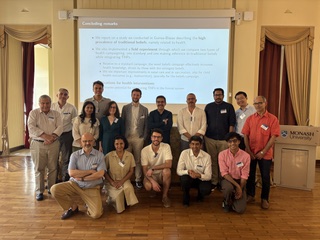 The Department of Economics organised the 10th edition of the Monash Business School Sustainable Development Conference at the Monash University Prato Campus on the 25th and 26th of June. It was a fantastic lineup of speakers. The Martin Ravallion Keynote was delivered by Professor Francois Bourguignon (PSE) and the Sisira Jayasuriya Keynote was delivered by Professor Francisco Ferreira (LSE). There was a Special World Bank Session on AI and Development along with a wonderful set of other paper presentations (with presenters based in Taiwan, India, Germany, Portugal, UK and USA in addition to Australia). The Department of Economics was well represented with paper presentations by Gaurav Datt, QA Do, Marco Lecci, Pushkar Maitra, Krisztina Orban and Paul Santos. A big thank you to Gaurav Datt for his wonderful leadership as the main organiser, well supported by Monash colleagues.
Our thanks also to the World Bank for their financial support for this event.
The EU is funding Fenicia Cossu to spend 21 months under the supervision of Professor Michelle Rendall at Monash University. The funding is part of the framework of the Horizon Europe programme, funding the Marie Skłodowska-Curie Actions (MSCA) Postdoctoral Fellowship – Global Fellowship project entitled Automation and Occupational Network (AUTON), Grant Agreement No. 101279945. Fenicia Cossu should be joining the department in October.
Professor Yves Zenou became co-editor of the Journal of Economic Theory from July 1, 2026.
Professor Sascha Becker’s research on religion and economic growth has been mentioned in Zenit.org and Religion news.
Two of Prof Sascha Becker’s papers on the Protestant Reformation were covered by German radio/TV on 31st Oct is Reformation Day:
His research on East-West differences in Germany was also referenced on the Oiger business news and research website.
A/Prof Christis Tombazos participated in the following radio programs on CGTN radio, the international broadcasting service of the China Media Group.
- Is the transatlantic alliance faced with an unprecedented crisis? This panel discussion on February 28, 2025, involved Dr. Tombazos addressing challenges to the transatlantic alliance amid changes in U.S. foreign policy.
- Why marking 50 years of China-EU diplomacy matters. On May 2 2025, Dr Tombazos was part of a panel discussing the history and future of diplomatic ties between China and the European Union.
- How far could a US game of tariffs go? In early 2025, Dr Tombazos provided an analysis for a podcast episode on US trade policies and their impact.
Further, A/Prof Christis Tombazos gave a wide ranging interview to the magazine Fast Forward, Cyprus’ Two-Speed Economy and Trump’s Trade Illusions, on 11 June 2025.
PhD candidate Yitian Wang’s research was featured on the Monash Business School website under graduate research impact. Her work uncovers the impact of extreme bushfires on household energy hardship, and why some families continue to struggle long after the headlines fade.
Previously
 2026
View
2026
View

-
Simon Angus and Paul Raschky
The IP Observatory has been selected as one of Monash’s 2025 Top 10 Breakthroughs. The researchers behind the breakthrough are Professors Simon Angus and Paul Raschky from the Department of Economics and Dr Klaus Ackermann from the Department of Econometrics and Business Statistics.
The Top 10 showcase celebrates the most significant research advances that have pushed the boundaries of knowledge and delivered profound societal, economic, or environmental benefits over the past twelve months.
Following a consultation process in August 2025, faculty nominations produced a longlist of 76 initiatives from across the university. After comprehensive review and analysis, the Associate and Deputy Dean Research leadership group narrowed this selection to a shortlist of 22 case studies, which were then reviewed in February 2026 by an esteemed group of Monash researchers as part of a rigorous Selection Panel.
The IP Observatory: monitoring global internet freedom, was identified as a standout example of Monash’s research excellence and impact in 2025.
Ricardo Dahis
Dr Dahis was awarded a Discovery Early Career Researcher Award (DECRA) 2026-2028 for his project “The Role of Money in Politics: Growing Concerns but Scarce Evidence”.
This project aims to investigate how financial power influences political decision-making and policy outcomes. It will examine how economic booms affect political participation and assess the effectiveness of campaign finance reforms in reducing undue influence. This project expects to generate new knowledge in political economy by using innovative data science techniques to study governance and electoral policies. Expected outcomes include new academic research, public datasets, and strengthened research collaborations. This should provide significant benefits, such as informing electoral reforms, improving transparency, and supporting evidence-based policy-making in Australia and beyond.
Vinod Mishra
A/Prof MIshra was successful in receiving the VAIshwik BHArtiya Vaigyanik (VAIBHAV) Fellowship from the Department of Science and Technology (DST), Ministry of Science and Technology, Government of India, for 2025. The VAIBHAV Fellowship envisages a collaboration between scientists of the Indian Diaspora and Indian Higher Educational Institutions (HEIs), Universities, and/or publicly funded Scientific Institutions. The VAIBHAV Fellowship covers all costs and provides research funds for the recipient to collaborate with an Indian Institution and spend up to two months per year over the next three years on a joint research project. A/Prof Mishra will be collaborating with Prof Rudra Sensarma of the Indian Institute of Management.
Dr Mallory Avery featured in the Sydney Behavioural Science Summit, a practitioner-focused workshop organised by Bescy.org, on February 2. Dr Avery was a guest speaker, presenting research on how AI will affect workforce composition.
Professor Sascha Becker presented at a seminar at the University of Bristol; at the Political Economy Seminar at Oxford University; and at the the American Economic Association Annual Meeting in Philadelphia in January 2026.
Professor Kaveh Majlesi is co-organising the 1st FIRN Household Finance Conference in April 2026 in Sydney. The keynote speaker will be Scott Baker from the Wisconsin School of Business.
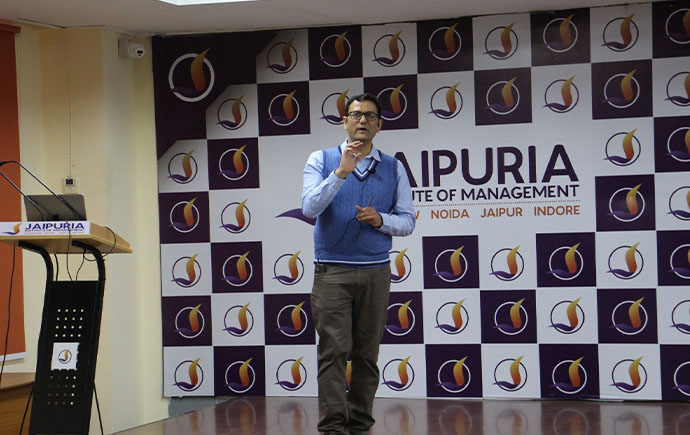
A/Prof Vinod Mishra was invited by Jaipuria Institute of Management, Indore, India, to deliver an expert seminar on Research, Education and AI. The seminar was very well attended by faculty and students.
The research of Dr Mallory Avery was highlighted in the AEA-CEE newsletter EconEdNews, Fall 2025 edition. "Active Learning Pedagogy for DEIB".
Professor Sascha Becker’s discussion paper “The Virtuous Cycle Between Skills and Technology” has been covered in several news outlets, including the Financial Times, Reuters and WirthschaftWoche. It covers the long shadow of the steam engines.
Prof Becker’s work on gender and religion also made it into several newspapers around the world. This article revisits a striking paradox: across cultures and religions, women are consistently more religious than men, even where religious doctrines reinforce traditional gender roles or constrain women’s social and economic freedoms. The study shows that women are more likely to pray, affiliate with religious traditions, and consider religion central to their lives. It discusses mechanisms including socialisation through marriage and motherhood, caregiving roles, and the role of religious communities as social safety nets that provide meaning, recognition, and leadership opportunities.
A/Prof Gordon Leslie has lodged a submission outlining economic principles for determining how water in Tantangara Reservoir is best allocated across multiple potential uses. This is part of the consultation on the Draft Upper Murrumbidgee Drought Operating Framework.
A/Prof Vinod Mishra recently spoke with SBS Hindi about the implications of India's Union Budget 2026 for Non-Resident Indians (NRIs).
The Budget introduces important measures — higher equity investment limits, simpler property tax compliance, lower TCS on overseas remittances, and a one-time disclosure window for foreign assets. Together, these steps make it easier and safer for overseas Indians to invest in and engage with India's financial markets.
The news story in English covering this interview is available.
Ricardo Dahis
Dr Dahis has received a DECRA fellowship.
Dr Claudio Labanca
Dr Labanca has been awarded an ARC Discovery Project grant for work on the project: “Better childcare policy: parental labour supply and provider responses.” Childcare policy is fundamental for women’s workforce participation, gender equity and productivity. Using new, linked administrative data, this project aims to provide novel insights on how childcare policy shapes the availability and utilisation of childcare services in Australia, as well as their effects on parental labour market outcomes. The project intends to propel Australia to the global frontier of research on childcare policy, generating findings that will inform policymakers in establishing childcare subsidy rates that effectively boost workforce engagement and productivity. Ultimately, the project can help narrow the gender pay gap, thus enhancing the well-being of Australian families, and foster a more equitable society.
Prof Michelle Rendall
Prof Rendell has been awarded an ARC Discovery Project grant for a project focusing on Macroeconomic Analysis of the Australian Higher Education System. The purpose of this project is to conduct a macroeconomic analysis of the Australian higher education system using administrative individual income tax records and education data provided by the Australian Bureau of Statistics. The earnings process of college graduates and returns to college education will be estimated by institution and field of study. These estimates will be used to evaluate (i) earnings risk by institution and field of study, (ii) college peer effects on earnings, and (iii) misallocation of talent across fields of study. The goal of this project is to provide insights into optimal human capital allocation and improvements in higher education policy in Australia to enhance economic efficiency and equality.
Prof Russell Smyth
Prof Smyth has been awarded an ARC Discovery Project grant for his project: Electric vehicle charging tariff paradigms for the clean energy transition. This project aims to devise innovative public charging systems for electric vehicles, considering flexible ways of billing (not just paying for energy), the infrastructure required, and interaction with user behaviour and the power grid. It will create new knowledge on how to bill people for demanding rapid responses, rather than charging vehicles when renewable energy is plentiful, significantly reducing the demand for energy generation. This requires a new tariff paradigm encouraging vehicles to be plugged in longer without compromising mobility, and calls for suitably accessible charging infrastructure as expected outcomes. The benefits include fostering EV uptake to decarbonise transport and transitioning to the clean energy future.
Two of Prof Sascha Becker’s papers on the Protestant Reformation were covered by German radio/TV on 31st Oct is Reformation Day:
His research on East-West differences in Germany was also referenced on the Oiger business news and research website.
A/Prof Christis Tombazos participated in the following radio programs on CGTN radio, the international broadcasting service of the China Media Group.
- Is the transatlantic alliance faced with an unprecedented crisis? This panel discussion on February 28, 2025, involved Dr. Tombazos addressing challenges to the transatlantic alliance amid changes in U.S. foreign policy.
- Why marking 50 years of China-EU diplomacy matters. On May 2 2025, Dr Tombazos was part of a panel discussing the history and future of diplomatic ties between China and the European Union.
- How far could a US game of tariffs go? In early 2025, Dr Tombazos provided an analysis for a podcast episode on US trade policies and their impact.
Further, A/Prof Christis Tombazos gave a wide ranging interview to the magazine Fast Forward, Cyprus’ Two-Speed Economy and Trump’s Trade Illusions, on 11 June 2025.
PhD candidate Yitian Wang’s research was featured on the Monash Business School website under graduate research impact. Her work uncovers the impact of extreme bushfires on household energy hardship, and why some families continue to struggle long after the headlines fade.
2025
View
-
The ThReD Conference and the MBS Sustainable Development Conference (Both at Prato campus, June 25—27, 2025), hosted by the Department of Economics and Monash Business School, were extremely successful. Approximately 45 academics attended one or both events. The Department of Economics had a large presence there, with A/Prof Gaurav Datt, A/Prof QA Do, Prof Pushkar Maitra and A/Prof Paulo Santos attending both conferences, and Prof Chongwoo Choe attending the MBS Sustainable Development Conference.
One of the keynote lectures (this year delivered by Sonia Bhalotra) is now named the Sisira Jayasuriya Lecture in honour of our late colleague. Prof Choe chaired the 2025 lecture.
The local organisers for both conferences were A/Prof Datt and Prof Maitra. A/Prof Do served as a member of the Organizing Committee for ThReD.
We have now established a presence in the European Development Economics circuit, and it will be good to build on these two successful conferences with support from the Department of Economics and Monash Business School.
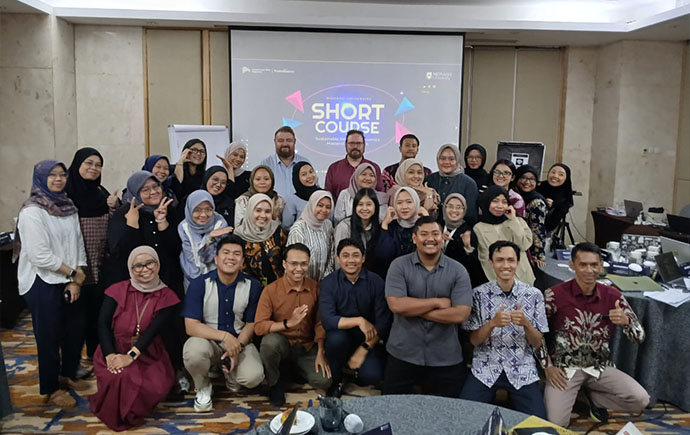
A/Prof Anke Leroux, Prof Russell Smyth, A/Prof Paulo Santos, Prof Michael Ward and Prof Paul Raschky took part in the Bappenas Workshop in Jakarta in October 2025.
The Ministry of National Development Planning (Bappenas), in collaboration with Monash University Australia and Monash University Indonesia, this year launched the Sustainable Regional Economics Course, an intensive training program aimed at strengthening Indonesia’s capacity in environmental and regional development planning. The program consists of two sessions: the first held from 29 September to 3 October 2025, and the second scheduled for the first week of November 2025.
This five-day masterclass brought together 29 senior planners and analysts from across Bappenas, representing key directorates that play a central role in Indonesia’s national and regional development agendas. These include the Directorate for Eastern Indonesia Development, Directorate of Environment, Directorate of Food and Agriculture, Directorate of Forestry and Conservation of Water Resources, Directorate of Industrial Downstream Planning and International Economic Cooperation, and the Directorate of Fiscal, Monetary, and Financial Sector Planning, among others.
The program was jointly led by Professor Russell Smyth and Professor Paul Dargusch from Monash University Australia, Associate Professor Arif Perdana from Monash University Indonesia, and the Center for Development, Education, and Training of Planners (Pusbindiklatren)–Bappenas, represented by Dr. Wignyo Adiyoso. The training was supported by expert facilitators from Monash University, who bring international experience in sustainability economics and policy design.
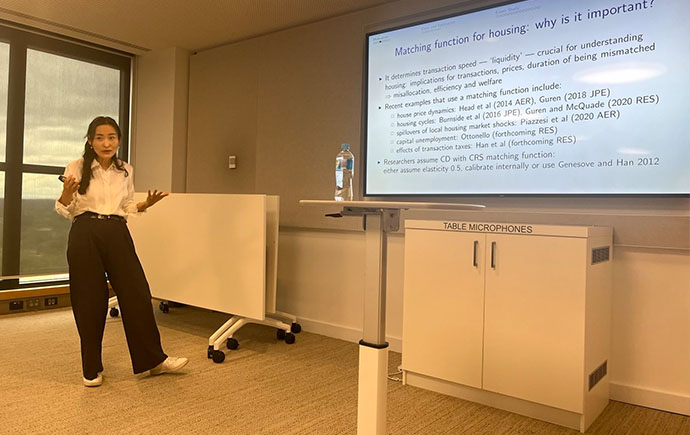
Prof Michelle Rendall hosted the 10th Workshop of the Australasian Macroeconomics Society at Monash Business School, Caulfield campus on November 19-21 2025. The keynote lectures were given by Prof Rachel Ngai from London School of Economics and Marco Del Negro from Federal Reserve Bank of New York.
On November 12 2025, our PhD candidate Zhongwen Chen gave a talk titled Economic Decisions in Virtual Reality at the 7th Annual Monash Business Behavioural Laboratory Symposium, titled Judgment and Decision-Making in Virtual and Physical Worlds. Zhongwen Chen was also invited to the panel discussion: Emerging Technologies in Judgment and Decision-Making.
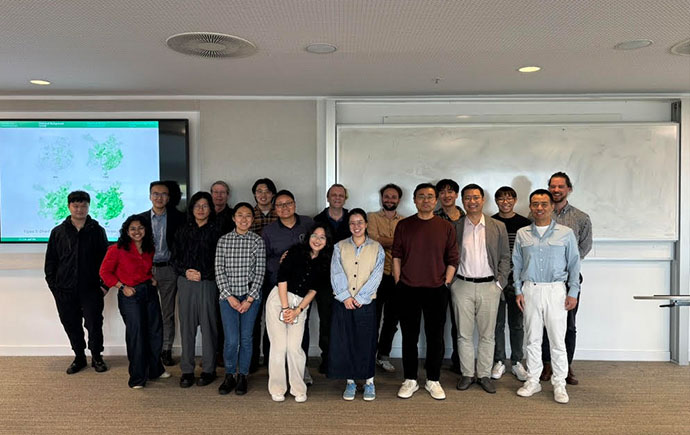
A/Prof Quoc-Anh Do hosted the 12th Australian Cliometrics Workshop on November 14 2025, which attracted around 30 participants from Monash, the University of Melbourne, and elsewhere in Australia, New Zealand, and China. Its format followed the traditional cliometrics society format of a short presentation of 5 minutes together with a discussion of 10 minutes by a discussant, followed by a large audience discussion. This has become a tradition of the community of economic historians in Australia, and its visibility and prestige have expanded farther in the region.
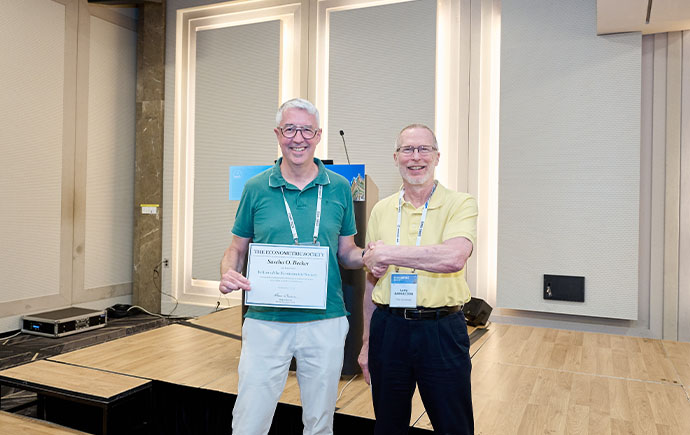
Prof Sascha Becker was officially inducted as Fellow of the Econometric Society in a certificate ceremony at the Econometric Society World Congress led by Society President Larry Samuelson.
Furthermore, Prof Becker gave a masterclass on forced migration in November 2025 at the Rockwool Foundation Berlin and Berlin School of Economics.
He also recently gave two keynote lectures. The first was at the 19th Workshop on Political Economy, in Dresden, Germany. The second was a public lecture titled: Why Forced Migration is Different at the University of Durham in the UK.
Finally Prof Becker participated in the panel discussion The History of Economic History at the 55th Annual Meeting of The History of Economic Thought Society (THETS).
Dr Ricardo Dahis presented at LSE Environment Week as well as at APEN at the University of New South Wales.
This year Prof Yves Zenou was also elected as a Council Member of the Game Theory Society.
Further, he was a Programme Committee Member of the 2026 Econometric Society Australasia Meeting, Adelaide, Australia, 24-27 November 2026, and joined the Scientific Committee of the Asian Meetings of the Econometric Society, NYUAD, January 23-25, 2026.
2025 Dean’s Awards
Congratulations to our colleagues recognised in the recent 2025 Dean's awards:
Dean’s Award for Researcher of the Year
- Prof Yves Zenou
Dean’s Commendations for Researcher of the Year
- A/Prof Rigissa Megalokonomou
Dean’s Award for Research Team of the Year
- Prof Erte Xiao and Prof Lata Gangadharan
Dean’s Commendations for Research Team of the Year
- A/Prof Guillaume Roger and Dr Sergei Balakin (Energy Lab)
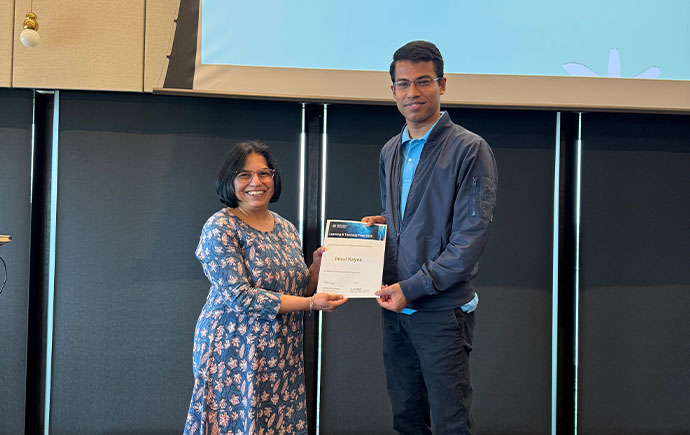
Dean's Citation for Outstanding Contributions to Student Learning as a Teaching Associate
- Mr Imrul Kayes
Dr Krisztina Orban was also awarded a purple letter for teaching excellence from the Dean.
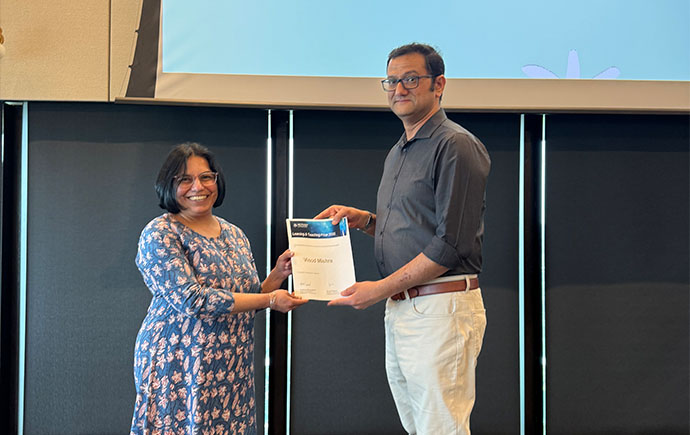
The Department of Economics Teaching Award went to A/Prof Vinod Mishra.
Professor Emeritus Ng Yew Kwang was awarded Honorary Professor from the School of Economics at Peking University. He also received an award for outstanding educational contribution from the same institution.
The 2025 Shanghai subject rankings have been published. In Economics, Monash jumped 9 places to rank 33 globally and 1 in Australia.
Ricardo Dahis
Dr Dahis has received a DECRA fellowship.
Dr Claudio Labanca
Dr Labanca has been awarded an ARC Discovery Project grant for work on the project: “Better childcare policy: parental labour supply and provider responses.” Childcare policy is fundamental for women’s workforce participation, gender equity and productivity. Using new, linked administrative data, this project aims to provide novel insights on how childcare policy shapes the availability and utilisation of childcare services in Australia, as well as their effects on parental labour market outcomes. The project intends to propel Australia to the global frontier of research on childcare policy, generating findings that will inform policymakers in establishing childcare subsidy rates that effectively boost workforce engagement and productivity. Ultimately, the project can help narrow the gender pay gap, thus enhancing the well-being of Australian families, and foster a more equitable society.
Prof Michelle Rendall
Prof Rendell has been awarded an ARC Discovery Project grant for a project focusing on Macroeconomic Analysis of the Australian Higher Education System. The purpose of this project is to conduct a macroeconomic analysis of the Australian higher education system using administrative individual income tax records and education data provided by the Australian Bureau of Statistics. The earnings process of college graduates and returns to college education will be estimated by institution and field of study. These estimates will be used to evaluate (i) earnings risk by institution and field of study, (ii) college peer effects on earnings, and (iii) misallocation of talent across fields of study. The goal of this project is to provide insights into optimal human capital allocation and improvements in higher education policy in Australia to enhance economic efficiency and equality.
Prof Russell Smyth
Prof Smyth has been awarded an ARC Discovery Project grant for his project: Electric vehicle charging tariff paradigms for the clean energy transition. This project aims to devise innovative public charging systems for electric vehicles, considering flexible ways of billing (not just paying for energy), the infrastructure required, and interaction with user behaviour and the power grid. It will create new knowledge on how to bill people for demanding rapid responses, rather than charging vehicles when renewable energy is plentiful, significantly reducing the demand for energy generation. This requires a new tariff paradigm encouraging vehicles to be plugged in longer without compromising mobility, and calls for suitably accessible charging infrastructure as expected outcomes. The benefits include fostering EV uptake to decarbonise transport and transitioning to the clean energy future.
Two of Prof Sascha Becker’s papers on the Protestant Reformation were covered by German radio/TV on 31st Oct is Reformation Day:
His research on East-West differences in Germany was also referenced on the Oiger business news and research website.
A/Prof Christis Tombazos participated in the following radio programs on CGTN radio, the international broadcasting service of the China Media Group.
- Is the transatlantic alliance faced with an unprecedented crisis? This panel discussion on February 28, 2025, involved Dr. Tombazos addressing challenges to the transatlantic alliance amid changes in U.S. foreign policy.
- Why marking 50 years of China-EU diplomacy matters. On May 2 2025, Dr Tombazos was part of a panel discussing the history and future of diplomatic ties between China and the European Union.
- How far could a US game of tariffs go? In early 2025, Dr Tombazos provided an analysis for a podcast episode on US trade policies and their impact.
Further, A/Prof Christis Tombazos gave a wide ranging interview to the magazine Fast Forward, Cyprus’ Two-Speed Economy and Trump’s Trade Illusions, on 11 June 2025.
PhD candidate Yitian Wang’s research was featured on the Monash Business School website under graduate research impact. Her work uncovers the impact of extreme bushfires on household energy hardship, and why some families continue to struggle long after the headlines fade.
-
Professor Sascha Becker gave three keynote lectures in December 2024 and January 2025:
2025: Keynote Lecture at the 3rd Bolzano Workshop on Historical Economics, Bolzano/Italy
2024: Keynote Lecture at the WEast 2024 Dublin Workshop
2024: Keynote Lecture at the 8th Asian Historical Economics Conference 2024 (AHEC 2024), HKU, Hong KongDr Ricardo Dahis presented at the World Bank's Public Institutions for Development conference.
He also joined the Technical Advisory Group on the Social Science Research Infrastructure Network (SSRIN) project. SSRIN is a four-year project to improve social science capabilities in Australia. Improvements in social science research capabilities are sought in three broad areas:
Access to data (available data assets, data discoverability, data documentation); Human research capabilities (training); and Ethical use of data (guidelines for using Indigenous data).
The 2025 Asia-Pacific Economic and Business History Conference, the annual conference of the Economic History Society of Australia and New Zealand, was held at the Caulfield Campus on 6-7 February 2025. Over 50 participants from Australia, New Zealand, United States, Japan, Korea, China, the UK and Europe heard 42 paper presentations. Dr Lionel Frost, Dr Weijia Li and Dr Quoc-anh Do organised the conference, with assistance from Holly Travers from the Events Team. Dr Claudio Labanca and Professor Gary Magee also presented papers.
Dr Gordon Leslie organised an event with the Monash Energy institute, titled Electric Vehicles and the Energy Transition: Expert Insights and Implications for the Industry.
Industry experts and researchers gathered in Melbourne to explore the economics of EV adoption, charging behaviour, and electricity tariff design.
Key takeaways included:
Time-of-use pricing can shift EV charging demand but may also create "shadow peaks," which can exceed rated limits within distribution networks and require infrastructure upgrades.
Managed charging offers a solution, reducing strain on distribution networks.
Research into consumer acceptance and adoption of managed charging in early stages.
Collaboration between industry and academia can help shape effective policies for the efficient development of EV-enabling infrastructure and tariffs.
Professor Yves Zenou was elected Associate Editor of The Economic Journal from 2024 onwards.
He presented at NBER Political Economy Program, SIEPR, Stanford University, USA, on November 15, 2024 and at University of California, Irvine, USA, on November 13, 2024.
Ben Smith, advised by Paulo Santos, has won the 2024 AARES prize, which recognises the most outstanding honours thesis in agricultural or resource economics in Victoria. A fantastic effort by a committed student, and a testament to the quality of advising by Paulo and the Monash honours program.
Title: Economic Inequality and Biodiversity Loss. An empirical analysis of Keo Seima Wildlife Sanctuary, 2012-2022
Professor Sascha Becker was quoted in a major Dutch newspaper article on the recent German election. The article also used some of his data to produce maps.
The Singapore Economic Review published a special issue in Professor Yew Kwang Ng’s honour in September last year.
Dr He-ling Shi was interviewed on Voice of America's flagship current affairs program Deep Perspective. During the one-hour program, he explained China's current challenges of insufficient effective demand and deflation, as well as policy options. The interview was conducted in Chinese and is available in the link above.
Prof Sascha Becker gave a keynote lecture at the Ifo CEMIR Junior Economist Workshop on Migration Research, in Munich, Germany
Prof Emeritus Yew-Kwang Ng delivered a public forum (in Chinese), ‘Fallacies in environmental economics that have to be corrected’, on 3 July 2024 at the Forum for Climate Change Economics. A video recording of the forum is available on bilibili.com.
A/Prof Paulo Santos presented ongoing work on the relationship between income and wildlife hunting in Cambodia (with Sharar Kader, Emiel de Lange, Henry Travers and Kimchinn Sok) at a policy workshop held in Phnom Penh on September 5. This was preceded by meetings with the Ministry of Environment of Cambodia on the scope for using cash transfers (in particular, UBI) to reduce biodiversity loss in the country.
An article on the middle income trap by Prof Ranjan Ray has been featured in Monash Business School’s Impact publication.
-
Professor Sascha Becker will start his one-year tenure as 1st Vice-President of The Society for Institutional and Organizational Economics (SIOE), with the SIOE Conference to be held in Sydney at the end of August.
Following this, Prof Becker will automatically become President-Elect in 2026 and then SIOE President in 2027, which will also entail running the SIOE Conference at The University of Warwick.
Professor Yves Zenou has been appointed Research fellow at the Rockwool Foundation Berlin Institute for the Economy and the Future of Work (RFBerlin).
He has equally become a Council Member of the Game Theory Society.
Associate Professor Lionel Frost was successful in the latest ARC Linkage Projects round, for his project LP240200877: A Tale of Two Cities: Long run social and economic mobility in Australia.
The project is administered through University of Adelaide, with $903,456 in funding over four years.
Partner Organisations: Genealogy SA, Digital History Tasmania Ltd, Registry of Births Deaths & Marriages, State Records (SA), State Library of South Australia.
Application Summary: How did nature and nurture impact the children of convicts and passage-assisted migrants in Australia? This project measures intergenerational mobility, combining colonial data, over 3 million digitised records and the work of dozens of volunteers to link thousands of South Australian and Tasmanian individuals' life courses. Our interdisciplinary approach, combines economic, social, historical and computational skills to produce new insights into the factors impacting an individual's mobility. Besides path-breaking research into mobility, expected outcomes include world-class, digitised and linked records that will benefit current research into the factors impacting life outcomes and secure, historical digital assets for future generations.
Dr Claudio Labanca has secured the following grant: The Rockwool Foundation, co-investigator (with Mulalic I. (PI), Jinkins D.(PI), and Østerdal(PI) L. P., Ahlfeldt G., Hussain M. A., Kuka E. , Redding S. J., Sturm D. M.) “Connecting Copenhagen - Urban structure, policy spillovers, and welfare disparities.”, 2023-2027, AUD 1.6 Million AUD (DKK 6.7 million).
Workshop and conference appearances
On 22-23 May 2025 Prof Yves Zenou gave the keynote lecture at the Workshop on Networks and Development in Naples, Italy.
In May 2025 Prof Sascha Becker gave the keynote lecture at the 4th Gender and Economics Workshop, in Luxembourg.
He also gave an online lecture at the Editors-in-Chief Face-to-Face Conference on Economics in China, organised by the School of Economics and Management, Beijing Jiaotong University in June.
Further, he delivered the Keynote Lecture at the workshop Autocracy and Nation Building in June in Bergamo, Italy.
Finally, in July 2025, Prof Becker taught a course at the ISEG Summer School at the University of Lisbon in Portugal.
And A/Prof Lionel Frost delivered a keynote address at the Australian Society for Sports History’s Sporting Traditions XXV conference at Bond University, 24 July.
Department events
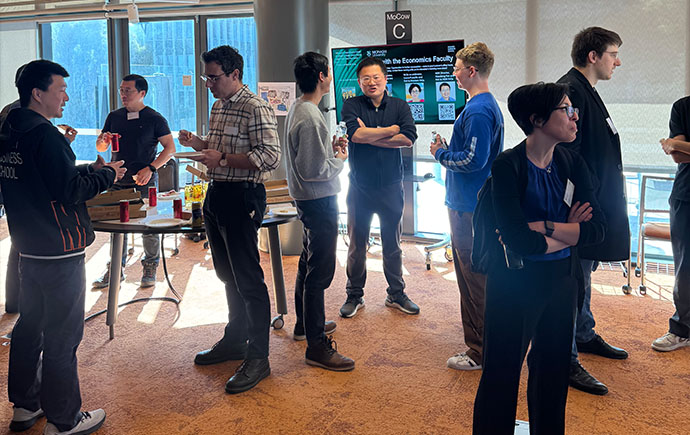
Approximately 100 interested staff and students attended the Meet the Econ Faculty pizza event, with a lot of conversation taking place about economics at Monash.
The aim was to provide an opportunity for students to discuss economics with fellow students, some professors they might already know, and some they might not. Conversations covered student interests, study plans, career goals, or current affairs.
Dr Gordon Leslie (Honours), A/Prof Laura Puzzello (Masters) and Dr Xiaodong Fan (PhD) were on hand to discuss these programs, with QR codes linking to program information / FAQs for students wanting to learn more about future study options.
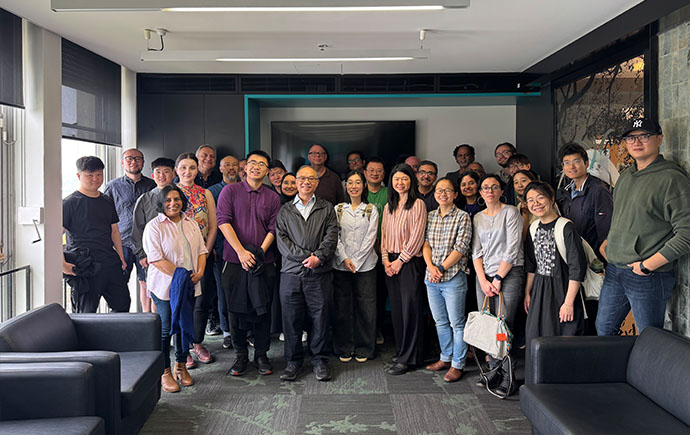
This was a one-off event funded by the Learning and Teaching Committee, headed by Dr Jaai Parasnis but given the success, the department hopes to make it a regular fixture.
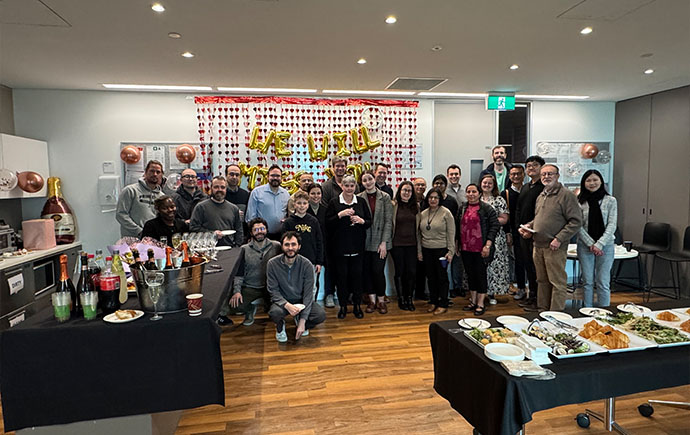
The department has said farewell with a morning tea to Professors Vai Lam and Phil Grossman who are both retiring.
Department manager Sue Ball also retired and will be greatly missed.
Prof Sascha Becker gave a keynote lecture at the Ifo CEMIR Junior Economist Workshop on Migration Research, in Munich, Germany
Prof Emeritus Yew-Kwang Ng delivered a public forum (in Chinese), ‘Fallacies in environmental economics that have to be corrected’, on 3 July 2024 at the Forum for Climate Change Economics. A video recording of the forum is available on bilibili.com.
A/Prof Paulo Santos presented ongoing work on the relationship between income and wildlife hunting in Cambodia (with Sharar Kader, Emiel de Lange, Henry Travers and Kimchinn Sok) at a policy workshop held in Phnom Penh on September 5. This was preceded by meetings with the Ministry of Environment of Cambodia on the scope for using cash transfers (in particular, UBI) to reduce biodiversity loss in the country.
An article on the middle income trap by Prof Ranjan Ray has been featured in Monash Business School’s Impact publication.
2024
View
-
 Professor Sascha Becker was appointed a fellow of the international Econometric Society in October 2024.
The UK Academy of Social Sciences also welcomed Prof Becker as one of its 45 newly appointed fellows.
“The Academy’s Fellowship comprises 1,600 leading social scientists from academia, the public, private and third sectors. Our Fellows’ expertise covers the breadth of the social sciences, and their practice and research addresses some of the major challenges facing communities, society, places and economies. All Academy Fellows are elected for their excellence in their fields and their substantial contributions to social science for public benefit. Selection is through an independent peer review which recognises their excellence and impact,” ACCS President Will Hutton says.
Congratulations Professor Becker on these well-deserved honours!
 Professor Yves Zenou joined the editorial board of the Economic Journal as an Associate Editor, from October 21, 2024.
Teaching awards
The Department of Economics Teaching Award for 2023 was awarded to Dr Siew Ling Yew.
Dr Anupama Sethi and Dr Koh Geok May from the Malaysia School of Business have been jointly awarded the 2023 Department of Teaching Award (DETA).
Research awards
Prof Andreas Leibbrandt and Dr Mladen Adamovic received the 2023 Best Paper award from the journal Leadership Quarterly for their paper 'Is there a glass ceiling for ethnic minorities to enter leadership positions? Evidence from a field experiment with over 12000 job applications'.
Dr Filip Premik received the Young Economists’ Essay Awards at the EARIE 2024 conference.
Congratulations to all recipients!
A/Prof Gaurav Datt (PI) and Dr Emilia Tjernstrom (Co-PI) were awarded a three-year, US$1.86 million grant by SPIA-CGIAR (Standing Panel on Impact Assessment-Consultative Group on International Agricultural Research) for a project that will estimate the return on CGIAR’s investments in India’s agricultural technology frontier. Collaborating with local researchers and partners from India's National Agricultural Research System, they will use cutting-edge data collection methods—including DNA fingerprinting and remote-sensing—to generate data on technology adoption with a view to provide actionable insights into how the CGIAR system's innovations contribute to sustainable agriculture, climate adaptation, and food security.
A/Prof Paulo Santos is part of a team that was awarded a grant for the project ‘Recognising and rewarding the contribution of Indigenous Knowledge for the sustainable management of biodiversity’ by the UK's Global Centre on Biodiversity for the Climate (GCBC). The total value of the grant is GBP 741,000. Partners are WCS-Cambodia (lead organisation), Cambodia Indigenous People Organization (CIPO) and Oxford University.
He is also part of the recently formed Working Group Sharing the Benefits of Conservation, funded by the Science for Nature and People Partnership (SNAPP)
Prof Sascha Becker gave a keynote lecture at the Ifo CEMIR Junior Economist Workshop on Migration Research, in Munich, Germany
Prof Emeritus Yew-Kwang Ng delivered a public forum (in Chinese), ‘Fallacies in environmental economics that have to be corrected’, on 3 July 2024 at the Forum for Climate Change Economics. A video recording of the forum is available on bilibili.com.
A/Prof Paulo Santos presented ongoing work on the relationship between income and wildlife hunting in Cambodia (with Sharar Kader, Emiel de Lange, Henry Travers and Kimchinn Sok) at a policy workshop held in Phnom Penh on September 5. This was preceded by meetings with the Ministry of Environment of Cambodia on the scope for using cash transfers (in particular, UBI) to reduce biodiversity loss in the country.
An article on the middle income trap by Prof Ranjan Ray has been featured in Monash Business School’s Impact publication.
-
Professor Sascha O. Becker gave a presentation on “Publish, Not Perish” to early-career researchers in Berlin, on Friday, 14 June.
He also presented his paper “Discrimination, Political Orientation, and the Probability of Emigration: University Professors in Fascist Italy” (joint with Luca De Benedictis) at The Rockwool Foundation Berlin on Thursday, 13 June and in Paris on Monday 17June.
Dr Mita Bhattacharya presented and discussed papers during the 99th Annual Conference organised by Western Economic Association .
Dr. Claudio Labanca co-organized the 4th Australian Workshop on Public Finance. The workshop, held on June 13-14 in Canberra, featured Professor Wojciech Kopczuk, editor-in-chief of the Journal of Public Economics and Professor of Economics and International and Public Affairs at Columbia University, as the keynote speaker. The conference provided an opportunity to discuss the development of Australian administrative data and for researchers using large administrative datasets to share their latest research and insights with policymakers.
Associate Professor Michelle Rendall was awarded the Royal Economic Society Prize, 2023 Best Paper Award, “Spatial Polarization” with Ass. Prof. Fabio Cerina, Ass. Prof. Elisa Dienesca and Professor Alessio Moro.
Professor Yves Zenou gave the keynote lecture at 23rd Journées Louis-André Gérard-Varet, Palais du Pharo, Marseille, 26-28 June 2024.
He also presented at the following workshops and seminars:
- Barcelona School of Economics (BSE) Summer Forum, Workshop on Networks, Barcelona, 6-7 June, 2024.
- 11th annual Toulouse Economics and Biology Workshop, The Institute for Advanced Study in Toulouse (IAST) and Toulouse School of Economics (TSE), Toulouse, 3-4 June, 2024.
- Department seminar series, Università Cattolica del Sacro Cuore, Milan, Italy, May 23, 2024.
- Economic Theory, Decision Theory and Experimental Economics Seminar, Bocconi University, Milan, Italy, 21 May, 2024.
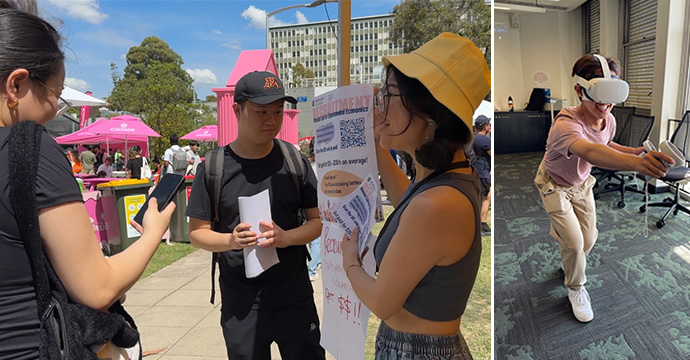
Monash Laboratory for Experimental Economics (MonLEE) hosted 26 students from John Monash Science School (JMSS) and 78 students from Mac. Robertson Girls’ High School during Semester 1, 2024. Each school experienced a full-day excursion at the Clayton Campus.
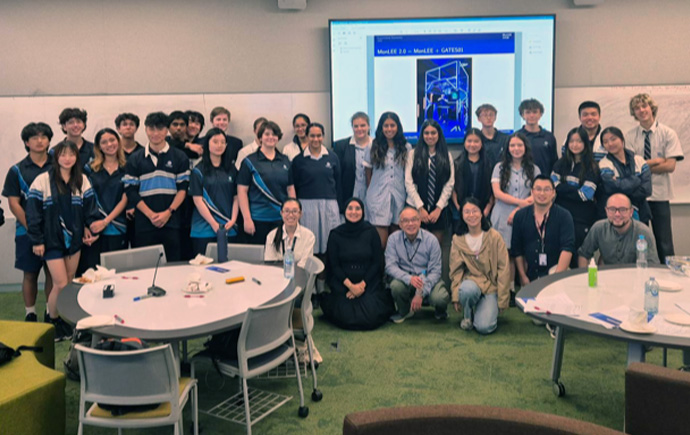
In our program provided to the high school students, in the Design sessions facilitated by MonLEE manager Sumaiya Bhura, students learnt about how to apply experimental methodology to solve their own research problems, while also understanding the role of randomisation and ethical principles.
In the coding sessions conducted by MonLEE managers Zhongwen Chen and Yuet Lyu, students learnt how researchers code to implement experiments in the lab and played games commonly used in lab experiments.
Students also had the opportunity to try MonLEE’s VR equipment. With support from Zhongwen Chen, Xiaojian Zhao, the Virtual & Augmented Reality Services (VARS) team, and RAs at the Monash Nexus of Emerging Technologies (MNET), students participated in immersive VR experiments, experiencing the research done at MonLEE.
Our colleagues also shared their expertise with the students. Associate Professor Vai-Lam Mui discussed “Material Needs, Non-Material Needs, and Community as the Third Social Order” with JMSS students. Professor Erte Xiao introduced “Behavioural and Experimental Economics” to Mac. Rob. students, while Dr Birendra Rai discussed issues of gender and discrimination.
In addition, Amy Newman and Stephanie Hah from Monash Business School’s recruitment team provided students with an overview of Monash Business School opportunities.
These events aimed to inspire high-school students’ intrinsic motivation in topics of behavioural and experimental economics, cultivating a broader sense of community engagement going beyond traditional boundaries.
 In 2023, the Department of Economics established the Klaus Abbink Honours Scholarship, in memory of our late colleague
Professor Abbink was regarded as a great supervisor and teacher for his students, always passing on his exceptional critical thinking and research principles. He was very patient and provided consistent care and equal effort for everyone that crossed his path.
This scholarship is one of 2-4 scholarships awarded each year to incoming Economics Honours students. All applicants to the Honours program are considered for this scholarship, with it awarded based on academic merit.
The first scholarship has been awarded to Filip Rozov.
"I am deeply honoured to be the inaugural recipient of the Klaus Abbink Honours Scholarship. The opportunity this scholarship provides will empower me to pursue my studies, fostering both my academic growth and understanding in the field of economics,” says Filip Rozov.
The Department shared this news with Dr Abbink’s family.
His sister replied:
"Thank you very much for the information about the scholarship and the message from Filip. We are very happy and honoured to hear that Klaus will be remembered at Monash this way. We wish Filip a successful and instructive course of study.”
Further, Susama Mahnaz has been awarded the Ian Little Scholarship, and Daniel Arzhintar received the final Economics Honours Merit Scholarship.
Dr Ricardo Dahis has been awarded a grant as part of the J-PAL JOI-Brazil initiative, “Bridging the Soft Skills Gap Through Technology”, with funding of 499,384 BRL (about 154,000 AUD).
Dr Krisztina Orban has won a STEG grant to study South African post-apartheid economic transformation using new data.
Dr Gennadi Kazakevitch has extended the scope of his involvement with SBS by agreeing to provide occasional briefs on economic affairs for SBS News in English. His first segment was on soaring rent across the capital cities in this country.
The research of Associate Professor Rigissa Megalokonomou is featured in two publications: “Human Capital Depreciation: Evidence from Teacher Waitlists”, Faculti, November 2023 and “Teacher gender biases exist and have long-term effects”, CEPR Policy Portal, VOX EU, September 2023.
Associate Professor Vinod Mishra was interviewed on SBS Radio (Hindi) on the 26th of January 2024 about the impact of Stage 3 tax cuts on an individual level and broadly on the Australian economy.
On February 21 2024 he was interviewed on SBS Radio (Hindi) about the causes and consequences of the falling savings rates in the Australian economy.
Professor Ranjan Ray has been featured in Monash Lens regarding indigenous mental health.
Professor Yves Zenou’s research on political trenches was featured in a CEPR Vox column.
-
Monash Business School’s presence at COP28
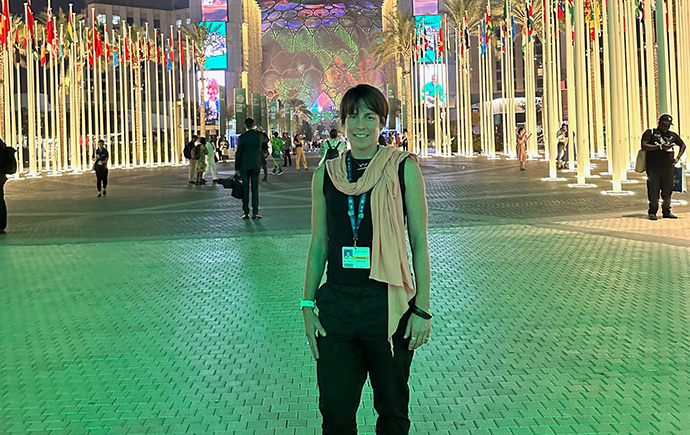 At COP28 in November 2023 in Dubai, Monash University became the first university in the Southeast Asian region to have their own pavilion in the Blue Zone. Associate Professor Anke Leroux from the Department of Economics represented Monash Business School and its Green Lab at the huge event.
“It was an amazing experience. Over ten days the Monash University Pavilion hosted 300 speakers and about 10 000 visitors. It was great to work with staff from other faculties and we got a good reputation early on for putting on great events so that contributed to the high number of visitors,” she said.
With the support of Green Lab and the Department of Economics, A/Prof Leroux spent the second week at the Monash Pavilion in the Blue Zone - a section of the conference with access only to party delegations, negotiators, heads of state and other government delegates, accredited press and admitted observers. This means unprecedented access to key stakeholders.
“It was a massive exposure and we had full programs for all the days. We wanted to have in-person events, so it was all about talking to partners and organising events that matched our visions and the Monash Impact 2030 strategic plan,” A/Prof Leroux said.
On day 9, Monash Business School and Green Lab Director A/Prof Anita Foerster organised a panel on the role of carbon offsets in achieving corporate Net Zero in Australia, featuring government, industry and science representatives, and moderated by A/Prof Leroux.
A/Prof Leroux was also “day lead” on Day 10, which was designated the UN theme Food, Agriculture and Water. She organised all the day’s events in the Monash Pavilion, featuring representatives from Indigenous communities, NGOs, governments, and industry investors. The interactive and immersive events used video, music, 3D models, panels and networking to discuss and reflect on food and water security.
“We had an event called Voices of Resilience where 3D models illustrated the impact of climate change on Pacific Islands and chats on how diverse knowledge of Indigenous people contributes to water resilient food systems,” A/Prox Leroux said.
“We showed video testimonials from pacific nations, and it so happened there was an Australian government official in the audience who was so moved by the testimonials that they went back and shared them with the entire Australian delegation. It’s very rare to have that kind of impact and access to government,” she said.
There was even an onsite version of “shark tank” for start-ups, A/Prof Leroux said.
“Climate tech start-ups were invited to pitch their ideas to investors and venture capitalists in the audience. So, we basically connected climate start-ups with money. That was a great event.”
In the future, A/Prof Leroux hopes more Monash Business School representatives will attend COP meetings under the Monash University umbrella.
“It is very important that we are represented with the other faculties. I would also like to see more exposure at COP of the excellent climate change-related research we do here at the Business School and across the University,” she said.
Other event-related news and achievements
In January 2024, Professor Sascha Becker gave a Keynote Lecture at the CIVICA Workshop on Historical Persistence Mechanisms, at Central European University in Vienna, Austria.
Associate Professor Quoc-Anh Do recently attended the ASSA meetings in San Antonio, Texas, in Jan 2023, and the IEA meeting in Medellin, Colombia.
Dr Ricardo Dahis attended the STEG Annual Conference 2024 in Abu Dhabi and he will attend the UNU-WIDER Development Conference in Mozambique.
Associate Professor Rigissa Megalokonomou gave a public lecture at an Economic Society of Australia event on how to encourage girls in STEM and reduce the gender pay gap.
She also presented at the following international conferences:
- CDES Sustainable Development Conference 2023, June 2023.
- 2023 International Workshop on Applied Economics of Education, June 2023.
- 36th Annual Conference of the European Society for Population Economics, June 2023.
- 21st Conference on Research on Economic Theory and Econometrics, July 2023.
Professor Yves Zenou gave the keynote lecture at the Asian (South/Central/West) Meetings of the Econometric Society, Indian Institute of Technology, Delhi, 12-15 January, 2024.
On Feb 19 and 20, MonLEE had a two-day special orientation at the Clayton campus, organised by Associate Professor Xiaojian Zhao. During this event, MonLEE recruited more than 300 students and staff registering as new users added in the MonLEE subject pool.
There was excellent input from Sumaiya Bhura, Zhongwen Chen, Zibo Jin, Eric Liu and Yuet Lyu from our BET group, and support from Justin Barugahare, Will Keeble and Mia Liao from Monash Emerging Technology Themes and Applications (METTA), an eSolutions group for students undertaking our VR experiments.
Professor Sascha Becker has been named one of 12 new Fellows of the International Economic Association, conferred to economists worldwide who have made an important contribution through the creation or dissemination of new ideas and high-quality policy work.
He has also been elected to the Australasian Regional Standing Committee of the Econometric Society.
Associate Professor Quoc-Anh Do has been appointed to the Editorial Board of the Journal of International Economics and Management. This journal is based and managed by the Foreign Trade University, Hanoi, Vietnam.
Dr Gordon Leslie has been appointed Associate Editor at The Electricity Journal and President-elect at the Transportation and Public Utilities Group (TPUG)
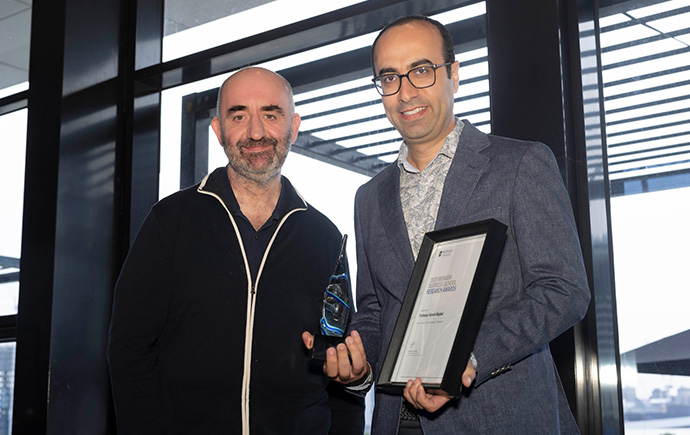
Professor Kaveh Majlesi (pictured with Deputy Dean, Research, Professor Russell Smyth) was awarded the Dean’s Award for Research Excellence in 2023 plus the Department of Economics Research Excellence award for 2023 .
Professor Yves Zenou has been named Economic Theory Fellow of the Society for the Advancement of Economic Theory.
Dr Ricardo Dahis has been awarded a grant as part of the J-PAL JOI-Brazil initiative, “Bridging the Soft Skills Gap Through Technology”, with funding of 499,384 BRL (about 154,000 AUD).
Dr Krisztina Orban has won a STEG grant to study South African post-apartheid economic transformation using new data.
Dr Gennadi Kazakevitch has extended the scope of his involvement with SBS by agreeing to provide occasional briefs on economic affairs for SBS News in English. His first segment was on soaring rent across the capital cities in this country.
The research of Associate Professor Rigissa Megalokonomou is featured in two publications: “Human Capital Depreciation: Evidence from Teacher Waitlists”, Faculti, November 2023 and “Teacher gender biases exist and have long-term effects”, CEPR Policy Portal, VOX EU, September 2023.
Associate Professor Vinod Mishra was interviewed on SBS Radio (Hindi) on the 26th of January 2024 about the impact of Stage 3 tax cuts on an individual level and broadly on the Australian economy.
On February 21 2024 he was interviewed on SBS Radio (Hindi) about the causes and consequences of the falling savings rates in the Australian economy.
Professor Ranjan Ray has been featured in Monash Lens regarding indigenous mental health.
Professor Yves Zenou’s research on political trenches was featured in a CEPR Vox column.
2023
View
-
Australian Economics Conference season 2023
The Australian Economics conference season is upon us - a time many Economists take part in and look forward to.
“The Australian Economics Conference Season in November and December each year is a highlight of the year, Professor Sascha Becker said.
“Each week features workshops in economics, many in Melbourne. We have many visitors from the Northern Hemisphere who escape the cold weather to enjoy the Australian summer and the great hospitality of the closely-knit Economics community ‘down under’,” Prof Becker said.
Here is an incredible list of some of the many events our colleagues will take part in:
3 November Australian Political Economy Network (APEN) at Monash 6 November OzClio (Australian Cliometric meeting) in Adelaide 8 November Continuing education in macroeconometrics 2023 (University of Melbourne and Melbourne Institute) 10 November Women in Macroeconomics Workshop II (University of Melbourne and Monash) 15-17 November 37th PhD Conference in Economics and Business (University of Melbourne) 20-21 November Economic Theory Festival (UNSW-UQ) 23-24 November Academy of the Social Sciences Australia (ASSA) meeting, Canberra 22-24 November Productivity, Regulation and Economic Policy conference (UQ, CEPA) 27-28 November OZMAC Workshop - an Australian Macroeconomics Workshop at Monash 30 November-1 December 2023 Monash Environmental Economics Workshop 1 December Melbourne Trade Workshop 4 December Natural Experiment Workshop (Deakin) 4 December Organisational Economics Workshop (Sydney) 5-6 December Australasian Public Choice Conference (Deakin) 6-8 December Workshop of the Australasian Macroeconomics Society in partnership with the UCSB Laboratory for Aggregate Economics and Finance (LAEF) 7-9 December Asian and Australasian Society of Labour Economics (AASLE) conference rotates across Australasia, and this year is in Taiwan 7-8 December Melbourne IO Workshop (Monash and Melbourne) 7 December Semi-Periodic Agricultural & Development Economics Research Symposium (SPADERS) (Sydney) 11-12 December Health/Ed/Labour/Public (HELP) workshop (Monash) 12-13 December 1st Conference on Networks in Economics: Theory and Evidence, UNSW, Sydney 14-15 December Quantitative Macroeconomics, The Reserve Bank of Australia, Sydney 15-17 December Asia-Pacific Industrial Organization Conference (APIOC 2023), Hong Kong. Annual conference, rotates throughout Asia-Pacific, large Australian contingent A/Prof Anke Leroux is heading to Dubai in December as part of Monash’s Delegation to COP28. She will be representing Monash Business School and Green Lab, and is currently co-organising events with A/Prof Anita Foerster to be run at the Monash Blue Zone Pavilion.
From the COP28 Taskforce:
“It is an especially exciting COP for Monash this year, as this will be the first year the University hosts a pavilion in the UNFCCC-managed Blue Zone. In fact, Monash will be the first and (as far as we’re aware) only University in the Indo-Pacific region to host a pavilion in the Blue Zone. It’s a considerable investment of time and resources and aims to communicate the university’s profound commitment to climate action in the critical days ahead.
“As Australia’s largest and most global university, with an international footprint across Australia, Asia Pacific, Europe, India and China, we are developing a thought-provoking agenda for COP28 that reflects the urgency of this moment and our role, as part of a global community, to mitigate and address the climate crisis.
“Our pavilion aims to do far more than feature Monash achievements or projects – instead, we aim to create a space for a wide range of partners and organisations to have transformative, bold, and where needed difficult, conversations.
“Our COP28 Taskforce is busy curating a series of engaging events and presentations to cover the full two weeks at COP.”
Associate Professor Choon Wang, Professor Asad Islam, Dr Kushneel Prakash (Uni Melbourne; former PhD student), and Professor Russell Smyth travelled to Fiji to engage with the industry, universities and ministries from 19 October to 27 October. They undertook research and policy meetings with the Deputy Prime Minister and Minister of Finance Professor Biman Prasad, the Ministry of Sugar Industry and stakeholders, Fiji Rice PTE Ltd, Energy Fiji Ltd, the Ministry of Finance, the Ministry of Agriculture and Waterways, University of South Pacific, and Fiji National University.
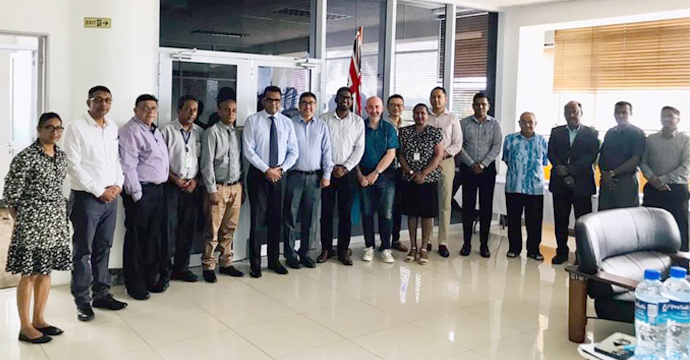 Monash Business School and Melbourne University academics travelled to Fiji in October 2023 to meet government and business officials and local academics.
A/Prof Quoc-Anh (Q.A.) Do was recently invited to join the CESifo, a global independent research network based in Munich whose mission is to advance international scientific knowledge exchange about economics and economic policy.
It is both an important research tool and a highly visible publication outlet for its members.
Dr Mita Bhattacharya has had two PhD students complete their theses:
- Dr Arjita Sikder
- Thesis title: Three essays on energy and development economics
- Supervisors: Mita Bhattacharya, Vinod Mishra.
- Dr Diep Phan
- Thesis Title: Essays on the economics of night-time lights: Data with applications to energy and economic development
- Supervisors: Mita Bhattacharya, Russell Smyth, and Xibin Zhang.
Dr Ricardo Dahis is attending the NEUDC conference at Harvard on November 4-5.
A/Prof Xiaojian Zhao and M. Zhongwen Chen will present at Judgement and decision-making in the virtual and real worlds; the fifth annual Monash Business Behavioural Laboratory (MBBL) Symposium, on November 20 and 21.
Prof Yves Zenou will give the plenary lecture at the 2024 Asia Meeting of the Econometric Society, Indian Institute of Technology, Delhi, 12-15 January 2024.
Prof Erte Xiao and Prof Lata Gangadharan recently won The Leadership Quarterly 2022 Best Article Award (Nisvan Erkal, Lata Gangadharan and Erte Xiao (2022) for their article: "Leadership Selection: Can Changing the Default Break the Glass Ceiling?"
Prof Chongwoo Choe received the International Journal of Industrial Organization (IJIO) Best Theory Paper Award 2023: (Chongwoo Choe, Noriaki Matsushima and Mark J. Tremblay), "Behavior-based personalized pricing: When firms can share customer information.
Four researchers from the department have been awarded ARC grants this year. Congratulations!
Together with a group of researchers from the department of Econometrics and Business Statistics Dr Qingyuan Du was awarded $ 309, 037 for a project entitled “Implications of global economic forces for domestic monetary policy.”
Professors Lata Gangadharan and Erte Xiao were awarded $ 344,400 for their project “Changing institutions to mitigate gender leadership gaps: Power of defaults”
Professor Yves Zenou was awarded $327,852 for his project “New methods in network economics to study environment friendly behaviours.” - Dr Arjita Sikder
-
This years’ department awards for teaching were announced at the department meeting on July 14.
Associate Professor Xiaojian Zhao was awarded a commendation.
Ms Zhongwen Chen received the award for best TA.
Ms Icy Guo received a commendation in the TA awards.
Dr Mita Bhattacharya presented the paper 'A cross-country study on the resilience of electricity consumption to COVID-19 contaminant policies', at WEA International, July 2022 in San Diego (virtual presentation).
Dr Laura Puzzello organised a three- day workshop between July 18-20 on Meeting AEA replication standards using Quarto and GitHub. The workshop was aimed at all members of the department as well as PhD students. The workshop was instructed by Ms Cynthia Huang.
On August 4 2023 Associate Professor Xiaojian Zhao is organising the Monash Business School Workshop to Further Interdisciplinary Research on Motivated Cognition in Virtual Reality. He is also one of the speakers along with Ms Zhongwen Chen from the department.
The focus of the workshop is to encourage speakers from different disciplines to share their expertise and create new opportunities in the interdisciplinary dialogue and collaborations. It attempts to explore the use of VR technology and machine learning to conduct a fully controlled economic experiment of human behaviours that could be difficult to achieve in the standard fields and laboratories.
Professor Yves Zenou has presented at the following institutions during May and June 2023.
- Economics seminar series, New York University at Abu Dhabi (NYUAD), May 1, 2023.
- Center for Behavioral Institutional Design (C-BID) seminar series, New York University at Abu Dhabi (NYUAD), May 4, 2023.
- Workshop on social and economic networks, AMU-AMSE, Marseille, June 1-2, 2023.
- Seminar in economic development, Paris School of Economics, June 12, 2023.
- Seminar at the department of economics, Stockholm University, June 15, 2023.
Professor Sascha Becker has been appointed Joint Managing editor of The Economic Journal.
Congratulations to Dr Stefanie Fischer who has been promoted to Associate Professor and Dr Isaac Gross who was promoted to Senior lecturer.
A number of new staff are due to arrive in the coming months. We look forward to making them feel welcome!
Dr Ricardo Dahis arrived July 31.
Dr Maxime Gravouille arrives later in the year.
Professor Moshe Hazan arrives September 1.
Dr Filip Premik arrives September 1.
-
Department Teaching Assistant Induction
The Department TA Induction was held on 21 February 2023. A warm welcome was given by A/Prof Vinod Mishra (Deputy HOD) to the 2023 TA team members. We had a great turnout, and it was an excellent opportunity for everyone to get to know each other. Dr Jaai Parsanis (Learning and Teaching Director) and Dr Anupama Sethi (TA Coordinator) provided information regarding the resources, support available to the TAs and their role. Thank you to Dr George Rivers for sharing his video discussing the expectations from TAs, and Dr Anthony Niu for giving a demo tutorial. We thank our professional staff Ms Sue Ball, Ms Angela Kousourakis and Ms Elena Shcherbak for their continuing support. We heartily welcome our TAs and are confident they are going to contribute towards our Department's goal of teaching excellence. We wish all of them a great semester!
Professor Sascha Becker co-organised the inaugural ASREC Australasia Conference at Monash Business School, on the 23rd and 24th of March 2023, together with Associate Professor Jeanet Bentzen from the University of Copenhagen. The inaugural speaker was Professor Pauline Grosjean from University of New South Wales.
Prof Becker also gave four seminars in January 2023. He presented at the Luxembourg School of Religion and Society and at the University of Luxembourg. In Germany he also presented at the Rheinische Friedrich-Wilhelms-Universität in Bonn and at the Humboldt University in Berlin.
In February, he presented at the Australasian Public Choice Conference (APCC) in Perth.
Dr Mita Bhattacharya took part in the following workshop at the Indian Institute of Technology in Mumbai in December 2022: 'Renewables and Net-Zero Targets: Current status for Australia and India'.
Melbourne Trade workshop
Associate Professor Laura Puzello organised the 6th Melbourne trade workshop on December 5 2022 which was held in person at Monash Business School.
The workshop was jointly organised by Monash Business School and the Trade and Development unit at The University of Melbourne. This year’s featured speakers were Mary Amiti from New York Federal Reserve, Associate Professor Bingjing Li from Hong Kong University and Professor Frederic Warzynski from Aarhus University.
There were between 16-20 participants per session, great speakers and discussants, and active participants from ANU, RMIT and Swinburne. Monash PhD students and other departments’ members participated. Talks provided insights on firms' expansion strategies, the US-China trade war and its effect on countries’ income and welfare, and multinationals R&D activity in South Korea.

Gender workshop
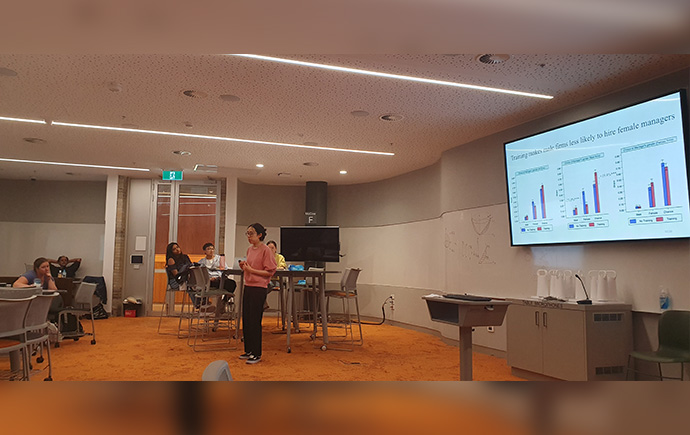
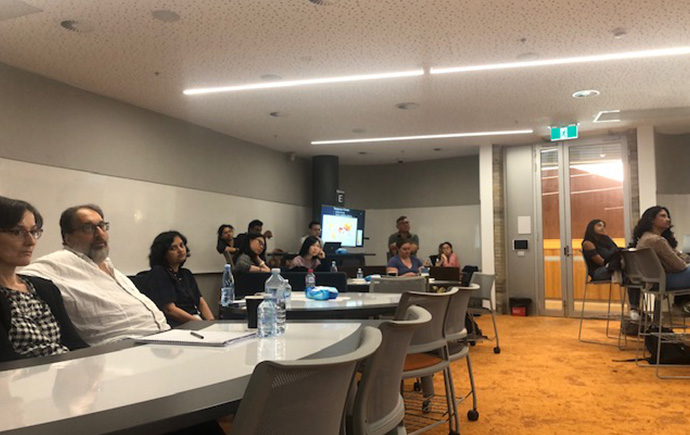
On March 17 The Department of Economics organized a mini department workshop on Gender. The aim was to bring together colleagues and PhD students who work on topics relating to gender using different kinds of data and methods (lab experiments, field experiments, observational data and theory). The event was a huge success.
The organising committee comprised Dr Solmaz Moslehi, Professor Pushkar Maitra and Dr Jaai Parasnis.
Associate Professor Michelle Rendall assisted in organising the VAMS Workshop at the University of Sydney from Dec 12-13 2022. Her colleagues on the committee were Dr Elena Capatina (ANU), Dr James Graham (USyd), and Dr Satoshi Tanaka (UQ). Financial support for this workshop was generously provided by the University of Sydney, the Australian National University, and Monash University.
Professor Yves Zenou was elected Foreign Member of the Royal Swedish Academy of Sciences (class for social sciences). On 6-7 March he also gave two seminars at the University of Sydney and University of Technology Sydney.
MonLEE
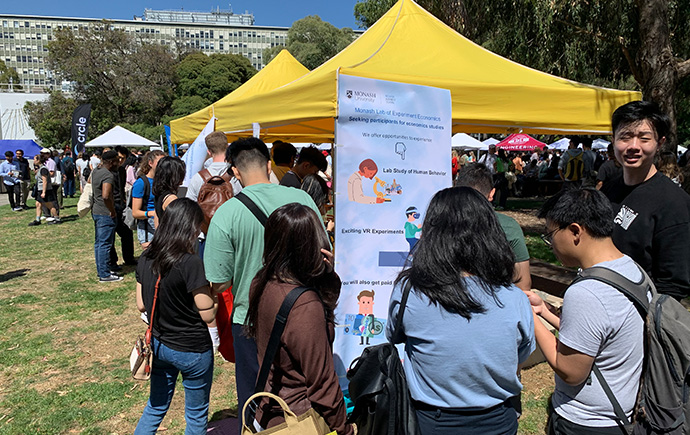
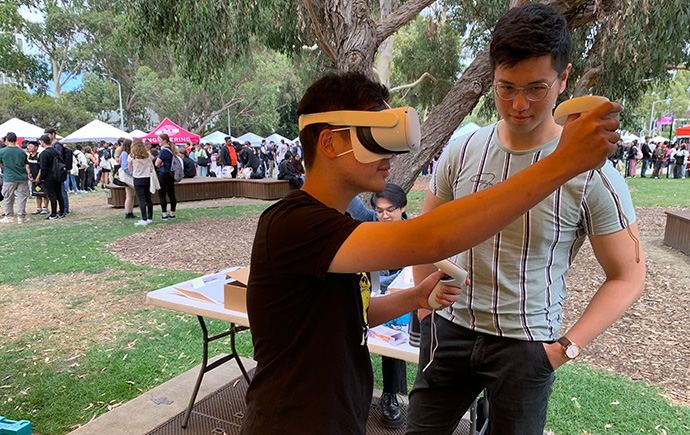
During Orientation Week in Semester 1, Monash Laboratory for Experimental Economics (MonLEE) organized a two-day special event. Our MonLEE managers Mike Wu and Zhongwen Chen created a coffee mug “relay race” (students got free coffee mugs once they invited their friends to sign up for MoneLEE) as an incentive device to recruit subjects. The recruitment was a great success. 286 students and staff registered as new users. Moreover, 35 students experienced an economic experiment in VR under the technical support from the e-Solution team.
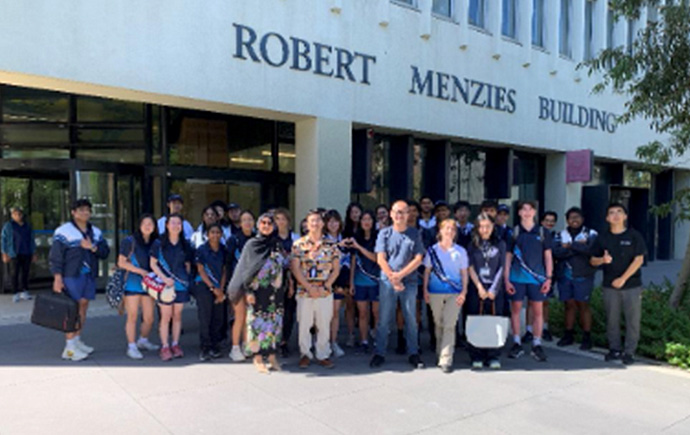
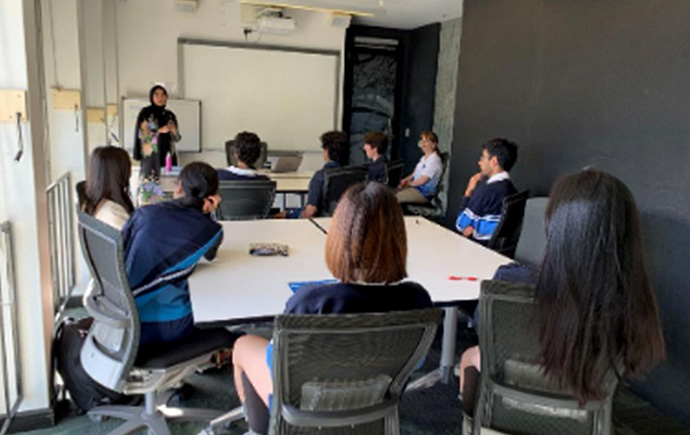
On March 17, MonLEE offered a full-day excursion for 28 high school students from John Monash Science School to Clayton campus where Amy Newman (a senior student recruitment coordinator) at Monash Business School first provided an overview about the Monash Business School, as well as student life at Monash University, followed by MonLEE staff’s short introduction of behavioral economics. Dr Birendra Rai also kindly provided an introduction of experimental economics (frontier research topics and methodologies) and shared his personal experience of the transition from engineering background to economic science.
Prof Sascha Becker is organising the 5th Monash-Warwick-Zurich “Text as Data” workshops on 3 and 4 April, with A/Prof Elliott Ash from ETH Zurich.
On 19– 22 April, Professor Kaveh Majslesi will organise the “CEPR Eighth European Workshop on Household Finance”. CEPR, the flagship organisation in Europe for economic research and policy, holds an annual workshop that consists of an event with industry partners followed by a few days of discussion and presentation of academic papers. It has always been held in Europe, but this year it will be held in Australia for the first time, on behalf of the Monash Business School.
Associate Professor Simon Angus was interviewed by the ABC on the battle to keep the internet up and running in the Ukraine amidst Russian attacks.
Dr Gennadi Kazakevitch featured in the West Australian on the elimination of industries in Australia in favour of cheap imports and international supply chains.
2022
View
-
As always, there are many awards to celebrate at this time of year.
First, congratulations to Associate Professor Xiaojian Zhao for receiving the Dean's Award for Excellence in Research 2022.
And to Dr Anupama Sethi for a Dean's Citation for Outstanding Contribution to Student Learning.
Further, we congratulate Professors Sascha Becker and Russell Smyth on being elected to the Academy of Social Sciences in Australia (ASSA). In total, 34 leading scholars in the social sciences were elected this year.
Dr Zac Gross has been awarded the Vice-Chancellor's Citation For Outstanding Contributions To Student Learning – Early Career. See the full list of awardees.
Congratulations to Zac for this well deserved recognition!
Associate Professor Simon Angus and colleagues have received the 2022 Australian Business Deans Council (ABDC) Award for Innovation and Excellence in Research. The annual Network Awards recognise and reward innovation and excellence in Australian business schools, highlighting the sector’s positive social impact and contribution. Congratulations.
Professors Kaveh Majslesi and Paul Raschky have been named top researchers in the fields of Economics and Development Economics by the Australian Research Magazine.
Also, Professor Majslesi’s paper “Cultural Origins of Investment Behavior” was chosen as the “Best Paper in Asset Pricing and Investments” (one of the two categories of awards, the other being corporate finance) at the Financial Management Association Asia-Pacific Conference 2022 that was held at Monash Business School between 11–13 December.
This year’s Christmas lunch was held at the Bleakhouse Hotel in Albert Park on December 14th. It was a great day with 60 staff, PhD students and visitors attending.


Professor Yves Zenou took part in the UNSW-UQ Economic Theory Festival: Bounded Rationality, Information and Markets in Sydney on December 5–6, 2022. He also presented at the departmental seminar, University of New South Wales in Sydney on December 7, 2022.
Further, he took part in a workshop on social networks at the Fondation de Treilles outside Nice in France on November 7–12, 2022.
Associate Professor Simon Angus was interviewed about internet access in Iran.
Associate Professor Guillaume Roger contributed to an article on energy bills in the New Daily.
The latest series of Monash Business School podcast “Thought Capital” on climate change features amongst others Associate Professors Anke LeRoux and Guillaume Roger from the Department of Economics.
Congratulations to Professor Zhijun Chen, Associate Professor Laura Puzello, and Associate Professor Paulo Santos on their recent promotions!
Professor Erte Xiao was elected as Asia-Pacific regional vice-president of ESA (Economic Science Association).
No content
-
Associate Professor Guillaume Roger is supervising postdoctoral students, Sergei Balakin and Ningyi Sun. They are funded by an ARENA grant and with contributions from the Grid Innovation Hub. Welcome!
Senior lecturer Mita Bhattacharya presented a paper titled 'Outsourcing Efficiency of Power Plant Operation in the US', at the Annual Conference organized by Western Economic Association International., June 29, 2022.
Online workshop
The 4th Monash-Warwick-Zurich Text-as-Date workshop took place online in early September. It was organised by Associate professor Elliott Ash (ETH Zurich) and Professor Sascha O. Becker.
Social inclusion and diversity in Economics
 From left: Solmaz Moslehi; Riki Polygenis; Stoja Andric; Isabelle Layton.
 Moderator Solmaz Moslehi with panelist Riki Polygenis.
The Women in Economics Network Victoria and the Department of Economics at Monash University organised a panel discussion and Q&A on Social Inclusion and Diversity in Economics on August 16. The session was moderated by Senior Lecturer Solmaz Moslehi.
This session explored career pathways that students with different socioeconomic backgrounds can take after studying Economics or related disciplines. The event featured a panel discussion of inclusive and diverse careers in economics and a Q&A with the panellists, who shared their different career journeys. Students also had the opportunity to meet our panellists in our post-panel networking session. The event was part of Learning and Teaching Committee’s activities.
Panellists included:
- Riki Polygenis, Assistant Secretary of the Financial and Monetary Policy Branch at Commonwealth Treasury.
- Stoja Andric, Senior Project Manager, Victorian Department of Education and Training.
- Isabelle Layton, Senior Policy Advisor in the Victorian Department of Jobs, Precincts and Regions.
Sascha Becker
The Frankfurter Allgemeine Sonntagszeitung covered Professor Sascha Becker’s research on forced migration ("uprootedness hypothesis") in their June 5 edition.
Mita Bhattacharya
Senior lecturer Mita Bhattacharya was interviewed by Monash Impact on the topic of energy supply and energy poverty in Australia: “Australia finally sees the danger as energy poverty risk looms.”
Lionel Frost
Associate Professor Lionel Frost was featured in Monash Lens on the topic of water resilient cities: “Tapping into Aboriginal knowledge to create a water-resilient future for Australia's cities.”
Ranjan Ray
Professor Ranjan Ray took part in the Monash University podcast “A different lens” on the topic of “The Shifting Sands of Global Power” – Is the world more dangerous now than it’s ever been? Listen here.
Congratulations to Professor Zhijun Chen, Associate Professor Laura Puzello, and Associate Professor Paulo Santos on their recent promotions!
Professor Erte Xiao was elected as Asia-Pacific regional vice-president of ESA (Economic Science Association).
No content
-
Dr Mita Bhattacharya has been awarded a grant for the 'Decision Engine to Support the Path to Net Zero', CRC-P project, under the RACE2030 program, with Mark Wallace from Monash University, Jahangir Hossain from the University Technology of Sydney, and Atiq Zaman from CurtinUniversity.
Dr Mallory Avery and Professor Andreas Leibbrandt have together with Jeffrey Flory from Claremont McKenna College, USA, received US$100,000 funding from the Russell Sage Foundation for their project "Does Work from Home Work for Diversity? Evidence From a Field Experiment"
Ass. Professor Wayne Geerling is presenting the lecture “Using Squid Game to Teach Game Theory” at the TeachECONference 2022 at the Centre for Teaching and Learning Excellence, University City London in June 2022.
He has also co-created a new website devoted to the same topic: www.economicsofsquidgame.com
Professor Yves Zenou is presenting at the ‘Lunch seminar TOM (Theory, Organisation and Markets)’ at Paris School of Economics in Paris, France on June 1, 2022.
And at the ‘Labour and public economics seminar’, Paris School of Economics, Paris, June 2, 2022.
Monash Lecture series in Behavioural economics
In 2022, Monash Lecture Series in Behavioural Economics continues to invite leading scholars to give online lectures on some frontier topics in the field of behavioural and experimental economics.
This year, we have successfully delivered two lectures by Roland Benabou on “Beliefs and Misbeliefs: The Economics of Wishful Thinking” and David Rand on “The Psychology of Fake News”. The recorded lectures are available on YouTube.
Department of Economics Careers Panel
The Careers Panel was held on the 23rd of March to a full auditorium. It was organised in partnership with the Graduate Development Team and was very successful. The speakers showcased the diversity in careers paths and highlighted that economists come from diverse backgrounds and the students had the opportunity to ask questions.
Ass. Professor Wayne Geerling has presented the following lectures:
“Economics Education Research: What I Do And Why It Matters”, Business Education Research Group (BERG) Symposium (February 2022).
“Finding Innovative Ways to Engage Your Students In Era 4.0”, Monash Business School Deep Dive (February 2022).
“Using Squid Game to Teach Game Theory”, Wiley Webinar (February 2022).
“Using Squid Game to Teach Game Theory”, Robert Morris University Teaching Conference, Pittsburgh, America February 2022).
“Making the ‘Dismal Science’ Less Dismal Through Experiential Learning”, Monash Education Academy (March 2022).
“Teaching in the 4.0 Era: The Use of Media in the Classroom”, Guangzhou University of Foreign Studies, Guangzhou, China (March 2022).
“Teaching in the 4.0 Era: The Use of Media in the Classroom”, Technische Hochschule Deggendorf, Germany (March 2022).
Professor Yves Zenou presented at the AME Labour Economics Seminar, Swedish Institute for Social Research (SOFI), Stockholm, Sweden on May 5, 2022. And the Departmental Seminar at the Carey Business School, Johns Hopkins University (online) on April 27, 2022.
Finally, his presentation on early childhood was delivered at the Victorian Treasury's New Directions in Economic Policy seminar series on 12 April 2022.
Professor Sascha O. Becker has been appointed as member of theBoard of Editors at the American Economic Journal: Applied Economics.
Simon Angus, Klaus Ackerman, Paul Raschky
The research of A/Professor Simon Angus, Dr Klaus Ackerman and Professor Paul Raschky from the Monash IP Observatory has been featured in Monash Lens: “Cyberwar: Keeping track of the battle to keep Ukraine online”
Sascha Becker
Professor Sascha Becker was interviewed by Tim Phillips on the Vox/CEPR podcast about his research on the economic impact of mass displacement in history, both on refugees and communities.
Listen to the full episode here.
He was also interviewed by The real Jason Duncan in an episode on YouTube called “Leaving your company in good hands - the root of all success” .
Mita Bhattacharya
Dr Mita Bhattacharya’s research on the use of end-of-life-tyres titled 'From dead tyres to liquid fuels', was published in 'Sustainability Matters' with co-authors from the Faculty of Engineering. This research was funded by the Tyre Stewardship.
Wayne Geerling
Ass. Professor Wayne Geerling’s article “Squid pro quo: using Squid Game to engage economics students”, was published in ‘The Campus Times Higher Education’.
Yew-Kwang Ng
Professor Yew-Kwang Ng was interviewed by SBS Radio's Mandarin program on the current Federal Election.
No content
-
Stefanie Fischer and Corey White
Dr Stefanie Fischer and Dr Corey White discussed abortions and the new restrictive abortion bans in Texas in The New York Times.
Wayne Geerling
A/Prof Wayne Geerling has done a series of interviews to promote his new working paper: “Using Squid Game to Teach Game Theory” (ABC, 3AW, Herald Sun; 7News TV: AusBiz).
The story has been picked up by dozens of media outlets worldwide and been translated into Bahasa-Indonesian, Italian and Vietnamese.
Claudio Labanca
Dr Claudio Labanca appeared on the Monash University podcast, What Happens Next? to speak about the effects of migration on the labour market opportunities of native workers.
Further, he discussed his research on the labour market effects of the migration induced by the Arab Spring uprisings on the academic Faculti platform.
Ranjan Ray
Professor Ranjan Ray was interviewed by Social Science Encyclopedia on aspects of his policy driven research on India.
Social Science Encyclopedia is well known internationally for publishing books in the area of Social Science. They have recently started a new web-based initiative featuring recorded interviews with internationally renowned researchers.
Professor Raj’s research on “Goods and Services tax: Estimating Optimal rates” with Dr Amita Majumder and Associate Professor Sattwik Santra was featured in Ideas for India.
Professor Raj was also interviewed on the research platform Faculti about his work on Covid-19.
Paul Raschky
Professor Paul Raschky was named Field Leader in Development Economics by The Australian Research Magazine.
Liang Choon Wang
The research of Associate Professor Liang Choon Wang and Professor Yves Zenou on "Gender inequality and caste: Field experiment evidence from India" was featured in Ideas for India.
Yves Zenou
Yves Zenou was also named Field Leader in Economics and Economic Policy by The Australian Research Magazine.
The 33rd PhD Conference in Economics and Business
The 33rd PhD Conference in Economics and Business, organised by Prof Pushkar Maitra, was held online in November. The conference included 160 registered participants, 30 presenters from 20 universities and discussants from 10 universities. Panel discussions were organised and moderated by Prof Ranjan Ray, Prof Stephen King and Monash Business School Head, Prof Simon Wilkie.
MEEW21
Monash Environmental Economics workshop MEEW21 was held on November 23-24th 2021.
The 2021 Monash Environmental Economics Workshop, organised by our Energy, Environment and Resource Economics Research Group and jointly hosted by the Department of Economics and CDES, was again a great success.
In its fifth iteration, MEEW took on a hybrid format featuring keynotes by A/Prof Lana Friesen (UQ) and Ms Susan Madden (Murray Darling Basin Authority and NSW Assistant Commissioner for Natural Resources) as well as a jam-packed program across energy, environment and natural resource economics topics. With over 70 online and in-person participants the excitement to reconnect and discuss research with colleagues across Australia after the long lock-down was palpable.


Australasian development economics workshop
On 25-26 November, the 16th annual Australasian Development Economics Workshop was held in a hybrid format, sponsored by the Australian Government Department of Foreign Affairs and Trade.
SEEDEC
The Symposium on Economic experiments in developing countries (SEEDEC) was co-hosted by FAIR at the Norwegian School of Economics and the Department of Economics at Monash Business School on 7 October, 2021.
The ninth annual SEEDEC symposium brought together a community of scholars who employ laboratory experimental methods for research in low and middle-income countries.
Monash Lecture series in Behavioural economics
The department of Economics initiated the Monash Lecture Series in Behavioural Economics which aims to invite leading scholars to give online lectures on some frontier topics in the field of behavioural and experimental economics.
In 2021, we successfully delivered three lectures by John List on “Voltage Effect”, Colin Camerer on “Individual Behaviour and Game Theory” and Juan Carrillo on “Neuroeconomic Theory”. The recorded lectures are available on Youtube.
In 2022, we will have Prof Roland Benabou from Princeton University to kick off the lecture series on 15 March, 9-11am.
Prof Sascha Becker has joined the Editorial Board of the /Journal of Economic
History (JEH).
Prof Becker also gave a keynote lecture at the 5th annual conference of the
Asian and Australasian Society of Labour Economics (AASLE) held at Peking University on 9-11 December, 2021.
He also presented his paper “Scholars at Risk: Academic networks and High-skilled emigration from Nazi Germany at Osaka University in Japan (online) on 6 December, 2021.
At the University of British Columbia in Vancouver Prof Becker gave a talk (online) on “Shallow Christianity and the rise of Hitler” on 1 October, 2021.On 21September 2021 he presented a research paper at the Institute for International Economic Studies in Stockholm.
Finally, on 9January, Prof Becker spent from 2am- 4am Melbourne time presenting a paper and discussing another paper at the (online) Allied Social Science Associations (ASSA) meetings.Prof Yves Zenou presented a paper at the Asian-Pacific Industrial Organization Society (APIOS) Conference (online), National University of Singapore, 13-14 December, 2021
He also held the Theory Seminar (online) at the Chinese University of Hong Kong, on 24 September, 2022.
Dr Claudio Labanca is co-organizing the inaugural workshop in Empirical Public Economics with Australian National University (ANU). This event, which will be hosted by the Tax and Transfer Policy Institute in Canberra on March 18 and 19, will bring together scholars and policy makers to discuss current issues and research in public economics.
This workshop is the first one of this type to be organized in Australia. It will set the seeds for a new community of researchers in public economics, and it will provide a great opportunity for our colleagues to showcase their research to policy makers, thus increasing its impact.
The keynote speaker is Professor Claus Thustrup Kreiner, of the Center for Economic Behaviour and Inequality, Department of Economics, University of Copenhagen. Professor Thustrup Kreiner is co-editor of the Journal of Public Economics and an expert on the use of large administrative datasets for research and policy insight.
Sascha Becker delivered the 2021 Noel Butlin Public Lecture at the Asia-Pacific Business and Economic History Conference at the University of Western Australia in February. The title of Sascha's lecture was 'Forced Displacement in History'. The conference and public lecture are annual events hosted by the Economic History Society of Australia and New Zealand. Lionel Frost is current President of the Society.
Professor Sascha Becker gave the Noel Butlin Lecture at the Asia Pacific Economic and Business History Conference 2021, (virtually) in Perth, on 11 Feb 2021.
Senior Lecturer Michelle Rendall gave a talk at The Oxford University Business Economics Programme on technology innovation, inequalities and gender (https://oubep.econ.ox.ac.uk/oubep_seminars/technology-innovation-inequalities-and-gender/)
Professor Yves Zenou gave the keynote speech at the Economic Society of Uruguay (SEU) annual meeting on December 23, 2020.
He also gave a seminar talk at the Cambridge-INET Networks Webinar Series on November 27, 2020 and a seminar talk at the New Zealand Economics eSeminar Series on November 13, 2020.
Finally, Professor Zenou participated in the Monthly Applied Economics Webinar, HKUST, NUS, Taiwan National, and University of Tokyo on February 25 2021.
Professor Sascha Becker wrote a piece in the Frankfurter Allgemeine Zeitung entitled “How religion shaped Economic history” with colleagues Jared Rubin and and Ludger Wössmann.
He and Marco Lecci have also started a new Economics podcast called GrowthChat where they cover topics in Economic growth and Economic History.
They interview Economists and other social scientists about their recent research papers and publications. The aim of the podcast is to share the invaluable work that researchers do, making it accessible to the general public and students, independently of their background and preparation.
So far seven interviews have been recorded and are available on Spotify, YouTube and Itunes. New episodes will be released every ten days.
Thought Capital
A new season of the Monash Business School podcast Thought Capital, 'Connecting the dots of COVID-19', is out now.
Participants in this season include Monash Business School Head Professor Simon Wilkie, former Dean Professor Stephen King, Adjunct Professor Tony Venables, Associate Professor Giovanni Caggiano, Associate Professor Gaurav Datt and Associate professor He-Ling Shi and a number of other colleagues from across the Business School.
You can find Thought Capital on Spotify, Itunes or wherever you listen to podcasts.
- In a recent paper called 'Geographic diversity in economic publishing' by Associate Professor Simon Angus, Associate Professor Kadir Atalay from University of Sydney, Associate Professor Jonathan Newton from Kyoto University and Senior Lecturer David Ubilava from University of Sydney, it is shown that Monash University has the highest concentration of editorial power in the 'rest of the world' meaning outside North America and Europe.
The authors say: "The most powerful institution in the world outside of North America and Europe, Monash University, is only as powerful as the 32nd most powerful institution in North America, but would rank 8th if it were located in Europe."
- On that note, we are happy to announce that Professor Sascha Becker has been appointed Associate Editor at the Journal of the European Association, from 1 Jan 2021.
He was also elected to the Executive Board of the Asian & Australasian Society of Labour Economics.
No content
- In a recent paper called 'Geographic diversity in economic publishing' by Associate Professor Simon Angus, Associate Professor Kadir Atalay from University of Sydney, Associate Professor Jonathan Newton from Kyoto University and Senior Lecturer David Ubilava from University of Sydney, it is shown that Monash University has the highest concentration of editorial power in the 'rest of the world' meaning outside North America and Europe.
2021
View
-
Simon Angus, Paul Raschky
Associate Professor Simon Angus, Professor Paul Raschky and Dr Klaus Ackermann (EBS) of the Monash IP Observatory, have contributed data and insights to more internet shutdown reporting around the world:
Gaurav Datt
Up to 94 per cent of households in India’s third-largest state, Bihar, have been adversely affected by the pandemic, according to 'Lives and Livelihoods in the wake of COVID-19 pandemic in rural Bihar' a joint study by Associate Professor Gaurav Datt (CDES, Monash University), Dr. Swati Dutta and Dr. Sunil K. Mishra (Institute for Human Development, India). This was widely covered in the media including Le Monde, New Indian Express, The Economic Times, countercurrents.org, News18, The Hindu, Business Today, Gulf News and The Logical Indian .
Vinod Mishra
Associate Professor Vinod Mishra was quoted in the news story on SBS News on the "Rethinking Permanent Skilled Migration" report by Grattan Institute.
A SBS Hindi News story featured Dr Mishra’s views on the recommendations of Joint Parliamentary Committee's final report on skilled migration.
A panel of students on the Academic Affairs Committee have selected Associate Professor Wayne Geerling as the deserving recipient of the Faculty Teaching Award (Business & Economics Faculty). The award is for academic staff members who have provided outstanding teaching in each faculty, creating a better learning experience for students.
Over the course of 2021, Dr Geerling has been nominated by many students. Here are some of the reasons his nominations stood out to the panel:
- Keeping students engaged by using clips, music videos and game shows during the teaching.
- In particular, the use of the inquisitive and Kahoot programs in helping students grasp modern technology theory.
- His continued enthusiasm in a time where students needed it as well as an ability to adapt to teaching in lockdown and empathising with his students’ situations.
- Encouraging students to prioritise their mental health and reassuring them of available support.
- Organising social events during lockdown in a time where students were vulnerable to isolation and loneliness.
It was no easy task for the panel to pick winners from hundreds of staff members who have worked tirelessly this year in extraordinary circumstances, yet the comments made by students about his teaching in 2021 stood out a perfect embodiment of what they set out to recognise.
Associate Professor Geerling also received a purple letter for ECC1000 in semester 1, 2021. These are awarded to the top performing units in the student evaluations of teaching (SETUs). Congratulations!
Sascha Becker
Professor Sascha Becker presented the paper "Scholars at Risk: Academic Networks and High-Skilled Emigration from Nazi Germany" at the University of Goettingen in the Netherlands on 21June and on 22June at the Hebrew University in Jerusalem, Israel.
He also presented the paper "Shallow Christianity and the Rise of Hitler" at the Ifo Institute at the University of Munich, Germany on 5August. All presentations by Zoom.
Mita Bhattacharya
The paper 'Energy productivity across different regions: Drivers and convergence analysis', by Ms Sidker Arjita, Dr Mita Bhattacharya and Dr John Inekwe was presented at WEA International, a virtual presentation by Ms. Sidker Arjita.
Wayne Geerling
Associate Professor Geerling ran an online teaching webinar with G. Dirk Mateer from the University of Texas: "Engaging Your Economics Students in All Modalities" on 21 July.
He also gave a keynote address: "Teaching Economics in English to ESL Students in the 4.0 Era: The Use of Media in the Classroom" at the Language Teaching and Learning in the 4.0 Era: Opportunities, Challenges and Strategies conference at Ha Noi University of Science and Technology, on 28 July.
Dr Geeling delivered an online seminar: "Breaking Down the Language Barrier: Using Pop Culture from Across the Globe to Teach Microeconomics", at the Developments in Economics Education Conference in Edinburgh on 2 September.
He will deliver an online seminar: "Diversifying the Use of Pop Culture in the Classroom: K-Pop Music" at the University of City London CTaLE Seminar, in London on 28 September.
Claudio Labanca
On August 26 and 27, a team of Dr Victoria Baranov (Melbourne University), Dr Claudio Labanca (Monash Economics) and Dr Denni Tomaasi (Monash EBS) organised and hosted the 23rd edition of the Labour Econometrics Workshop.
This workshop provides an opportunity for researchers in labour economics and applied econometrics to share and discuss their latest research. The workshop is the major conference for labour studies in Australia and it is hosted by a different Australian university each year. This year the virtual event was co-hosted by Monash Business School and the University of Melbourne. This was the first time the event had been hosted at Monash University since its inception 23 years ago. The conference featured keynote speeches by Professor Gordon Dahl from UC San Diego and Professor Kelsey Jack from UC Santa Barbara. More details on the event (including videos of the keynote talks) are available on the event website.
Guillaume Roger
Associate Professor Guillaume Roger was invited to testify at a Parliamentary Hearing on 6September held as part of the 'Inquiry into the current circumstances, and the future need and potential for dispatchable energy generation and storage capability in Australia'. He spoke about the economics of storage, and specifically about how little we know about it and how much work is required.
Xiaojian Zhao
Monash Laboratory for Experimental Economics (MonLEE) is organising the 2021 Monash Zoom Mini-Workshop of Motivated Beliefs on 30 October. Learn more and register now.
No content
- In a recent paper called 'Geographic diversity in economic publishing' by Associate Professor Simon Angus, Associate Professor Kadir Atalay from University of Sydney, Associate Professor Jonathan Newton from Kyoto University and Senior Lecturer David Ubilava from University of Sydney, it is shown that Monash University has the highest concentration of editorial power in the 'rest of the world' meaning outside North America and Europe.
The authors say: "The most powerful institution in the world outside of North America and Europe, Monash University, is only as powerful as the 32nd most powerful institution in North America, but would rank 8th if it were located in Europe."
- On that note, we are happy to announce that Professor Sascha Becker has been appointed Associate Editor at the Journal of the European Association, from 1 Jan 2021.
He was also elected to the Executive Board of the Asian & Australasian Society of Labour Economics.
No content
-
Eight candidates from the department of Economics were successful in being promoted this year. Two to the highest (E) level. The department wishes to congratulate all staff promoted this year.
- Associate Professor Arthur Campbell was promoted to Professor.
- Associate professor Paul Raschky was promoted to Professor.
- Senior Lecturer Wayne Geerling was promoted to Associate Professor.
- Lecturer Ayushi Bajaj was promoted to Senior Lecturer.
- Lecturer Gordon Leslie was promoted to Senior Lecturer.
- Lecturer Xiaodong Fan was promoted to Senior Lecturer.
- Scholarly Teaching Fellow Dr Anupama Sethi was promoted to Lecturer.
- Scholarly Teaching Fellow Dr Kris Ivanoski was promoted to Lecturer.
Professor Sascha Becker
Professor Becker gave zoom seminars at Harvard University on the 11th of March and at Northwestern University. on the 5th of May 2021.
He also gave his first face-to-face seminar in more than 12 months, at
QUT Brisbane on the 8th of April 2021.Mita Bhattacharya
Senior lecturer Mita Bhattacharya presented a paper entitled 'Drivers of energy poverty in the ASEAN+6 region (Australia, the People's Republic of China, India, Japan, Korea and New Zealand): Evidence from nonparametric estimates across countries' (co-authored with John Inekwe and Eric Yan), at the WEAI conference, Virtual Platform, on 18 March.
In conjunction with the Faculty of Engineering, Dr Bhattacharya recently completed a report on the assessment of liquid fuel, chemicals, and porous material production from the end-of-life tyres for the Tyre Stewardship Australia.
The techno-economic work concludes that subject to the right policy setting, a 60 tonne per day processing plant will become cash-positive in four years with about 80 cents per litre oil production cost while avoiding these from going to landfill.
A dedicated supply chain needs to exist to make pyrolysis plants viable at defined locations. Also, defined regulatory policies in support of the pyrolysis process will facilitate the introduction of pyrolysis plants which are technically not complicated.
Giovanni Caggiano
Professor Caggiano is due to give talks at the following universities:
- 12 August 2021 at Queensland University of Technology.
- 27 August 2021 at Auckland University of Technology.
- 1 September 2021 at Macquarie University.
He was also a speaker on the 8-9 April 2021 at the Applied Time Series Workshop, Federal Reserve of St Louis.
Lionel Frost
From the 26th of March to the 5th of April, Associate Professor Lionel Frost was part of a panel discussion on A new suburban ambition – the past and future of the Australian suburb, organised by MADA as part of Melbourne Design Week.
Gennadi Kazakevitch
Dr Kazakevitch now has a regular weekly (Monday) Economic News segment on Radio SBS (Russian). This is the link to the most recent one.
Kushneel Prakash
Dr Kushneel Prakash is the recipient of the 2020 Mollie Holman award for best doctoral thesis completed in the Faculty of Business and Economics. His thesis is entitled 'Three Essays on Subjective Wellbeing' and his supervisor is Professor Russell Smyth. Dr Prakash is now at the Melbourne Institute.
Ranjan Ray
Professor Ray presented a paper (written jointly with Parvin Singh) entitled "Regionally Disaggregated Estimates of Global Income Inequality with Evidence on Sensitivity to Purchasing Power Parity" at the World Congress of the International Economic Association (IEA). The IEA World Congress was scheduled to be held in Bali last year but was postponed to this year due to COVID-19 and is being held online. A link to the recording that has been uploaded on the IEA website. Parvin Singh did her master's degree in Economics from Monash. The full Conference programme is available on the IEA website.
Dr Udeni De Silva Perera recently completed her PhD thesis under the joint supervision of Professor Brett Inder (from EBS as her primary supervisor) and Professor Ranjan Ray (from Economics as her Associate supervisor). Her thesis is entitled, 'Essays On Child Growth In Sri Lanka: An Empirical Analysis Of The Effects Of Sectors, Interventions And Natural Disasters'. She received her PhD degree at a Convocation held in May that both Professor Inder and Professor Ray attended. Congratulations to Dr Udeni de Silva Perera.
Michelle Rendall
Senior lecturer Dr Michelle Rendall gave a seminar at Melbourne Institute on 14 May on 'Gender and Disadvantage in the Evolution of Test Score Gaps' (with Dr Jaai Parasnis and Dr Molly Paterson).
Yves Zenou
Professor Yves Zenou gave the keynote lecture at the 19th International Workshop on "Spatial Econometrics and Statistics" in Nantes, France (online) on 31May.
He also delivered a departmental seminar (online) at the University of Antwerp on 28 April and at the University of Ottawa on 26 March.
Lionel Frost
Associate Professor Lionel Frost was interviewed on ABC Radio Grandstand, as part of the AFL's Sir Doug Nicholls Round that recognises the contribution of Indigenous Australians. Dr Frost spoke about his research on the formation of the AFL's Racial Vilification Code.
He was also featured in Monash Lens, “How First Nations AFL players worked to fight racial vilification on and off the field.”
Wayne Geerling
Associate Professor Wayne Geerling spoke to Monash impact on the topic of using popular culture in teaching Economics.
Vinod Mishra
Associate Professor Vinod Mishra was featured in the SBS news story on 11 May regarding Australia’s Federal budget 2021.
He also gave his response to the Prime Minister's comments that opening international borders is not his immediate priority. On SBS on 12 May.
Further, a news story in Deutsche Welle (DW) Hindi edition quoted his views on the Australian prime minister's appeal that workers should return to offices now.
Ranjan Ray
Professor Ranjan Ray’s report on how the pandemic has affected some economies more than others has appeared in Monash Impact.
Yves Zenou
Professor Yves Zenou was featured In Monash Impact on Social Networks and Political Opinions.
No content
- In a recent paper called 'Geographic diversity in economic publishing' by Associate Professor Simon Angus, Associate Professor Kadir Atalay from University of Sydney, Associate Professor Jonathan Newton from Kyoto University and Senior Lecturer David Ubilava from University of Sydney, it is shown that Monash University has the highest concentration of editorial power in the 'rest of the world' meaning outside North America and Europe.
The authors say: "The most powerful institution in the world outside of North America and Europe, Monash University, is only as powerful as the 32nd most powerful institution in North America, but would rank 8th if it were located in Europe."
- On that note, we are happy to announce that Professor Sascha Becker has been appointed Associate Editor at the Journal of the European Association, from 1 Jan 2021.
He was also elected to the Executive Board of the Asian & Australasian Society of Labour Economics.
No content
-
The Dean's Award for Excellence in Teaching is awarded to Associate Professor Vinod Mishra and Associate Professor Simon Angus as part of the Directors of Education team.
The Dean's Citation for outstanding contribution to Student Learning is attributed to Dr Claudio Labanca and Dr Kris Ivanovski.
Senior Lecturer Ratbek Dzhumashev has been awarded the Empirical Economics Lawrence R. Klein Award for outstanding papers in the field of Empirical Economics.
This biannual prize is awarded for the best paper published in the journal Empirical Economics. The Empirical Economics Springer prize was awarded for the first time by Springer in 2006,and was renamed in honour of the Nobel prize winner Lawrence R. Klein in 2013.The 2019/2020 Lawrence R. Klein Award goes to:
Abebe Hailemariam (Monash Uni), Ratbek Dzhumashev (Monash Uni) and Muhammad Shahbaz for the joint paper "Carbon emissions, income inequality and economic development" published in Empirical Economics (2020) 59:1139–1159.
Professor Sascha Becker has been appointed Associate Editor at the Quarterly Journal of Economics (QJE), the only QJE Associate Editor south of the Equator.
Senior Lecturer Michelle Rendall became a fellow of CEPR in January.
Dr Claudio Labanca is co-organizing the inaugural workshop in Empirical Public Economics with Australian National University (ANU). This event, which will be hosted by the Tax and Transfer Policy Institute in Canberra on March 18 and 19, will bring together scholars and policy makers to discuss current issues and research in public economics.
This workshop is the first one of this type to be organized in Australia. It will set the seeds for a new community of researchers in public economics, and it will provide a great opportunity for our colleagues to showcase their research to policy makers, thus increasing its impact.
The keynote speaker is Professor Claus Thustrup Kreiner, of the Center for Economic Behaviour and Inequality, Department of Economics, University of Copenhagen. Professor Thustrup Kreiner is co-editor of the Journal of Public Economics and an expert on the use of large administrative datasets for research and policy insight.
Sascha Becker delivered the 2021 Noel Butlin Public Lecture at the Asia-Pacific Business and Economic History Conference at the University of Western Australia in February. The title of Sascha's lecture was 'Forced Displacement in History'. The conference and public lecture are annual events hosted by the Economic History Society of Australia and New Zealand. Lionel Frost is current President of the Society.
Professor Sascha Becker gave the Noel Butlin Lecture at the Asia Pacific Economic and Business History Conference 2021, (virtually) in Perth, on 11 Feb 2021.
Senior Lecturer Michelle Rendall gave a talk at The Oxford University Business Economics Programme on technology innovation, inequalities and gender (https://oubep.econ.ox.ac.uk/oubep_seminars/technology-innovation-inequalities-and-gender/)
Professor Yves Zenou gave the keynote speech at the Economic Society of Uruguay (SEU) annual meeting on December 23, 2020.
He also gave a seminar talk at the Cambridge-INET Networks Webinar Series on November 27, 2020 and a seminar talk at the New Zealand Economics eSeminar Series on November 13, 2020.
Finally, Professor Zenou participated in the Monthly Applied Economics Webinar, HKUST, NUS, Taiwan National, and University of Tokyo on February 25 2021.
Professor Sascha Becker wrote a piece in the Frankfurter Allgemeine Zeitung entitled “How religion shaped Economic history” with colleagues Jared Rubin and Ludger Wössmann.
He and Marco Lecci have also started a new Economics podcast called GrowthChat where they cover topics in Economic growth and Economic History.
They interview Economists and other social scientists about their recent research papers and publications. The aim of the podcast is to share the invaluable work that researchers do, making it accessible to the general public and students, independently of their background and preparation.
So far seven interviews have been recorded and are available on Spotify, YouTube and Itunes. New episodes will be released every ten days.
Thought Capital
A new season of the Monash Business School podcast Thought Capital, 'Connecting the dots of COVID-19', is out now.
Participants in this season include Monash Business School Head Professor Simon Wilkie, former Dean Professor Stephen King, Adjunct Professor Tony Venables, Associate Professor Giovanni Caggiano, Associate Professor Gaurav Datt and Associate professor He-Ling Shi and a number of other colleagues from across the Business School.
You can find Thought Capital on Spotify, Itunes or wherever you listen to podcasts.
- In a recent paper called 'Geographic diversity in economic publishing' by Associate Professor Simon Angus, Associate Professor Kadir Atalay from University of Sydney, Associate Professor Jonathan Newton from Kyoto University and Senior Lecturer David Ubilava from University of Sydney, it is shown that Monash University has the highest concentration of editorial power in the 'rest of the world' meaning outside North America and Europe.
The authors say: "The most powerful institution in the world outside of North America and Europe, Monash University, is only as powerful as the 32nd most powerful institution in North America, but would rank 8th if it were located in Europe."
- On that note, we are happy to announce that Professor Sascha Becker has been appointed Associate Editor at the Journal of the European Association, from 1 Jan 2021.
He was also elected to the Executive Board of the Asian & Australasian Society of Labour Economics.
No content
- In a recent paper called 'Geographic diversity in economic publishing' by Associate Professor Simon Angus, Associate Professor Kadir Atalay from University of Sydney, Associate Professor Jonathan Newton from Kyoto University and Senior Lecturer David Ubilava from University of Sydney, it is shown that Monash University has the highest concentration of editorial power in the 'rest of the world' meaning outside North America and Europe.