
MIG Impact Leaders Article
Milena Knight
View

Bachelor of Politics, Philosophy and Economics and Bachelor of Arts
CEO and Founder of The MEK Collection: The MEK Collection | jewellery store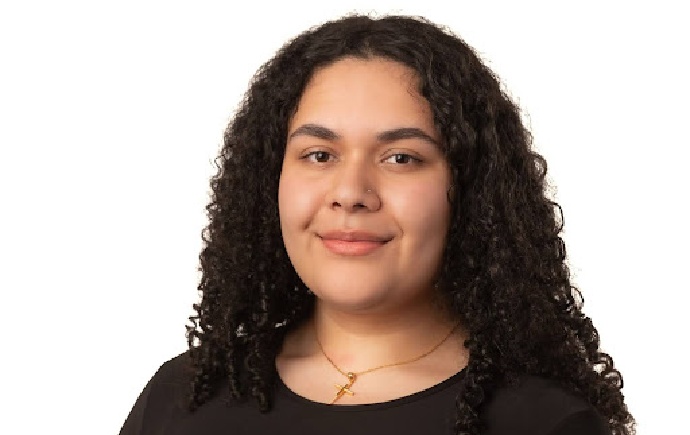
What societal, business or global issue/s are you passionate about and why?
I am passionate about several global and societal issues such as climate change, income inequality, gender inequality, racial injustice, and homelessness. I am invested in these issues as I am passionate about human rights, and improving the lives of people through policy and economic methodologies. I believe that through more informed policy and political action, we can shape a better world for tomorrow’s generation.
What sort of innovative/entrepreneurial initiatives are you undertaking, and why are you excited about this?
My entrepreneurial journey started for me at the age of 12, when I would sell locker accessories, stickers, and jewellery at my high school’s locker bays. Now, I operate the business on a larger scale and currently own a jewellery business called The MEK Collection. A business that specialises in selling high-quality jewellery at low prices. Beyond my business, other entrepreneurial initiatives I am undertaking would be The Monash Generator’s Validator Program, a program designed to foster innovation and creativity, as well as help entrepreneurs validate their business ideas. I am excited to be undertaking these initiatives as it has broadened my skills, network, and knowledge.
What type of impact would you like to have?
At this point in time, I aspire to work within a political-economic occupation after university, as I believe that this will give me the platform to enforce positive societal change - This is the impact that I would like to have, this is the mark I would like to leave on my local community and on the world. Additionally, I hope to inspire, I hope to motivate, and I hope to enforce change that will benefit the people and the environment. I hope I inspire and motivate others to take action and make a difference in their communities.
What would you like to do next in your leadership journey and or career, and why?
My current aspiration is to carve a path into the realm of governance, as I ardently believe that it will serve as the launching pad for me to drive profound and positive societal transformation. Given this, my next step in my leadership journey would be pursuing such a role after university.
What was your MIG challenge and who was your industry partner?
I was fortunate enough to be partnered up with Dickson Ho from the United Nations Environmental Programme (UNEP) for my MIG journey. Our MIG challenge was to “Design a plan to roll out the plastic tide turners challenge in the Pacific SIDS, with the aim to motivate the youth to find solutions, reduce the consumption and lead change in their homes, schools, colleges, workplaces and the communities.”
What did you enjoy about MIG?
There were several aspects of the MIG which were extremely enjoyable. For one, I really enjoyed working with my group. Everyone from the MIG was so lovely to speak and work with. However, in terms of how the MIG has been useful for me and my future career, I would say that it has significantly improved my self-confidence, and public speaking abilities, and improved my communication and leadership skills. These are all so crucial in my career, for I will be speaking to a wide range of people, pitching ideas, and speaking to various stakeholders. The MIG has ensured that I can do all of this effectively.
Do you think innovation and entrepreneurship skills are important for emerging leaders, and why?
Innovation and entrepreneurship shape a great leader, which is why these skills are crucial for emerging leaders. Through these skills, future leaders are able to remain resilient in the face of challenges and develop creative solutions to tackle pressing issues. I believe that this is a requirement for future leaders, as they will be addressing several adversaries and problems; we require resilient, open-minded, and creative leaders to positively shape the world. Leaders will have these qualities if they are innovative and acquire an entrepreneurial mindset.
What advice would you share with the next generation of innovators and change agents?
My advice to the next generation of innovators, change agents, and leaders, would be don’t let the prospect of change discourage you. Please don’t see change as something that is out of reach and intangible.
I-Tung Hsieh (Tony)
View
Bachelor of Information Technology, Software Development
Fullstack Developer, UNIHACK 2024 Winner
What societal, business or global issue/s are you passionate about and why?
I am deeply passionate about leveraging technology to address a wide range of societal, business, and global challenges. My focus is on solving real-world problems that can improve quality of life, bridge communication gaps, and enhance accessibility. This passion is driven by the belief that technology holds the key to unlocking solutions to many of the world’s most pressing issues, from health and wellness to inclusivity for non-English speakers.
What sort of innovative/entrepreneurial initiatives are you undertaking, and why are you excited about this?
Recently, I've been involved in a hackathon where my team developed BiteBalance, a mobile web app designed to promote healthy eating through personalized dietary guidance. This project, alongside my continuous work on improving our chatbot's linguistic capabilities, showcases my commitment to innovation. Participating in these initiatives excites me because it allows me to apply creative problem-solving skills, collaborate with diverse teams, and contribute to meaningful change. The process of ideating, developing, and implementing solutions provides a unique learning experience that fuels my passion for continuous growth and innovation.
What type of impact would you like to have?
My goal is to make a significant impact by developing technologies that are inclusive and accessible, thereby ensuring that the benefits of digital advancements reach a broader audience. I aspire to create solutions that not only solve problems but also empower individuals and communities by providing them with the tools they need to thrive in a rapidly evolving technological landscape.
What would you like to do next in your leadership journey and or career, and why?
I am keen to explore leadership roles that focus on fostering innovation and collaboration within the tech community. Leading projects that bring together interdisciplinary teams to tackle pressing issues is where I see myself making the most impact. This interest is driven by my conviction that collective creativity and diverse perspectives are pivotal in developing groundbreaking solutions.
What was your MIG challenge and who was your industry partner?
The challenge presented to us during the MIG was to enhance the accessibility of chatbots for non-English speakers. This objective was not just about broadening the linguistic capabilities of chatbots but also making technology more inclusive and accessible to a diverse user base. Our industry partner for this project was the Commonwealth Bank, which provided a real-world context for applying our innovations and testing our solutions. Their involvement offered valuable insights into the practical applications of our project, allowing us to navigate the complexities of implementing technology solutions in a business setting.
What did you enjoy about MIG?
One of the most impactful aspects of my experience with the Monash Innovation Guarantee (MIG) was the immersion in the Design Sprint process. Its true value became evident after MIG, particularly during UNIHACK 2024, where I participated in a hackathon with the teammates I met during MIG. Together, we leveraged this methodology to rapidly define our challenge, generate a wide array of ideas, and efficiently pinpoint the most viable solution. This approach was pivotal in a fast-paced environment, highlighting the importance of swiftly finding and testing solutions.
The Design Sprint process taught us that speed and adaptability are crucial in today's fast-paced world, allowing us to test our ideas with a robust method to quickly ascertain their viability. Even when ideas didn't pan out, the process was still invaluable, ensuring all team members' contributions were considered and fostering a collaborative atmosphere. This experience has significantly shaped my approach to innovation, emphasizing the need for rapid ideation, effective prototyping, and the agility to accept failure as a step toward success.
Do you think innovation and entrepreneurship skills are important for emerging leaders, and why?
Innovation and entrepreneurship skills are crucial for emerging leaders because they encourage a mindset geared towards solution-finding, resilience, and adaptability. These skills enable leaders to navigate challenges, spearhead change, and inspire teams to pursue ambitious goals. In today's dynamic world, such qualities are indispensable for driving progress and achieving sustainable impact.
What advice would you share with the next generation of innovators and change agents?
To the next generation of innovators and change agents, my advice is woven from my journey and observations. Embrace every opportunity with a spirit of curiosity and an open heart. Innovation is more than just having groundbreaking ideas; it's about resilience, adaptability, and a willingness to collaborate in the face of challenges. Understand deeply the issues you want to address, acknowledging that the root of meaningful innovation often lies in empathy and a profound understanding of those issues.
Ryan Brigham
View
Bachelor of Science
Founder and Managing Director of Health in Focus
2022 Young Australian of the Year Nominee
2023 Fred Hollows Aware Recipient 
What societal, business or global issue/s are you passionate about and why?
I strongly believe accessible and affordable healthcare and education are fundamental human rights that everyone deserves access to. The past few years I have battled with numerous debilitating health conditions, requiring more surgeries than I can count and more time in hospital than I can remember. Although this period has been challenging, it provided me with empathy and a glimpse into the struggles of millions around the world suffering just like I was. It showed me how important it is to put health as a constant focus in our lives. This was further highlighted through my volunteer experience in hospitals and remote communities overseas, where I saw first-hand the urgent need for better healthcare and a reduction in global health inequity.
What sort of innovative/entrepreneurial initiatives are you undertaking, and why are you excited about this?
I founded a not-for-profit healthcare charity called Health in Focus in late 2020. In just over 3 years, I have grown Health in Focus into a global organisation across 5 countries with over 180 volunteers. We have raised close to $200,000 AUD in donations and supported the lives of more than 9,200 people in need. We take an upstream approach in creating public health policy change, and downstream in planning, organising, funding, and running various initiatives.
Our projects include monthly medical camps in rural Vietnam, weekly health education workshops in Australia and Tanzania, a weekday GP clinic for poor patients in Ho Chi Minh City, public health posters, global health research, a Mobile Cardiac Clinic to treat rural and remote Victorians, and much more! I’m incredibly excited by the potential of Health in Focus to unify the world in creating more sustainable and equitable healthcare solutions. In addition to Health in Focus, I have also recently ventured into profit for good startups. I am currently creating an Online Will platform that integrates end-of-life clinical care. Moreover, I am working with my MIG Industry Partner, Co-Labs, to develop more sustainable healthcare products and to reduce microplastics through synergistic genetically altered microbial communities. In the future I also aim to launch a fully sustainable clothing and food company, using sustainable products within the bio-economy that require minimal land space and no animal harm.
What type of impact would you like to have?
The world is full of injustice, inequity, and suffering. I aim to rip out these systemic issues from the roots by targeting the underpinnings of compassion, justice, and human dignity; to not treat human suffering, but to cure it. I hope to be an advocate for those who are in need, for those who are without a voice, and for those who are suffering just like I was. Disease is universal, healthcare is not, and I hope to create a world where healthcare is quality, affordable, and available to everyone, everywhere.
What would you like to do next in your leadership journey and or career, and why?
In the future, I hope to catalyse transformative change - advancing healthcare, health equity, and sustainability - through a future career as a medical practitioner, through Health in Focus, and through other profit-for-good organisations. However, I do not want to merely steer organisations or initiatives, I want to empower communities across the globe to drive their own paths to wellness. By bridging the gap between theory and practice, embracing a multidisciplinary approach, co-leading and co-designing communities, and forging partnerships across sectors, I hope to effectuate tangible, positive, long-lasting change that will emanate long after I am gone.
What was your MIG challenge and who was your industry partner?
My MIG challenge was to help a biotechnology startup grow while expanding the Australian biotechnology community. Our industry partner was Co-Labs, a transdisciplinary hub for innovation. They provide lab space and consulting services for startups in the biotechnology space. Andrew and Sam, the Co-founders of Co-Labs provided invaluable advice and experiences to us. Together, we devised a collaboration between Co-Labs and the Monash University Generator Program, a space for startups of all kinds to grow. We also discussed ways Co-Labs can expand into interstate and rural regions by creating lab spaces across Australia.
What did you enjoy about MIG?
The MIG was a transformative experience that changed my perspective on the need for interdisciplinary teams, innovative mindsets, and entrepreneurial skills in this fast-paced and rapidly evolving world. I am extremely grateful for the opportunity to work with Co-Labs to apply theoretical knowledge in a practical setting. I also thoroughly enjoyed hearing from and networking with other industry leaders throughout the unit; an experience that is otherwise hard to come by.
During the MIG I improved upon countless employability skills including problem-solving, creativity, communication, teamwork, project management, and critical thinking. Another incredible part of MIG was the student cohort, a group of passionate and like-minded individuals who were a pleasure to work with. Finally, the MIG team, including Unit Coordinators Susie Ho and Puja Ganguli, and the rest of the teaching staff, were absolutely fantastic throughout. They were always willing to assist students at a moment's notice and were genuinely passionate about empowering students to create a better world and achieve their goals.
Do you think innovation and entrepreneurship skills are important for emerging leaders, and why?
Contemporary society is burdened with issues - issues that are novel, issues that are evolving, and issues that are tangled together in a chaotic web. Innovation and entrepreneurial skills act as an antidote to the chaos, allowing us to weave through the complex network of life’s issues. They are not just important in the modern era, they are imperative.
Resilience and perseverance are at the forefront of innovation and entrepreneurship. We cannot grow without facing obstacles, we cannot change without failure, and we cannot create a better world without backlash. We must endure. We must push forth. Innovation and entrepreneurship are not just skills, they are a mindset and way of being in this crazy world. They are the manifestation of passion, purpose, and creativity, and with how much suffering goes on these days, we certainly need more of this.
What advice would you share with the next generation of innovators and change agents?
The world is changing rapidly, and we need innovators and change makers now more than ever. For this to happen, there are a few things you should do:
- Be curious - curiosity is the driver of change. Keep asking why? How? What if? Never ever stop questioning.
- Be innovative - embrace creativity. Look at what is being done and what can be improved. Constantly seek out gaps to fill and new opportunities.
- Be optimistic - reach for the stars and expect to hit the moon. We are living in a pessimistic pandemic, and change will never happen unless you truly believe in it.
- Be confident, but not overconfident - believe in yourself, your abilities, your ideas, your convictions. Believe in your capacity to create meaningful change in the world, but remain humble about your accomplishments and desires.
- Be collaborative - teamwork is essential in innovation and change. Embrace a multidisciplinary approach and recognise diverse perspectives to create better solutions.
- Be honest - prioritise integrity and ethical conduct in everything you do. Hold yourself accountable. Do not lie or mislead, as the consequences of this are far worse than anything the truth will bring upon.
- Be true to yourself - embrace your uniqueness and transform it into something powerful. Do not see your differences as a weakness, but rather, a superpower to draw upon.
- Be adaptable - embrace challenges in the face of uncertainty. Cultivate a growth mindset and recognise that things change over time.
- Be resilient - do not give up. Do not let people tell you that you can’t do it. Do not let barriers break you or slow you down. Persevere in the pursuit of your goals. Stay focused on your vision and committed to your values, no matter what challenges life throws at you. Nothing will ever change without opposition. Challenges are a constant in change, and you should view them as positive steps forward rather than tripping over.
- Be the driver of your support network - you have the capacity to choose who is in your circle and who is not. Reach out to people who you look up to, who do what you hope to do; more often than not, they will get back to you and want to help out.
Felix M. Njoroge
View
Bachelor of Criminology
Entrepreneur, Strategist and Social Justice/Welfare Enthusiast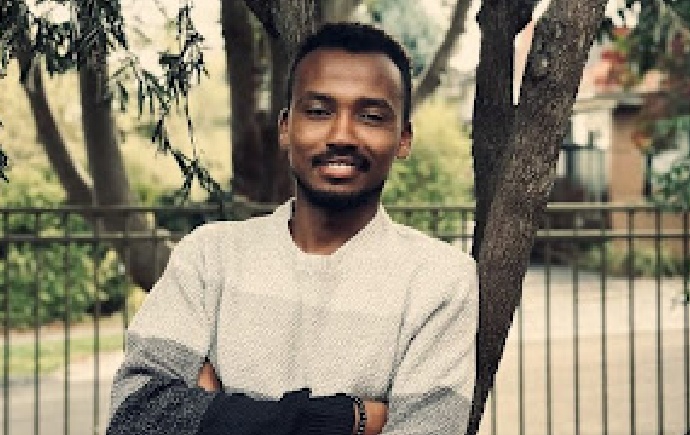
What societal, business or global issue/s are you passionate about and why?
I’ve got a particularly keen interest in any pursuit that is aimed at combating hunger and food wastage. As a Social Justice and Welfare enthusiast, I believe that no human being should go without the very basic necessities for life sustenance, especially given the levels of privilege that the world has been able to attain thanks to rigorous innovation. This is the reason why I decided to start volunteering with FoodFilled Inc., a charity organisation that aims to tackle food wastage and starvation by rescuing edible food that is destined for the landfill and giving it to those who risk going a day without a meal.
What sort of innovative/entrepreneurial initiatives are you undertaking, and why are you excited about this?
I am actively investing in Fractional Property Ownership as a way of seeding capital for my future innovative ventures, some of which shall hopefully even make an impact in combating world hunger and other similar issues that are core to my life values. I am excited about this entrepreneurial journey I have embarked on as it presents an opportunity to invest in the future in an accessible manner given my current status as a full-time student. There is also the security it offers which allows me to confidently map out my vision and goals.
What type of impact would you like to have?
I have always said when probed that I have yet to find anything as rewarding as putting a smile on someone's face because of making their life’s burden any less. And this is the ultimate impact that I’d like to have through anything that I put my hands on, be it for 1 or 1000. It is my desire to also be an example that emboldens those who relate to any of the challenges that present as a consequence of my identity, by proving there is enough space for anyone who puts action behind their dreams.
What would you like to do next in your leadership journey and or career, and why?
I’d like to work on some of the weaknesses that pose potential barriers to attaining fulfilment in my leadership journey as well as career advancement opportunities. I have found through the practice of self-reflection that for me to achieve better, I need to do better to the best of my knowledge.
What was your MIG challenge and who was your industry partner?
My MIG Partner was Nairm Marr Djambana (NMD), an Aboriginal organization based in Frankston. Our challenge in service to NMD was to innovate ways that they could increase their engagement with the community and make them feel more inclusive specifically for every Aboriginal LGBTQIA+ member.
What did you enjoy about MIG?
The Guest Speakers and Networking with both mentors and fellows is what stood out best for me. I established connections that have proven to be very essential for both my personal and professional growth. The nuggets of innovative & general life wisdom that were shared with us through the talks make MIG one of the most crucial experiences at Uni for me.
Of particular benefit to my future endeavours was the breakdown of the innovation method- 5-day Design Sprint by Jake Knapp. The systemic explanation of this method made it apparent how innovation need not be a time-consuming or complex process, nor is it a reserve for a certain calibre of people as stereotypes may suggest. This was a liberating message to any aspiring/budding entrepreneur.
Do you think innovation and entrepreneurship skills are important for emerging leaders, and why?
Innovative leaders are progressive leaders and this is imperative if certain global issues are to be satisfactorily addressed. Tackling such issues calls for collaborative participation from all world leaders, of all levels and fields. These global issues which include climate change and bio-degradation urge for new ways of doing things that are sustaining for the earth’s vital resources. Only entrepreneurial leaders are equipped to make decisions that would deliver such results.
What advice would you share with the next generation of innovators and change agents?
Identify what direction your core values compass is facing, and there lies your innovation journey. This is because passion is the fuel that never burns out! Also, approach every networking opportunity with an open mind and a blank slate because at times it is by the most unlikely person that the most ideal window of opportunity cracks open. Prejudices can be costly!
Melissa M. Cahill
View
Bachelor of Art History and Curating
Writer, Curator, Communicator and Learner
What societal, business or global issue/s are you passionate about and why?
I am passionate about the preservation of culture, and tradition and the importance of memorialisation through art practice and oral storytelling. These passions sit within the broader context/interest of intergenerational trauma. I am particularly curious about how the complexities of neuro-divergent thinking are often integral within art making yet Western cultures struggle to support and scaffold the communities producing objects/artworks prized so highly in affluent economies. Culture, tradition and art practice are often expressed, developed and passed on by society’s most marginalised and disadvantaged people. It is through this lens that the community best understands itself - past, present and future. We must do better to nurture, collaborate and celebrate creativity within all corners of the community.
What sort of innovative/entrepreneurial initiatives are you undertaking, and why are you excited about this?
I am in the process of morphing a pre/pandemic start-up into its next iteration. It took enormous courage and faith to build a start-up throughout the Covid-19 years in Melbourne and nothing could have prepared me for the fall-out in 2022 of ‘the pandemic years’ as the demands of scaffolding children upon their return to school became very real. The acquisition of self-compassion, clarity and a revised understanding of capacity has enabled me to re-focus and the MIG has been pivotal to this process. In 2024, I am volunteering at Monash in Mentor roles and as a DSR Student Ambassador; I participate often in PhD studies conducted by Monash candidates too.
I recently began training to become a volunteer at the Melbourne Holocaust Museum and joined the Irish Studies Association of Australia and New Zealand (ISAANZ). I am currently writing a submission for a book publication which I hope will be considered by Monash University Press.
What type of impact would you like to have?
I value the impact I make daily, in small ways, at a local level. One can not dare to dream of global impact if one’s local experiences of connection and innovation are not well understood. I aspire to work on projects with the potential for a vast impact on diverse communities, across multiple generations. I have UNESCO in my sight and aspire to become involved in their global platform when the time aligns.
I’m particularly passionate about elevating the profile of neuro-diverse women. Discovering my 2e challenges and wonders for the first time, upon diagnosis at 45 years of age, has put personal urgency behind this issue. This knowledge led me back to Monash University and it’s informing how I support and celebrate my three spectacular, neuro-diverse children.
What would you like to do next in your leadership journey and or career, and why?
I’m passionate about the importance of Arts and Culture access within the Australian curriculum. To solve big world problems will take all the creative thinking our youngest generations can conjure and this requires mentorship and the passing-down of skills somewhat lost in recent decades owing to digital times. Returning to a ‘make-do’ mentality requires a renaissance. I aim to be a leader within that revolution.
What was your MIG challenge and who was your industry partner?
StartSpace powered by State Library Victoria. To harness the entrepreneurial talents of the StartSpace member base to solve real-life challenges for State Library Victoria, furthering their innovation objectives.
What did you enjoy about MIG?
The MIG was an incredible opportunity for self-development. For me it was not just an inter-faculty or interdisciplinary experience, as a mature-aged student it was also intergenerational. I won ‘court-side’ tickets enrolling in this unit and observed in action the near future of our country’s thought leaders. I also experienced my own assets and talents within a dynamic and fast-moving environment which was thrilling and ultimately empowering.
The morning lectures were thoughtful and useful and created a wonderful opportunity to meet new students each day. It was these students who provided the greatest personal satisfaction during and after the MIG. I didn’t anticipate the personal connections created and nurtured during this intensive; they have been powerful and life-giving. I am also deeply grateful and humbled to have been mentored by the accomplished Dr Jeremiah Emmanuel and A/Prof Susie Siew Yuen Ho.
Do you think innovation and entrepreneurship skills are important for emerging leaders, and why?
Without innovative and entrepreneurial skills, emerging leaders will struggle to move from the starting blocks, in any context. Creative thinking sits behind innovation and this must be fostered/practised throughout one’s lifetime. It’s in the doing that innovators discover magic, find answers and solve problems. It’s not enough that a leader is working with a team of exceptional innovators, it’s incumbent on a leader to model this mindset in all their affairs. Entrepreneurship is a way of being.
What advice would you share with the next generation of innovators and change agents?
Back yourself. Lean into the passions that ignite your spirit and create a sense of flow and joy. Seek mentorship and give it freely in return when the opportunity presents itself to pay it forward. Run towards discomfort but run with a team. Innovation is an adventure and adventures are exhilarating when shared generously.
James Chilcott
View
Bachelor of Banking and Finance
Australian Financial Review Top 100 Future Leaders 2024
What societal, business or global issue/s are you passionate about and why?
I'm personally motivated to transform the dread of Monday mornings into anticipation. I’m all about helping others (and myself) build lives full of purpose and joy, shaking off that mental fog. In our often distant world, nothing beats a real, genuine connection for me. Craving deep discussions, even (or especially) with those who see things differently? Absolutely. I believe it's what the world sorely needs. Through these conversations, we grow, we understand, we knock down walls of division. That's the goal.
What sort of innovative/entrepreneurial initiatives are you undertaking, and why are you excited about this?
Jumping into the Monash Innovation Guarantee flipped a switch for me. It showed that raising your hand and getting involved, truly makes life richer and more meaningful. Following that energy, I've thrown myself into founder programs with the Monash Generator, dabbled in starting my own venture, and embraced mentorship programs. I've dived into the deep end with the Monash Graduate Recruitment Immersion Program, served on marketing and investing committees, and even chased jobs that seemed to be a stretch. Amidst all these endeavours, I've managed to keep my grades high and, surprisingly, truly enjoyed my classes. This journey of jumping in landed me among the Australian Financial Review's Top 100 Future Leaders. It's solid proof that jumping into the fray, and pushing past comfort zones — is where recognition and growth happen.
What type of impact would you like to have?
In a society where tall poppy syndrome prevails, true fulfilment emerges through engagement, not isolation. Personal growth isn't found in solitude, curled up in the foetal position watching YouTube videos in bed; it's discovered in the midst of doing, in the throes of involvement. That's where you find growth and fulfilment — or at least, that's been my experience.
What would you like to do next in your leadership journey and or career, and why?
I'm seeking a role where the work truly matters, well beyond mere 'busy work.' Exactly where? That's still up in the air.
What was your MIG challenge and who was your industry partner?
My MIG challenge involved collaborating with The Startup Network team. Together, we aimed to develop an online digital platform aimed at engaging stakeholders within their personal and professional communities.
What did you enjoy about MIG?
- Bridging the Gap: There’s a real divide between what textbooks teach and the actual dynamics of the industry and work life. MIG bridged that gap, offering a safe space to learn through mistakes and curiosity.
- People: The summer timing and selective process meant that my peers were not just any students but highly motivated, engaging, and thought-provoking individuals. This environment fostered meaningful relationships and professional networks.
- Overcoming Impostor Syndrome: Stepping into the industry as a newcomer often comes with doubts about belonging. MIG demystified the industry, showing us that professionals are just regular people. This experience broke down barriers, making the idea of future participation less daunting.
- Promoting Engagement: Above all, MIG was fun. It proved that diving into unique, intellectually stimulating experiences is rewarding. This sentiment is shared among MIG alumni, who continue to seek growth opportunities post-participation.
Do you think innovation and entrepreneurship skills are important for emerging leaders, and why?
Of course. Innovation is all about continuously striving to discover the best solutions to our problems. In an environment that's always changing, innovation allows us to tailor solutions that fit just right. Entrepreneurship is essentially the ability to, once you've identified a problem, actually get up and do something about it. Finding solutions and taking action, in my opinion, will take you far.
What advice would you share with the next generation of innovators and change agents?
The master has failed more times than the beginner has even tried — my small journey is a testament to numerous attempts and failures, each one a stepping stone rather than a setback. Dive into anything that sparks even a flicker of interest. It’s from these sparks that I've ignited my most passionate pursuits, finding the joy to leap out of bed each morning. Let curiosity be your guide, and let each attempt, successful or not, fuel your journey forward.
Maham Umar
View
Bachelor of Science, Majoring in Human Pathology
Founder of @mahamumarart
What societal, business or global issue/s are you passionate about and why?
As a Pakistani Muslim woman, I've experienced firsthand the inequalities that permeate our world. From early encounters with racism to witnessing my mother's struggles in an English-dominated society and feeling lesser than her peers. Thus, these experiences have reminded me of a passion to combat injustice within society and thus a global issue I wish to one day help diminish is inequality. I'm driven by a deep-rooted belief in the power of collective action and kindness to create a more equitable world. This is why I intended to utilise my talents and my voice to help one day illuminate the path to enhanced inclusion.
What sort of innovative/entrepreneurial initiatives are you undertaking, and why are you excited about this?
I am currently launching an art business “@mahamuamrart” as part of my entrepreneurial pursuits, with the intention of one day seamlessly incorporating it into my future career as a speech pathologist! My objective is to provide individuals with a profound sense of validation and understanding, drawing from my personal struggles of feeling heard. My goal is to alleviate similar challenges for others, offering solace and recognition, even if it's just to one person.
What type of impact would you like to have?
In the future, my aspiration is to forge global connections and communicate the profound similarities that unite humanity. Through my art, I endeavour to not only capture the beauty of life. But also shed light on the shared struggles we face each day. Therefore, if I can foster a sense of connection and understanding among those who encounter my work, bridging the perceived divides that fuel inequality.
I believe that much of the inequality in our world stems from a lack of comprehension and empathy. Thus, by portraying the commonalities that bind us together, I hope to diminish the sense of alienation that divides us. If I can play even a small role in reducing inequality and promoting unity, I will have fulfilled my purpose.
What would you like to do next in your leadership journey and or career, and why?
In the next phase of my journey in innovation, I plan to complete my undergraduate studies in a Bachelor of Science and pursue a Master of Speech Pathology. Over the next 5-10 years, my goal is to leverage my master's degree to establish my own speech pathology clinic. I am particularly enthusiastic about specialising in paediatric speech pathology. In hopes of one day practising speech pathology in compliance with art therapy!
Therefore, allowing me to fuse my passion for art with my desire to connect with individuals on a deeper level! My commitment to helping others has been ingrained within me since childhood. Since the age of 11, It has always been my life's mission to help people. Thus, looking ahead, I aspire to fulfil this mission through my practice. I am hopeful that by empowering patients to improve their communication skills, they can become catalysts for positive change in the world. Ultimately, my measure of success lies in the impact I have on individuals. If I can help even a single person feel valued, heard, and recognized for their significance in the world, I will consider my journey a successful one!
What was your MIG challenge and who was your industry partner?
During the MIG, my group and I were fortunate enough to be partnered up with the co-founder of Eloments tea, Julie Hersh, who presented us with the challenge to "promote the sales of ethically sourced tea during a cost-of-living crisis.
What did you enjoy about MIG?
During the MIG, I had the pleasure of meeting remarkable innovators like Julie Hirsh, Megan Flamer, and Susie Ho, who fuelled my hopefulness and reignited my passion to innovate through painting, a love I had neglected for over six months prior to the course.
The interactive lectures at the beginning of each day were invaluable, as they provided us with techniques to embody a growth mindset to drive innovation whilst instilling in me a desire to do more and be better. Mindfulness was one of my favourite themes during these lectures. A skill I am still working to fully embrace, and one that I intend to carry into my future career as a speech pathologist. I intend to deliberately cultivate consciousness in my practice to enhance my communication skills, manage stress levels, and make informed clinical decisions.
Do you think innovation and entrepreneurship skills are important for emerging leaders, and why?
I believe that Innovation and entrepreneurial skills are paramount for emerging leaders. They provide a lens through which individuals can perceive the world with empathy and less bias, enabling them to adapt swiftly to dynamic environments, particularly in today's fast-paced era dominated by social media and AI.
Thus, fostering an innovative mindset is indispensable for all emerging leaders, as it cultivates openness to change, fosters personal growth, and contributes to the collective endeavour of creating a better world.
What advice would you share with the next generation of innovators and change agents?
You can be the change you want to see in this world. It's just a matter of taking that leap, even though you might have a million doubts in the back of your mind: What if I fail? What if it doesn’t work out? What if I lose money? But what if it does work out? What if this great idea you came up with changed the world in ways you had never imagined? What if you succeed!
Jayce Batallones
View
Bachelor of Computer Science
President of Monash Association of Coding
Founder of Jayce Tutoring
What societal, business or global issue/s are you passionate about and why?
I'm deeply passionate about the intersection of technology and education. I firmly believe in their transformative power to uplift individuals and societies. Technology continuously introduces innovative tools, from hardware to software like Generative AI, propelling us to greater levels of productivity and progress. My passion for building and creating, whether through LEGO, keyboards, computers, YouTube videos, or running a tuition business, all stems from this belief in the potential of technology and education to make a positive impact.
What sort of innovative/entrepreneurial initiatives are you undertaking, and why are you excited about this?
As President, I'm currently spearheading initiatives at the Monash Association of Coding (MAC) to establish it as the premier coding club in Australia. We're providing unparalleled opportunities, technical workshops, and multiple hackathons to foster a vibrant community of like-minded individuals. Our disruptive approach includes a robust social media presence, rapidly growing our membership to 1300 in just three weeks, and amassing over 40k followers across all platforms. Additionally, we're collaborating with Melbourne University's coding club on a Startup Hackathon and launching new initiatives like Projects, dedicated to creating impactful software, and Education, aimed at guiding high schoolers toward tech opportunities. I'm thrilled to empower fellow tech enthusiasts to achieve their personal and professional aspirations.
What type of impact would you like to have?
I aspire to broaden access to resources and knowledge for Australian students pursuing tech careers. Through a mix of non-technical and technical workshops, networking opportunities with industry partners, and access to internships via our boards and marketing efforts, I aim to empower our members to reach new heights. We're committed to making this journey enjoyable by infusing humour into our content and hosting social events. Personally, I'm passionate about catalysing a shift from traditional graphic posts to video content in marketing. After just 8 weeks of video releases, we've already witnessed a surge in video content adoption by other clubs.
What would you like to do next in your leadership journey and or career, and why?
I'm excited to embark on launching a startup aimed at accelerating learning for all students, enabling them to achieve their goals. My vision is to ensure equal access to opportunities such as scholarships, competitions, and job placements, which can significantly enhance lives. Many students lack awareness of these programs and the necessary preparation, and I aim to bridge this gap. Making a positive impact on people's lives is my passion, and I believe this is the perfect avenue for achieving maximum impact.
What was your MIG challenge and who was your industry partner?
My MIG challenge centred around improving networking opportunities for students through Microsoft and LinkedIn. Working closely with our industry partner, we developed prototypes aimed at enhancing LinkedIn's functionality. Our ideas included refining the events section and introducing a swipe-based feature, akin to dating apps, to facilitate new connections.
What did you enjoy about MIG?
I found MIG to be an enriching experience on multiple fronts. Each day brought new paradigms to learn and apply to our project, which kept things dynamic and engaging. Working within a diverse team provided invaluable insights and perspectives, as everyone brought unique experiences to the table. One paradigm that resonates with me is the iterative problem-solving approach we learned, continually refining solutions based on evolving challenges. This mindset, instilled by the Generator, has proven invaluable in my role within the club and in my entrepreneurial endeavours.
Do you think innovation and entrepreneurship skills are important for emerging leaders, and why?
Innovation and entrepreneurship are essential skills that every leader needs. As leaders navigate complex issues and evolving markets, the ability to innovate allows for the creation of new solutions and approaches. Entrepreneurial skills empower leaders to take calculated risks, seize opportunities, and drive meaningful change. In essence, these skills equip leaders to stay ahead of the curve, drive growth, and tackle the world's most pressing problems effectively.
What advice would you share with the next generation of innovators and change agents?
- The best part is no part - Elon Musk
- If you want to be an anomaly, you’ve got to act like one - Gary Vaynerchuk
- We are what we repeatedly do. Excellence, then, is not an act, but a habit - Aristotle
- You don’t rise to the level of your goals, you fall to the level of your systems - James Clear
Caylin Qiu
View
Bachelor of Science, Majoring in Physiology
Sustainability, Social Justice, ESG Enthusiast & Advocate and Science Communicator
What societal, business or global issue/s are you passionate about and why?
I am passionate about sustainability, climate change, and social justice issues the world is currently facing. Over the years I have seen first-hand the effects of coral bleaching in the Great Barrier Reef, experiencing the country-wide impacts of lengthened fire season in Australia, and learning about the biodiversity and habitat loss happening across the world. Humans around the world are also experiencing the consequences of climate change, populations still don’t have access to human rights, and disparity and inequalities are still experienced by communities near and far. I know that a more sustainable and ethical world is achievable, but will require global cooperation. I hope to continue working within the climate change and sustainability space and help others navigate and work towards achieving the Sustainable Development Goals (SDGs) and Net Zero.
What sort of innovative/entrepreneurial initiatives are you undertaking, and why are you excited about this?
In my spare time, I have been participating in case competitions, meeting with colleagues around the world who are working within the climate and sustainability space, and attending online webinars. One of my goals is to write more articles to share all the ESG (Environmental, Social, and Governance) & SDG-related knowledge I have been learning about in my degree and career on my LinkedIn platform (https://www.linkedin.com/in/caylinqiu). Climate change is affecting everyone and it is important that climate and sustainability knowledge is easily accessible and understandable to all people.
As a Science student majoring in Physiology, I am delighted to be undertaking my first sustainability elective unit (BTX3100 - Sustainability regulation for businesses) this semester. I also look forward to my BEX3723 - Sustainable Business and Governance Challenges - Changing the Future unit where I will be travelling to Fiji to learn more about the impacts of complex sustainability and public governance challenges. The opportunity to add some academic sustainability knowledge has helped strengthen my own career experience. I am also very excited to be joining a multidisciplinary team of students from Monash Australia and Malaysia, and the University of Warwick in the United Kingdom as part of the TeaMWork Internship program working on projects aiming to achieve the United Nations Sustainable Development Goals this winter.
What type of impact would you like to have?
There is only so much I can achieve by myself, but the more people that are working together to achieve better outcomes for the world, the larger the impact we will have. I hope to inspire and help more people to make sustainable choices. Recently in my role at Monash Council, I worked with my team to reduce waste contamination and encourage the proper use of recycling and FOGO (Food Organic Garden Organic) bins. After a year of talking to residents and contacting households one by one, we were able to see the positive results of our work - less contamination in kerbside bins, and a reduction of litter around residential streets. This was only a small area within Monash Council, however I hope it has contributed to reducing contamination in composting and recycling facilities, and will encourage more residents to be mindful of the recycling efforts.
I hope to contribute to society from the community level by doing my best to recycle properly, reduce my environmental impact and share my passion with those around me, but also at a career level at an organisation that aligns with my values and passion, so that I can continue working towards a more sustainable and ethical world.
What would you like to do next in your leadership journey and or career, and why?
While in the last year of my studies, I have been looking forward to finding graduate opportunities within the climate and sustainability space where I can contribute to their causes by sharing my skills and experiences. I hope to work in an organisation that is committed to making a difference and helping achieve sustainable outcomes for the community. My goal is to experience a variety of roles within the sustainability space and eventually explore opportunities within climate policy, law, or research.
I have so many wonderful and passionate people working within sustainability who volunteer on environmental projects in their spare time. During my time at Monash, I have volunteered through a number of programs as a mentor or coach. In the future, I hope to direct this experience into a role where I can also share my knowledge with the future generation through mentoring or school presentations, like the colleagues I look up to.
What was your MIG challenge and who was your industry partner?
Ursula Lepporoli and Emma Finch from KPMG’s Global Mobility Services team were my industry partners. My team and I worked on finding solutions to use Global Mobility to increase diversity in the C-suite for KPMG’s clients. I had the opportunity to meet people from the KPMG Global Mobility Services team to learn about Global Mobility and better understand the challenges their clients face. Ursula and Emma were very supportive and provided us with their own insights and feedback throughout the project. It was a great experience to learn about the professional services industry, the importance of diversity, and the strength it adds to an organisation's leadership team.
What did you enjoy about MIG?
MIG was an enriching personal, professional, and academic experience. The unique intensive structure of MIG incorporated learning from industry professionals, professional and personal development workshops, collaborating with a multidisciplinary team of peers, and the invaluable opportunity to meet, network and work on real-life industry challenges with our industry partners. MIG’s class structure allowed students to learn, study, apply, and reflect throughout the semester so that we were well-prepared and equipped to translate these skills and knowledge into our assessments and more importantly our careers.
The key takeaway from my MIG experience is the growth and excitement I felt upon finishing the unit. Not only was I able to learn, apply, and practise so many important academic and career skills, but I was also able to harness soft skills such as communicating and pitching information in front of diverse audiences and the ability to create and present my ideas in a digestible and accessible manner which will be valuable in my future endeavours. The teaching team at MIG tried their best to engage and prioritise the student learning experience which resulted in a community of students who were eager to learn and support each other while establishing strong friendships and professional networks. I thoroughly enjoyed my experience and would strongly recommend future students to enrol and participate in MIG.
Do you think innovation and entrepreneurship skills are important for emerging leaders, and why?
Yes, definitely! Technical and hard skills can always be learnt in the traditional way of schooling, however, innovation and entrepreneurship skills are a mindset and way of thinking that can only be improved through application, feedback, and reflection. In a world where the future is unpredictable, and new jobs and careers are always emerging as technology advances, it is important that emerging leaders can adapt stay resilient and persevere through these changes. I see the next generation of leaders leading with compassion and using their innovation for good - to make this world a better place.
What advice would you share with the next generation of innovators and change agents?
My advice for the next generation of innovators and change agents is to say “YES”! Say yes to opportunities, and don’t underestimate your abilities (even if you feel like you don’t qualify or meet all the requirements). Yesses and an open mind to change, challenges, and chances will take you so far and reward you with skills and experiences for a lifetime. Give everything you have dreamed about trying a go, time passes anyway so don’t let age or the time it takes keep you away from achieving your goals. I tell myself I would rather be embarrassed than regret not trying something I have always wanted to do.
I hope that whoever is reading this realises that you are more than just your name and degree, you're capable of achieving so much and I truly believe in you! My last advice is to look after yourself and nourish your body. These are challenging times for young people and students, it's okay to feel like you’re falling behind, confused, or lost - life isn’t a race. Take it at your own pace, pause and take a big deep breath. Go outside and experience nature; take time to listen to the birds chirp, feel the sun shining, and smell the fresh air. Then take a cup of water and spend some time just experiencing the present moment.
Alyssa Coleman
View
Bachelor of Laws (Honours) and Bachelor of Global Studies
Human Rights Advocate and Intern at Amnesty International Australia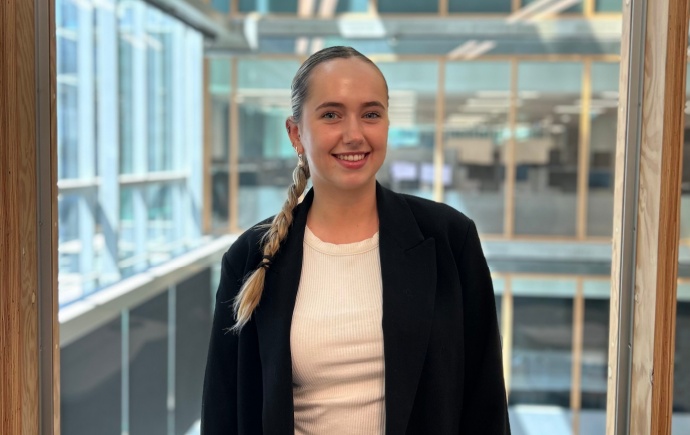
What societal, business or global issue/s are you passionate about and why?
I am passionate about the universal access to Human Rights, and it being effectively implemented at a global scale. I believe in providing everyone with the same respect, kindness, and opportunities, regardless of their background or circumstances. I am committed to helping others in the aspect of Human Rights. I want to provide people with educational opportunities, ensuring accessibility to thrive in their environment and assisting others to the best of my abilities. I hope to create a multifaceted impact that creates change at a global level in which Human Rights are upheld.
What sort of innovative/entrepreneurial initiatives are you undertaking, and why are you excited about this?
I am currently doing a legal internship at Amnesty International Australia. This opportunity was afforded to me through forming connections with my innovation industry partners, and actively engaging in the international non-governmental organisation. Alongside my internship, I am also volunteering for the organisation and was presented with a leadership opportunity, hosting a Youth Social Change Lab. Working with Amnesty has been a long-term career goal of mine. I am excited about my participation and opportunities that are allowing me to extend both my academic understanding and active involvement in Human Rights. As well as this, through my spare time, my recreational love for fashion has allowed me to create an entrepreneurial opportunity for a small sustainable business, hiring high-quality garments.
What type of impact would you like to have?
I aspire to have a global impact, dismantling unequal systematic structures that prevent individuals from justice and access. I ideally, want to be involved in amplifying the voices of silenced individuals, specifically through storytelling. I hope to eventually work in the legal aspect of Human Rights structures contributing to the development and the implementation of it.
What would you like to do next in your leadership journey and or career, and why?
In my leadership journey and career, I aim to combine my passion for Human Rights and Law, learning about history and creating a positive change. My goal is to understand the various contributing factors that create both barriers and complexities for these issues and provide an effective solution to ensure a positive outcome.
What was your MIG challenge and who was your industry partner?
My MIG industry partner was Amnesty International Australia, who provided us with a MIG challenge of creating a campaign to engage Australian youth in human rights issues in 2024-2025. This industry challenge involved creating an engagement action plan for Amnesty’s Human Rights Act campaign, whilst also including four touchpoints targeted at young Australians.
What did you enjoy about MIG?
I enjoyed collaborating with others from various disciplines and learning the importance of different innovative skills, storytelling, and diversity in teamwork. This allowed for various avenues to be considered when approaching our challenge, thus providing a stronger solution to the problem. I also loved the social aspect of learning and engaging with others about their degrees and passions!
Do you think innovation and entrepreneurship skills are important for emerging leaders, and why?
I think innovation and entrepreneurship skills are essential for emerging leaders, as it provides you with a broader perspective, and the tools to utilise interdisciplinary collaboration. These skills also allow you to develop human-centred design in your approaches, whether that be through business or as leaders.
What advice would you share with the next generation of innovators and change agents?
My advice towards the next generation of innovators and change agents would be to keep an open mind, adapt to changes, and remember that no dream is too big. Everything is possible with determination, collaboration, and compassion. The key to innovation is to be constantly learning and adapting!
Tejas Srinivas
View
Bachelor of Psychology
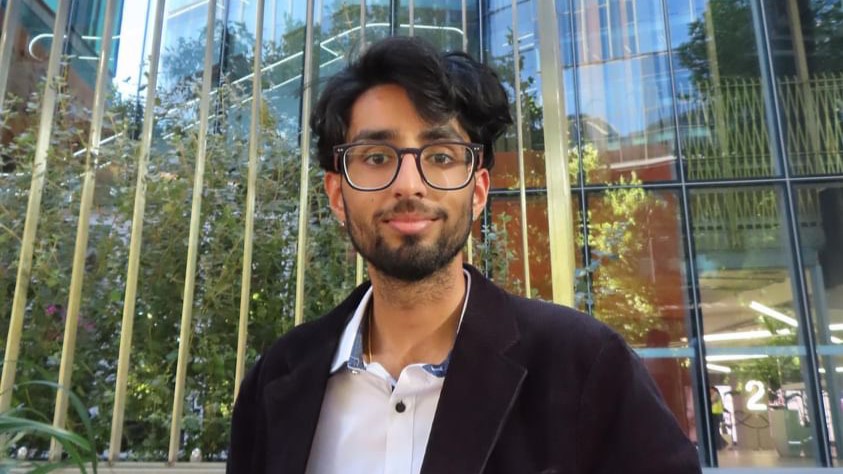
Founder of the 'ABCD: The Business Edition' Podcast
What societal, business or global issue/s are you passionate about and why?
I am very passionate about startups, and the large strides entrepreneurship is making within the university atmosphere. I believe the world needs enthusiastic, passionate and goal-oriented youngsters putting their ideas out there and doing whatever it takes to make things happen. Being a Psychology student, I am particular passionate about startups that centre their focus around mental health and MedTech, as I believe this field is in desperate need of innovation considering the tough years we have all been through due to the pandemic.
What sort of innovative/entrepreneurial initiatives are you undertaking, and why are you excited about this?
I’ve launched my first podcast series, “ABCD: The Business Edition” where I speak to individuals within the startup space including founders, investors and mainly people who are currently shaking things up within the entrepreneurial space. I’ve also taken part in innovative programs myself like the Validator from Monash Generator, and was also selected to be a Student Fellow in the Startmate Fellowship Program. I’m excited for what the future will hold, and I’m learning new things everyday from the stories and experiences I hear from those around me.
What type of impact would you like to have?
My goal is to have a positive impact in a role where I can help people directly. I would like to work in a startup or perhaps one that I have created on my own, and would love to work in a tight-knit team with people that have the same vision as me. I want to be someone that inspires people, and makes them believe that anything can be done as long as you want it more than anyone else.
What would you like to do next in your leadership journey and or career, and why?
I would like to continue taking any leadership opportunities that come my way, and put myself in a position where I can inspire others, and use my marketing and people skills to create professional content.
What was your MIG challenge and who was your industry partner?
My MIG challenge involved environmental sustainability. Me and my group were fortunate enough to be paired with Planet Protector Group (PPG), a sustainable packaging company. Our challenge was to successfully create a market entry strategy for their new product, and create a prototype for making their product successful in the market.
What did you enjoy about MIG?
The MIG was quite enjoyable, and definitely the best unit I have undertaken in my university study. The sheer amount of ground we were able to cover in the best part of 3 weeks was amazing, and we got to learn about innovation and entrepreneurship from some of the best minds in that space almost daily. The group-work was also engaging and helped my presentation skills and leadership abilities greatly. I believe the MIG has been extremely instrumental in helping me and my peers develop skills that get us career-ready.
Do you think innovation and entrepreneurship skills are important for emerging leaders, and why?
Skills of innovation and entrepreneurship are essential for young and emerging leaders to blaze a path forward and stand out among their peers. In today's dynamic global economy, leaders who can think creatively and take calculated risks are more likely to drive growth, inspire teams, and navigate uncertainty. Entrepreneurship skills, such as problem-solving, resilience, and resourcefulness, enable leaders to transform ideas into actionable plans, cultivate a culture of continuous improvement, and seize new market opportunities.
What advice would you share with the next generation of innovators and change agents?
My advice to the next generation of innovators and change agents is simple – believe in yourself. No idea is too big. Anything can be achieved if you believe in it enough and work hard to make it a reality.
Vincent Giang
View
Bachelor of Computer Science (Data Science) & Bachelor of Commerce (Finance)
Secretary at InvestEd Students’ Collective
2nd Place, UCC x Oliver Wyman Trans-Tasman Case Competition 2024
Winner, Hacyathon 2022
What societal, business or global issue/s are you passionate about and why?
I am passionate about the accessibility of quality education, as it plays a vital role in shaping student’s lives and fostering social equity. I believe that when educational opportunities are accessible, they empower individuals to develop their skills and knowledge, which, in turn, positively impacts the wider society.
In my position as the Lead Mathematics Tutor at Artin Education, I have witnessed the transformative power of education firsthand. I still vividly remember when a student, after class, shared with me how her marks improved from the 60s to the 90s after a term in our program. This moment really reinforced my belief in the significant impact that quality education can have on students’ lives and always motivates me to make a positive impact on my students.
What sort of innovative/entrepreneurial initiatives are you undertaking, and why are you excited about this?
I have been actively involved in various case competitions that focus on solving problems with innovation and sustainability at their core. Earlier this year, I participated in the ACYA National Case Competition, where our challenge was to explore how a solar panel installer could introduce new services or products to penetrate the growing renewable energy market and gain market dominance. This competition provided an excellent opportunity to think critically about emerging trends and innovative solutions in the renewable energy sector.
More recently, I competed in the Oliver Wyman x UCC Trans-Tasman Case Competition, where we were tasked with developing a strategy for Amber Electric to expand its offerings into the business sector, with the goal of converting Australia to 100% renewable energy. This initiative was particularly exciting as it culminated in the opportunity to present our proposed solution to the co-founders of Amber Electric during the finals.
I’m excited by these competitions as they provide a platform to tackle real-world challenges and develop practical solutions. Working alongside such skilled individuals not only enhances my problem-solving abilities but also helps me cultivate valuable skills that are essential in today’s rapidly evolving landscape.
What type of impact would you like to have?
I aim to make a meaningful impact on my students by fostering an environment where they can thrive and achieve their goals. There's immense satisfaction in knowing that I have played a role in helping them reach their potential. Witnessing their successes not only brings joy but also reinforces my commitment to education. When students excel, I feel a sense of shared achievement, knowing that my guidance has contributed to their growth and confidence.
What would you like to do next in your leadership journey and or career, and why?
I would like to continue exploring my career by participating in programs and competitions while securing internships to gain more real-world experience. Engaging in competitions allows me to apply theoretical knowledge to practical challenges and collaborate with diverse teams. Additionally, internships will provide valuable insights into industry practices, enhancing my skill set and understanding of the business landscape. This combination of experiences will be instrumental in shaping my leadership journey, enabling me to develop the competencies necessary to make a meaningful impact in my field.
What was your MIG challenge and who was your industry partner?
My MIG challenge revolved around leveraging digital twin modelling to support the government in developing sustainable and effective public transportation solutions. A digital twin, in this context, refers to a virtual model of a physical area, specifically a digitised representation of a portion of Victoria.
I had the privilege of working with Sam Rye from the Monash Sustainable Development Institute (MSDI) as my industry partner. Sam was exceptional in sharing his expertise on interdisciplinary collaboration and sustainability, greatly enriching our project by highlighting the importance of integrating knowledge from various fields to effectively address complex challenges. His guidance not only enhanced our understanding of the transportation issues at hand but also inspired us to consider the broader community effects of our proposed solutions, reinforcing the significance of a holistic approach to public policy and planning.
What did you enjoy about MIG?
Monash Innovation Guarantee (MIG) was one of the best units I have undertaken in my double degree. The experience was incredibly insightful and eye-opening, clearly highlighting the critical need for innovation, sustainability, and interdisciplinary collaboration in addressing real-world challenges.
MIG provided the unique opportunity to work alongside individuals from different academic backgrounds, allowing us to combine our diverse skills and perspectives to create innovative and sustainable solutions. This collaborative environment not only fostered creativity but also helped build strong friendships within the team, transforming us from mere teammates into close friends.
I would highly recommend the MIG programme to anyone considering it. It truly stands out as one of the most enriching experiences, offering personal growth, practical skills, and invaluable connections that extend beyond the classroom.
Do you think innovation and entrepreneurship skills are important for emerging leaders, and why?
Innovation and entrepreneurship skills are crucial for emerging leaders because they equip them with the tools needed to navigate an ever-changing landscape. In a world marked by rapid technological advancements and shifting societal needs, these skills enable leaders to identify opportunities, devise creative solutions, and adapt to new challenges.
Furthermore, innovation fosters a culture of continuous improvement, encouraging leaders to think critically and embrace change. This mindset is essential for addressing complex issues that require novel approaches. Entrepreneurship skills, on the other hand, empower leaders to take calculated risks, drive initiatives forward, and mobilise resources effectively.
What advice would you share with the next generation of innovators and change agents?
First and foremost, say yes to every opportunity that comes your way. Embrace each chance, whether it is networking with someone new or taking on a challenging project. Each experience, regardless of how small or daunting it may seem, has the potential to teach you invaluable lessons and broaden your horizons. These connections and challenges can lead to opportunities and collaborations further along your innovation journey.
Next, embrace change. In today’s fast-paced world, adaptability is crucial for thriving in a constantly evolving environment. Being open to new ideas and remaining flexible in your approach allows you to respond effectively to emerging challenges and seize opportunities that others might overlook.
Finally, cultivate a growth mindset. Believe in your ability to learn and grow from both positive and negative experiences. This mindset fosters resilience, helping you navigate setbacks while keeping your focus on your goals. Remember that every failure is merely a stepping stone toward success. It is essential to learn from these experiences and apply those lessons as you progress.