
Dr Dion Tuckwell: 2025 Good Design Award empowers teachers and learners
Monash University Communication Design lecturer Dr Dion Tuckwell has received a 2025 Australian Good Design Award in the Social Impact category, alongside long-time collaborator Dr Fiona Young, founder of architecture_with.
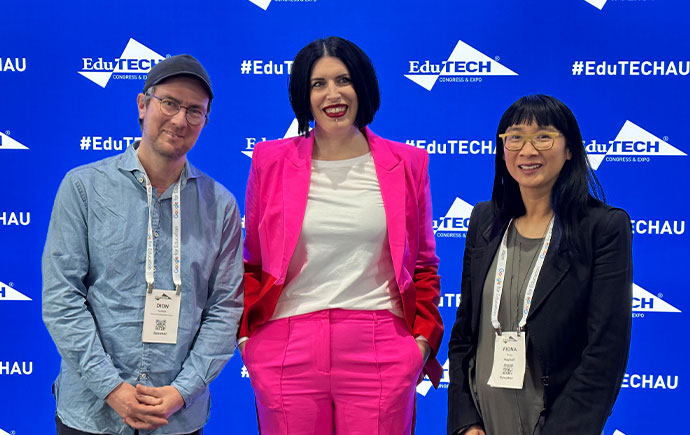
Their project, Making Space: Empowering Teacher Practice, was recognised for rethinking how educators and students interact with innovative learning environments (ILEs). Developed with Evelyn Scott P–10 in Canberra and Principal Jackie Vaughan, the project uses co-design to help teachers reflect on and reshape their learning spaces.
“Making Space is a participatory design process developed from doctoral research by Dion Tuckwell and Fiona Young. Co-created with Evelyn Scott School in Canberra and Principal Jackie Vaughan, the process empowers educators to understand and harness the potential of innovative learning environments,” wrote the Good Design Awards jury.
“This is a standout example of design excellence, demonstrating the power of collaboration, research-led practice, and meaningful impact in education.”
From classrooms to ecosystems
Tuckwell and Young’s collaboration began as part of an Australian Research Council (ARC) study led by the Learning Environments Applied Research Network (LEaRN) at the University of Melbourne. While the broader project focused on quantitative data, Tuckwell brought a design practice lens, creating participatory workshops that helped teachers reimagine their spaces.
“Traditional classrooms are becoming ecosystems,” said Tuckwell. “We were seeing how flexible, multi-modal, and tech-integrated environments disrupted old teaching models – but also opened up incredible new possibilities.”
“The Evelyn Scott School partnership was a chance to build on our Making Space research and turn our ideas into a practical, collaborative program for teacher learning—refining tools we’d developed during our PhDs into something that could make a real impact,” adds Young.
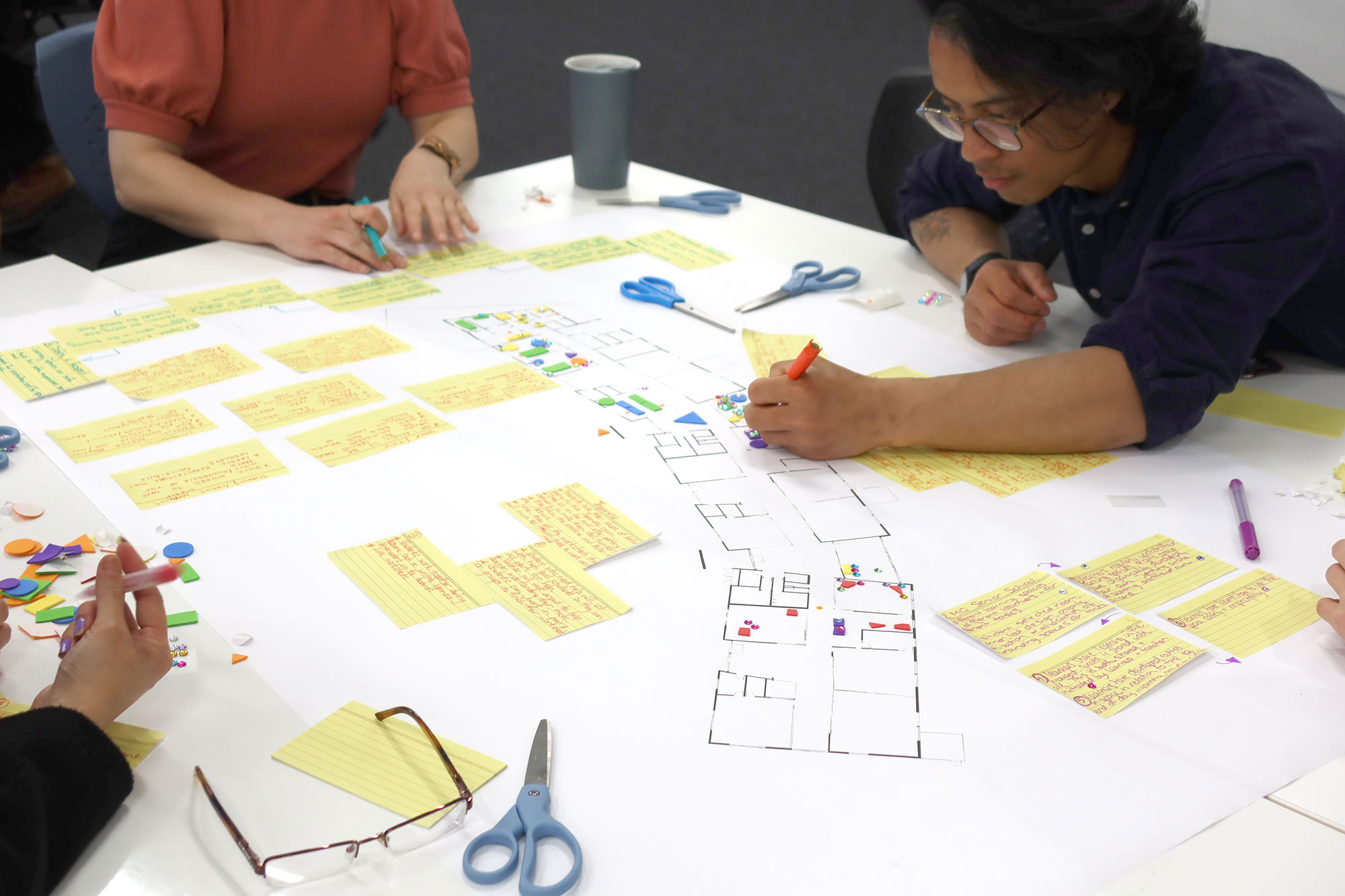
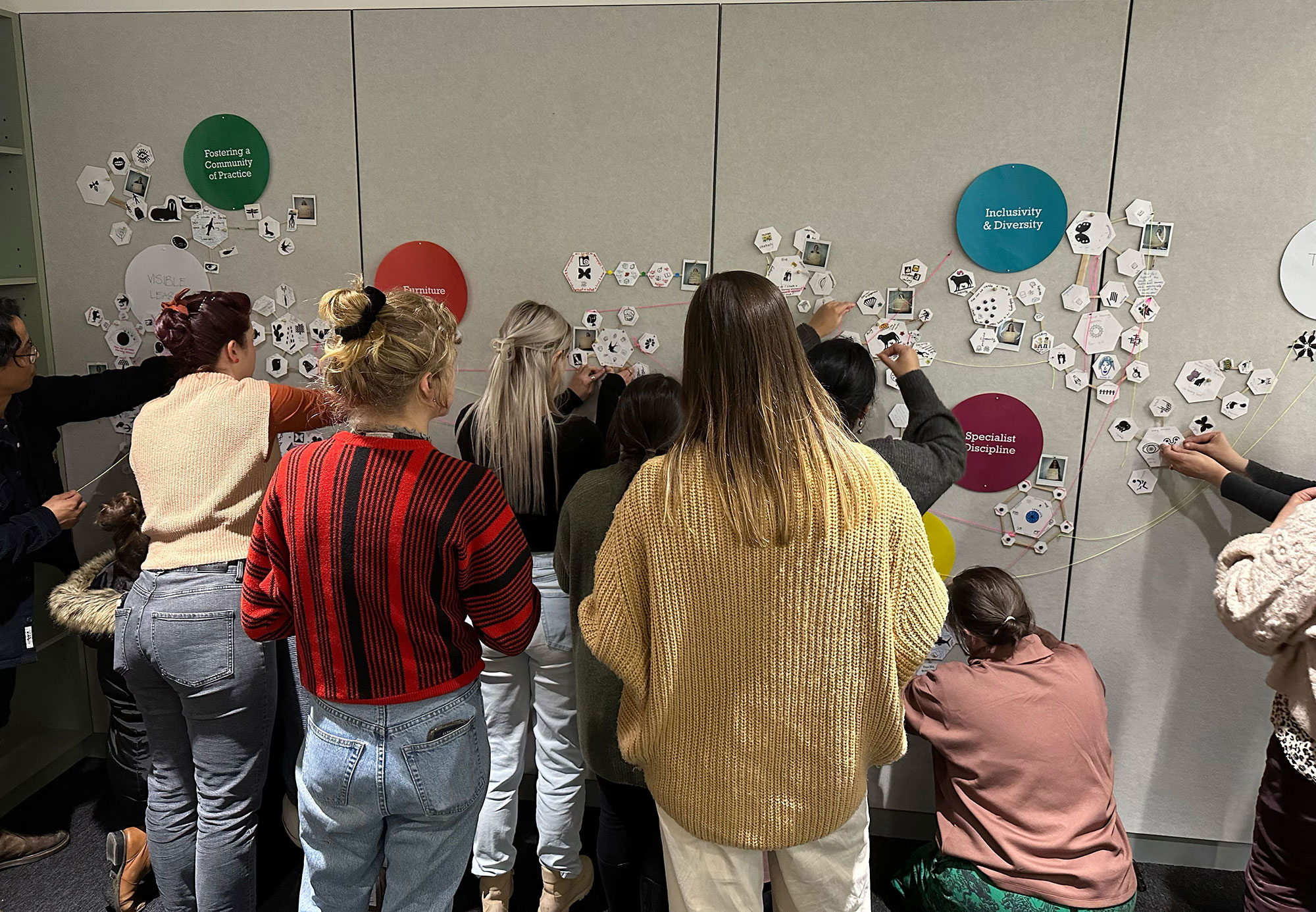
With support from Professor Lisa Grocott and in collaboration with Young, Tuckwell designed embodied, hands-on methods like visual framing and school-mapping workshops. These exercises helped teachers uncover new insights about how their environments shaped learning.
A social innovation rooted in practice
While much of the project’s early work focused on understanding teacher experiences, it soon became clear that the outcomes extended far beyond research.
“This is design – as social innovation,” said Tuckwell. “We’re improving relationships between teachers and their spaces, and ultimately with their students.”
Their work continues through the MakingSpace.cc platform, with ongoing partnerships like Evelyn Scott P–10.
“Teachers are starting to see the environment as a collaborator in their practice,” he added. “It’s not just about furniture or layout. It’s about giving students and teachers the tools to co-create their learning spaces.”
Principal Jackie Vaughan says “Partnering with Dr Dion Tuckwell and Dr Fiona Young over the past three years has empowered Evelyn Scott School staff to confidently facilitate student-led, contemporary learning, resulting in a transformative shift where students co-create and lead their own learning journeys.”
Especially for neurodivergent learners and those with diverse needs, shaping the learning environment has powerful benefits. Making Space encourages schools to move beyond one-size-fits-all education.
Beyond the studio: co-design for the real world
Unlike traditional top-down design, Tuckwell and Young’s work positions teachers as co-creators. This long-term, immersive approach is what makes it both effective and emotionally resonant.
“Co-design is about emotional labour. It’s not always easy,” said Tuckwell. “But it gives people – especially those most affected – the tools to discover their own practices and create change.”
The Good Design Awards jury praised the project’s potential to scale and its commitment to community-led innovation. Still, Tuckwell cautions:
“People ask us for a toolbox. There isn’t one. Every school is different.”
What anchors the work is a shared belief in the transformative power of design.
“Design can make a difference to the lives of professional teachers in ways I never expected,” explains Tuckwell.
“Architecture sets the scene for learning, but to fully realise the potential of innovative spaces, we must bridge the gap between design and use. Making Space uniquely builds teachers’ spatial literacy—empowering them to turn these environments into more equitable, engaging places for all learners,” adds Young.
Continuing the mission
The project has also received the Australian A4LE Award for Innovative New Initiatives and the international Kelly Tanner Award. With Young leading MADA research partner architecture_with, the team continues to collaborate with schools across Australia and beyond.
“I hope we can continue to scale this work so more schools can empower teachers to harness the potential of innovative learning spaces and create more equitable, engaging learning experiences for all,” says Young.
“Being acknowledged like this reaffirms the value of collaborative design in education,” said Tuckwell. “Winning this award motivates me to keep exploring how design can respond to the complex needs of today’s learners and educators.”