
Monash University Design alumni, students and staff recognised as finalists in the 2025 Victorian Premier’s Design Awards
Monash Art, Design and Architecture (MADA) is celebrating an outstanding sweep of finalist recognitions in the 2025 Victorian Premier’s Design Awards, with students, alumni and academic leaders honoured across multiple categories. Their projects, which span healthcare, education, public health, ageing, disability support and wellness, demonstrate the breadth of design innovation emerging from Monash and its deep commitment to socially responsible, human-centred practice.
Alumni finalists: Anja and Simeon
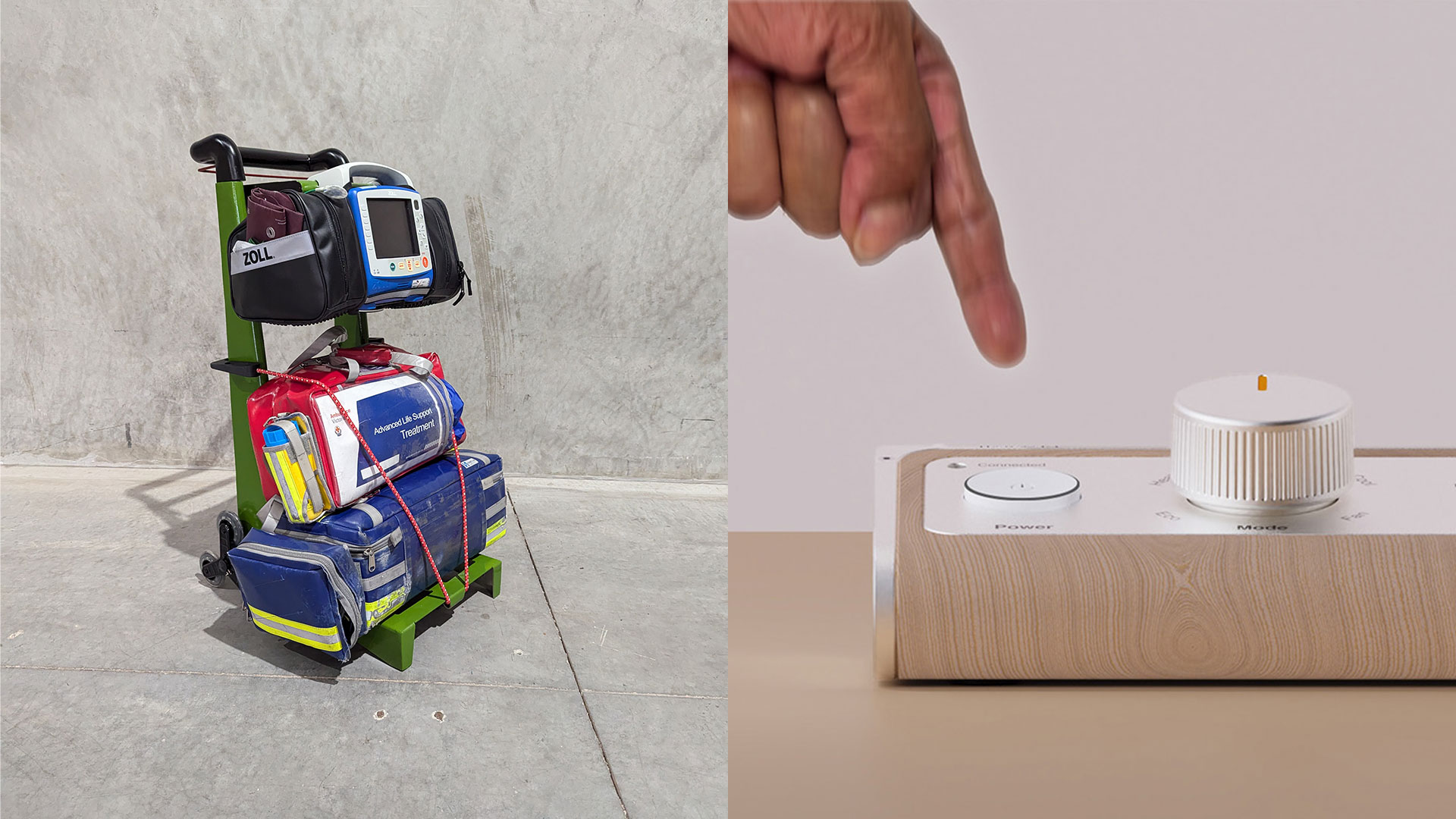
Among the finalists are Industrial Design alum Anja Johansen, whose Paramedic Equipment Trolley (P.E.T.) was developed with Ambulance Victoria to address high rates of strain and injury among paramedics. The lightweight, ergonomic trolley integrates a hydraulic lever, tri-wheels for stairs and adjustable handlebars, enabling responders to push rather than lift heavy loads. Built from recyclable aluminium and designed for repairability, the P.E.T. exemplifies circular thinking and safety-led innovation.
“Every feature came from paramedic feedback,” Johansen said. “I wanted to design something that genuinely makes their work safer and easier.”
Fellow Industrial Design alum Simeon Rubin was named a finalist for LEO, a smart home ecosystem created to support older adults to live independently. Through extensive co-design, Rubin developed a system of physical modules, a simplified digital interface and ongoing service support that feels intuitive rather than clinical. By adapting technology to users rather than the reverse, LEO tackles barriers to digital accessibility and social connection, demonstrating design’s power to support ageing in place.
“My goal was to create technology that feels personal, not clinical. A product that older users could see as part of their home, not something they have to learn to live with,” said Rubin. “LEO is about giving people independence and comfort through design.”
Student finalists: Sarah, Yash, Lucy and Yevan
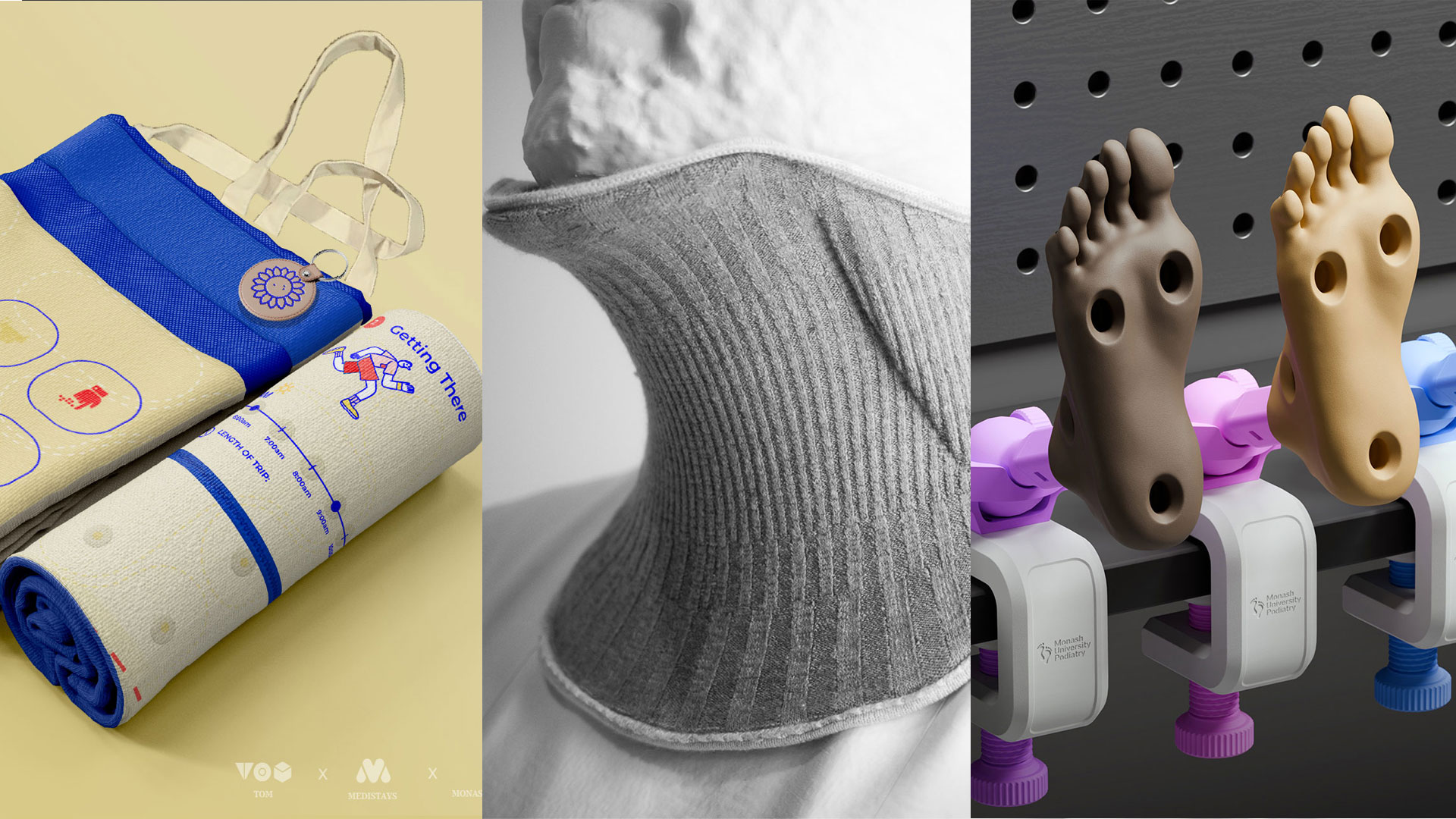
Current students were also strongly represented. Bachelor of Industrial Design student Sarah Al-Sarai, with Master of Architecture collaborators Ayoola Sholola and Zarmeena Taizai, were recognised for the Accessible Stay Book (ASB). Developed with MediStays, the ASB is a portable sensory-friendly travel planner for people with hidden disabilities. Combining a visual journey planner, reflection tools and a durable tote for essentials, the project helps foster confidence and autonomy for travellers who experience anxiety or communication barriers.
“The ASB gives people with disabilities confidence and independence to travel. It is rewarding to see how thoughtful design can make travel safer, more inclusive and more dignified,” Al-Sarai said.
MADA PhD candidate Yash Bohre, along with supervisors Dr Rowan Page and Purba Joshi, was named a finalist for the DIGNITY Collar, a bespoke support system for people living with Amyotrophic Lateral Sclerosis (ALS). Using modular textile construction and 3D-printed inserts, the collar adapts as symptoms progress, offering comfort, stability and a renewed sense of dignity. Its blend of digital fabrication and soft materials also supports local and repairable production in diverse healthcare contexts.
Bachelor of Communication Design student Lucy Corcoran was recognised for FLOJO, a joyful board game that reframes menstruation education for primary-aged students. Developed through research and consultation with health practitioners, FLOJO creates a playful and story-driven space where children can learn confidently about body literacy and wellbeing. By normalising early conversations about menstruation, Corcoran’s project uses design to create positive social change through play.
“I wanted to create something that informs and invites curiosity and confidence. Normalising these discussions early empowers children to approach their health with understanding, not shame” explained Corcoran.
Bachelor of Engineering/Bachelor of Industrial Design student Naruncheng Yevan Ye was shortlisted for The Podiatry EduKit, a lifelike 3D-printed training foot with replaceable inserts for practising real clinical procedures. Developed with the Monash Automation team and clinician Dr. Malia Ho, the EduKit enables students to safely hone skills such as callus removal and nail care before treating real patients. Designed for scalability and affordability, it expands access to realistic training tools and illustrates how thoughtful prototyping can improve patient outcomes.
MADA staff finalists
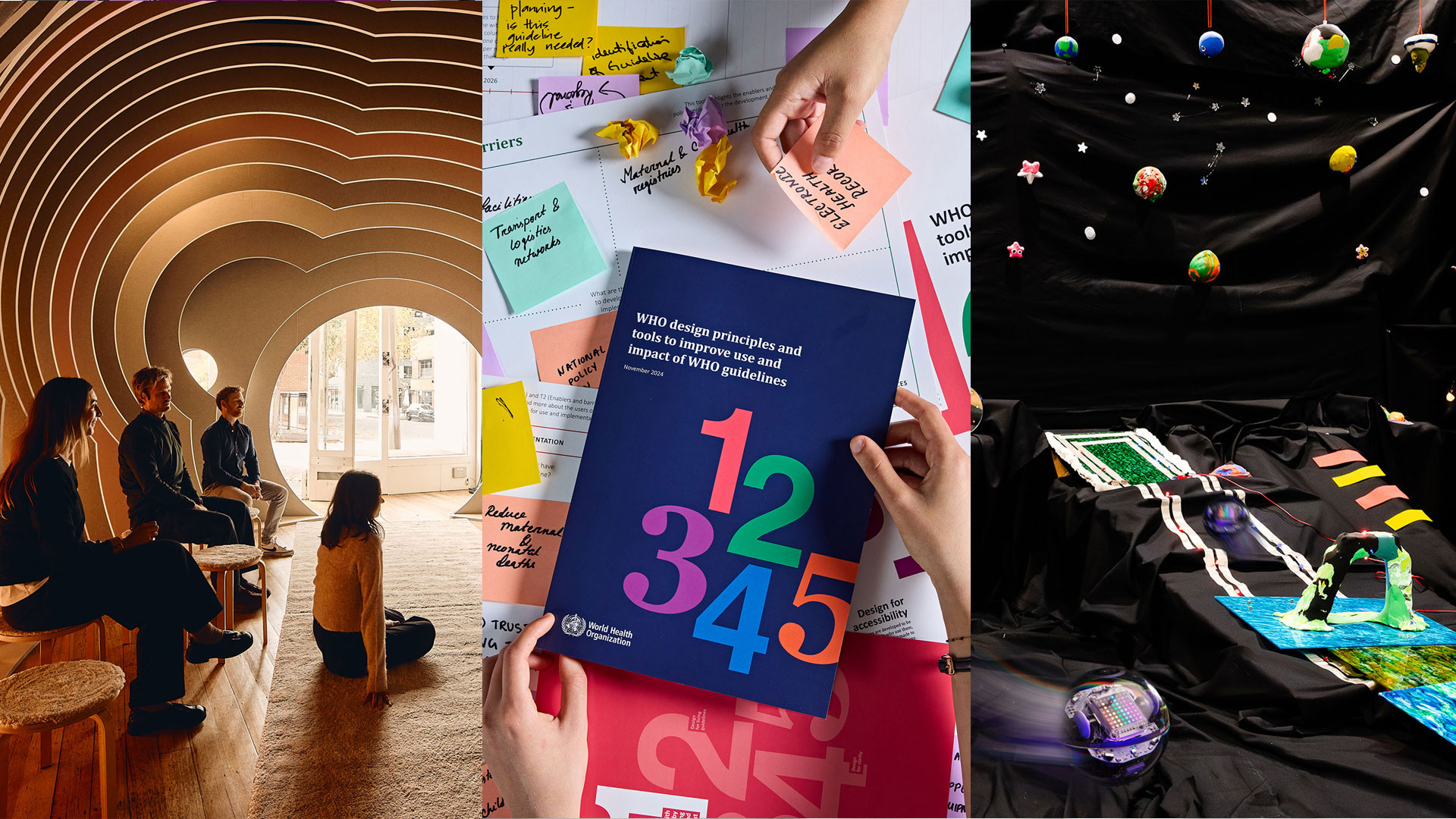
MADA academic staff were also strongly acknowledged this year. Architect, artist and founder at Studiobird, Associate Professor Matthew Bird was recognised for Quiet Studio (developed with Studiobird, Autex Acoustics and Universal Practice ). Quiet Studio is a sculptural acoustic sanctuary exhibited at NGV’s Melbourne Design Week 2025. The installation delivered measurable wellness outcomes, including a 90 percent reduction in reverberation, while using sustainable design approaches, and place-based listening principles informed by Indigenous ways of understanding Country.
Beyond its immediate impact, the project sets a precedent for how architecture can integrate sound, sustainability and wellbeing to foster human restoration in urban environments.
Associate Professor Matthew Bird said:
“Quiet Studio demonstrates how evidence-based, sustainable design can make a measurable difference to how people feel and interact with their surroundings. I hope this recognition inspires broader investment in design that promotes calm, connection, and respect for place.”
A major collaborative achievement led by Associate Professor Leah Heiss and Dr Myra Thiessen, together with MADA designers Dr Troy Mcgee, Professor Gene Bawden, Dr Amy Killen, Hatoun Ibrahim and Adjunct Associate Professor Olga Kokshagina, were also named finalists. The WHO Design Principles and Tools to Improve Use and Impact of WHO Guidelines is a landmark initiative co-created with the Science Division of the World Health Organization (WHO). Over two and a half years, the Monash team worked with stakeholders across 15 countries to produce practical resources. By embedding design thinking in the guideline process, the resource addresses long-standing barriers to improve the clarity, usability and global uptake of WHO health guidance. The tools are already influencing key WHO programs in hygiene and reproductive health.
Associate Professor Leah Heiss said:
“This recognition highlights the power of collaborative design to tackle complex global challenges. The project shows how design can strengthen systems and support WHO teams to make health guidance clearer, more accessible, and more impactful for communities worldwide.”
MADA’s influence also extended across faculties through Co-Creating Space:Transforming Paediatric Hospital Play Through Interactive HCI Technologies, a finalist project led by Dr Kirsten Ellis with MADA alum Jacqueline Johnstone and Dr Troy McGee, IT researchers and the Starlight Children’s Foundation. Reimagining the Starlight Express Room at Monash Children’s Hospital as an interactive, screen-free environment that children help design, the project is now informing future rooms nationwide and demonstrating the impact of inclusive design on wellbeing and creativity.
Taken together, these Monash finalists reflect a shared ethos across MADA: design rooted in empathy, inclusion and real-world impact.
Professor Gene Bawden said:
“Our students, alumni and staff are defining a new design literacy for the future, grounded in environmental stewardship, human values and interdisciplinary collaboration.” The breadth of recognition across the 2025 Victorian Premier’s Design Awards underscores MADA’s leadership in shaping design that improves lives locally, nationally and globally.”