
About MERRC
"Improving outcomes and quality of life after brain injury and trauma"
-

-
Established in 2000, the Monash Epworth Rehabilitation Research Centre (MERRC) is tracking over 3500 people with traumatic brain injury over 30 years, documenting recovery and long-term outcomes.
The ultimate aim is to identify risk factors and address problems though intervention studies. MERRC has had longstanding funding support for this and other studies from the Transport Accident Commission. As a key research centre within Epworth, MERRC oversees the conduct of clinical trials to enhance evidence-based practice at Epworth and ultimately Australia-wide and internationally.
MERRC has a number of research streams, including
- Moderate to Severe TBI, led by A/Prof Adam McKay
- Stroke and Telehealth, led by A/Prof Rene Stolwyk
- Concussion, led by A/Prof Catherine Willmott
- Precision Neurorehabilitation, led by Dr Gershon Spitz
- Multidisciplinary Rehabilitation, led by Dr Pamala Ross
- Co-Design and Clinical Translation, led by Dr Kate Gould
- Paediatric TBI, led by Dr Michael Takagi
- Trauma Research, led by Prof Jennie Ponsford
Our people
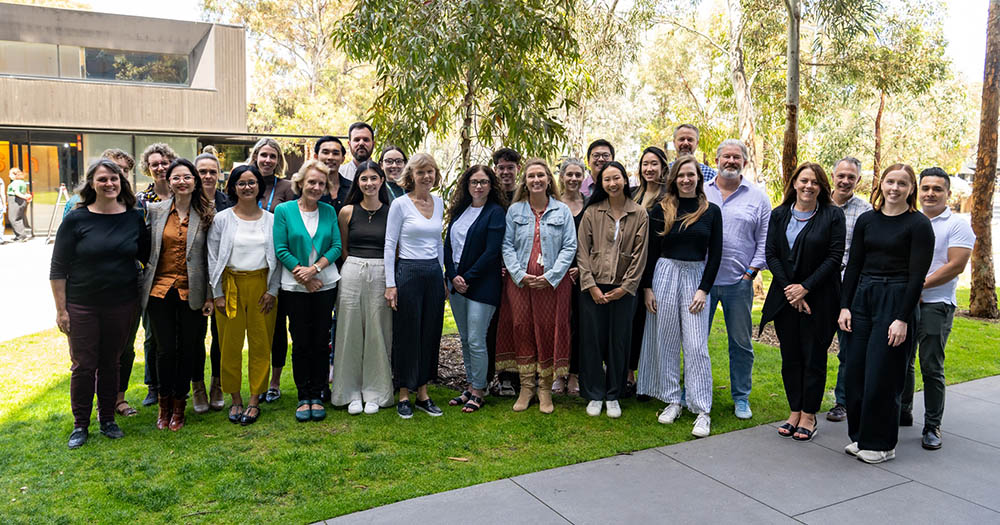
Over 35 psychologists, and multi-disciplinary clinicians and researchers are employed by or associated with the centre and form a dynamic multi-disciplinary research team, in addition to a large group of doctoral and honours students.
Visit the MERRC Our people page to find out more.
Outcomes research
Outcome after moderate and severe traumatic brain injury has been examined in considerable breadth, in terms of psychosocial functioning, employment, cognition, coping, pain, psychiatric health, sexual functioning, and family relationships. The impact of genetic factors, age and other demographic factors on outcome is a focus of study, including cultural influences upon outcome. Our outcome data has highlighted the high frequency of anxiety, depression, fatigue, pain and alcohol use and identified some factors associated with these problems, including coping style, which in turn has sparked further inquiry into psychiatric outcome for survivors of TBI, and psychological factors which affect functional outcome. Outcome studies after mild TBI have highlighted the trajectories of recovery of post-concussional symptoms and the multifaceted nature and causes of persistent post-concussional symptoms, which are now underpinning the development of treatments. The addition of the Translational Neuroscience theme has particularly strengthened the depth of biological research, including employment of advanced imaging technologies through collaboration with the international Enigma Consortium and Alfred Neurosciences group, as well as genetic studies, which can in turn be informed by and translated into clinical practice.
Treatment trials
Developing effective management protocols have been a major focus of the work of the Centre, including management of patients in post-traumatic amnesia, rehabilitation of cognitive and behavioural dysfunction, and development and evaluation of community-based models of rehabilitation. Based on the outcome studies, treatments have been developed and are being evaluated in world-first controlled trials focusing on anxiety and depression, fatigue and sleep disturbance, attention, memory and executive function, challenging behaviour, return to work and delivery of therapy to patients in post-traumatic amnesia. These treatment trials have expanded to provide treatment for stroke patients in the domains of fatigue and sleep disturbance as well as memory problems, and depression with Dr Rene Stolwyk, Dr Dana Wong and Dr Adam McKay leading this work. Telehealth interventions are also being evaluated. Dr Catherine Willmott has expanded the Centre's work on concussion in partnership with the NHMRC and AFL, where she is now Head of Concussion Innovation and Research. Her group is evaluating, biomarkers as predictors of outcome after mild TBI, the use of accelerometers to assess head impact in football, the use of soft headgear for protection of footballers and the efficacy of a multi-disciplinary therapeutic intervention for persistent post-concussional symptoms. The information booklets produced in earlier mild TBI outcomes studies led by Jennie Ponsford and Cathy Willmott (see Resources) have been requested by over 100 different clinical and research bodies worldwide and translated into several languages and used in a recent cluster randomised trial to improve Emergency Department management of mild TBI.
Community engagement
In all its endeavours, MERRC and the Brain injury and Rehabilitation Theme has embodied the philosophy of the Turner Institute for Brain and Mental Health to deliver care that has an impact on the community of individuals with disorders of brain and mental health. Consistent with the fact that most of its researchers are trained clinicians, and with the goals of the Turner Institute, MERRC has substantial engagement with community organisations through Brain Injury Australia and direct involvement of consumers in the co-design and implementation of its research projects, especially the TAC funded Early Intervention for Return to Work trial led by Pamela Ross and the CYBERABILITY study led by Kate Gould. Cathy Willmott has taken up a role as Head of Concussion innovation and Research at the Australian Football League, which strengthens MERRC’s association with that sector in conducting concussion research. Of particular importance since the COVID pandemic, Rene Stolwyk has led research validating the use of telehealth approaches to neuropsychological assessment, establishing a Turner Telehealth Neuropsychology clinic servicing several Victorian health regions in collaboration with the Department of Health and Human Services Stroke Clinical Network, leading worldwide training workshops and developing telehealth guidelines for neuropsychological assessment. MERRC has also evaluated the validity of telehealth delivery of numerous clinical interventions for individuals with brain injury.
Translation
One of MERRC’s great strengths as a centre lies in the dissemination and implementation of its clinical research. MERRC clinicians have published two therapy manuals, with two more underway, conducted workshops and provided supervision to clinicians and students, the efficacy of which has in turn been evaluated and published (e.g., Wong, McKay, Ponsford et al., 2020). The NET trial evaluated implementation of mild TBI screening protocols developed by our team in Emergency Departments Australia-wide, with an accompanying economic evaluation by Duncan Mortimer (Bosch et al., 2019; Mortimer et al., 2018). A Positive Behaviour Support clinic was recently established at the Turner Clinic, to provide direct client services, and develop a website and other training materials to provide training and supervision to clinicians and students. A/Prof Rene Stolwyk is contributing to stroke policy and guidelines through the Stroke Foundation as well as the telehealth neuropsychology guidelines, while Prof Jennie Ponsford has co-led the development and revision of the INCOG guidelines for cognitive rehabilitation after TBI, the development of guidelines for management of mild TBI and for the pharmacological management of neurobehavioural problems after TBI.
See our Research Studies for more information on individual projects.
Collaborations
Within Australia, MERRC has strong collaborations with most other research groups in the Turner Institute, and with the Victorian DHHS Stroke Clinical Network, Monash and Austin Health, the Florey, the University of Melbourne, Connectivity TBI, Better Care Victoria, the Transport Accident Commission, LiVE Tasmania, the eSafety Commission, the National Centre for Healthy Ageing, NHMRC Aphasia Centre of Research Excellence, the Alfred Neurosciences group, the Victorian State Trauma Registry, the National Trauma Research Institute, the Monash Alfred Injury Network, RAILS, Epworth Healthcare and the Australian Football League.
MERRC also has extensive international collaborations, with groups in Norway with Prof Marianne Lovstadt, Sunnaas Rehabilitation Hospital, on vocational intervention; and Dr Alex Olsen, on imaging studies; in the Netherlands with Prof Caroline Van Heugten, Univ of Maastricht, who visited MERRC on sabattical in 2019-2020, on studies of fear avoidance after TBI and physical activity and sleep after TBI; in the UK with Nele Demevere, from Oxford Univ on stroke assessment studies; in Canada with Prof Mark Bayley from Univ of Toronto on the INCOG Guidelines study; and the United States, with Profs Cindy Harrison Felix from Craig Hospital in Denver, John Corrigan from Ohio State University and Kristen Dams-O’Connor from Mt Sinai Medical Center in New York in international comparative TBI outcome studies; with Profs Mark Sherer and Angelle Sander from Univ of Texas on studies of outcome predictors and health literacy in individuals with TBI, with A/Prof Steven Lockley from Harvard University on the light therapy study, with A/Prof Tim Feeney from Belvedere and Mill School, New York and Melissa Capo, St Rose College, New York, who have provided clinical leadership on the Positive Behaviour Support intervention, with Prof John Leddy from Univ of Buffalo on concussion treatment studies and with the worldwide Enigma TBI Imaging consortium.
See our Research Studies for more information on individual projects.