
Support us
Mental ill-health is one of the greatest challenges of our time, destroying and taking lives at a higher rate than almost any other affliction. Yet there has been little innovation in psychiatric treatments for over 50 years, and available drug and talk therapies don’t work well for most people suffering with a mental illness. We desperately need better treatments, at scale, and psychedelic therapies have emerged as one of the most promising breakthroughs in decades.
While there is reason for hope, the future of psychedelic therapies still hangs in the balance. To fulfil their potential we need to address many consequential challenges, including patient suitability, sustained outcomes, best practice care, therapist training, and increased access and affordability.
To address key challenges and opportunities within this emerging area of mental healthcare, we envision establishing a centre of excellence in psychedelic therapies at Monash University: a dynamic, multidisciplinary, and outcome-oriented centre, working at the forefront of clinical research, education, and implementation.
Join us, and help establish a centre of excellence that will deliver:
- Groundbreaking Science: high-quality evidence and know-how that can inform who we treat, how we treat, and who reimburses the treatment.
- Next-generation Training: programs that provide comprehensive skills, ongoing professional development, and mentorship for psychedelic clinicians and researchers, serving the community and equipping future leaders in the field.
- Real-world Impact: evidence-informed standards, thought leadership, and public education, informing policy and reimbursement, and supporting institutional partnerships.
Expanding on our nation-leading track record and multidisciplinary capabilities, the proposed centre would dramatically expand our work and its reach. By supporting the establishment of a centre, you will empower our multidisciplinary experts to direct their efforts to the high impact research and development work that will most serve the community.
Because there has never been a greater need, nor a greater opportunity, to make a positive impact on the mental health of our community.
Ways to support
If you are considering making a transformational gift to accelerate clinical psychedelic research and would like to discuss further, please contact the Lab directly, or: Amber Skehan |
|---|
To make a one-off gift to advance leading-edge psychedelic research and training, click below and select “Psychedelic Research Donations”. |
Future projects
For psychedelic therapies to fulfil their potential, we need to address many consequential challenges. While not a comprehensive list of the proposed activities within the centre, here are some of our flagship projects under development.
Click to expand each project below.
 The one-size-fits-all approach to psychedelic dosing, and the standard requirement to discontinue medications prior to psychedelics, fails many individuals, and substantially increases burdens and risks. Instead, this study focuses on long-term safety and effectiveness of personalised dosing using both psilocybin and MDMA at different times, alongside psychotherapy. This trial will vary drug, dose, number, and timing of dosing sessions for people who are taking or not taking psychotropic medications through the use of graded treatment algorithms, relapse prevention strategies, and dose titration. Through this, we aim to establish a more effective, customised treatment approach that can support sustained remission in a higher proportion of patients, and improve safety and accessibility. Beyond the data from this study, a systematised data-driven treatment algorithm will be generated for clinical implementation.
 This project targets a major cause of mental health issues: early exposure to severe conflict and instability in the home. Despite the crucial role of parental relationships in the mental, physical, and behavioural conditions in the family unit, current treatments for couples are severely lacking, and no drug-assisted therapies exist. We aim to enhance relationship satisfaction, reduce conflict, and improve mental health within families through MDMA-assisted couples therapy, offering an innovative solution with substantial potential for positive social impact.
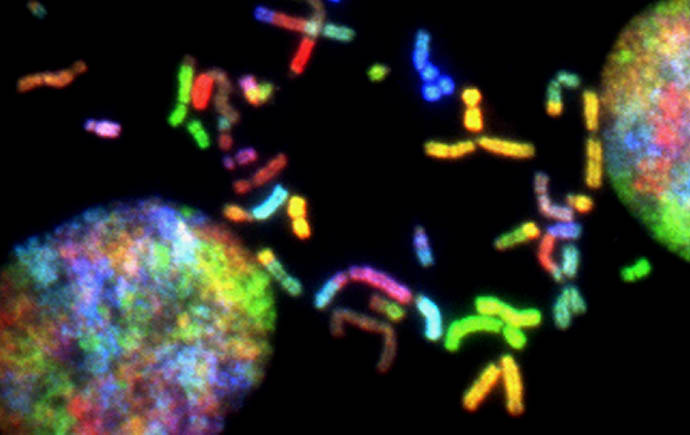 Certain individuals may not respond to standard psychedelic therapies and may require different dose levels to achieve the same effects. To enhance the efficiencies of psychedelic therapies, it is important to identify predictors of treatment success. By analysing genetic, microbiomic, cell biomarker, neurobiological, demographic, personality, and a range of other predictors, we seek to determine the non-responder profile, and tailor dosing to improve the probability of success. This study aims to minimise harms, burdens, and costs for individuals and payers, and improve outcomes for those who would otherwise show suboptimal response.
 Recognizing the high demand for extended care following post-psychedelic therapy, we aim to establish a clinically-moderated peer support forum and app. Peer-support forums outside of psychedelic therapies have been shown to be useful for maintaining treatment benefits. By connecting with others who have undergone psychedelic treatments, and with psychedelic therapists who can provide basic minimal support, this platform will support participants to maintain and build on the positive changes derived through psychedelic therapy. Additionally, we intend to utilise the platform to assess the factors that contribute to enduring benefits following psychedelic treatments, contributing to approaches to treatment that can deliver high rates of remission in the longer term.
 Safe, effective, and accessible psychedelic treatments may depend most of all on the competence, care, and availability of psychedelic clinicians. Building on our track record in delivering multiple therapist trainings and clinical supervision for teams, we aim to develop a set of Monash-accredited courses in psychedelic science and therapies, alongside clinical placements, and global network of experienced psychedelic supervisors who can support trials and clinics.
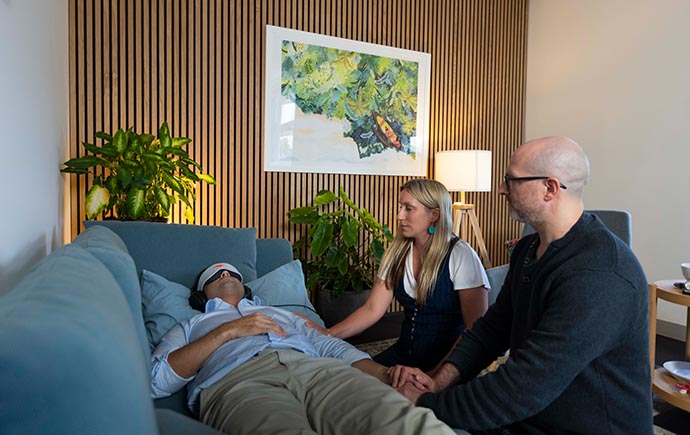 The majority of patients and therapists believe that a clinician’s ability to be a competent and trustworthy psychedelic ‘guide’ will depend in part on whether they have ‘travelled’ to, and learned how to ‘navigate’ within, the utterly unfamiliar and ineffable ‘psychedelic landscapes’. Our world-first study assessing the value of psilocybin-assisted therapist training adds support to this view. While commonplace during the first wave of psychedelic therapy, and something most patients want in their therapists, there are very few opportunities for psychedelic-assisted therapist training, and very little know about the benefits, risks, and method of use. We aim to both provide this opportunity using both psilocybin and MDMA, and rigorously assess it within our developing psychedelic therapist competency framework.
 While there is a growing set of practices and manuals associated with different clinical psychedelic research programs – many of them influenced by psychedelic research in the 50s, 60s and 70s, by earlier indigenous practices, and by third-wave psychotherapy – there is a need for comprehensive, pluralistic, and contemporary standards of psychedelic dosing, psychedelic psychotherapy, therapist and prescriber training, physical spaces, and aftercare. Building on the work of our lab and that of our international colleagues, we aim to establish expert and lived-experience committees to develop, refine, communicate, and assess standards.
 Studies suggest that combining psychedelic-assisted therapy and meditation practices can enhance the beneficial effects of both interventions. This study will investigate how different meditation techniques, when combined with psilocybin dosing, impact its therapeutic effects to optimise mental health treatment outcomes.
 This study aims to bridge the knowledge gap in understanding how psychotherapy influences psychedelic therapy outcomes. We plan to conduct a psilocybin trial to examine the impact of varying the amount and intensity of psychotherapy. With four conditions that each emphasise distinct leading candidates for best-practice in psychedelic psychotherapy, our goal is to optimise the balance between psychotherapy's benefits, cost, and complexity, thereby improving the effectiveness and affordability of psychedelic therapies.
 Research suggests that psychedelics can significantly boost motivation to address problematic behaviours, like leading to quitting smoking, increased exercise participation, and improved social connections. This study proposes to integrate a brief psychedelic intervention with established Lifestyle Medicine frameworks to examine the potential amplification of long-term lifestyle changes and mental health improvement. By embracing a holistic perspective, we aspire to pioneer an integrated approach to fostering mental and physical well-being. Our goal is to establish a holistic approach to mental and physical well-being.
 The combination of performance pressures, overtraining, interpersonal conflict, injury, and premature retirement often leads to poorer mental health outcomes among athletes compared to the general population. To address the unique mental health challenges faced by elite athletes, this study will investigate the potential of psilocybin-assisted therapy that has been specifically developed for this population. We also aim to evaluate the impact of psilocybin on athletic performance to provide valuable insights into the ongoing debate about psychedelics in sports doping regulations.