
Teaching
Undergraduate
View

Bachelor of Medical Science and Doctor of Medicine (BMedSc/MD)
The Department of Surgery is heavily involved in teaching the BMedSc/MD course at Monash University.
Studying with us means hands-on experience from Year 3 of your degree:
- Year 3 - Integrated Medicine and Surgery teaching at all School of Clinical Sciences sites. Active surgical involvement occurs in problem-based learning (patient and paper based), clinical skills teaching and theme based teaching. There is particular emphasis on outpatient, bedside and operating theatre teaching.
- Year 5 - Most surgical specialties are involved in the provision of core surgical, specialty or elective placements for students in Year 5. There is also an Anatomy/Surgery option which allows the study of a region or specialty in greater detail. Members of the Department have been involved in revision of the Year 5 modules with a surgical theme.
Find out more about the Bachelor of Medical Science and Doctor of Medicine (BMedSc/MD).
Bachelor of Medical Science Honours - BMedSc(Hons)
Outstanding research training opportunities are available in the Department of Surgery for BMedSc(Hons) students. Projects are available in all surgery specialties.
Find out more about the Bachelor of Medical Science Honours (BMedSc (Hons)) or contact us for more information.
Postgraduate
View
The Department of Surgery is the focus for postgraduate surgical training with surgical teaching, skills training and regular audit meetings. Members of the Department participate in surgical and clinical anatomy teaching for postgraduates
The Marshall Prize in Surgical Training
Established in 2002, the Marshall Prize in Surgical Training is to encourage surgical trainees within Monash Health to pursue basic or clinical investigative projects. The prize recognizes the contribution of the Marshall brothers Robert, Vernon and Donald to surgical training at Prince Henry's Hospital and Monash Medical Centre. A symposium based on submitted abstracts is conducted in mid-December each year.
Find out more about the prize and submit your entry now.
Skills Surgical Simulation Laboratory
A basic and advanced skills and surgical simulation laboratory has been recently established at Monash Health to cater for both undergraduates and postgraduate surgical trainees. To date particular emphasis has been placed upon basic surgical principles, laparoscopic surgery and orthopaedic surgery. It is planned to broaden the scope of the facility to surgical simulation in the near future.
Professorial Surgical Rounds
These hour long meetings are held on a weekly basis (Wednesday's at 5.30pm) with presentations from all surgical units within Monash Health as well as from a broad range of guest speakers. The first half of the year focuses on HMO/Basic Surgical Trainee education. Each unit presents on common conditions, procedures and post-operative complications encountered in that speciality. An introduction to possible research projects available within that unit is also provided. The second half of the year is devoted to surgical audit and the presentation of topics of interest by each Monash Health surgical unit.
Prizes
View
-
The Marshall Prize in Surgical Training, in conjunction with the Faculty of Medicine, Nursing and Health Sciences, Monash University, was established to encourage surgical trainees within Monash Health to pursue basic or clinical investigative projects.
Previous winners
- 2024 Dr Tran Ngoc An Huynh
- 2023 Dr Yen Kylie Lim
- 2022 Dr Assia Comella
- 2021 Dr Asiri Arachchi
- 2020 Dr Fiona Pavan
- 2019 Dr Julie Flynn
- 2018 Dr Damir Ljuhar
- 2017 Dr Jeremy Wiseman
- 2016 Dr Jasmina Kevric
- 2015 Mr Mithra Sritharan
- 2014 Dr Richard Woodford
- 2013 Paul Stimpson
- 2012 Naseem Mirbagheri
- 2011 Sameh Farah
- 2010 Tony De Sousa
- 2009 Brendan Thomas
- 2008 Chilton Chong
- 2007 Amal Abou-Hamden
- 2006 Saifulla Syed
- 2005 Sarah Olson
- 2004 Daniel Moon
- 2003 Naveen Somia
- 2002 Abraham Stephanopoulos
History
In 2002 the Marshall Prize in Surgical Training was established to encourage surgical trainees within Monash Health to pursue basic or clinical investigative projects. The Marshall Prize for Surgery was named after Emeritus Professor Vernon Charles Marshall and his brothers the late Robert and Donald to recognise their contribution to Surgery. This is a unique situation in Australia where all three surgeons and bothers worked at Prince Henry's Hospital at the same time from 1975. Vernon Marshall was head of Monash University Department of Surgery and General Surgery; Donald Marshall was Head of Plastic Surgery and Robert Marshall was Head of Gastrointestinal Surgery.
Call for Abstracts
Eligible trainees are invited to submit an abstract summarizing the project including the following components - introduction, aims, methods, results and conclusions. The abstract must not exceed 250 words on a single sheet of A4 paper.
Applications should be submitted electronically to: Professor Julian Smith, julian.smith@monash.edu and a signed copy delivered to: Mrs. Mira Petruzalek, Department of Surgery (MMC), Level 5 E Block, Monash Medical Centre, 246 Clayton Road, Clayton, Vic 3168.
Up to six finalists will be selected on the basis of their abstract submission and invited to present the results of their project at the Marshall prize Symposium as part of the Professorial Surgical Rounds Program.
The venue and time of the Marshall Prize Symposium will be notified in due course.
The format of the symposium paper will be a 10-minute verbal presentation of the project followed by 5 minutes of discussion.
The winner will be decided by a panel of adjudicators, some of which will be invited from outside Monash Health. Points will be allocated based on criteria such as originality of hypothesis, project planning and design, study methods, data analysis, conclusions, abstract content, quality of presentation and discussion.
The winning trainee will receive a cash prize and his/her name will be placed on an honour board to be located within the Department of Surgery.
-
The Prince Henry's Prize in surgery is awarded to a final year student who has spent time within the School of Clinical Science in Years 3 or 5 who achieves the highest aggregate mark in `Surgery' as determined by the results of the Year 5 Clinical Knowledge Test and a viva-voce exam held in the Department. A cash prize is awarded to the winner.
Previous winners
- 2024 Ms Isobel Nicholls
- 2023 Ms Monique Wisnewski
- 2022 Ms Dinali Panagodage
- 2021 Mr Hugo G Winter
- 2020 Mr Wei Herng Wan
- 2019 Ms Chelsea Matley
- 2018 Ms Ruby Cleeland
- 2017 Ms Anthea O’Neill
- 2016 Mr Benjamin Chosich
- 2015 Ms Diva Baggio
- 2014 Mr Harsh Dubey
- 2013 Benjamin Poh
- 2012 Alexander Handrinos
- 2011 Paul Amailuk
- 2010 Greta Lindenmayer
- 2009 Dinesh Mahendran
- 2008 Jin Jie Cheah
- 2007 Claire Owen
- 2006 Felicity Dukes
-
For Monash University medical students
The Singh Family, in conjunction with the Faculty of Medicine, Nursing and Health Sciences, Monash University, present the Digvijay Singh Kohli Prize to a medical student, for the best essay on the developments in inflammatory bowel disease management. The Digvijay Singh Kohli surgery prize winner will receive $500.
Previous winners
- 2009 Osama Elsewaisy
- 2008 Rahul Chakrabarti
Application process
The essay should address the broad scope of inflammatory bowel disease management and not merely focus on a single specific therapeutic modality.
The suggested essay length is 2000 words with a strict upper limit of 2,500 words.
Applications should be submitted electronically to: julian.smith@monash.edu and a signed copy delivered to: Ms. Mira Petruzalek, Department of Surgery (MMC), Level 5 E Block, Monash Medical Centre, 246 Clayton Road, Clayton, Vic 3168.
Medical students in Year 3, 4, 5 of the undergraduate program in Australia are eligible to apply. Work produced from a Bachelor of Medical Science degree is not eligible. Previous winners are not eligible to re-apply. Applicants should sign and submit a plagiarism disclaimer with their essay.
Judging will be done by a panel of members of the Department of Surgery (MMC), of the School of Clinical Sciences or of the Faculty of Medicine, Nursing and Health Sciences where appropriate using the following criteria: originality, coherence, integration of clinical experience with learning, and extent of application of research or evidence-based methodologies.
Student profiles
View
Find out about some of the Department of Surgery student experiences and pathways from their profiles below.
Katharine Geyle | Claire Stanley
Katharine Geyle
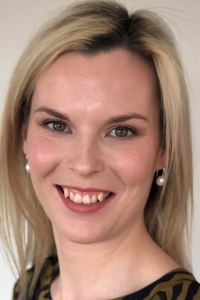
Project Title: An investigation of inflammation in voice disorders
Supervisors: A/Prof Debra Phyland (Main Supervisor) and Prof Julian Smith (Associate Supervisor)
Experience in the Department: I am a speech pathologist with a special interest in laryngology. I'm currently undertaking a PhD within the Department of Surgery that aims to investigate the relationship between vocal fold inflammation and voice disorders.
Vocal fold inflammation is commonly reported as a significant and sentinel clinical finding on videostroboscopy for people with voice disorders. However, it is unclear whether this finding relates to genesis and continuation of dysphonia. Although it is broadly accepted that vocal fold inflammation can arise from a number of aetiologies (laryngopharyngeal reflux being the most well-known), the reporting of this finding is historically subjective. There is an apparent need to improve the evaluation and measurement of vocal fold inflammation in order to test its relevance to dysphonia and to its potential role in the development of laryngeal pathologies.
My research aims to investigate the physiologic characteristics, measurement and significance of vocal fold inflammation, with typical patterns of vocal dysfunction, associated psychosocial profiles and the impact on patient's activity and participation limitations to inform clinical diagnoses and management planning into the future. This is particularly important because chronic vocal fold inflammation can lead to vocal fold tissue changes (fibrosis) that may be irreversible and potentially render the individual markedly dysphonic long term.
Claire Stanley
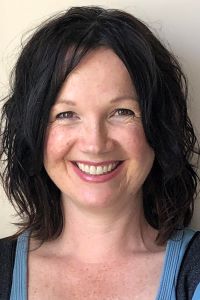
Project Title: The reliability and competence of Australian speech pathologists in evaluating swallowing function related to structural abnormalities on videofluoroscopy swallowing studies
Supervisors: A/Prof Debra Phyland (Monash) and A/Prof Anna Miles (Auckland University)
Experience in the Department: I have recently transferred over to the PhD program from a Masters of Philosophy. My research involves evaluating Speech Pathologists and their ability to evaluate structural abnormalities in the pharynx on videofluoroscopy, the impact the abnormalities have on swallowing function, and the recommendations for management. I have worked at Monash Health within the Department of Otolaryngology, which sits in the Monash Health Department of Surgery for over 10 years. My specialties include instrumental swallowing and laryngeal evaluations using videofluoroscopy, Flexible Endoscopic Evaluation of Swallowing (FEES) and Videostroboscopy. I hope to be able to use my PhD to improve the evaluation of structural abnormalities and their impact of swallowing function to improve the swallowing safety of patients.
Liam Chaplin
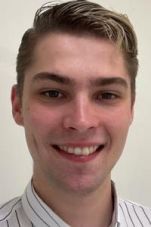
Project Title: The Outcomes for Bioprosthetic Tissue Valves and the Occurrence of Subclinical Leaflet Thrombosis
Supervisors: A/Prof Andrew Cochrane AM and Prof Julian Smith
Experience in the Department: My honours project is focused on identifying the prevalence and risk factors associated with a pathology known as subclinical leaflet thrombosis in surgical aortic bioprostheses.
Subclinical leaflet thrombosis describes the process of localised clot formation on the leaflets of a replacement heart valve, in the absence of noticeable symptoms. The pathology usually occurs within the early post-operative stages.
Previously, it was thought to have only occurred in metallic valve replacements, however, recent studies have made it clear that tissue valve implants are also at risk of these clots forming.
The issue is that we don't know the exact frequency, and the potential patient risk factors that may influence whether some patients are more susceptible than others requires further investigation.
I have chosen to do my B.Sc honours in the field of cardiac surgery, as I have seen first-hand what patient recovery following life-saving surgical intervention is like, with my father having undergone bypass surgery when I was 16. I see cardiac surgery as an immensely challenging yet rewarding field of medicine that I would like to pursue in the future.
Nicole Free | Dr Michael P Chae | Dr Jahan Penny-Dimri
Nicole Free
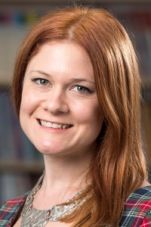
Project Title: The impact of vocal load and voice exercise in speakers with benign vocal fold lesions
Supervisors: A/Prof Debra Phyland
Experience in the Department: Benign vocal fold lesions form on vocal folds in response to trauma, and are typically attributed to phonotraumatic voice use. They have the potential to significantly impact a person's ability to use their voice and subsequently their social functioning, employment, and emotional wellbeing. My research explores the potential for these lesions and a speaker's voice characteristics to change across time and in response to vocal load and targeted voice exercises.
Prior to commencing my PhD in the Department of Surgery, I worked as a Speech Pathologist in acute medical and outpatient laryngology settings. I had been involved in clinical research but was looking to formalise my research training through a PhD. While at Monash I’ve had opportunities to present my research within the Monash Community, at national and international conferences, and have developed skills in communicating scientific research to a range of audiences. I am grateful for the mentoring and supervision I have received throughout my PhD, and for the flexibility, I have been afforded juggling research and the birth and care of my two children. I feel confident moving forward in my career as a clinical researcher with the skills and knowledge I have gained.
Dr Michael P Chae

Project Title: Developing application of 3D printing in plastic and reconstructive surgery
Supervisors: Prof Julian Smith, Prof David Hunter-Smith and Prof Warren Rozen
Experience in the Department: I had a very well supported clinical research project that culminated in a higher degree in the form of a PhD. The project was about developing applications of 3D printing in plastic and reconstructive surgery. 3D printing had just become affordable and widely available at the moment. We found that it was useful for preoperative planning, intraoperative surgical guidance, education and building customised prostheses.
After completing my PhD, I returned to clinical practice and began a Plastic Surgery Training program via the Royal Australasian College of Surgeons. I keep a close eye on the progress of 3D printing around the world and would like to pursue an academic career in surgery in the future.
Dr Jahan Penny-Dimri

Project Title: Machine Learning for Predicting Postoperative Outcomes in Cardiac Surgery
Supervisors: Prof Julian Smith, Dr Christoph Bergmeir and A/Prof Andrew Cochrane
Experience in the Department: My research sits at the intersection of data science, critical care, and clinical surgery. I have been fortunate to have an interdisciplinary supervisory team to help develop and bring the latest advances in machine learning and AI technologies to surgical risk prediction. This PhD has allowed me to flexibly combine my disparate passions of mathematics, critical care, and surgery.
Abhishekh Srinivas
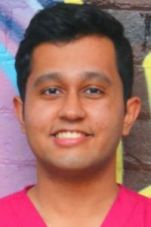
Project Title: Anatomical feasibility of endovascular intervention for Type-A aortic dissections
Supervisors: Prof Julian Smith and Mr Ming Yii
Experience in the Department: After finishing my fourth year of study, I completed my project with the Department of Surgery at the School of Clinical Sciences. It was focused on vascular surgery, an area of medicine I found particularly memorable amongst my clinical placements so far. As we transition into an era of minimally-invasive surgery, the scope of my project put forth by my supervisors was particularly interesting, given the potential cutting edge benefits our proposed treatment offered for acute ascending aortic dissections, a lethal disease.
I was very grateful to work alongside both clinicians and academics within my supervising team, allowing for exposure to several aspects of clinical surgery alongside my research throughout the year. The BMedSc(Hons) program with the Department of Surgery was undoubtedly a phenomenal experience in bettering my research practice, whilst honing my skills in scientific writing and presentation, skills that would undoubtedly be useful for the rest of my career.
Following completion of my BMedSc (Hons) year, I am now a current final year student, and will soon commence work as a medical intern at Alfred Health. I still have an avid interest in vascular surgery and have continued to collaborate on several projects in this area.
Student Information Evenings (annual)
Below are the timelines of our annual Information evenings for the following year entry. Click on the links to find out more.
- BMedSc(Hons) (Held in April or May)
- Honours and Higher Degrees by Research (HDR) (Held in August)