
Gilan Group - Epigenetics and Cancer lab
Key terms | Research overview | The team | Our interests | Study with us | Funding | Publications
Key terms
- Chromatin biology, gene regulation, haematopoiesis, acute myeloid leukaemia, solid cancer
Research overview
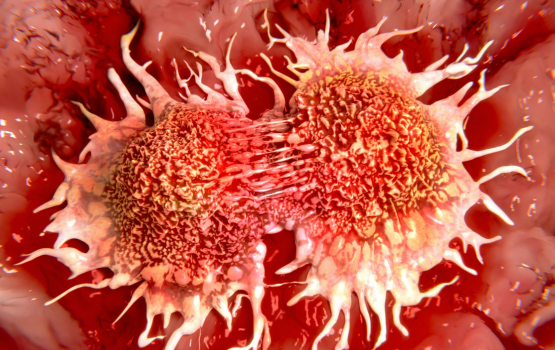
The Gilan laboratory at the Australian Centre for Blood Diseases explores the fundamental mechanisms for how the epigenetic landscape influences the precise control of gene expression.
We then apply these insights to understand how the epigenome of leukaemia cells is altered and the role it plays in the maintenance of the leukemic state. We aim to understand how the dynamic nature of the epigenome facilitates the response and adaptation (resistance) to targeted therapies. Ultimately the goal is to leverage these insights to identify strategies to reset the cancer cells back to their normal state for therapeutic benefit.
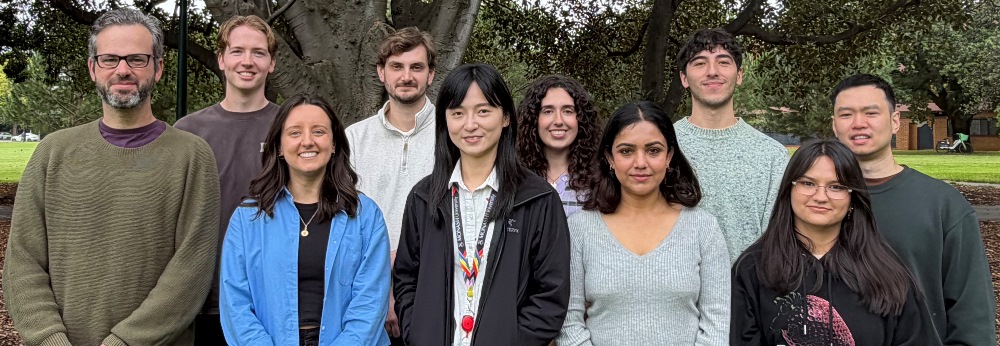
Meet the team
Group Leader
Our interests
Fundamental to our understanding of the role of the epigenome in cancer is the intricate world of gene regulation. Gene regulation is an incredibly complex process that underpins the immense diversity of multicellular organisms. Broadly speaking, we aim to make sense of how the many layers of chromatin regulation (epigenome) are linked together to control gene expression. Acute Myeloid Leukaemia (AML) is a devastating disease with a clinically unmet need. It is highly heterogeneous but is caused by relatively few mutations that invariably converge on a block of differentiation and increased self-renewal of blood progenitor cells. Our work spans cellular biology, molecular biology and biochemistry. We utilise a wide variety of cutting edge techniques in the genomics field such as RNA-seq, ChIP-seq, ATAC-seq, CRISPR, CRISPR screens, and mouse models to understand how current and emerging therapies function and to discover new therapeutic targets.
Study with us
See our available research projects or contact A/Prof Gilan directly at omer.gilan@monash.edu.
Projects and Opportunities
- Discover chromatin mechanisms of epigenetic memory
- Investigate how chromatin facilitates adaptation to cellular stress
- Determine how non-genetic heterogeneity is regulated in cancer
- Identify novel epigenetic regulators of leukaemia biology
- Develop CRISPR-based genetic screens to understand principles of gene regulation
Funding
Our lab is funded by the Victorian Cancer Agency, and the National Health and Medical Research Council.
Publications
- Pubmed search on 'Gilan O'
- Google Scholar
Select publications
DOT1L provides transcriptional memory through PRC1.1 antagonism. Neville D, Ferguson DT, Heikamp EB, Lai Z, Magor GW, Lam C, Dobbs OG, Levina V, Knezevic K, The JJ, Alex S, Suits SC, Rumler B, Uckelmann M, Talarmain L, Lam EYN, Perkins AC, Armstrong SA, Bell CC, Davidovich C, Gilan O. Nat Cell Biol. 2026 Feb;28(2):307-322. doi: 10.1038/s41556-025-01859-8. Epub 2026 Feb 3.
CRISPR-ChIP reveals selective regulation of H3K79me2 by Menin in MLL leukemia. Gilan O, Talarmain L, Bell CC, Neville D, Knezevic K, Ferguson DT, Boudes M, Chan YC, Davidovich C, Lam EYN, Dawson MA. Nat Struct Mol Biol. 2023 Oct;30(10):1592-1606. doi: 10.1038/s41594-023-01087-4. Epub 2023 Sep 7. DOI: 10.1038/s41594-023-01087-4.
Selective targeting of BD1 and BD2 of the BET proteins in cancer and immunoinflammation. Gilan O, Rioja I, Knezevic K, Bell MJ, Yeung MM, Harker NR, Lam EYN, Chung CW, Bamborough P, Petretich M, Urh M, Atkinson SJ, Bassil AK, Roberts EJ, Vassiliadis D, Burr ML, Preston AGS, Wellaway C, Werner T, Gray JR, Michon AM, Gobbetti T, Kumar V, Soden PE, Haynes A, Vappiani J, Tough DF, Taylor S, Dawson SJ, Bantscheff M, Lindon M, Drewes G, Demont EH, Daniels DL, Grandi P, Prinjha RK, Dawson MA. Science. 2020 Apr 24;368(6489):387-394. doi: 10.1126/science.aaz8455. Epub 2020 Mar 19.PMID: 32193360
Targeting enhancer switching overcomes non-genetic drug resistance in acute myeloid leukaemia. Bell CC, Fennell KA, Chan YC, Rambow F, Yeung MM, Vassiliadis D, Lara L, Yeh P, Martelotto LG, Rogiers A, Kremer BE, Barbash O, Mohammad HP, Johanson TM, Burr ML, Dhar A, Karpinich N, Tian L, Tyler DS, MacPherson L, Shi J, Pinnawala N, Yew Fong C, Papenfuss AT, Grimmond SM, Dawson SJ, Allan RS, Kruger RG, Vakoc CR, Goode DL, Naik SH, Gilan O, Lam EYN, Marine JC, Prinjha RK, Dawson MA. Nature Communications. 2019 Jun 20;10(1):2723. doi: 10.1038/s41467-019-10652-9
Id2 and E Proteins Orchestrate the Initiation and Maintenance of MLL-Rearranged Acute Myeloid Leukemia. Ghisi M, Kats L, Masson F, Li J, Kratina T, Vidacs E, Gilan O, Doyle MA, Newbold A, Bolden JE, Fairfax KA, de Graaf CA, Firth M, Zuber J, Dickins RA, Corcoran LM, Dawson MA, Belz GT, Johnstone RW. Cancer Cell. 2016 Jul 11;30(1):59-74. doi: 10.1016/j.ccell.2016.05.019. Epub 2016 Jun 30.PMID: 27374225
Functional interdependence of BRD4 and DOT1L in MLL leukemia.Gilan O, Lam EY, Becher I, Lugo D, Cannizzaro E, Joberty G, Ward A, Wiese M, Fong CY, Ftouni S, Tyler D, Stanley K, MacPherson L, Weng CF, Chan YC, Ghisi M, Smil D, Carpenter C, Brown P, Garton N, Blewitt ME, Bannister AJ, Kouzarides T, Huntly BJ, Johnstone RW, Drewes G, Dawson SJ, Arrowsmith CH, Grandi P, Prinjha RK, Dawson MA. Nature Structural and Molecular Biology. 2016 Jul;23(7):673-81. doi: 10.1038/nsmb.3249.
BET inhibitor resistance emerges from leukaemia stem cells. Fong CY, Gilan O, Lam EY, Rubin AF, Ftouni S, Tyler D, Stanley K, Sinha D, Yeh P, Morison J, Giotopoulos G, Lugo D, Jeffrey P, Lee SC, Carpenter C, Gregory R, Ramsay RG, Lane SW, Abdel-Wahab O, Kouzarides T, Johnstone RW, Dawson SJ, Huntly BJ, Prinjha RK, Papenfuss AT, Dawson MA.Nature. 2015 Sep 24;525(7570):538-42. doi: 10.1038/nature14888. PMID: 26367796
Principles and mechanisms of non-genetic resistance in cancer. Bell CC, Gilan O.Br J Cancer. 2020 Feb;122(4):465-472. doi: 10.1038/s41416-019-0648-6. Epub 2019 Dec 13.PMID: 31831859 Review.