
Cancer’s Achilles’ heel: Monash researchers discover how to ‘switch off’ cancer genes for good
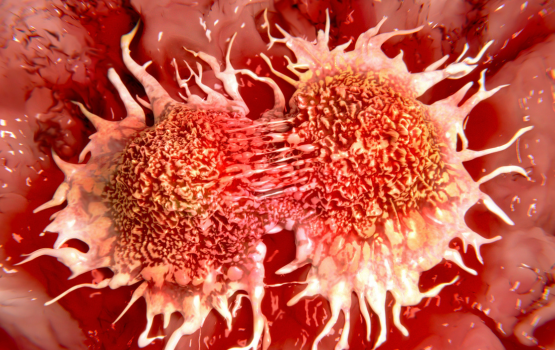
Credit: selvanegra from Getty Images
Monash University researchers, in collaboration with Harvard University, have discovered how to permanently ‘switch off’ cancer causing genes, revealing a new approach to cancer treatment.
The breakthrough, published in the prestigious journal Nature Cell Biology, could result in shorter treatment periods and dramatically reduce the debilitating side effects that often come with cancer treatment.
The research focuses on epigenetic therapy, in which patients take a drug that alters how their genes are switched on or off, resetting the harmful changes caused by cancer mutations.
This includes some aggressive forms of acute leukaemia driven by a genetic error that hijacks the cell’s normal gene-control machinery, keeping cancer-promoting genes constantly switched on.
Drugs that target this process already exist, but until now, scientists have not fully understood why they work.
Dr Omer Gilan, Senior Research Fellow at the School of Translational Medicine and the Australian Centre for Blood Diseases, led the research team that discovered that targeting the epigenetic proteins Menin or DOT1L can permanently ‘switch off’ cancer-causing genes in leukaemia cells.
“We have potentially identified a new way to exploit cancer’s weaknesses,” Dr Gilan said.
“But the most exciting part of this is that clinicians can harness our findings to improve response and reduce side effects for patients.
“Anyone who has watched someone they love go through cancer treatment will attest to how difficult it is, so making treatment easier to withstand and more effective is absolutely vital.”
PhD candidate Daniel Neville, lead author on the paper, said the improvement leverages the ‘memory’ provided by the epigenetic protein DOT1L, found in cancer cells.
“The drugs we use to target Menin erase the memory provided by DOT1L, and continue killing the cancer cells, even after the treatment has stopped,” he said.
“We hope that by reducing the treatment period, patients may tolerate higher doses or be eligible for additional therapies to improve outcomes.
“This is a big step forward for epigenetic therapy, and one we hope will change how cancer is treated more generally.”
The discovery is set to be tested in a clinical trial run by Monash University and The Alfred, later this year.
Associate Professor Shaun Fleming, clinical haematologist and head of the myeloid disease program at The Alfred and a researcher at the Australian Centre for Blood Diseases, says this is an exciting step forward for leukaemia treatment.
“As we continue clinical trials of Menin inhibitors, and particularly moving into combination studies, understanding better how these new therapies work may allow us to utilise them more effectively and with a greater degree of safety in future,” Associate Professor Fleming said.
Read the research paper.
About Monash University
Monash University is Australia’s largest university with more than 80,000 students. In the 60 years since its foundation, it has developed a reputation for world-leading high-impact research, quality teaching, and inspiring innovation.
With four campuses in Australia and a presence in Malaysia, China, India, Indonesia and Italy, it is one of the most internationalised Australian universities.
As a leading international medical research university with the largest medical faculty in Australia and integration with leading Australian teaching hospitals, we consistently rank in the top 50 universities worldwide for clinical, pre-clinical and health sciences.
For more news, visit Medicine, Nursing and Health Sciences or Monash University.
MEDIA ENQUIRIES
E: media@monash.edu