
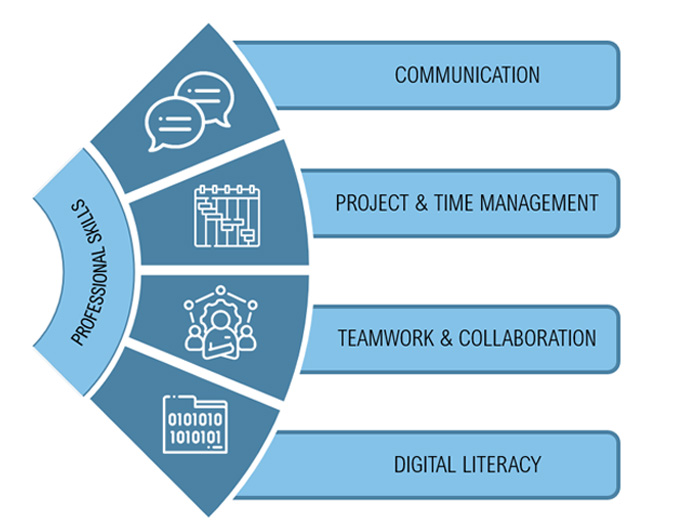

Communication is a vital skill for graduate students, enabling you to share your research clearly, confidently, and persuasively with diverse audiences. Whether presenting at conferences, publishing papers, or engaging with the public, strong communication bridges the gap between complex ideas and meaningful impact. Ultimately, effective oral and written communication transforms research from isolated findings into powerful contributions that inform, inspire, and drive change.
A graduate research student’s ability to effectively and efficiently manage projects and time is of utmost importance for the successful and timely completion of a graduate research degree. Effective management helps you set realistic goals, prioritise tasks, and maintain steady progress on your research projects. It reduces stress, minimises procrastination, and ensures deadlines are met without compromising quality. These skills also prepare graduates for future careers, where managing multiple projects and collaborating with teams is the norm.
Teamwork and collaboration are vital skills for graduate students, fostering a dynamic research environment where diverse ideas and expertise intersect. Research today is rarely a solo endeavor — it often involves working across disciplines, institutions, and even continents. Effective collaboration enhances problem-solving, sparks innovation, and strengthens project outcomes by drawing on varied perspectives. It also builds essential interpersonal skills like communication, conflict resolution, and leadership. Mastering teamwork not only boosts research impact but also prepares you for future roles in academia, industry, and beyond — where collaboration is key to tackling complex global challenges. Monash offers a range of opportunities to build this essential skill. In our Faculty, students can further build on this skill through participating in School/Faculty based graduate research committees.
Digital literacy is a crucial skill for graduate students, equipping you to navigate, evaluate, and utilise technology effectively in your research and academic work. It goes beyond basic computer skills — encompassing data analysis tools, digital collaboration platforms, online research databases, and emerging technologies like AI. Strong digital literacy enhances research efficiency, supports innovative methodologies, and fosters effective science communication. In an increasingly digital world, mastering these tools ensures graduate students can adapt to evolving technological landscapes, amplify the impact of your work, and remain competitive in both academic and professional careers.