
Research
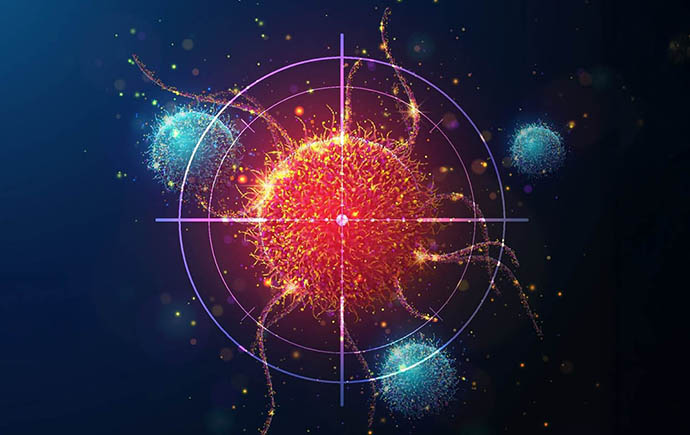 Close to one million people in Australia will have been diagnosed with cancer in the last 10 years. Today, Australians diagnosed with cancer enjoy significantly better survival prospects: in the 1980s and 1990s, around 50 per cent of people survived five years after diagnosis. By the early 2020s, this had increased to just over 70 per cent.
Many things have contributed to this: public health investments have delivered screening programs and developed evidence for communities and individuals to modify their individual risk through nutrition, exercise and avoiding sun exposure, alcohol consumption and smoking. Research breakthroughs such as immunotherapy, precision medicine and liquid biopsies have transformed diagnosis and treatment. And bioinformatics and AI-assisted tools continue to refine diagnosis, describe disease progression, and shape research questions.
But survival is only part of the story: overall cancer incidence is up, especially in the under-30s. Numerous cancers remain as deadly as they were decades ago, and new therapies do not benefit everyone equally, or come with severe toxicity.
The Department of Cancer Medicine hosts highly collaborative research groups explore diverse aspects of cancer biology, including:
- immune detection and targeting of cancers and infection
- the interaction between cancer, host and environment
- genomic medicine
- gastrointestinal cancer, and
- the mechanisms of cancer initiation and progression using patient-derived samples from the Alfred Cancer Biobank.
These include some of the most important and pressing questions in cancer research today, including:
- Can a systems-level understanding of cancer cell signalling or the tumour microenvironment help to identify novel therapeutic strategies?
- Can the current spectrum of cancers sensitive to immunotherapy be extended, and can we identify biomarkers of response to immunotherapy?
- How do changes in epigenetic and transcriptional regulators contribute to the different 'hallmarks' of cancer?
-
Research programs
One way we bring our research together is through the lens of specific themes to illustrate its primary focus. We are expert global leaders in several research areas.
-
Biostatisics/Data Management - A/Prof Mohammad Asgarhi-Jafarabadi
View

Cancer and Host Dynamics - Dr Miles Andrews
View
Cancer Development and Treatment - Prof Mark Shackleton
View
Cancer Exercise - A/Prof Eva Zopf
View
Cancer Genomics - Dr Prache Bhave/Prof Gary Richardson
View
Clinical Genomics and Bioinformatics - A/Prof Tu Nguyen
View
Colorectal Cancer Surgery - Prof Paul McMurrick
View
Drug Discovery/Clinical Trials - Prof Gary Richardson
View
Gastrointestinal Translational Research - Prof Alex Boussioutas
View
Imaging/Theranostics - Prof Mark Frydenberg
View
Translational Immunology - A/Prof Vivek Naranbhai
View
Translational Research - Prof Mark Frydenberg/Prof Paul McMurrick
View
Tumour Immunology - Dr Jessica Da Gama Duarte
View
-