
MUARC research shows need for systems thinking approach to workplace violence
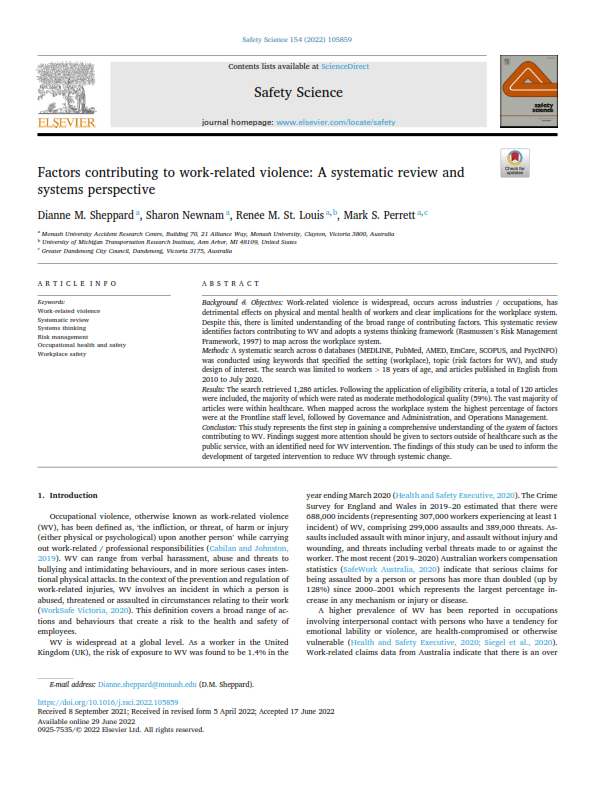 A recent MUARC systematic review has taken a step towards gaining a comprehensive understanding of the factors that contribute to workplace violence.
Researchers conducted a systematic literature review before applying a systems perspective to map the factors contributing to workplace violence across the entire workplace system. The systems framework ranged from the highest levels (e.g. Government-related factors such as changing political climate; Organisational governance such as OHS policies and procedures) through to Frontline Staff (experience, role type) and Equipment and Surroundings levels (crowding, accessibility).
The paper defines workplace violence as ranging from “verbal harassment, abuse and threats to bullying and intimidating behaviours, and in more serious cases intentional physical attacks.”
It was found that 50% of factors relating to workplace violence reported in the academic literature were identified at Frontline Staff level. The study argues that too many interventions aimed at protecting workers from workplace violence are targeting risks at the Frontline Staff level, which do not consider influences from the rest of workplace system. For instance, rather than giving staff body cameras or training them to deal with aggressive customers, systemic change is needed. These changes could include “the development of guidance material in managing violent and aggressive behaviour, policies and procedures that guide the management of behaviour and identifying roles and responsibilities of leaders in the management of workplace violence.”
Around 1% of workplace violence factors were located at the highest level of the system – Government, Regulators and other external influences. The report suggests there is scope for new interventions at this level such as legislative changes and public awareness campaigns to protect emergency services personnel and other public-facing roles that expose the worker to people who are vulnerable or health-compromised.
Organisational leadership is another level of the workplace system at which there are factors contributing to workplace violence. Factors include workplace culture, safety climate and reporting culture. The study argues that management and leaders must ensure workers are comfortable reporting incidents of workplace violence and feel confident that the organisation is committed to their wellbeing and will initiate positive change. At the management level changes may include policies and procedures relating to workplace violence, while at the operations level changes may include the revision of work schedules and staff-to-patient/client ratios.
The study also noted that most workplace violence research has focused on the healthcare sector. There is a need for attention to be paid to other sectors, with the public service highlighted as an example. Parking inspectors and employees in other regulatory roles can be particularly exposed to workplace violence.
A systems thinking investigation tool to guide practitioners in reviewing incidents is also proposed by the researchers.
Leader author, Dr Dianne Sheppard, says the findings show “how critical it is to take a systems thinking approach when responding to psychosocial hazards in workplaces, including exposure to work-related violence. When developing controls or interventions to minimise the occurrence of workplace violence, organisations must consider the contribution of factors across levels within the organisation and those external to the organisation to maximise the effectiveness of those interventions.”
The research was published in Safety Science and can be found here.