
Macclesfield Disaster Recovery Group
Project Summary
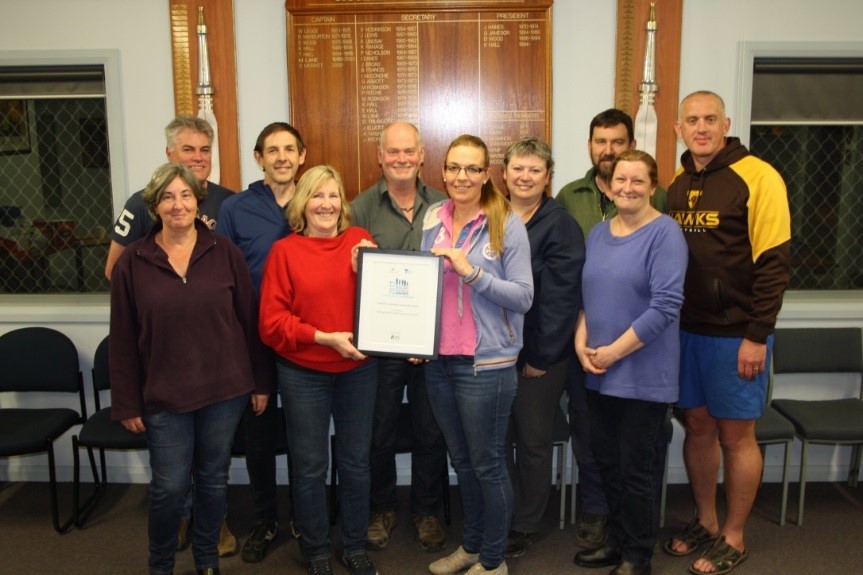 Macclesfield Disaster Recover Group (MDRG) is a Relief/Recovery focused community-based emergency management group. MDRG is an integral part of local emergency preparedness and relief /recovery capability. MDRG has been instrumental in promoting formal emergency safety messages and establishing foundations by which the Macclesfield community can be key drivers in their own Recovery.
Background and Situation Context
The Macclesfield area is a rural hamlet in the eastern Dandenong Ranges of Victoria and has a diverse mix of residents.
Macclesfield has recently been included in the Victorian Fire Risk Register with High and Very High-risk areas and is at risk of both grass and scrub and bushfire events. Our combination of elevated and low-lying areas, coupled with several older wooden bridges combine to isolate us from nearby support areas.
Should a large fire impact on Macclesfield and surrounding areas we face a loss of life and injury, the destruction of multiple dwellings and kilometres of fencing and loss water for livestock for more than 24 hours. The Macclesfield area also experiences high impact storm and wind events, which regularly results in the loss of power and impacts access and egress to the area due to fallen trees.
The MDRG response area is approximately 100 square kilometres. We have strong agricultural origins and residents include a mix of long term and recently relocated residents. These factors combined with a community culture of independence and self-determination compelled MDRG to develop proactively our community’s capability during the immediate, medium and long terms phases of a disaster.
Activities
In 2013, the Macclesfield Disaster Recovery group was formed in partnership with the Macclesfield CFA. MDRG services a role within the community to provide primary care and support to affected residents in the immediate aftermath of a serious or high impact emergency in the area.
MDRG core purpose is managing the primary and psychosocial needs of our community during the first 72 hours of a serious event. Secondarily MDRG provide a conduit by which our community will have the capacity to provide leadership to government and social support services should external relief and recovery support be needed in our township.
The leadership and membership were formed following initial community consultation. After the development of our procedure manual, we were fortunate to procure training support from Red Cross and have now trained many members in Psychological First Aid (PFA) and Communication in Recovery. Further community information sessions included supporting children, teenager and Animals in emergencies.
Most importantly, the group raised awareness across the community of the devastating impact that high intensity emergencies can have at a community level. This in turn added a depth of context to prevention and preparedness activities undertaken by individuals and community groups across our area.
Results
The impacts of MDRG include;
- Enshrined community values and diversity by developing the MDRG procedure manual in consultation with the Macclesfield community.
- Mitigating the risks of fatalities/injuries/post event psychological trauma associated with high impact emergencies by providing primary care and psychological support in the first 72 hours after an event.
- Increased Bushfire awareness by providing planning assistance through pre-season information sessions for both MDRG members and the wider Macclesfield community. People are better prepared for extreme events.
- Reduced social isolation and increasing social connectedness by providing regular training events and by providing an inclusive and positive group culture.
- Increased member’s employability skills by providing first aid, specialist communications and psychosocial training. These skills remain transferable across working and personal lives and other areas of community living.
- Enabled community leadership in the aftermath of a serious event thus increasing the community’s ability to have ownership and direction of relief/recovery efforts. This in turn reduces dependency on government and welfare sectors.
- Provided a conduit for Macclesfield fire brigade members to access specialist psychosocial training outside of training provided by CFA.
What knowledge or product outcomes did the project accomplish?
- Leading change and coordinating effort: by developing strong and meaningful partnerships with Shire Yarra Ranges, Victoria Police, Red Cross, Australian Institute of Disaster Resilience, Emergency Management Victoria, Macclesfield CFA, Macclesfield Primary School, Macclesfield Landcare, Macclesfield Pony & Adult riding club.
- Communicating with and educating people about risks: by promoting the need for and opportunities of MDRG at a local and regional level and by providing pre-season training and specialist information events to highlight and plan for disaster risks and by assisting residents by providing education and relevant local knowledge tailored to their level of literacy and capacity to respond.
- Partnering with those who effect change: by collaborating on an ongoing basis with a broad range of local and state partners in the development, delivery, monitoring and expansion of broader community-based emergency and relief/recovery planning and by fostering volunteerism and leadership within the local community.
- Empowering individuals and communities to exercise choice and take responsibility: By providing proactive and supportive solutions to give residents greater choice to develop and enact emergency plans. By encouraging local individuals and groups to be more responsible for the risks they live with and to consider the needs of our community in the aftermath of an emergency. By raising awareness of the roles, responsibilities and limitations of relief/recovery agencies to ensure that residents have more realistic expectations of the support on offer and are better prepared to greater responsibility for their own wellbeing in the aftermath of an event.
- Supporting capabilities for disaster resilience: By reducing dependency of traditional emergency services and welfare support following a high impact event and by establishing stronger pre-existing relationships between our local community and the agencies that support us, thus ensuring a better understanding of our community needs in the aftermath of a serious event.
- Transferability: Our initial focus on environmental disaster such as Bushfire/extreme weather events has provided a sound basis from which we can now consider a range of disaster/emergency applications. While we do not have cause at local level to be the target for acts of terrorism, a localised or wide spread agricultural/livestock biological event, such as disease outbreak, would have a devastating effect on our community. Now MDRG is trained and well placed to offer the sort of targeted support that our community would need to liaise with authorities and provide personal support to affected families and businesses.
Awards
Finalists Fire Awareness Awards 2015
Highly Commended Resilient Australia Awards 2017
Reflection
MDRG utilised existing learnings in community recovery from high intensity disaster situations to tailor a program to the Macclesfield community in particular. Our collective experience/skills within MDRG identified that focusing only on the catastrophic nature of disasters would not increase the resilience and fortitude of our community when faced with an active threat.
Understanding the difficulties faced by other communities we determined that while our group is underpinned by the concept of disaster relief and recovery, our ongoing activities, group culture and group vision must be to enrich the resilience and wellbeing of our participants now and into the future as follows.
MDRG Ground Rules
- 1. All are welcome regardless of skills, time available or level of experience.
- 2. Participation in MDRG must not impact members personal bushfire plans -Tasks are not allocated to individuals.
- 3. Members may contribute before, during or after an incident and from inside and outside of the impacted area.
- 4. Participation in the MDRG group must enhance member’s everyday lives and be a positive experience.
We have embedded these rules in all that we do from the allocation of tasks the access to learning opportunities and the importance of an inclusive and supportive group culture.
The importance of placing value on the social connectedness and psychological wellbeing of the group has ensured we are not dependant on a high impact/ large-scale disaster to remain relevant and give meaning to the group’s existence. This has contributed to our membership numbers remaining stable and slowly increasing throughout the time in which group has been functioning.
Our plan is highly localised however due to small/rural aspects of our community it may be a useful reference for smaller townships and communities such as ours. MDRG would also provide an example of the value of inclusivity in community-based emergency planning.
Critical Success Factors
- Developing an inclusive group culture
- Building relationships with local and broader disaster resilience networks
- Being able to clearly articulate our purpose and limitations
- Utilising a positive psychological approach in defining our ground rules
Barriers to Success
- Taking the time to develop our own plan rather than skimming over this stage by using existing templates
- Taking the time to attract a diverse representation of the Macclesfield community
- Procuring funding to address skills gaps and training needs
- Procuring funding for basic equipment
Additional Project Details
| Lead organisations | Macclesfield Disaster Recovery Group |
| Partner/s |
Victoria Macclesfield CFA; Macclesfield Primary school; Macclesfield Landcare; Macclesfield Pony and Adult Riding group; Shire of Yarra Ranges; Emergency Management Victoria; Red Cross |
| Funding source |
CFA Summer Fire Safety Initiatives 2015/2016 CFA Summer Fire Safety Initiatives 2016/2017 In Kind Training support: -Psychological First Aid AND Communicating in Recovery |
| Funding amount |
$1600 Children and Teenagers in Emergencies 2016 $950 Animal and Emergencies 2017 |
| Contact name | Yolanda Slykerman – MDRG Coordinator |
| Contact email | accounts@fluidmotionfilm.com |
| Contact telephone | Email contact only. |
| Hurdles submitting details of project | Nil |
| Project URL | To be supplied |