
Mobilising trade unions: Building equity in the garment supply chain workplaces in Bangladesh
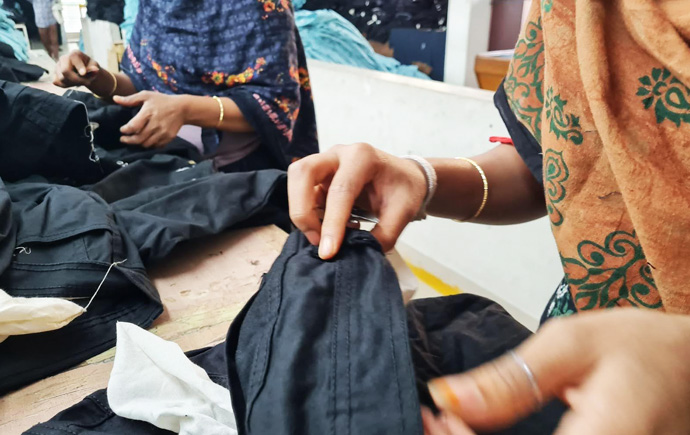
In 2013, the collapse of the Rana Plaza building in Bangladesh caused the death of 1,134 predominantly women garment workers. Since then, ensuring ethical and sustainable practices within the garment supply chain has been paramount in the fast-paced world of apparel manufacturing. Therefore, 256 leading brands, including almost all the large retail brands of Australia, like KMART, TARGET, BIG W, and Cotton On, undertook a voluntary compliance regime to enhance workplace conditions and ensure their safety and security in factories of the widely acknowledged Ready Made Garment (RMG) Sector of Bangladesh.
Given that 80% of the 4 million workers employed in Bangladesh's RMG Sector are women, it is imperative to address their workplace conditions. The Decent Work Agenda of the International Labour Organisation (ILO) has been at the forefront of this advocacy. However, despite the ILO's efforts, the recognition and conditions of women workers in Bangladesh’s garment industry remain a challenge. This underscores the urgent need for further action to align with the United Nations Decent Work Agenda, a call that has gained global recognition.
In this challenging context, my collaborative research program has partnered with workers, trade union federations, and local-level research-based non-government organisations to advocate for and facilitate equitable participation for better work conditions. Through stakeholder-driven research engagements and methods, my research program has made tangible interventions on the ground, contributing to the ongoing efforts for a more equitable garment industry.
My research has been undertaken in two phases. First, my program focused on analysing the misrecognition and non-recognition of women workers in enacting compliance regimes from 2013 to 2019, which influenced ILO policy.
The second phase of my activist research program aims to centralise women workers’ rights, recognition, and, thereby, their status in the factory and society. To do this, I have been mobilising by organising workshops involving the Trade Union Federations and their members (i.e., women garment factory workers), compliance consultants, as well as NGOs, journalists, and academics working on the Sector to investigate and monitor:
- Wage theft and timely payment of wages
- Provision or low-cost food or rationing systems
- Informing workers about their rights, such as medical leave during periods of illness, short breaks for those who have breastfeeding children, maternity leave with benefits, hostels for unmarried workers to ensure their security
- Advocating for the right of workers to have their union at the factory level
Outcomes
Monash researchers
Want to know more?
Project
- Understanding international sourcing practices of iconic brands in Australia: the case of ready-made garments in Bangladesh
Journal articles
- Alamgir, F., Alamgir, F., & Alamgir, I. F. (2022). Live or be left to die? Deregulated bodies and the global production network: Expendable workers of the Bangladeshi apparel industry in the time of Covid. Organization, 293(3), 478-501.
- Alamgir, F. & Alakavuklar, O. N. (2020). Compliance codes and women workers’ (mis)representation and (non)recognition in the apparel industry of Bangladesh. Journal of Business Ethics, 165(2), 295–310.
- Alamgir, F. & Banerjee, S. B. (2019). Contested compliance regimes in global production networks: Insights from the Bangladeshi garment industry. Human Relations, 72(2), 272-297.
Media
- The Myth of Genderless Worker, Monash Business School Impact
- Codes of conduct fail to address exploitation in Bangladesh’s clothing factories, Cass Media
- The Fair-Trade Fraternity, The Daily Star Magazine
Reports
- ‘Shopping for a bargain: How the purchasing practices of clothing brands in Australia impact the women who make our cloth’, a joint research report with OXFAM Australia.
- Decent Work in a globalized economy: Lessons from Public and Private Initiatives, The International Labour Organization
- How corporate social responsibility and sustainable development functions impact the Workplace: A literature review ,The International Labour Organization