
Transforming management education: Developing students’ coping through transition pedagogy
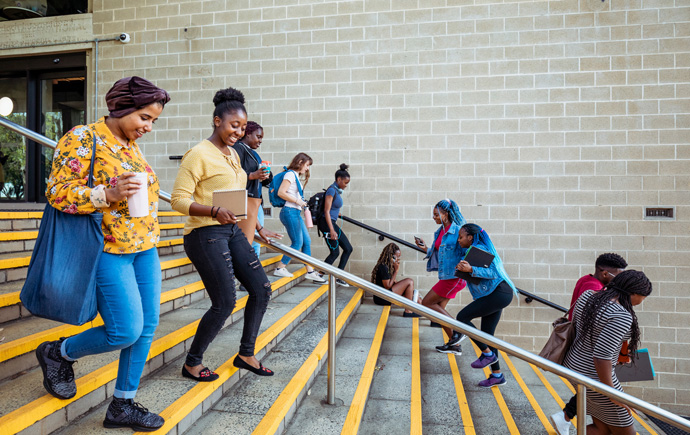
Navigating the transition from school to university poses a significant challenge for some students. This time is often marked by a lack of coping skills essential for academic and personal success resulting in increased stress, lowered motivation, and engagement. This can lead to increased dropout rates, particularly among marginalised groups. Recognising the vital need for equitable support, my teaching philosophy and strategies aim to empower all students to thrive in university life by enhancing engagement and fostering self-efficacy. My teaching innovations have also paved the way for a collaborative research program on student coping which has resulted in an article published in a top-ranked education journal.
To achieve my goal of providing a supportive and engaging experience for students, I create an online learning environment that fosters engagement through interactive learning resources. My learning materials are meticulously designed to enhance student self-efficacy by chunking, scaffolding, and providing multiple attempts with immediate feedback. My classroom activities foster active and vicarious learning by leveraging case study analysis, and promote social learning through team-based discussions. Through purposeful design of classroom environments, students’ observations and interactions with peers and teachers foster a sense of belonging. I devise challenging assessments that are scaffolded to support skills improvement, resulting in students' elevated self-efficacy. By applying Universal Design for Learning Principles in the construction of resources, I make learning accessible and differentiated to suit students with disabilities and nurture their self-sufficiency.
My transformative approach to curriculum design and delivery not only benefits students economically by reducing drop-out rates, it also fosters a cultural shift towards inclusivity, diversity, academic excellence, and student well-being. Additionally, the external beneficiaries of my teaching innovations include first-year educators who are better informed and equipped to provide their students with supportive and engaging learning experiences.
Outcomes
- Students have experienced a significant improvement in academic performance with a sustained increase in average final marks since the implementation of my teaching innovations. The average score was 65 before its implementation and now students are averaging 73.
- Grade distribution has shifted positively, with more students receiving higher grades (HDs and Ds).
- Student engagement with online materials has seen a notable rise where students are accessing the online materials up to 3 times as much as previously.
- Qualitative feedback indicates enhanced learning and self-efficacy, supported by reduced failure rates between assessment components and improved scores/marks between assessments.
- Some of the interactive online resources and in-class case studies by educators at other campuses (MGF1010 in Caulfield and MGB1010 in Peninsula).
Awards
- Citation for Outstanding Contributions to Student Learning (2023) from the Australian Awards for University Teaching (AAUT)
- Vice-Chancellor's Award for Innovation in Teaching and Learning (2021)
- Dean’s Award for Teaching Excellence (2023)
- Dean’s Award for Technological Innovation in Learning and Teaching (2019).
Monash researchers
Want to know more?
Read more about the unit:
Research output
Co, M. J., Hamadeh Kerbage, S., Willetts, G., Garvey, L., Bhattacharya, A., Croy, G., & Mitchell, B. (2023). Students coping with change in higher education: An overview. Educational Research Review, 38, 100508.
Media
- Lessons in innovation and compassion, Monash Business School
- Empowering all learners: UDL strategies to improve engagement and academic performance, Australian Disability Clearinghouse on Education and Training (ADCET)
- From online case studies to group evaluations in workgroups, Australian Inspiration Day presentation