
Citarum Action Research Program (CARP)
Citarum Action
Research Program (CARP)
Creating clean, healthy and productive rivers and communities.
Introducing the collaboration between Monash University, Indonesia partners, and an international consortium of research partners to revitalise the polluted Citarum River.
Millions of people rely on the Citarum River for their water, energy, food and livelihoods. The river sustains livelihoods through agriculture, animal husbandry, fishing and ecotourism. Yet, it is also one of the most polluted rivers in the world. Each day 20,000 tonnes of solid waste, and 280,000 tonnes of industrial wastewater are discharged directly into the river, mostly raw or untreated sewage from domestic households.
Prioritising healthy environments, wellbeing and access to clean water and waste services has never been more important. But solutions are often developed and applied in isolation from each other. An integrative, socio-technical approach for sustainable transformation of the river corridor is needed.
Project team
Investigators
- Professor Diego Ramírez-Lovering
Professor Tony Wong
Dr Brendan Josey
Dr Tanvi Maheshwari
Dr Michaela Prescott
Dicky Tanumihardja (PhD Candidate)
Monash Art, Design and Architecture - Professor Rob Raven
Dr Jane Holden
Dr Paris Hadfield
Jess Walters (Project Coordinator)
Monash Sustainable Development Institute - Nanda Astuti
Monash Indonesia - Dr Denise Hardesty
Dr Melissa Skidmore
CSIRO - Professor Christian Zurbruegg
Dr Laura Velásquez
EAWAG - Dr Kartika Hajar Kirana
Dr Cipta Endyana
Universitas Padjadjaran - Dr Reni Suwarso
Dr Dwinanti Marthanty
Universitas Indonesia - David Sutasurya
YPBB
Partner organisations
- Monash University
- Monash Indonesia
- Universitas Indonesia
- Universitas Padjadjaran
- West Java Provincial Government
- West Java Environmental Agency (DLH)
- West Java R&D agency (BP2D)
- CSIRO
- Swiss Federal Institute of Aquatic Science and Technology (eawag)
- PRO-BSF
- Precious Plastics Bandung
- Perkumpulan YPBB
Funded by
Undertaken within

(Left to right) Professor Diego Ramírez-Lovering collaborates with Environmental Agency Head Dr. Ir. Prima Mayaningtyas, M.Si., Universitas Indonesia’s Head of the Citarum Research Social Team Dr. Reni Suwarso, MPP., Ph.D, and Head of the Citarum Research Engineering Team Dr. Rr. Dwinanti Rika Marthanty, S.T., M.T.
Our vision
Our vision is to create clean, healthy and productive rivers and communities by using new approaches that harness waste, thereby propelling communities towards sustainable growth.
Monash University and Universitas Indonesia are partnering with the Indonesian Government, communities, local NGOs, and the global research community to develop innovations that deliver improved water and waste services, and revitalise the community, economy and environment.
By co-designing new infrastructure, behaviour programs, business models and institutions, our aim is to help communities move away from dumping or discharging waste into the environment, and shift towards circular solutions that recycle, remanufacture and reuse waste.
Our approach
To achieve our vision, we will come together across sectors and disciplines to co-design and test integrative social, technological and economic innovations.
Together, we’ll create new solutions to help restore degraded rivers, revitalise communities and transition to a circular economy. Our aim is to collect rigorous scientific evidence that localised socio-technical innovations can deliver sustainable improvements and growth for rivers and their communities.
We’ll partner with selected villages along a tributary of the Citarum River to demonstrate our community-led, technically rigorous approach addressing pollution, biodiversity loss, community health and poverty in riverine contexts.
Expected impacts
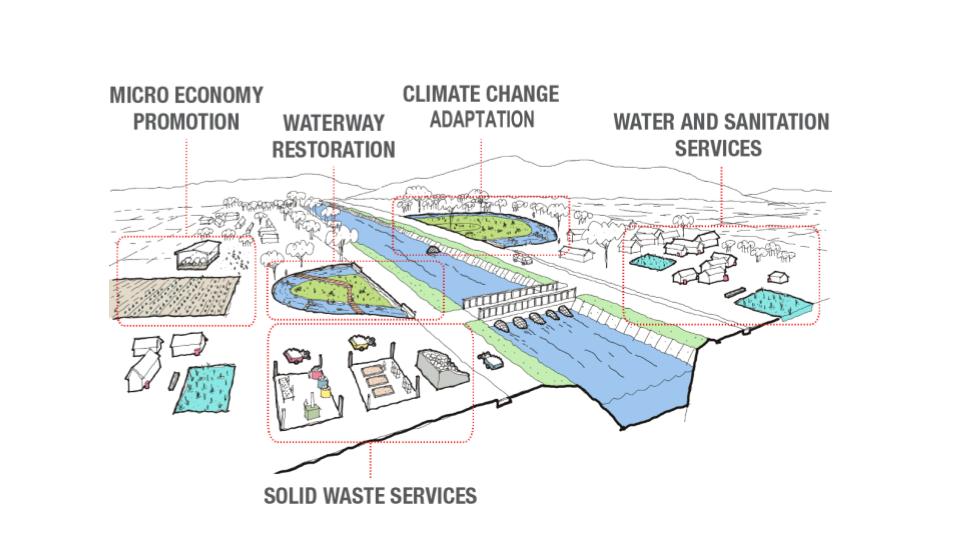
• Restored waterways
• Waste reuse
• Climate change adaptation
• Improved sanitation services
• Strengthened local economy
• Enhanced river governance
The future
With multi-disciplinary evidence of effectiveness in hand, we aim to scale these solutions to transform river catchments and revitalise communities across Southeast Asia.

Living River: A Pathway to Revitalise the Citarum River
The film, which documents the Citarum Action Research Program (CARP), aims to give a voice to the lived experience of vulnerable communities that live along the Citarum River, explore community-led approaches for urban transformation and share key lessons learned through our collaborations with communities and governments in Indonesia to address river pollution together.
By connecting human-scale and village-scale experiences to the catchment area, this film highlights that a new approach is needed for riverine communities: an holistic approach that is sensitive to local landscapes, ecologies, cultures, wisdom, economy, behaviours, governance, and capacities, and brings together technological and social innovation to create real, long-term change. The film was funded by a 2022 Monash Data Futures Institute Seed Grant, 'Interdisciplinary data perspectives: Co-developing sustainable future visions for the Citarum'.
Preliminary research
- DECRA funded project, Partnering with Local and Indigenous Knowledge Systems to Improve the Impact of River Management in West Java
- Asia-Pacific Network for Global Change Research (Monash University and University of Indonesia): Enhancing Local Capacity for Implementing Transboundary Revitalisation Policies for the Citarum River (2021 – 2023)
- Monash-Warwick Alliance scheme: Sustainable Development of Informal Settlements and Citarum Basin Ecologies (Nov 2019 – Dec 2021)
- Interdisciplinary Research Grant (Monash Data Futures Institute and MSDI): Predicting flood risk: The case of the Citarum River, Indonesia (2019 – 2021)
Who we are
Lead universities: Monash University and University of Indonesia
Research partners: PRO-BSF, Precious Plastics Bandung, Perkumpulan YPBB, Universitas Padjadjaran, CSIRO, Swiss Federal Institute of Aquatic Science and Technology (eawag) and Research and Development Agency of West Java Province (BP2D)
Government partners: West Java Provincial Government and West Java Environmental Agency
Funding partners: Indo-Pacific Plastics Innovation Network (IPPIN) and Koneksi. Thanks to Study Melbourne and veski who funded our research in 2022–2023.
For more information
Contact: citarum.research@monash.edu
Recent news and events
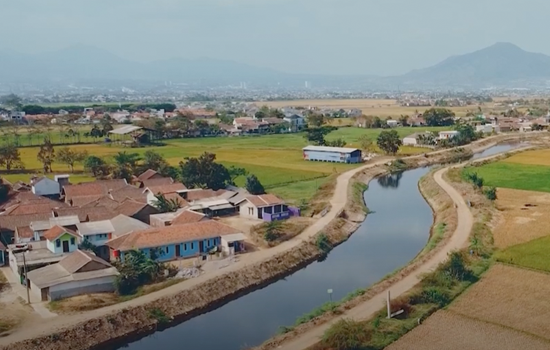
Monash leads international project to clean up one of the world’s most polluted rivers

Revitalising the Citarum river: A collaborative living lab approach

Celebrating winners of urban transformation poster competition
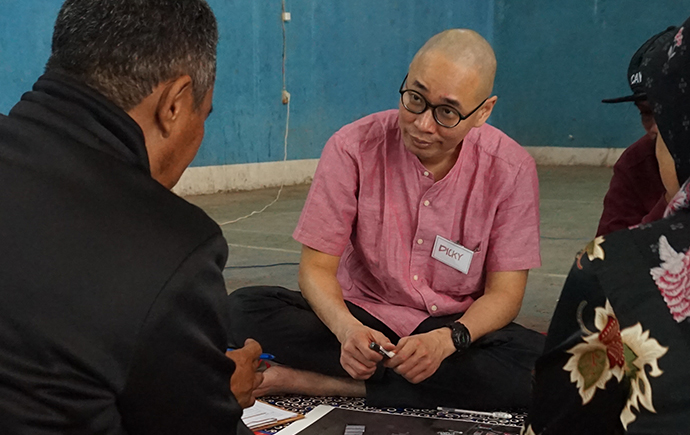
First PhD for the Citarum Action Research Program demonstrates how design can be used to facilitate change
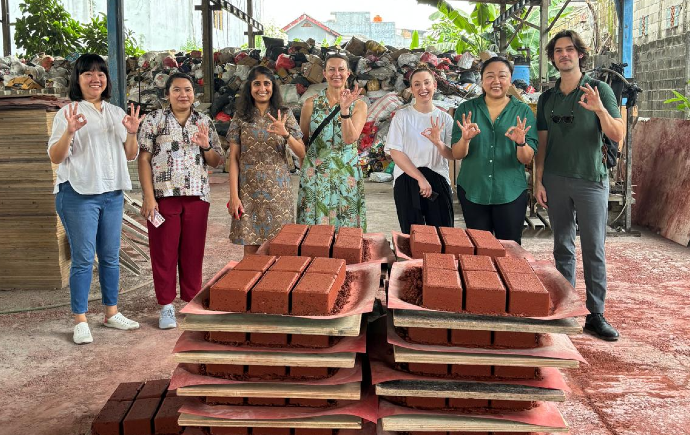
Monash team design innovative solutions to reduce waste entering the Citarum River

From rubbish to resource: Monash Bachelor of Design students create furniture out of waste plastic from one of the world’s most polluted rivers
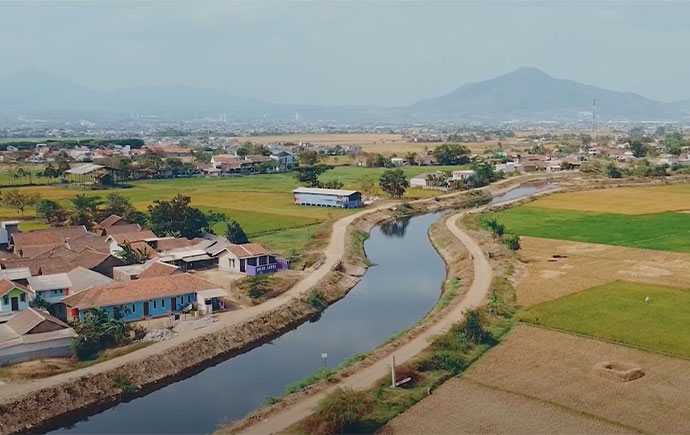
Revitalising the Citarum River demands holistic solutions blending nature and community empowerment

Monash University, together with the University of Indonesia and the West Java Provincial Government, launch the Citarik Ecotourism Masterplan
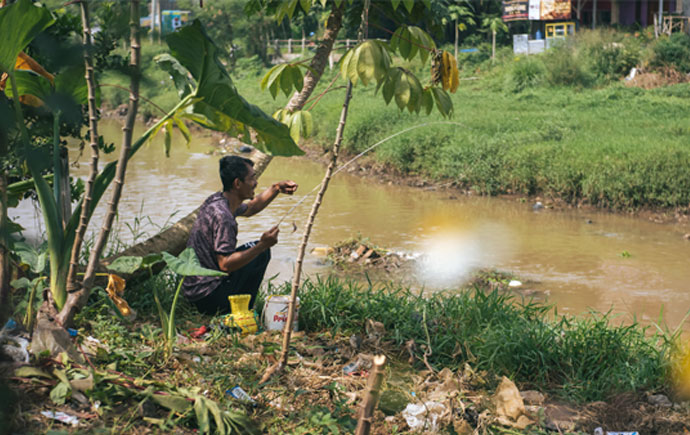
Monash and CSIRO partnership tackles plastic waste to revitalise Indonesia's Citarum River

Interdisciplinary Data Perspectives for the Citarum

Webinar: Revitalising the Citarum River and its Communities

Community-led solutions key to a revitalised Citarum River

Revitalising a River, Revitalising Communities

Victorian Government investment lays groundwork for living lab to transform Citarum River

Citarum Program features at International River Symposium

Cleaning up Indonesia’s Citarum River, one of the world’s most polluted waterways
Monash University and West Java Government partner to revitalise polluted Citarum River

First informal settlement receives RISE water and sanitation upgrades in Indonesia

Monash visit to Bandung, West Java
Graduate research opportunities
- Applications now open
- Scholarships may be available
- Undertaken with: Transforming Cities Hub
CARP (Citarum Action Research Program)
The project aims to design, deliver and monitor a socio-technical intervention in a strategic location in the upper river catchment of the Citarum River. We aim to develop evidence through a rigorous program of research in ecological health, well-being and community resilience to climate change.