
Monash Design research teams win two Good Design Awards for groundbreaking health co-design projects
Monash University Design research teams have been recognised with two prestigious 2025 Australian Good Design Awards in the Social Impact category, celebrating their contributions to transforming global public health and frontline healthcare innovation.
The awards were presented for two distinct but equally impactful projects:
- Design Principles and Tools to improve use and impact of the World Health Organisation (WHO) Guidelines
- Foundations of Medical Technology – Co-designing an Innovation Capability Platform for Frontline Healthcare Workers in collaboration with Safer Care Victoria (SCV).
Transforming WHO guidelines through design
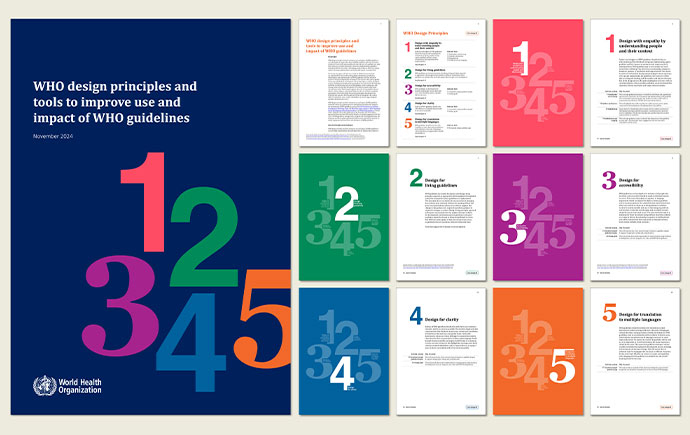
In collaboration with the World Health Organization (WHO), Associate Professor Leah Heiss, Dr Myra Thiessen, Dr Troy McGee, Professor Gene Bawden, Dr Amy Killen, Dr Sarah Daly, Hatoun Ibrahim, and Monash Adjunct Associate Professor Olga Kokshagina led the development of a first-of-its-kind design resource to improve the usability, accessibility, and implementation of global health guidelines. The WHO Design Principles and Tools introduce a human-centred, systems-level approach to guideline development. This is an unprecedented shift for the organisation.
Developed through a global co-design process involving stakeholders from 15 countries, including healthcare workers, policymakers, and people with lived experience, the resource is available to guideline developers across 194 member states.
“This project fundamentally changes how WHO guidelines are created,” said Heiss. “We moved from a one-size-fits-all model to one that recognises the lived realities and motivations of users around the world.”
The resource has already been used in multiple WHO settings, such as hand hygiene and reproductive health, and is accessible globally via WHO's official site.
The Good Design Awards jury praised the project, calling it “a brilliant showcase of innovation and impact” and “a foundational resource that introduces practical tools to improve global health outcomes.”
Equipping Healthcare Workers for Innovation
The second award-winning initiative, Foundations of Medical Technology, was co-designed with Safer Care Victoria (SCV) and frontline healthcare workers in a partnership between Monash Art Design and Architecture (MADA), Monash Institute of Medical Engineering (MIME) and the Department of Jobs, Skills, Industry and Regions.
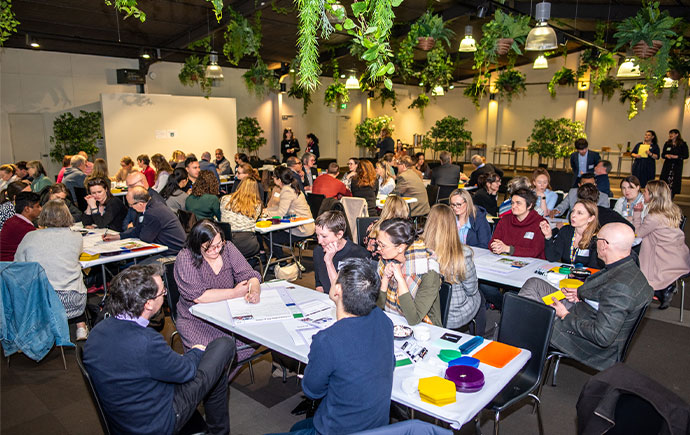
Associate Professor Leah Heiss led the co-design process, bringing together over 65 clinicians, healthcare workers, consumers, industry and academic researchers to co-design inputs to the platform, while MNHS clinician and entrepreneur Associate Professor Khoa Cao led development of the platform with MIME.
The result is a free, online learning platform that equips busy clinicians with essential innovation skills to address persistent healthcare challenges. Since its launch in July 2024, over 300 healthcare professionals –- from nurses and doctors to paramedics and allied health professionals – have completed the course. Structured around the globally recognised Stanford Biodesign model, the program is accessible, self-paced, and designed for use within real clinical settings.
“Frontline healthcare workers are the best placed to identify challenges, but they’re often disconnected from the tools and support needed to innovate,” said Heiss. “This program builds that bridge.”
The platform has been integrated into postgraduate training at Monash’s Faculty of Medicine, Nursing and Health Sciences, further embedding innovation capability into the future health workforce.
“Clinicians are natural problem-solvers, but often lack the frameworks and confidence to design solutions,” said Cao. “We built this course to close the gap between clinical insight and innovation execution and empower clinicians at the coal-face to transform everyday frustrations into structured, translational opportunities that drive real change in healthcare.”
The Good Design jury noted:
“By making innovation processes accessible, this project empowers frontline staff to define and solve complex problems. Smart, innovative and impactful.”
These awards mark a major milestone for MADA, MIME and MNHS, underscoring the transformative power of design-led research in solving some of the world’s most urgent healthcare challenges.
“This collaboration embodies the spirit of Monash, breaking down silos to solve problems that matter,” said Cao. “When clinicians, designers, and engineers work together, innovation becomes an integral part of healthcare.”
Heiss concludes “Both the Foundations of Medical Technology project and the WHO Design Principles and Tools project demonstrate the real-world impact of design. It’s about co-designing systems with the people who need them, and creating change where it matters most.”